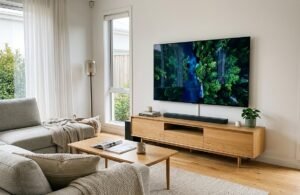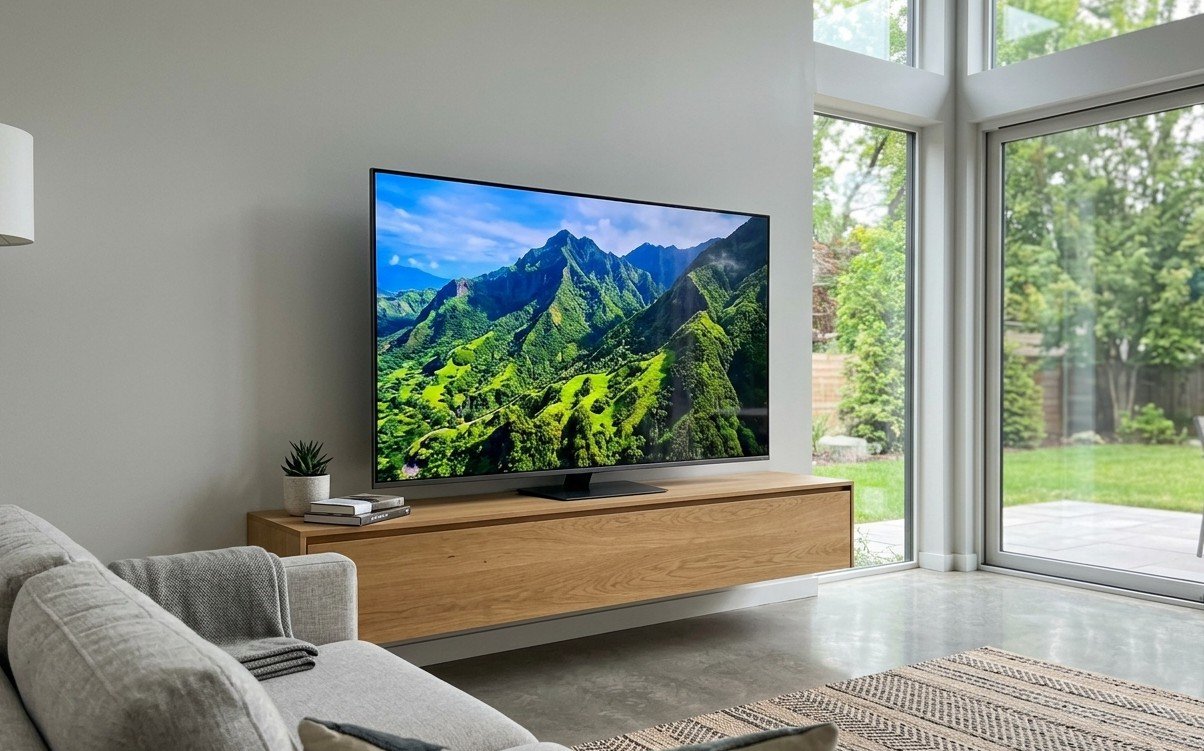
A 55 inch TV measures 139 centimetres across the diagonal and has settled in as the default size for an Australian lounge room. Choosing the best 55 inch TV in Australia is therefore not a question about size at all, because that part of the decision is already made by the time anyone starts comparing models.
Size being fixed leaves everything that separates these sets sitting behind the glass. Four backlight approaches cover the market at this size: full array LED places dimming zones directly behind the panel, mini LED divides those zones into far smaller and more numerous elements, QLED adds a quantum dot layer that widens the colour range, and direct lit LED does neither and competes on price alone.
The practical seating distance for a 139 centimetre panel runs from about 2 metres (6.5 feet) out to roughly 3.5 metres (11.5 feet), and past that the resolution advantage of 4K stops being visible at all. Inside that range three things decide the picture: how finely the backlight is divided, how the set copes with a sunlit room, and whether motion holds together when the camera pans quickly.
Every set below is 55 inches, so the usual first question is already answered. What follows sorts them by how each panel makes its light, because two televisions of identical size and resolution routinely differ more from each other than a 55 inch and a 65 inch sharing the same backlight design.
Quick Picks
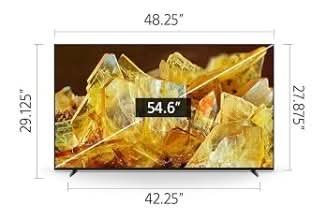
Sony 55 Inch X90L BRAVIA XR Full Array LED
Full array backlight and the best motion handling here for sport and film.
CHECK ON AMAZON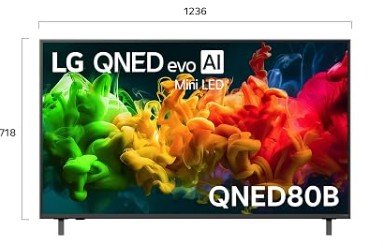
LG 55 Inch QNED80B Evo AI Mini LED
Mini LED brightness that holds contrast with the curtains wide open.
CHECK ON AMAZON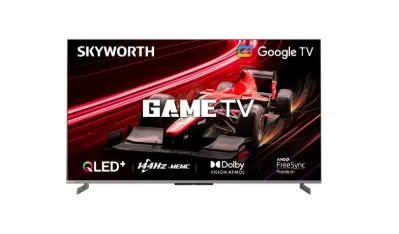
SKYWORTH 55 Inch Q7700G QLED Plus
A real 2.1.2 channel system with a subwoofer, so no soundbar is needed.
CHECK ON AMAZONBest 55 Inch TV in Australia Compared
| Product | Link | Type | Best For | Key Spec |
|---|---|---|---|---|
| Sony 55 Inch X90L BRAVIA XR Full Array LED | Check price | Full array LED | Sport and film | XR processor, full array local dimming |
| LG 55 Inch QNED80B Evo AI Mini LED | Check price | Mini LED | Sunlit lounge rooms | Mini LED backlight, 2026 model |
| SKYWORTH 55 Inch Q7700G QLED Plus | Check price | QLED | Rooms without a soundbar | 144Hz panel, 2.1.2 channel audio with subwoofer |
| LG 55 Inch QNED70B AI Mini LED | Check price | Mini LED | Mixed daily viewing | Mini LED backlight, webOS platform |
| JVC 55 Inch 4K Mini LED 144Hz | Check price | Mini LED | PlayStation and Xbox | 144Hz refresh, Google TV |
| Kogan 55 Inch Mini-LED QLED 144Hz | Check price | Mini LED QLED | Value seekers | Mini LED and quantum dot, 144Hz |
| Sony 55 Inch BRAVIA 3 4K HDR LED | Check price | Direct lit LED | Film and drama | 4K HDR, Google TV |
| Philips 55 Inch 7100 Series 4K UHD | Check price | LED | Evening viewing | 4K UHD, Dolby Vision and Atmos |
| Kogan 55 Inch QLED 4K 144Hz | Check price | QLED | Bedrooms and rentals | Quantum dot, 144Hz, Google TV |
| SYLVOX 55 Inch Outdoor Waterproof Smart TV | Check price | Outdoor rated | Patios and alfresco areas | 2000 nits, weatherproof rated |
1. Sony 55 Inch X90L BRAVIA XR Full Array LED – Best Motion Handling
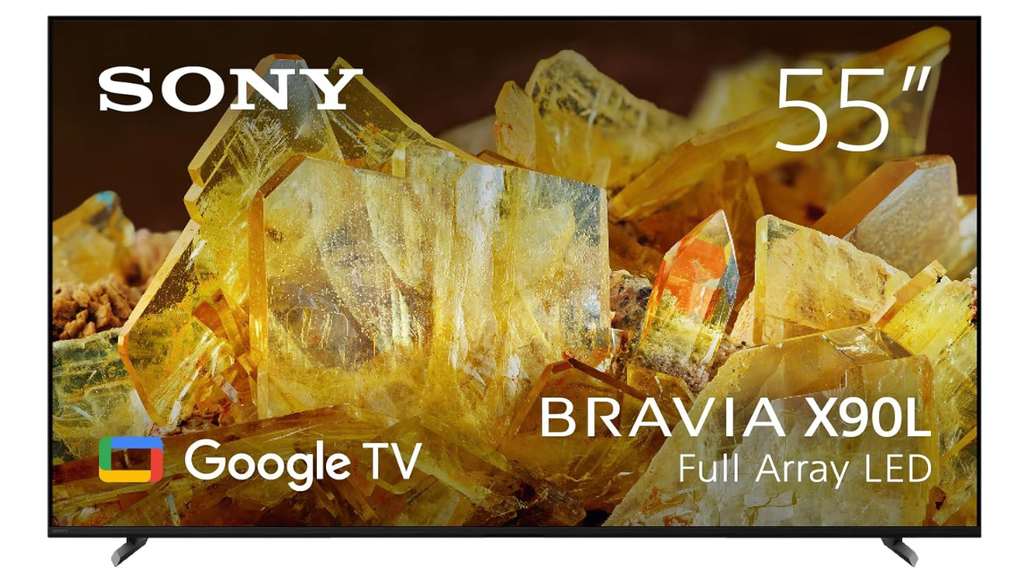
Full array backlighting puts the dimming zones behind the panel rather than around its edge, which is the structural difference between this and most sets at 55 inches. Bright objects hold their brightness without washing out the black around them. The XR processor drives the dimming, and it is the part doing the real work.
Motion is where this pulls clearly ahead. Fast horizontal pans, the hardest thing a television has to do, stay coherent instead of smearing, which matters more on cricket and football than any peak brightness figure. Colour handling is measured rather than punchy, so it looks less impressive next to a saturated demo set and more accurate once you live with it.
For a room where sport and films get equal time, this is the most complete performer in the list. Someone who mostly watches streamed television in a bright room will not see enough of the difference to justify sitting it above the mini LED sets below.
Pros
- Full array local dimming rather than edge lighting
- Best motion handling in this guide for sport
- Accurate rather than oversaturated colour
- Strong upscaling of lower resolution broadcast
Cons
- Looks understated next to a saturated demo set
- Premium end of this guide
- Advantage narrows in a very bright room
Key specs: 55 inch (139 cm) full array LED, XR processor, local dimming, Google TV, 4K HDR
CHECK ON AMAZON2. LG 55 Inch QNED80B Evo AI Mini LED – Best Bright Room Picture
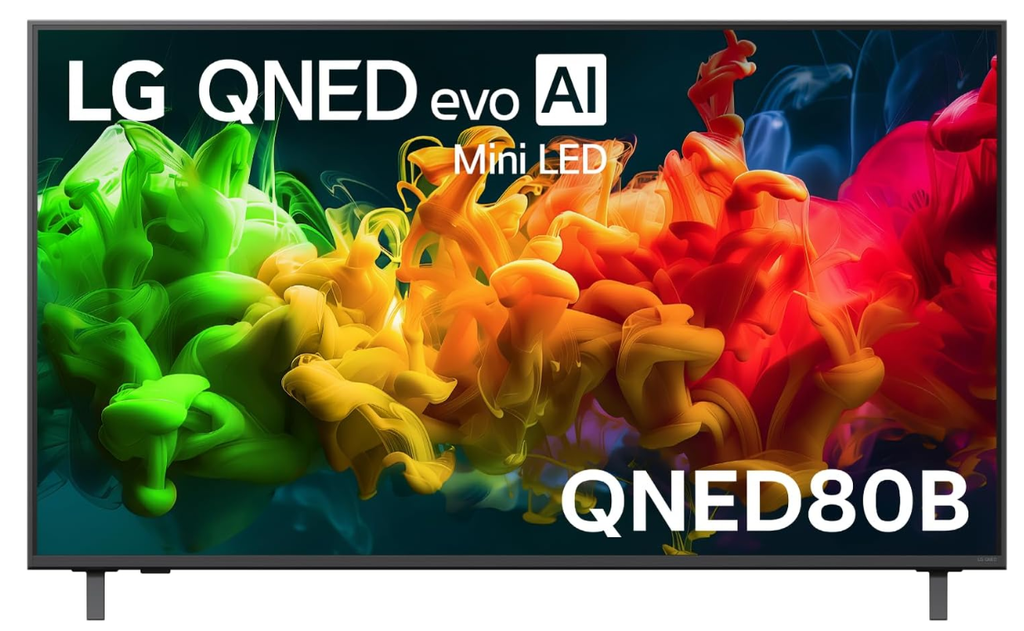
Mini LED shrinks the backlight elements so more of them fit behind the same panel, which sharpens the boundary between light and dark areas. The result is a picture that holds contrast in a room with the curtains open. This is a 2026 model, so it carries the current processing rather than last season’s.
Brightness is the headline and it is genuinely useful here rather than a specification-sheet flourish. An Australian lounge room in the late afternoon defeats a lot of televisions, and this is one that keeps a watchable image through it. Off-angle viewing holds up better than on a standard LED panel, which matters in a room where the sofa is not square to the screen.
Anyone whose main viewing happens in daylight should start here. In a dark room the advantage narrows considerably, and the Sony above will show more in the shadows.
Pros
- Mini LED backlight holds contrast in daylight
- Current 2026 processing
- Off-angle viewing better than standard LED
- Strong peak brightness for a bright lounge room
Cons
- Shadow detail trails the full array Sony
- Halo visible around bright objects on dark scenes
- webOS carries more promoted content than Google TV
Key specs: 55 inch (139 cm) mini LED, QNED80B, webOS, 4K HDR, 2026 model
CHECK ON AMAZON3. SKYWORTH 55 Inch Q7700G QLED Plus – Best Built In Sound
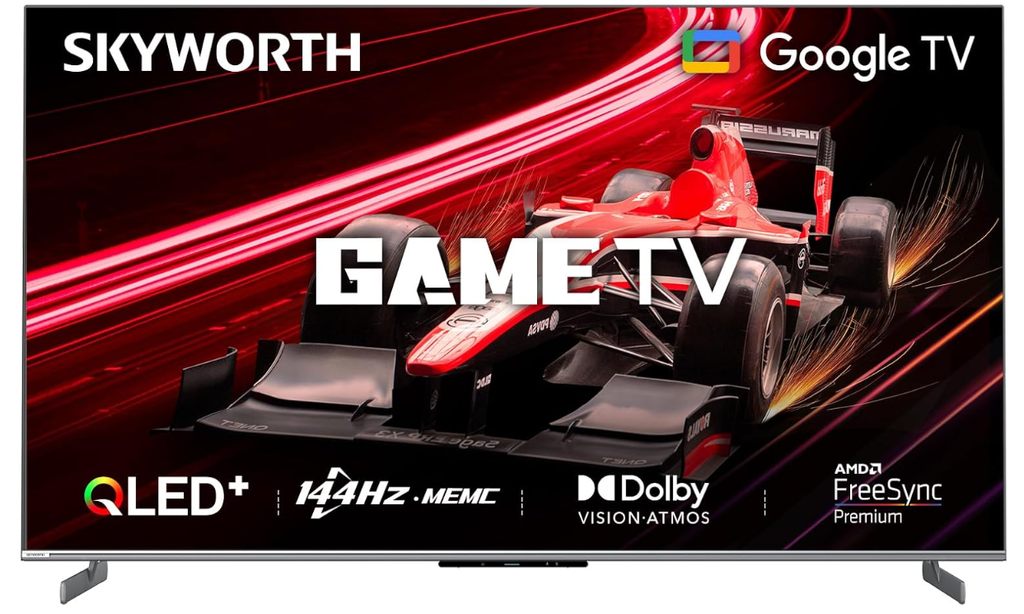
Built-in audio here runs to a 2.1.2 channel arrangement with its own subwoofer, which is unusual at this size and this end of the market. Most televisions put two small drivers behind the panel and leave the rest to a soundbar. This one attempts the job properly.
The upward-firing channels give height effects a real position rather than a simulated one, so Dolby Atmos content does something audible instead of merely appearing in the settings menu. Dialogue sits clear of a busy soundtrack without adjustment. Picture is quantum dot QLED running at 144Hz, which covers gaming as competently as it covers film.
A living room where a soundbar is not welcome, whether for space or for the look of it, is the obvious home for this. Where a sound system already exists, the audio hardware is money spent on something redundant.
Pros
- 2.1.2 channel audio with a built in subwoofer
- Upward firing drivers give real height effects
- 144Hz panel suits gaming as well as film
- Dialogue stays clear without adjustment
Cons
- Audio hardware is wasted if a soundbar already exists
- Backlight control behind the mini LED sets
- Brand has a smaller service presence in Australia
Key specs: 55 inch (139 cm) QLED, 144Hz, 2.1.2 channel audio with subwoofer, Dolby Atmos, Google TV
CHECK ON AMAZON4. LG 55 Inch QNED70B AI Mini LED – Best Value Mini LED
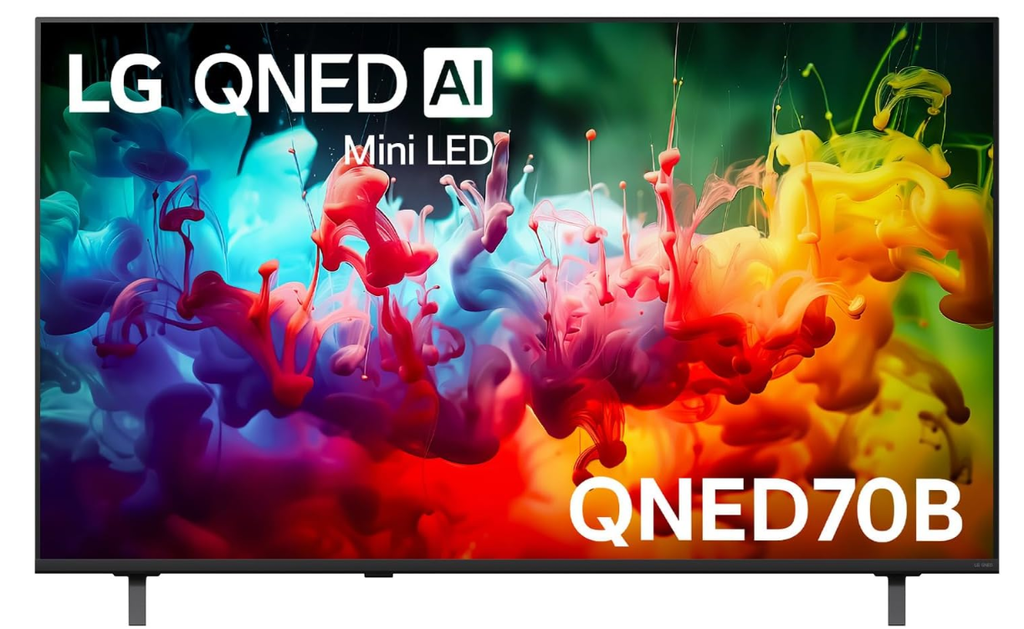
Sitting a step below the QNED80B, this keeps the mini LED backlight and gives up some of the processing that separates the two. The core advantage, a backlight divided into many small zones, survives the cut. What goes is the finer control over how those zones behave.
In practice the gap shows on difficult content and closes on ordinary television. A subtitled film with white text on a dark scene will reveal slightly more halo here than on the model above. Streaming, news and daytime television look near enough identical on both.
This is the entry to buy when the mini LED backlight is the goal and the last increment of processing is not worth the difference. Viewers who watch a lot in the dark should stretch to the QNED80B instead.
Pros
- Mini LED backlight at a lower price than the QNED80B
- Handles ordinary television as well as the dearer model
- webOS platform kept current
- Good all round choice for mixed viewing
Cons
- More halo on dark scenes than the QNED80B
- Processing is the part that was cut
- Not the choice for a dedicated dark room
Key specs: 55 inch (139 cm) mini LED, QNED70B, webOS, 4K HDR, 2026 model
CHECK ON AMAZON5. JVC 55 Inch 4K Mini LED 144Hz – Best for Console Gaming
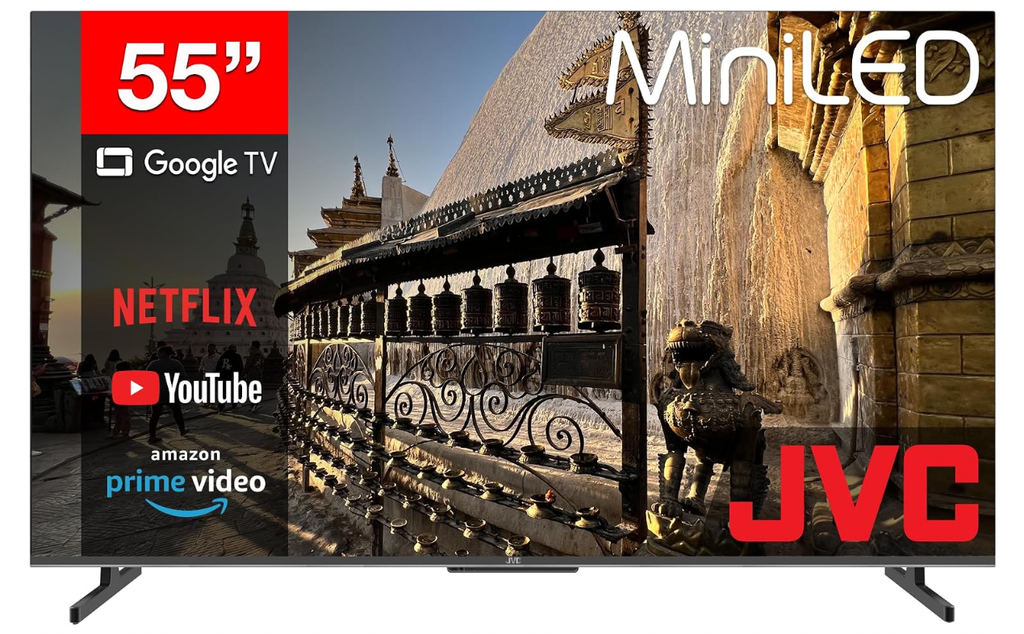
A 144Hz panel on a mini LED backlight is an unusual pairing at this price, and it is aimed squarely at a console rather than a lounge room. Both current consoles output at rates this panel can actually display. The Google TV platform handles the streaming side without a separate box.
High refresh rate matters less for how smooth a game looks and more for how quickly the screen responds to a controller. That responsiveness is the thing a specification sheet struggles to convey and a player notices in the first five minutes. Backlight control is competent rather than exceptional, so dark game scenes show more blooming than they would on the Sony.
Set this against the LG mini LED sets above and the trade is clear: better response, less refined image processing. A console-first household gets the better end of that deal.
Pros
- 144Hz on a mini LED backlight is rare at this price
- Genuinely responsive for console gaming
- Google TV built in, no streaming box needed
- Handles both current consoles at full rate
Cons
- Noticeable blooming on dark game scenes
- Image processing behind the major brands
- Motion on film content trails the Sony
Key specs: 55 inch (139 cm) mini LED, 144Hz, Google TV, 4K HDR, HDMI 2.1
CHECK ON AMAZON6. Kogan 55 Inch Mini-LED QLED 144Hz – Best Specification Per Dollar
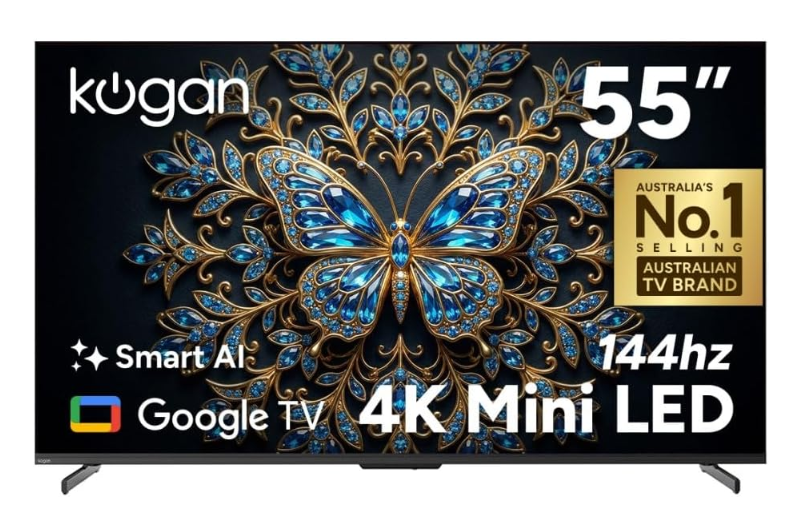
Mini LED backlighting and a quantum dot layer together, at 144Hz, is a specification list that reads like a far more expensive television. The hardware is genuinely there. What separates this from the premium sets is what the processing does with it.
Image processing is the invisible half of a television and the half that takes years of engineering to get right. Colour here is vivid and occasionally overdone, and motion handling on fast content trails the Sony noticeably. None of that is apparent on a specification comparison, which is exactly why specification comparisons mislead at this size.
For a second lounge room, a bedroom or a rental, the hardware-per-dollar argument is strong and the compromises sit in places that matter less. As a main television in a room where films get watched properly, the sets above earn their premium.
Pros
- Mini LED and quantum dot together at a low price
- 144Hz panel included
- Hardware specification well above its price
- Sensible choice for a second room
Cons
- Colour occasionally overdone
- Motion handling trails the premium sets
- Processing is where the savings were made
Key specs: 55 inch (139 cm) mini LED QLED, 144Hz, Google TV, 4K HDR
CHECK ON AMAZON7. Sony 55 Inch BRAVIA 3 4K HDR LED – Best Colour Accuracy
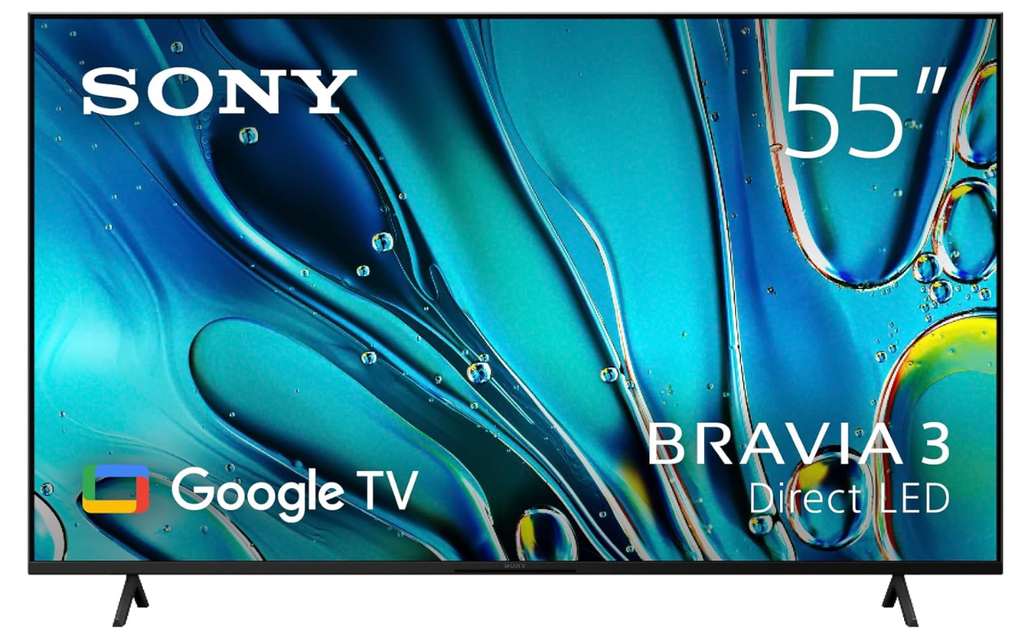
Stepping down from the X90L drops the full array backlight and keeps the colour science, which is a deliberate trade rather than a stripped-out model. Skin tones and natural colour stay believable where cheaper panels push everything towards vivid. The panel is direct lit rather than zone controlled.
Losing local dimming costs contrast in dark scenes, and that is the honest limitation. What remains is a picture that does not fatigue over a long film, because nothing is being artificially boosted. Google TV runs the software side, and the remote and interface are noticeably less cluttered than on the budget brands here.
Drama and film watchers who value accuracy over impact are the natural buyers. Anyone chasing a picture that looks striking from across a bright room should choose one of the mini LED sets instead.
Pros
- Colour accuracy inherited from the dearer Sony models
- Comfortable to watch across a long film
- Clean Google TV interface and remote
- Reliable upscaling of standard broadcast
Cons
- No local dimming, so dark scenes lose contrast
- Direct lit panel rather than full array
- Less impressive in a bright room than mini LED
Key specs: 55 inch (139 cm) direct lit LED, 4K HDR, Google TV, BRAVIA 3 series
CHECK ON AMAZON8. Philips 55 Inch 7100 Series 4K UHD – Best Ambient Lighting
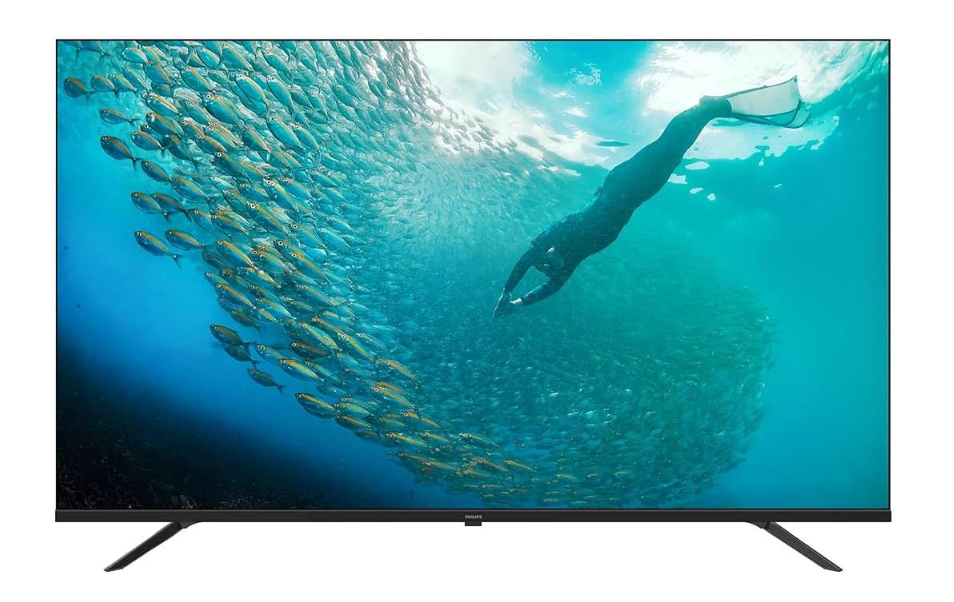
The Philips approach to a dark room is to light the wall behind the television rather than push the panel harder. Reducing the contrast between a bright screen and a black wall is the reason a long evening of viewing feels easier on the eyes. It is a genuinely different answer to a problem every other set here solves with brightness.
Panel performance is mid-range and honest about it, running standard LED with Dolby Vision decoding. The ambient effect does more for perceived picture quality in a dark room than a modest increase in peak brightness would. In daylight the effect is invisible and the set is simply a competent mid-range television.
Evening viewers in a dimly lit room get something here that no amount of extra specification elsewhere replicates. Daytime-heavy households should look at the mini LED entries instead, where the money goes into the panel.
Pros
- Ambient wall lighting reduces eye strain in the dark
- Dolby Vision and Dolby Atmos decoding
- Different answer to dark room viewing than brightness
- Competent mid range panel
Cons
- Ambient effect is invisible in daylight
- Mid range panel performance only
- Needs a wall close behind to work properly
Key specs: 55 inch (139 cm) LED, 4K UHD, ambient backlighting, Dolby Vision and Atmos, 7100 series
CHECK ON AMAZON9. Kogan 55 Inch QLED 4K 144Hz – Best Entry QLED
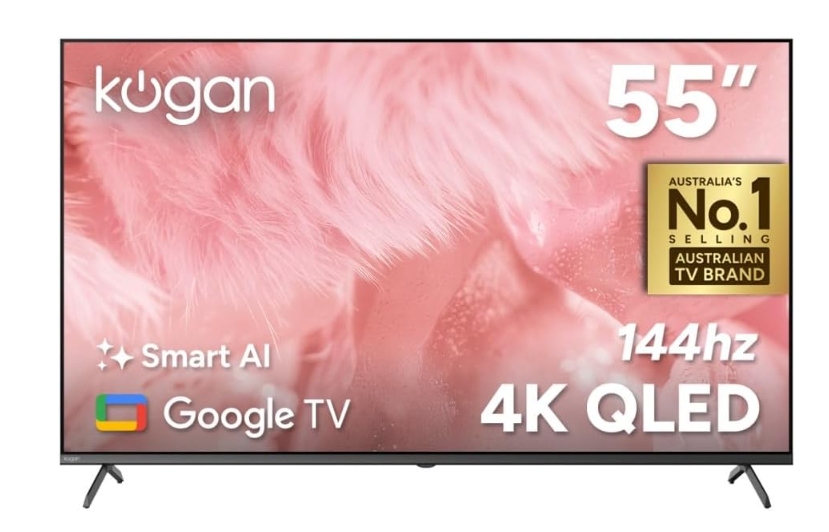
Quantum dot colour and a 144Hz panel without the mini LED backlight puts this a clear step below its stablemate above, and a clear step above a plain LED set. The quantum dot layer widens the colour range. The conventional backlight limits how far contrast can go.
For everyday television, streaming and casual gaming this covers the ground competently. Dark room performance is where the missing backlight control shows, with black scenes reading closer to dark grey. Google TV keeps the software current, which matters more over five years than any single picture specification.
A bedroom, a study or a rental property is the right home for this one. It does not pretend to be a main-room television and is priced accordingly.
Pros
- Quantum dot colour at an entry price
- 144Hz panel
- Google TV keeps software current for years
- Well matched to a bedroom or rental
Cons
- No mini LED, so black scenes read dark grey
- Not a main room television
- Contrast limited by the conventional backlight
Key specs: 55 inch (139 cm) QLED, 144Hz, Google TV, 4K HDR
CHECK ON AMAZON10. SYLVOX 55 Inch Outdoor Waterproof Smart TV – Best for Outdoor Areas
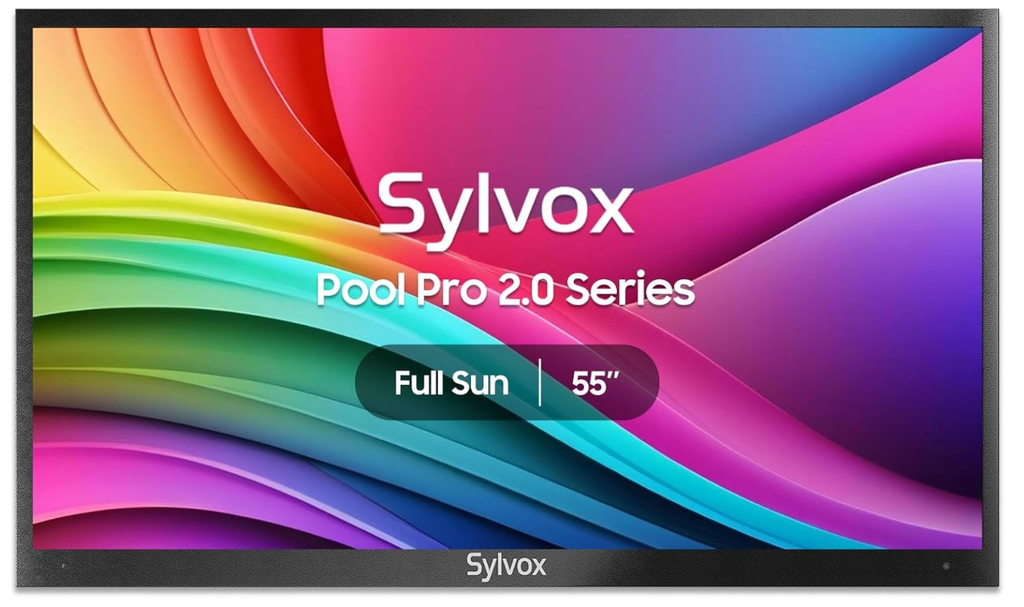
Nothing else in this guide can be left outside, which makes comparison with the rest largely beside the point. A weatherproof housing and a 2000 nit panel are the two things that define it. Both exist to solve problems an indoor television never faces.
Brightness of that order is roughly triple what a normal indoor set produces, and it has to be, because a covered patio at midday defeats an ordinary panel completely. The sealed housing handles rain, humidity and the dust that comes with an Australian summer. Picture quality judged against an indoor television of similar size is unremarkable, and that is the wrong comparison to make.
An alfresco area, a poolside setting or a covered deck is the entire use case. Buying one for a lounge room would mean paying a substantial premium for weatherproofing that does nothing indoors.
Pros
- Weatherproof housing rated for outdoor installation
- 2000 nits, roughly triple a normal indoor panel
- Handles rain, humidity and summer dust
- Solves a problem no indoor television can
Cons
- Picture quality unremarkable against indoor sets
- Substantial premium for the weatherproofing
- Pointless indoors
Key specs: 55 inch (139 cm) outdoor rated, 2000 nits, weatherproof housing, 4K HDR, smart platform
CHECK ON AMAZONHow to Choose a 55 Inch TV
Decide the room before the model. A set bought for a north-facing lounge room with the curtains open needs brightness above everything else, which points at mini LED. A set for a media room with the lights down needs contrast control, which points at full array. Buying the wrong one produces a television that reviews well and disappoints daily.
Read past the specification list. Mini LED, quantum dot and 144Hz all appear on budget sets now, and the hardware really is present. What separates a cheap set carrying those features from an expensive one is image processing, which no specification list describes and which takes years of engineering to get right.
Measure the seating distance first. Between about 2 and 3.5 metres a 55 inch panel is well matched to the room. Closer than 2 metres and the size starts to dominate; further than 3.5 and the detail 4K provides goes unused. That measurement settles more than any feature comparison.
Weigh the sound separately from the picture. Most televisions at this size fit two small drivers behind the panel and assume a soundbar will follow. One set here builds in a genuine multi-channel system with a subwoofer. If a soundbar is already in the room, that hardware is money spent twice, and the budget is better placed in the panel.
Consider whether a screen is the right answer at all. For a room used mainly at night, or one where a large image only matters occasionally, a portable projector in Australia throws a far larger picture for less outlay and packs away afterwards. Where the television runs during the day, a panel remains the only sensible option, since no projector competes with sunlight.
Check the platform, not just the panel. Google TV and webOS both receive updates for years, while lesser smart platforms slow down and lose apps well before the panel wears out. A television is kept for the better part of a decade in most households, and the software is what ages first. Australian Consumer Law guarantees cover a set for a reasonable period regardless of the written warranty, and at this price that period is measured in years.
In a bigger lounge room, a 65 inch TV gives you roughly 40 percent more screen area than a 55 inch set.
Frequently Asked Questions
What is the ideal viewing distance for a 55 inch TV?
Between about 2 metres and 3.5 metres, or roughly 6.5 to 11.5 feet. Closer than 2 metres the screen starts to fill too much of the field of view for comfort. Further than 3.5 metres and the extra detail 4K resolution provides is no longer visible, so a cheaper panel would look the same.
Is mini LED worth paying more for over standard LED?
In a bright room, yes. Mini LED divides the backlight into many small zones, which holds contrast when ambient light would otherwise wash the picture out. In a consistently dark room, a full array set with good processing will show more shadow detail for the same money.
Does a higher refresh rate matter if I do not game?
Barely. Australian broadcast and streaming content is delivered at 50 or 60 frames per second, so a 144Hz panel has nothing extra to display. The refresh rate matters for console and PC gaming, where the screen responds faster to input, and for very little else.
Are budget brand 55 inch TVs worth buying?
For a bedroom, study or rental they represent good value, because the hardware specification is genuinely competitive. As a main lounge room television the compromise shows in image processing, particularly on fast motion and in dark scenes, which is the part that cannot be read off a specification list.
Can I use a 55 inch TV outdoors?
Only if it is built for it. A standard indoor television is not sealed against moisture and is not bright enough to overcome daylight on a patio. One set in this guide is rated for outdoor installation and runs at roughly triple the brightness of an indoor panel, which is what the job requires.
What is the difference between QLED and OLED at 55 inches?
QLED is a backlit panel with a quantum dot layer that widens the colour range, while OLED lights each pixel individually and switches them off completely for true black. OLED wins on contrast in a dark room; QLED goes brighter, which serves a sunlit Australian lounge room better.
Verdict
Two of these sets would look identical in a showroom and nothing alike in a dark lounge room. The Sony X90L is the one to buy where sport and film share the screen, because its full array backlight and motion handling hold together on exactly the content that exposes cheaper panels. For a room with the curtains open most of the day the LG QNED80B is the better answer, and where a soundbar is never going to happen the SKYWORTH Q7700G is the only set here that treats its own audio seriously.