Holding a hand drill square to a workpiece is the problem a drill press exists to solve, by fixing the motor and chuck to a column so the bit descends on a fixed vertical axis. The best drill presses in Australia divide into two families that do not compete: bench machines that clamp the work under a stationary head, and magnetic drills that clamp themselves to steel and travel to the work instead.
Three formats cover what is available here. Bench drill presses bolt to a workbench and suit timber, plastics and light metalwork. Magnetic drills anchor to structural steel with an electromagnet and bore large holes on site. Mini bench presses are desktop machines for modelling, jewellery and hobby work in soft materials.
Chuck capacity and quill stroke matter more than motor wattage on a bench machine. A 13mm chuck covers standard twist bits and a stroke around 40mm to 60mm sets how deep a single plunge can go before the work has to be repacked. Magnetic drills are rated differently again, on holding force in newtons, where 12000N is roughly 2700lbf of grip against the steel.
This guide compares four drill presses sold in Australia, running from a 200W desktop machine to a 1550W magnetic drill that cores 50mm holes, and lists chuck capacity, speed range and holding force where it applies. Anyone kitting out a workshop should read it alongside our guide to budget 3D printers in Australia.
Quick Picks
Bosch 710W Electric Bench Drill Press
A 13mm keyless chuck, two-speed gearbox and a digital readout for speed and depth.
CHECK ON AMAZON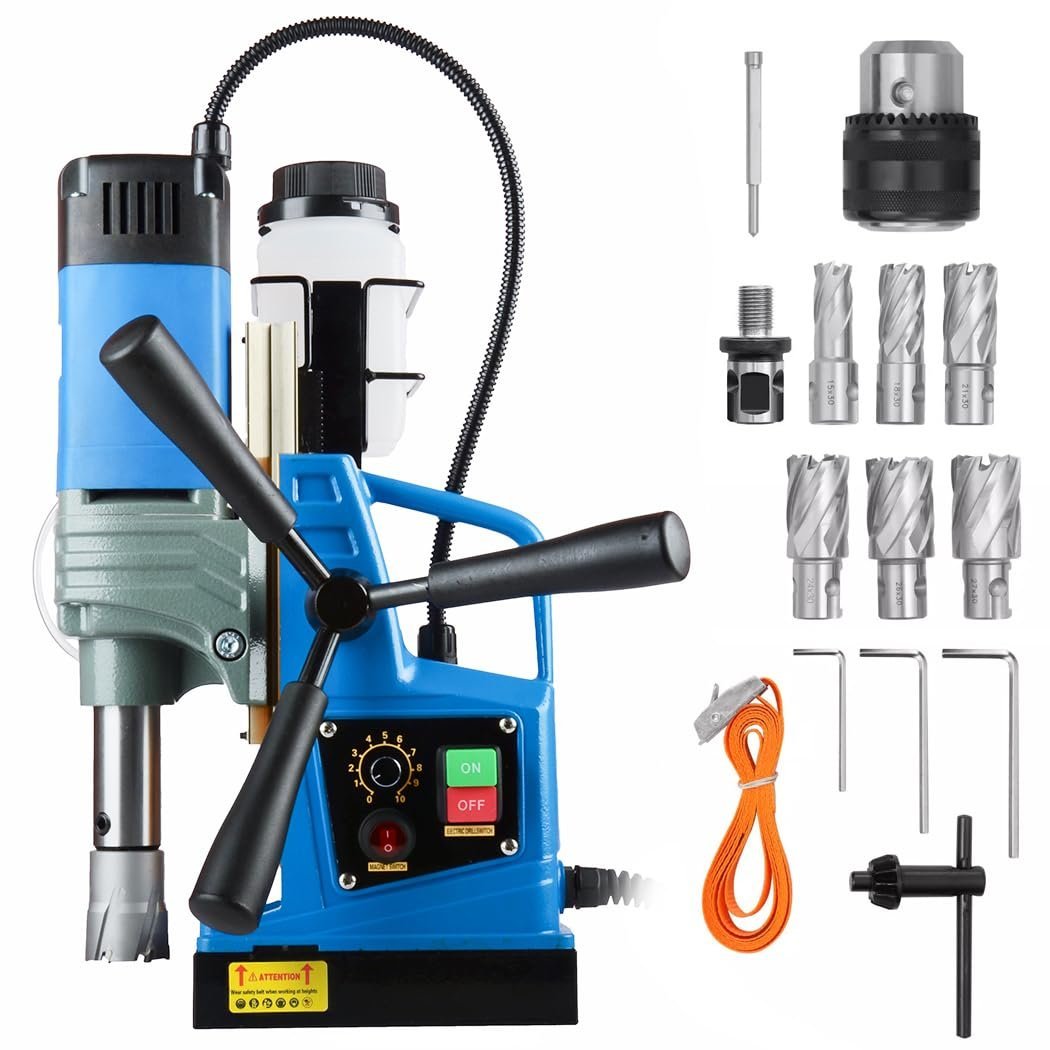
1550W Magnetic Drill Press
Cores to 50mm with 13000N of electromagnetic grip and overload protection built in.
CHECK ON AMAZON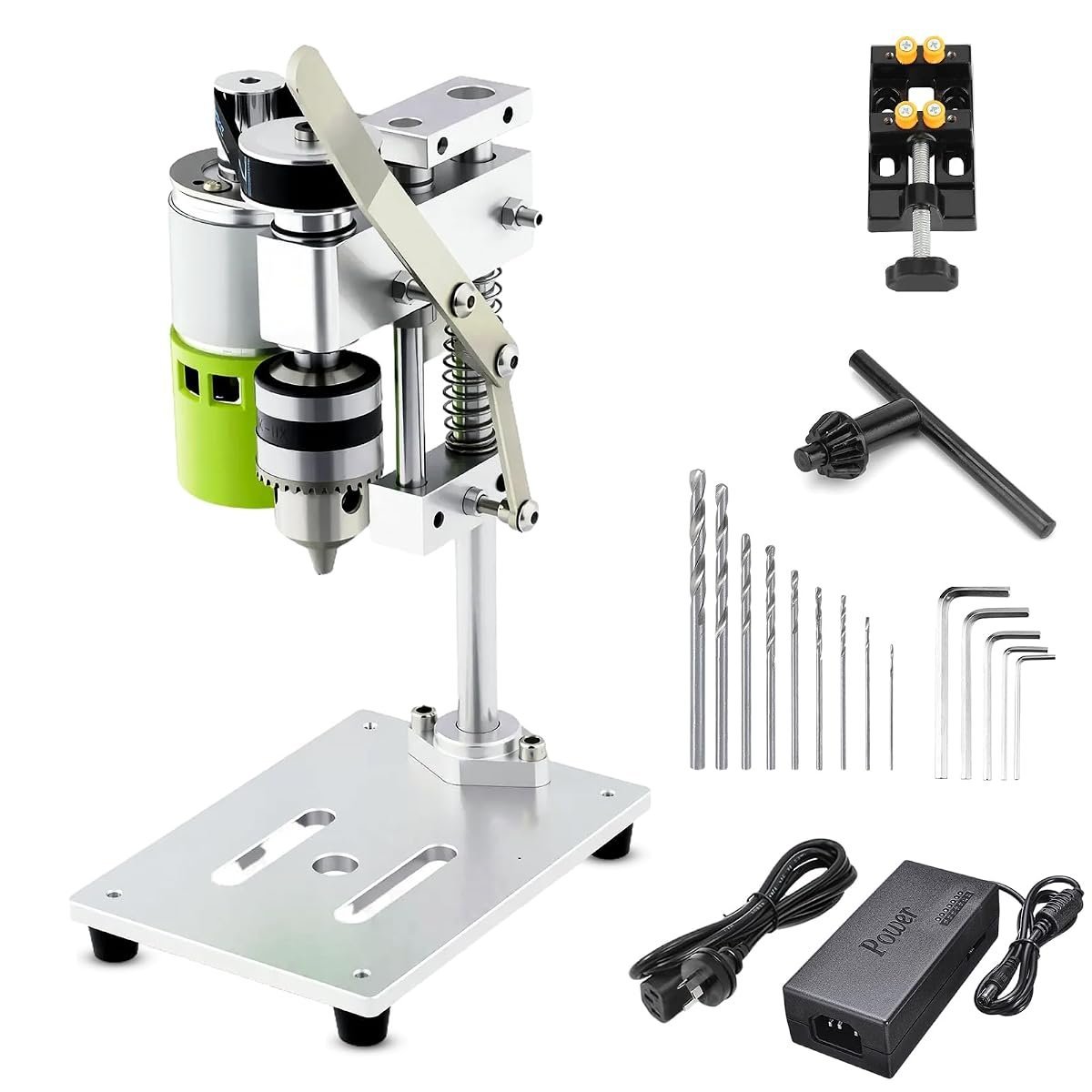
Mini Drill Press 200W Benchtop Machine
A desktop machine with seven speeds to 4500rpm and a 1.5mm to 10mm chuck.
CHECK ON AMAZONDrill Presses Compared
| Product | Link | Type | Best For | Key Spec |
|---|---|---|---|---|
| Bosch 710W Electric Bench Drill Press | Check price | Bench drill press | Workshop bench | 710W, 13mm keyless chuck, 2-speed |
| 1550W Magnetic Drill Press with 50mm Coring | Check price | Magnetic drill | Structural steel | 1550W, 500rpm, 13000N hold |
| VEVOR 1100W Portable Magnetic Drill | Check price | Magnetic drill | Portable steel work | 1100W, 580rpm, 12000N hold |
| Mini Drill Press 200W Benchtop Machine | Check price | Mini bench press | Hobby and modelling | 200W, 4500rpm, 1.5-10mm chuck |
1. Bosch 710W Electric Bench Drill Press – Best Bench Drill Press
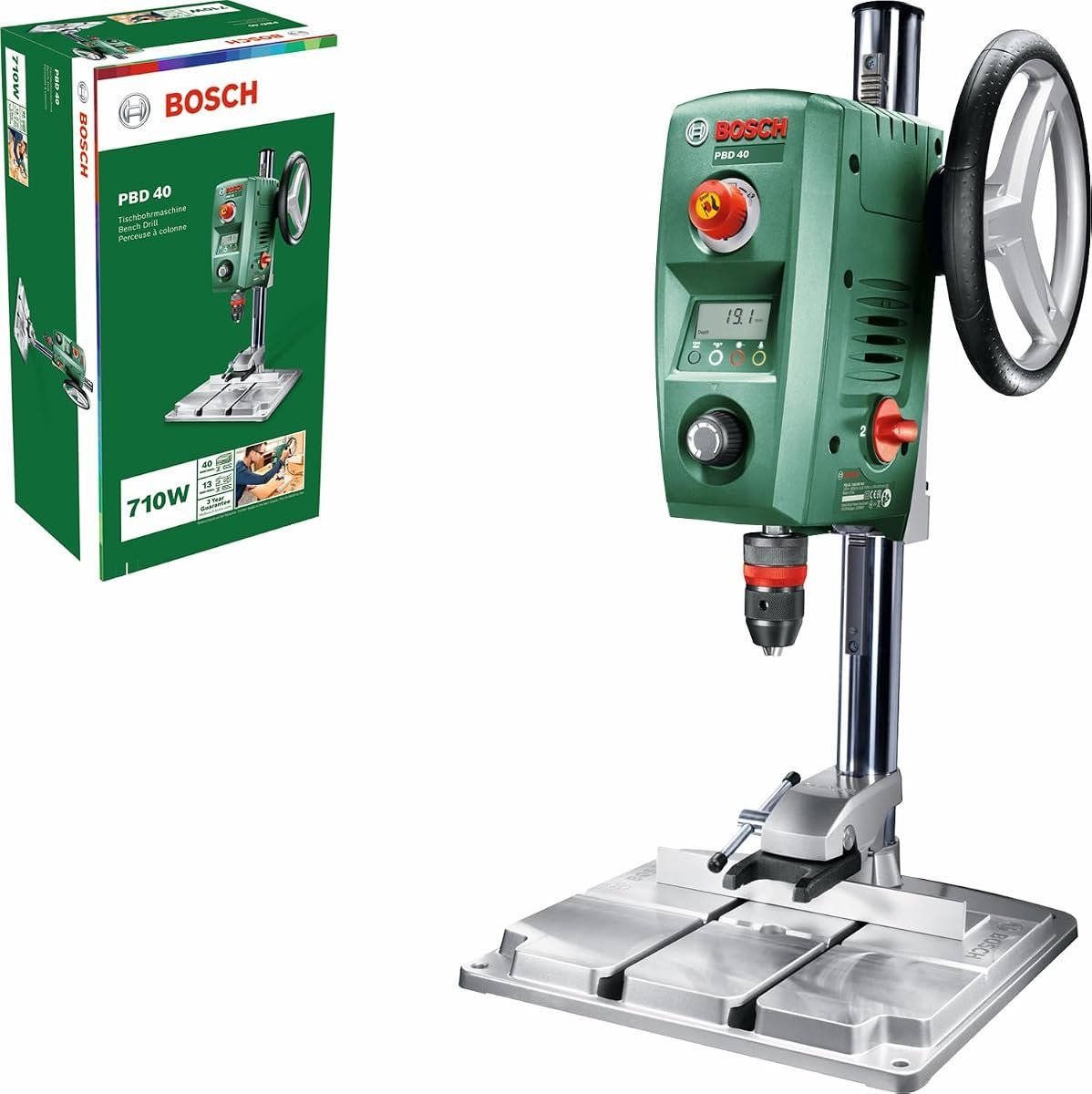
Seven hundred and ten watts drive a two-speed gearbox here, with a keyless precision chuck taking bits to 13mm. A digital display reports drilling speed and depth rather than leaving both to judgement. A quick clamp holds the work, including round stock.
The digital readout is the feature that separates this from a basic pillar drill, because depth on a drill press is otherwise set by a threaded stop and checked by eye. Two speeds is fewer than a belt-change machine offers but the split is sensible, giving torque in first and speed in second. The keyless chuck retightens itself as the bit loads up, which is where cheaper chucks slip.
Two gears will not satisfy anyone stepping through a wide range of materials and bit diameters, where a five or twelve speed belt machine gives finer control. For timber, plastics and light metal on a home bench it covers the work properly. The quick clamp for round material is worth more than it sounds, since round stock spinning in a vice is the classic drill press injury.
Pros
- Digital display for both speed and drilling depth
- 13mm keyless chuck retightens under load
- Two-speed gearbox splits torque and speed sensibly
- Quick clamp holds round material safely
Cons
- Only two speeds against belt-driven machines
- Bench mounting limits workpiece size
Key specs: 710W motor; 13mm keyless precision chuck; two-speed gearbox; digital speed and depth display; quick clamp included.
CHECK ON AMAZON2. 1550W Magnetic Drill Press with 50mm Coring – Best for Structural Steel
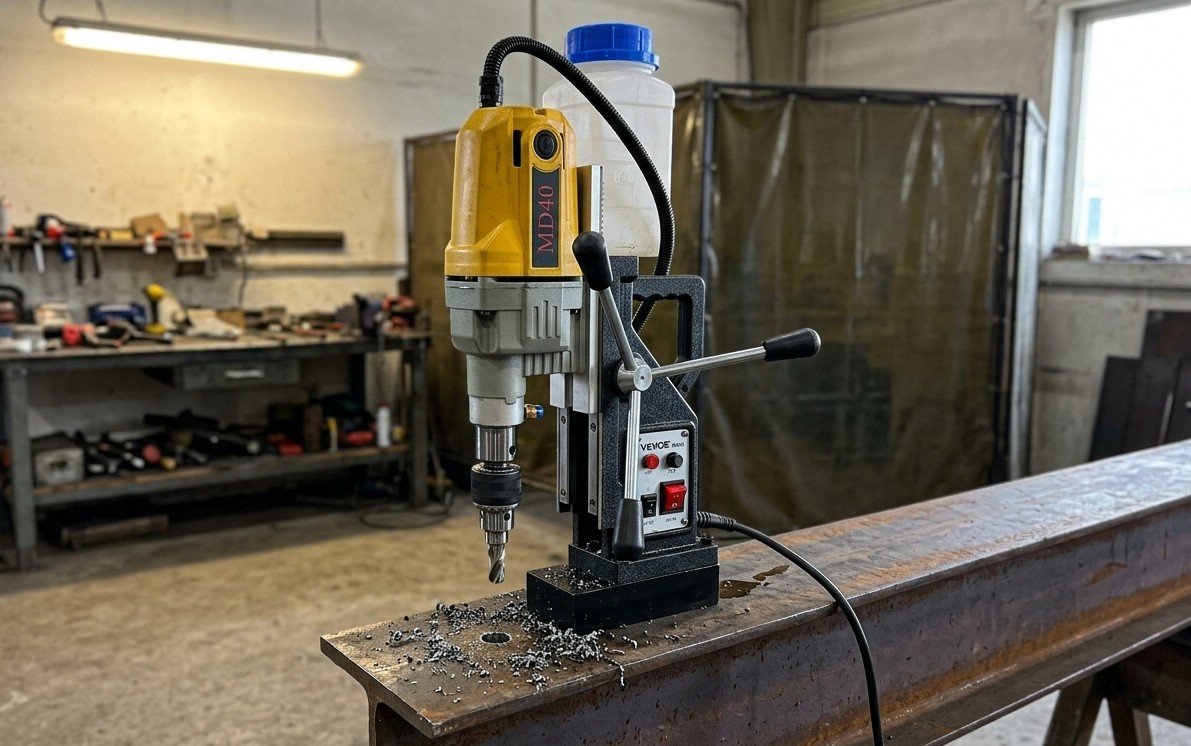
This is a different tool to a bench press, clamping itself to the steel with an electromagnetic base rather than holding the work. The base generates 13000N, about 2922lbf, of grip. A 1550W motor turns at 500rpm and cores holes to 50mm, with six bits supplied.
Magnetic drills exist because structural steel cannot be carried to a bench, so the machine goes to the beam instead. Thirteen thousand newtons anchors it firmly enough to drill horizontally and overhead, which is the whole point. A scale on the frame helps line the bit up against a marked centre, and combined overload protection guards the motor on a heavy cut.
Fifty millimetre coring is well beyond anything a household project needs, and the machine only works on ferrous material thick enough to hold the magnet. Fabricators, boilermakers and anyone drilling structural steel on site are the buyers. On timber or a bench it is the wrong tool entirely.
Pros
- 13000N electromagnetic base grips for horizontal and overhead work
- Cores to 50mm diameter
- 1550W motor with overload protection
- Six cutting bits included
- Frame scale helps align to a marked centre
Cons
- Only works on ferrous metal thick enough to hold the magnet
- Far more machine than household projects need
Key specs: 1550W motor; 500rpm; 50mm maximum coring diameter; 13000N (2922lbf) magnetic holding force; six bits included; overload protection.
CHECK ON AMAZON3. VEVOR 1100W Portable Magnetic Drill – Best Portable Magnetic Drill
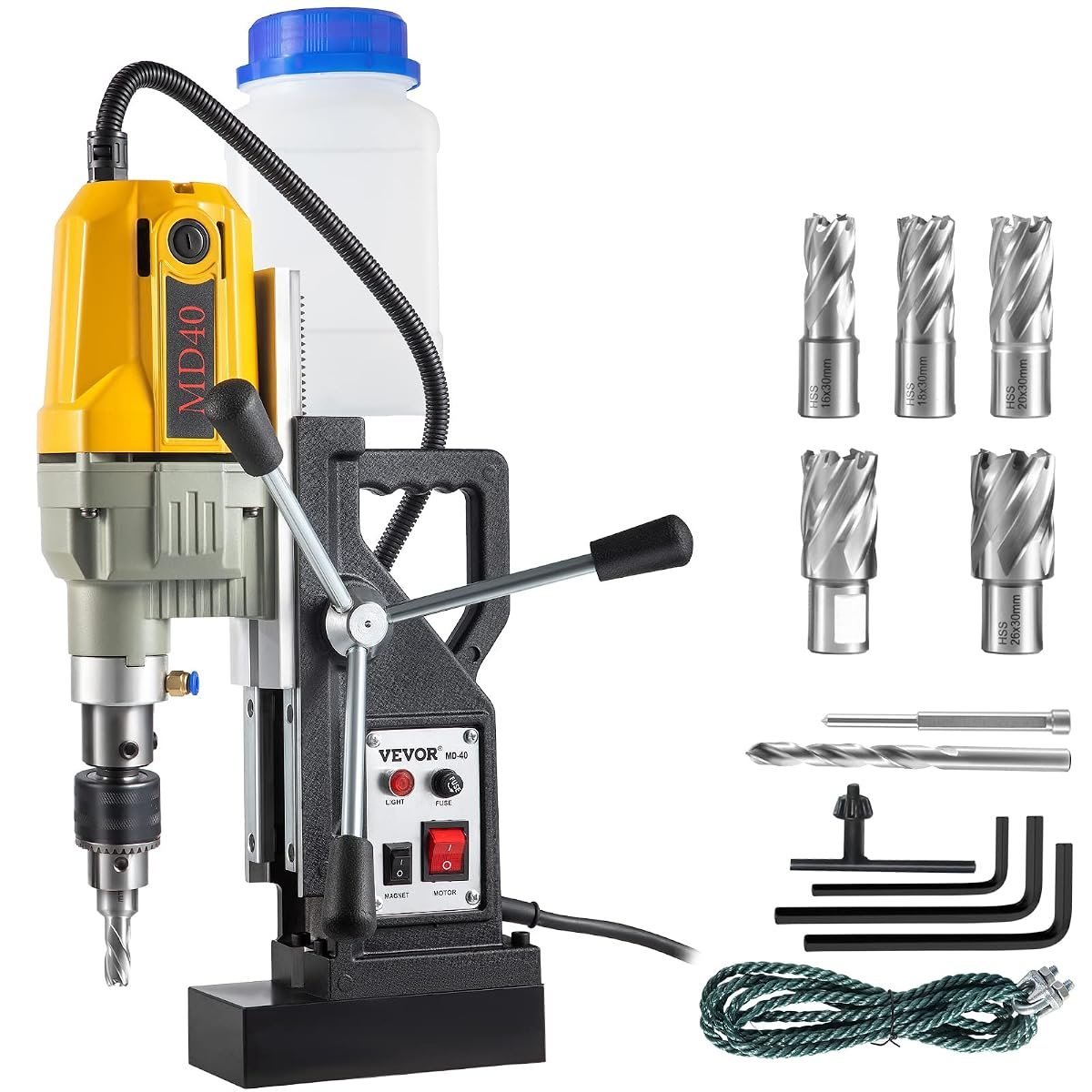
Eleven hundred watts and 580rpm make this the lighter of the two magnetic drills, boring to roughly 40mm across and 50mm deep. The electromagnetic base holds at 12000N. Coring and twist bits both ship with it.
A lower power rating brings lower weight, and weight is what decides whether a magnetic drill gets carried up a ladder or left in the ute. Five hundred and eighty rpm is faster than the 1550W machine, which suits smaller diameters where a slower speed would burnish rather than cut. The base is near-pure iron and the ergonomic handle is built for carrying rather than as an afterthought.
Twelve thousand newtons is slightly less grip than the larger machine and the smaller boring capacity shows on heavy sections. For maintenance work, smaller fabrication and anywhere the drill has to be moved often, that trade favours this one. Both bit types being included saves a separate purchase.
Pros
- Lighter than the 1550W machine and easier to carry
- 580rpm suits smaller diameters
- 12000N near-pure iron magnetic base
- Coring and twist bits both included
- Cooling system for sustained cuts
Cons
- Lower holding force than the larger magnetic drill
- Around 40mm boring capacity limits heavy sections
Key specs: 1100W motor; 580rpm; approximately 40mm boring diameter and 50mm depth; 12000N (2697lbf) magnetic force; coring and twist bits included.
CHECK ON AMAZON4. Mini Drill Press 200W Benchtop Machine – Best for Hobby Work
Two hundred watts and a body measuring roughly 22 by 10 by 13 centimetres put this on a desk rather than a workbench. An 895 DC motor reaches 4500rpm across seven speed settings. The chuck takes bits from 1.5mm to 10mm.
Small diameters need high speed rather than torque, which is exactly the wrong way round for a full-size press, so a machine spinning to 4500rpm suits model work, circuit boards and jewellery far better than a 710W bench drill would. Seven speeds give real control across that range. A 40mm stroke is generous for the size.
Two hundred watts will stall in anything approaching structural material, and the light frame flexes under side load. Modelling, electronics, resin and soft timber are its range. Treat it as a precision tool for small work rather than a scaled-down workshop machine.
Pros
- 4500rpm suits small-diameter precision work
- Seven speed settings
- 1.5mm to 10mm chuck capacity
- 40mm drilling stroke in a desktop footprint
- Fits on a desk rather than a bench
Cons
- 200W stalls in harder or thicker material
- Light frame flexes under side load
Key specs: 200W 895 DC motor; up to 4500rpm; seven speed settings; 1.5-10mm chuck; 40mm maximum stroke; approximately 22 x 10 x 13cm.
CHECK ON AMAZONHow to Choose the Best Drill Presses in Australia
Decide first whether the work comes to the machine. A bench drill press assumes the workpiece can be carried to it and clamped down, while a magnetic drill assumes the opposite and clamps itself to the steel instead. That single question eliminates half the market immediately. Timber, plastics and small metal parts point to a bench machine; structural steel on site points to a magnetic drill.
Chuck capacity and quill stroke beat wattage. A 13mm chuck accepts the full range of standard twist bits, and the quill stroke sets how deep one plunge goes before the work has to be repacked and re-clamped. A powerful motor behind a 10mm chuck and a short stroke is still a limited machine. Check both numbers before comparing watts.
Speed range matters more than top speed. Large bits in steel need low rpm to avoid burning the cutting edge, while small bits in timber or acrylic need high rpm to cut cleanly rather than tear. A two-speed gearbox covers broad categories, a belt-change machine gives finer steps, and a desktop unit spinning to 4500rpm is built for small diameters only. Match the range to the materials rather than to the headline figure.
On a magnetic drill, holding force is the safety spec. Force is quoted in newtons, and 12000N to 13000N is the working range for portable machines. It determines whether the drill can be trusted horizontally or overhead, and it only develops properly on ferrous steel of adequate thickness. Thin, painted or rusted sections reduce grip considerably.
Check what the machine is actually made of. Bench presses in this category range from cast columns to pressed steel, and a light frame flexes under side load, which shows as a hole that wanders off vertical. Table size and whether it tilts also decide what can be held. A machine that cannot clamp round stock securely is a genuine hazard rather than an inconvenience.
Australian supply for this category is unusually thin. Many drill presses listed on local marketplaces ship from overseas warehouses with multi-week delivery, and some carry electrical specifications intended for other markets. Confirm the seller ships domestically and that the machine is 240V before ordering. A workshop being fitted out at the same time may also want our guide to portable power stations in Australia, since a magnetic drill on site needs a supply that will carry it.
Drill press work is safer and more accurate with a couple of clamps holding the workpiece down to the table.
Away from the bench, a cordless drill drives screws and bores holes in wood, metal or masonry with no cable to trip over.
Frequently Asked Questions
What is a drill press used for?
It holds a drill bit on a fixed vertical axis so holes are square to the workpiece and repeatable in depth, which a handheld drill cannot reliably manage. Typical uses are timber joinery, drilling metal stock, and any job needing several identical holes. A depth stop lets the same depth be repeated without measuring each time.
What is the difference between a drill press and a magnetic drill?
A drill press is stationary and the workpiece is brought to it and clamped, while a magnetic drill clamps itself to ferrous steel and is carried to the work. Magnetic drills are used on structural steel, beams and plate that cannot be moved, and they can drill horizontally or overhead. They only work on steel thick enough to hold the electromagnet.
What chuck size do I need on a drill press?
A 13mm chuck covers the full range of standard twist bits and is the practical benchmark for a bench machine. Smaller 10mm chucks limit bit choice, which matters more than it first appears. Desktop hobby machines commonly run 1.5mm to 10mm, which is appropriate for the small diameters they are built around.
What speed should I drill metal at?
Slower than timber. Large diameters in steel need low rpm so the cutting edge does not overheat and lose temper, while small bits in soft materials need higher speeds to cut cleanly. This is why speed range matters more than maximum rpm, and why a two-speed or belt-change machine suits mixed work.
How much holding force does a magnetic drill need?
Between roughly 12000N and 13000N for portable machines, which is around 2700 to 2900lbf. That range is enough to work horizontally and overhead on adequate steel. Holding force drops on thin, painted, rusted or curved sections, so the rated figure assumes clean flat steel of sufficient thickness.
Are drill presses hard to buy in Australia?
The domestic range is limited compared with other power tools. Many listings on local marketplaces ship from overseas warehouses with delivery measured in weeks, and some are specified for other electrical markets. Check the seller location, the stated delivery window and that the machine is 240V before ordering.
Verdict
A workbench and mixed materials make the Bosch 710W the sensible default, since the digital depth readout and self-tightening 13mm chuck cover timber, plastics and light metal without fuss. Structural steel is a different job altogether, and the 1550W magnetic drill with its 13000N base and 50mm coring capacity is the machine for beams that cannot be moved. Carrying that capability up a ladder favours the lighter 1100W unit instead, while the 200W desktop press earns its place only on model work, circuit boards and jewellery where 4500rpm matters more than torque.