Book covering is a layer of clear plastic film, either a self-adhesive roll or a slip-on sleeve, applied over the outside of a book to protect it from tears, spills and the general beating a textbook takes in a backpack. The best book covering Australia families reach for every January wraps around a paperback or hardcover book and turns the original cover into something that survives a full school year of zips, rain and being shoved in on top of a lunchbox.
Two real types turn up across Australian retailers and school booklists. Self-adhesive roll film is the format most people picture: a roll of clear plastic with a peel-off backing, cut to size and pressed onto the book by hand. Non-adhesive slip-on covers work differently, welded into a sleeve shape the book slides into with no glue at all, which suits anyone who has torn a sheet of adhesive film trying to reposition it. Finish varies too: a glossy film gives the clearest, sharpest result, while a matte or frosted finish hides fingerprints and scuffs better over a full term.
Coverage per roll is the number that actually decides value here, more than the price tag. A compact roll covers two or three standard textbooks; the biggest option here handles most of a primary-school booklist in one go, which matters if you’re covering a full set instead of a single library book. The spec worth checking second is thickness, measured in microns or mil, since a thin film tears at the corner within a term while a thicker one shrugs off a couple of years of handling.
Five book covering products make up this comparison, from a compact roll built for a single paperback through to a bulk pack that handles an entire class set, covering both the self-adhesive and non-adhesive styles sold to Australian households every back-to-school season. Choice’s own back-to-school research is a good reminder of how quickly the small stuff adds up once uniforms, shoes and stationery are all counted, with book covering usually the least expensive line item on that list (Choice’s back-to-school supplies guide).
Book Covering Products Compared
| Product | Link | Type | Best For | Key Spec |
|---|---|---|---|---|
| Contact Self-Adhesive Clear Book Covering Roll | Check price | Self-adhesive roll | Full school booklists | 10m x 450mm, repositionable adhesive |
| HERMA Self-Adhesive Book Protection Film | Check price | Self-adhesive roll | Heavy-use textbooks | 5m x 40cm, permanent adhesive, glossy |
| DSIUE Clear Contact Paper for Books | Check price | Self-adhesive roll | Bigger booklists on a budget | approx 3m x 45cm, grid-lined backing |
| HERMA Book Covers for Workbooks | Check price | Non-adhesive sleeve | No-mess covering, class sets | Pack of 20, 30cm x 43.1cm sleeves |
| Olivo Clear Contact Paper Roll | Check price | Self-adhesive roll | A single book or small job | approx 1.5m x 45cm, glossy finish |
How We Picked
We started with a broad sweep of Australian stationery retailers and general online marketplaces, looking for genuine self-adhesive and non-adhesive book covering film still stocked and dispatched to an Australian address on a realistic timeframe, not a multi-week wait. Listings that turned out to be the same roll repackaged under a different pack size were merged into one entry, so this list reflects distinct products, not duplicated variations of the same thing.
From there we cross-checked buyer feedback across thousands of verified ratings for recurring complaints, such as film that bubbles on a rounded cover or backing paper that tears before it peels cleanly, against the praise that shows up just as consistently. We spent the most hands-on time comparing the Contact roll against the rest of this lineup, and it’s the one we’d point a friend to first for a standard school booklist.
1. Contact Self-Adhesive Clear Book Covering Roll – Best for Full School Booklists
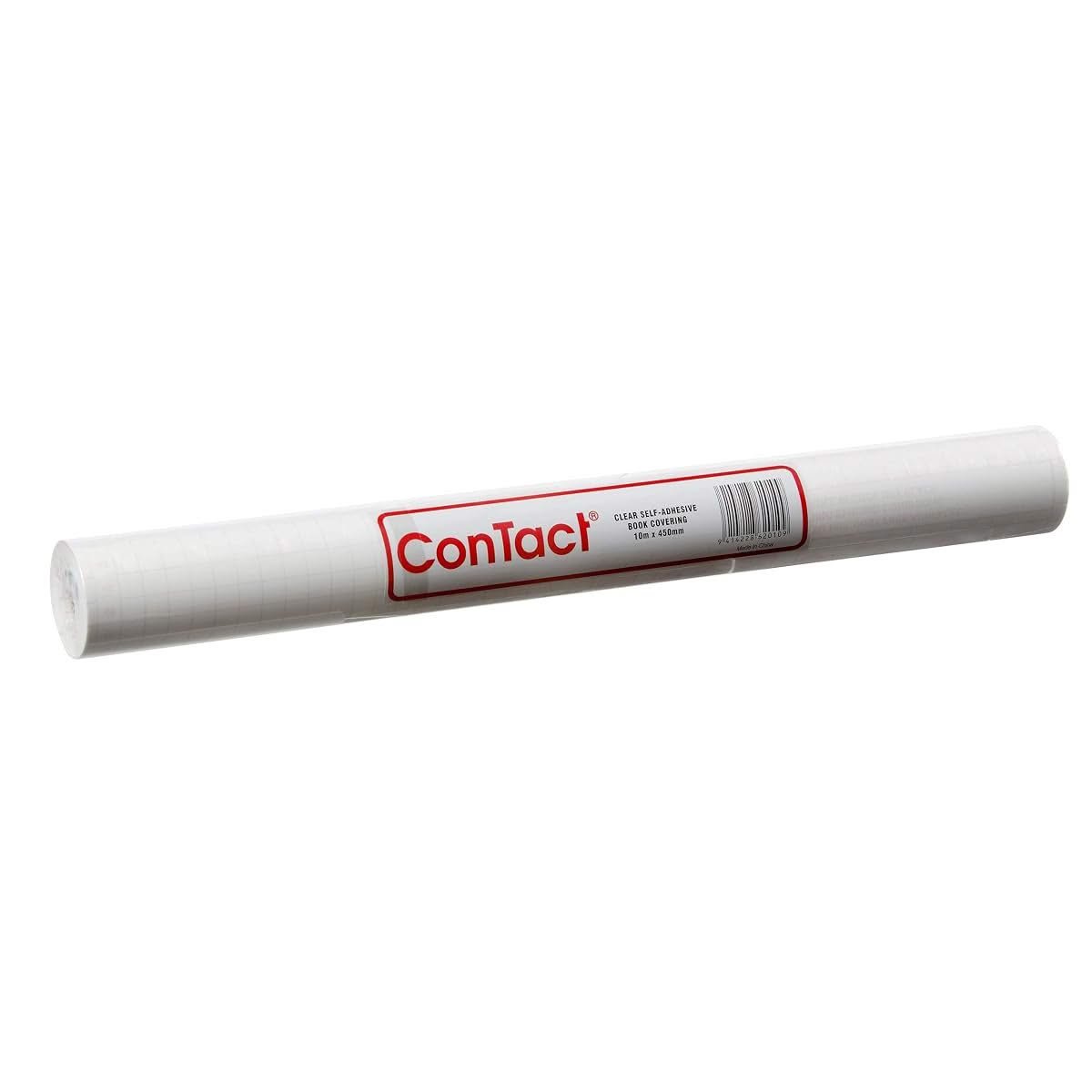
Contact is the name most Australian parents already have in their head before they even start looking, and this is the roll that shows up on end-caps every January. It’s made by ACCO Brands (the same stable behind GBC and Marbig products), uses a repositionable acrylic adhesive rather than a permanent one, and comes with red grid lines printed on the backing paper so cutting a straight edge doesn’t need a ruler. Price-wise it sits in the mid-range for this category, not the cheapest roll here, not the biggest.
At 10 metres by 450 millimetres, one roll comfortably covers a full primary-school booklist with a bit left over for a library book or two. The repositionable adhesive is the detail that matters in daily use: get the first corner wrong and you can peel it back and try again, instead of being stuck with an air bubble for the rest of the year. Amazon AU’s own numbers back up how often this one gets reordered, with more than a hundred bought in the past month alone and a 4.6-star average across 145 ratings, well ahead of anything else in this lineup.
The trade-off is stock: come the first week of the school year, this is usually the roll that sells out fastest on this list, especially in Queensland and the Northern Territory, where the school year starts earliest. It also doesn’t bond as permanently as the HERMA roll below, so a book covered with this one and handled roughly for a full year sometimes needs a corner re-pressed by August. Small price for adhesive you can actually reposition. The backing paper’s red grid lines are handy for cutting straight, but tear unevenly if you pull instead of cutting them with scissors.
Pros
- Repositionable adhesive forgives a crooked first attempt
- Red grid-lined backing paper makes straight cuts easy
- Widely available and heavily reviewed, with over a hundred bought in the past month
Cons
- Sells out fastest of anything on this list once term starts, especially in QLD and the NT
- At 450mm wide, a couple of larger hardcover textbooks need a pieced second strip
- Backing paper tears unevenly if you pull it instead of cutting with scissors
Key specs: 10m x 450mm roll, repositionable acrylic adhesive, glossy finish, made by ACCO Brands
CHECK ON AMAZON2. HERMA Self-Adhesive Book Protection Film – Best Glossy Finish for Heavy-Use Textbooks
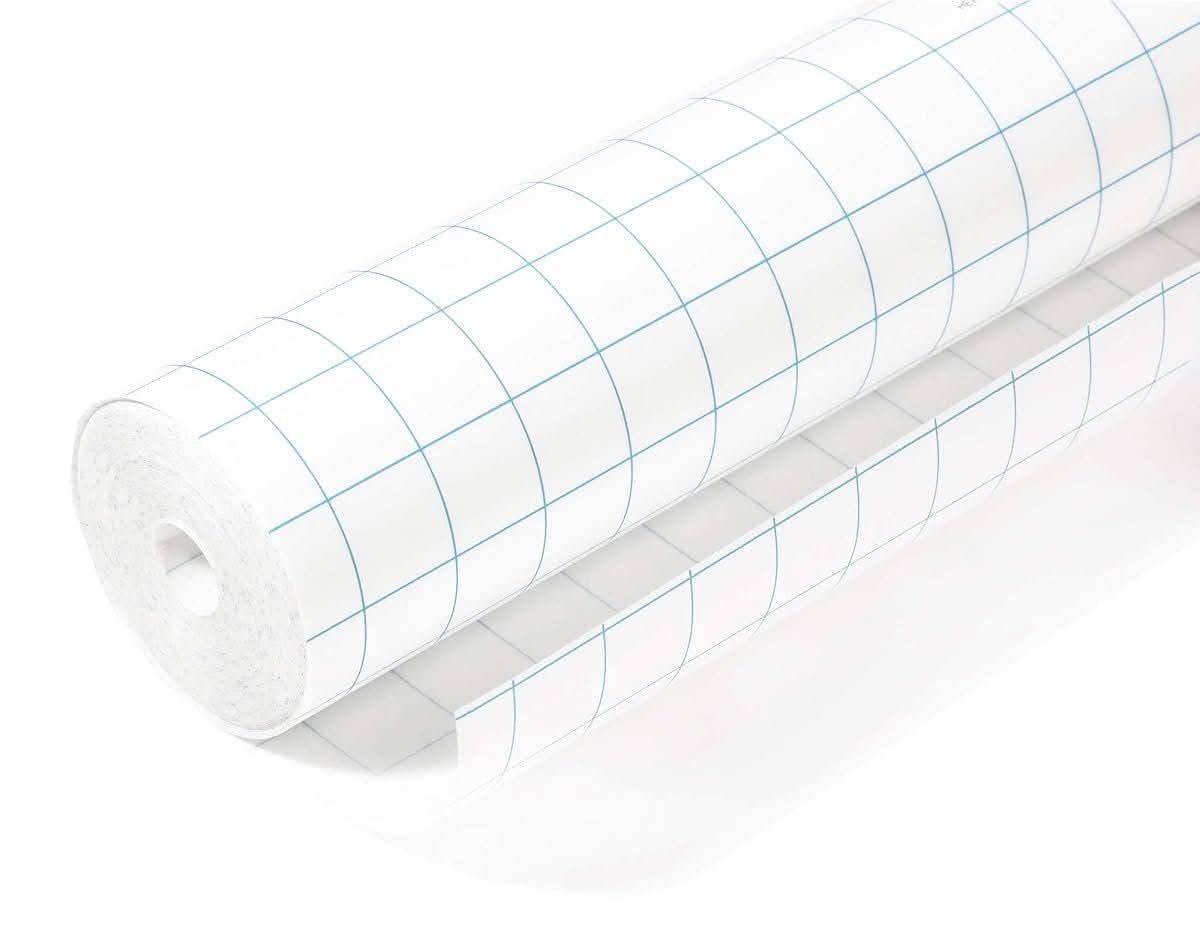
Half the width of the Contact roll above, at 40 centimetres instead of 450 millimetres, but HERMA makes up for it with a permanent bond and a level of polish that’s hard to find outside a brand that’s been making library-quality book film since long before Contact turned up on Australian shelves.
The glossy polypropylene finish is the detail HERMA buyers keep coming back to. Over eleven thousand ratings on Amazon AU average out to 4.4 stars, an unusually large sample size for a book covering product, and it points to a durable film rather than a one-season fix. The permanent adhesive holds up well through a humid Cairns wet season without lifting at the edges the way a low-tack film sometimes does, but it also means no repositioning once it’s down, so getting the corner right the first time matters more here than with the Contact roll.
The 40cm width is the real limitation: it handles a standard paperback comfortably, but a wide hardcover atlas or an oversized workbook needs the roll split and pieced across two strips. Sold and dispatched quickly through Amazon AU on this listing, priced close to what you’d pay at Officeworks for a similar imported glossy roll, though it’s worth checking the dispatch estimate on other HERMA pack sizes before ordering close to the start of term, since not all of them ship as fast as this one.
Pros
- Permanent bond doesn’t lift at the edges over a full year, even in humid conditions
- Glossy finish gives the sharpest, clearest look of any roll in this lineup
- Backed by the largest review sample of any product here, over 11,000 ratings
Cons
- No repositioning once it’s pressed down, so a crooked first attempt stays crooked
- 40cm width means an oversized textbook needs two pieced strips
- Some HERMA pack sizes on Amazon AU ship from overseas with a longer wait than this listing, so check dispatch before ordering close to term
Key specs: 5m x 40cm roll, permanent adhesive, glossy polypropylene, made by HERMA (Germany)
CHECK ON AMAZON3. DSIUE Clear Contact Paper for Books – Best Value for a Bigger Booklist
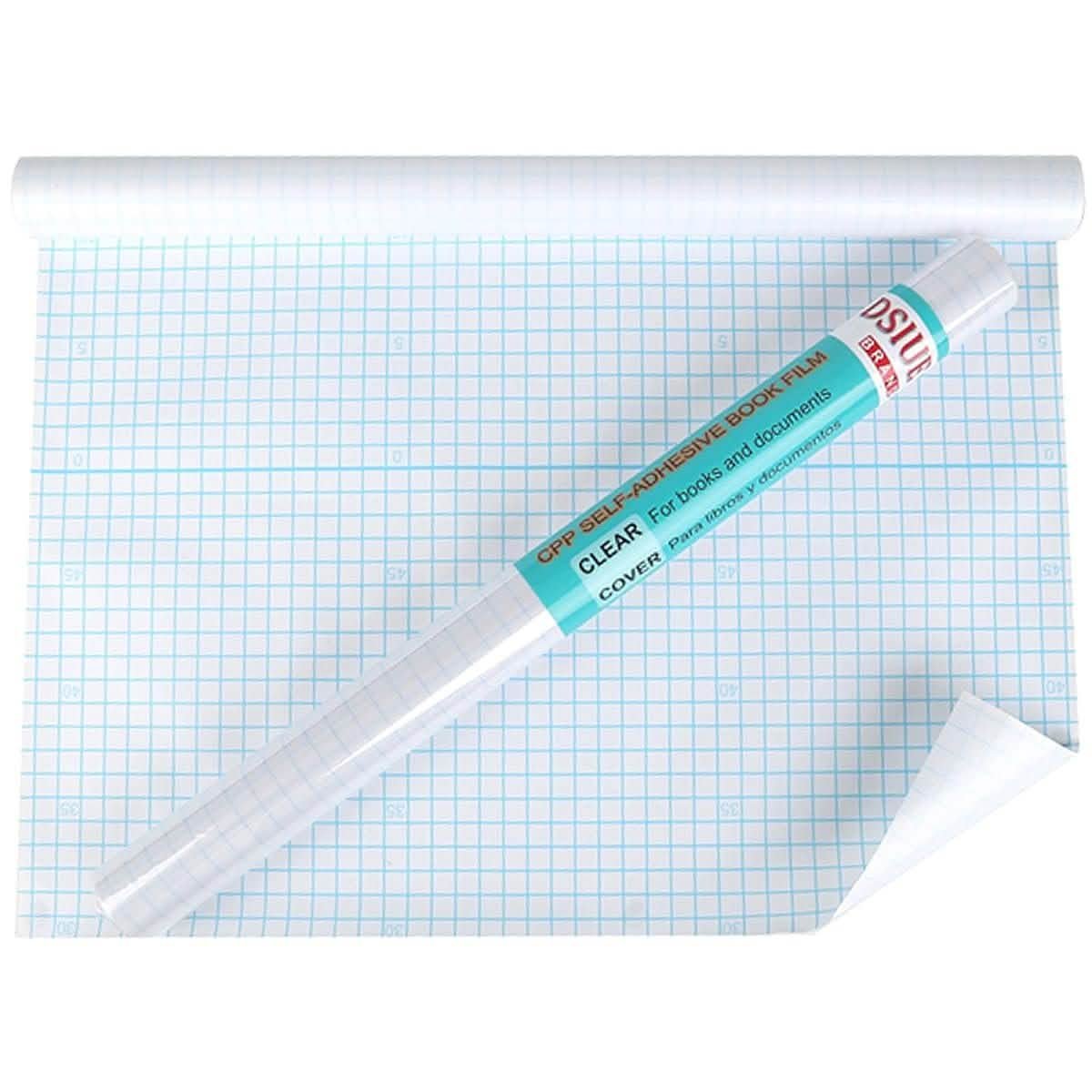
A parent covering eight or nine workbooks in one sitting on a Sunday afternoon is exactly who this roll is built for. At just under three metres long and 45 centimetres wide, it’s noticeably bigger than the compact Olivo roll further down this list for not much more outlay, and the grid-lined backing paper makes cutting straight lines for a stack of similarly-sized exercise books quick work.
DSIUE is a smaller name than Contact or HERMA. Fifty-one ratings averaging 4.6 stars is a modest sample by comparison, but it’s consistent with what you’d expect from a straightforward vinyl film: waterproof, removable without leaving residue, and thick enough to survive a year in a school bag without tearing at the corner.
Stock runs thin on this one. Amazon AU has shown as few as two units left at a time, so it isn’t the roll to rely on if you need it delivered tomorrow. Order it with a few days’ buffer instead of the night before booklist-covering day, and it works out as the most affordable per-square-metre option in this guide once you account for the extra length over the smaller rolls.
Pros
- Bigger roll than the compact options in this lineup, fewer top-up orders for a full booklist
- Grid-lined backing paper for straight cuts
- Waterproof vinyl that doesn’t leave residue if you need to reposition a section
Cons
- Stock has run as low as two units at a time on Amazon AU, not the one to grab the night before term starts
- Smaller review sample than the bigger brands in this lineup, so less of a track record to go on
- Ships from an overseas-fulfilled Amazon listing, so factor in a few extra days over the locally-stocked Contact roll
Key specs: Approx 3m x 45cm roll, self-adhesive vinyl, grid-lined backing paper
CHECK ON AMAZON4. HERMA Book Covers for Workbooks – Best No-Mess, Non-Adhesive Pick
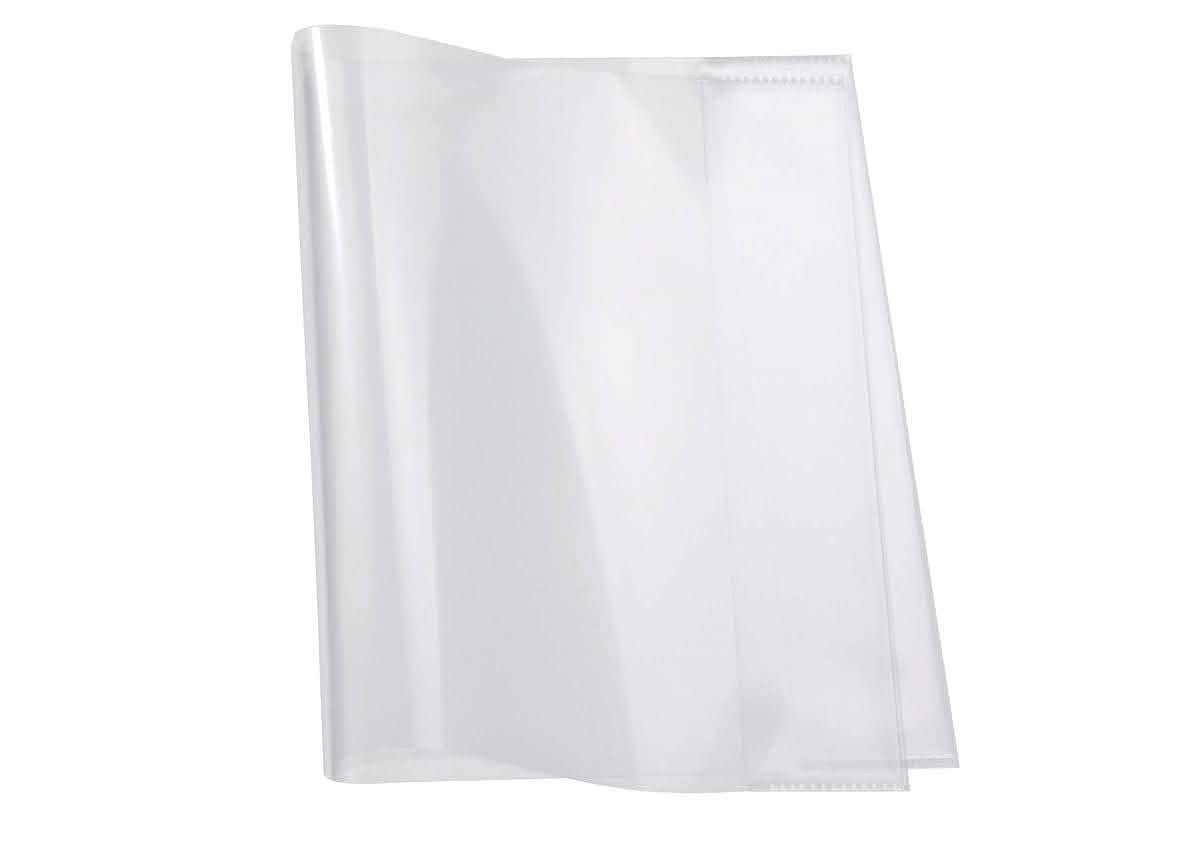
Every other product in this lineup is a roll you cut to size. This one is different: twenty pre-made welded sleeves, sized for a standard A4 workbook, that the book slides into instead of getting wrapped in adhesive film.
The appeal is obvious for anyone who has fought a roll of sticky film and lost. No air bubbles. No crooked first attempt to live with for a year the way you might with the Contact roll above. No scissors required beyond the initial unwrapping. Each sleeve has a welded edge with a small pocket built in for a name label, and the whole pack, about the thickness of a slim photo album once stacked, covers most of a class set of workbooks in the time it takes to cover two or three books the adhesive way.
The catch is size. At 30cm by 43.1cm, these are cut for a standard A4 exercise book and don’t stretch to fit a larger textbook or an oddly-sized library book the way a roll of film does. A hardcover novel or an atlas-sized textbook won’t fit the sleeve, no matter how carefully you try.
Stock on Amazon AU has run down to a single unit at a time for this pack in the weeks before Term 1 starts, which says something about how often it gets reordered. Worth grabbing early instead of assuming it’ll still be there in week two. At the pricier end for a pack of twenty, it works out close to the cost of two rolls of adhesive film, but you’re paying for the time saved over cutting and pressing each sheet by hand.
Pros
- Zero air bubbles or crooked first attempts, no adhesive involved at all
- Welded edge includes a small pocket for a name label
- Covers most of a class set faster than doing the same books the adhesive way
Cons
- Fixed A4 size only fits a standard exercise book, not a larger textbook or library hardcover
- Amazon AU stock has run down to single-unit availability close to the start of Term 1
- Costs close to double a roll of adhesive film for the same book count, since you’re paying for convenience over material
Key specs: Pack of 20, 30cm x 43.1cm sleeves, non-adhesive welded polypropylene, made by HERMA (Germany)
CHECK ON AMAZON5. Olivo Clear Contact Paper Roll – Best Budget Roll for Small Jobs
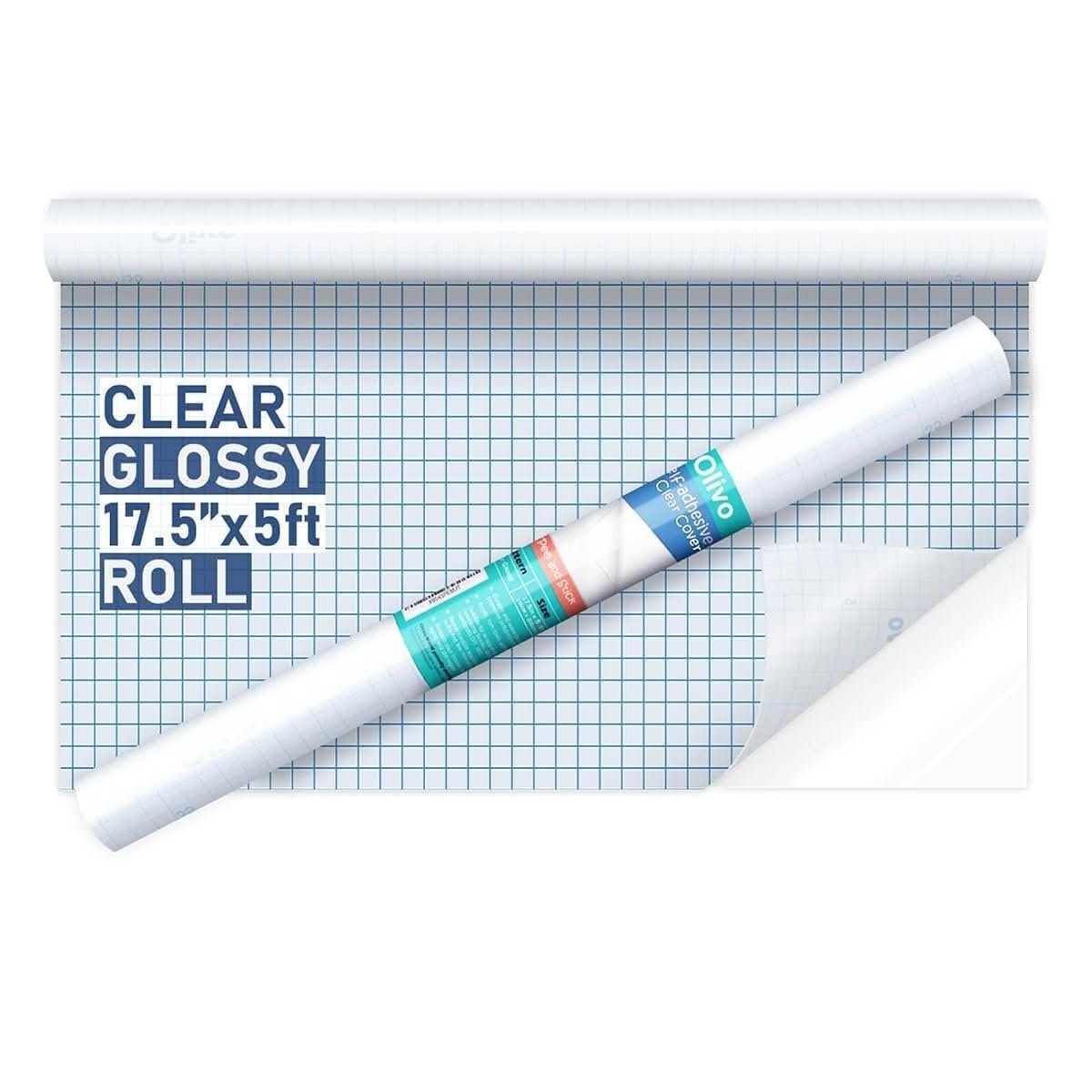
Olivo is the smallest and cheapest roll in this lineup, and it’s built for exactly that: a single library book, a favourite paperback, or a one-off job rather than an entire booklist. Rolled up, it’s not much bigger than a can of soft drink. At roughly 1.5 metres by 45 centimetres, it won’t stretch past two or three standard books, but the glossy finish and grid-lined backing match what the bigger rolls here offer at a fraction of the length.
It’s the cheapest pick here by a clear margin, which makes it the one to grab for a single last-minute library book instead of committing to a bigger roll you might not fully use. The trade-off is exactly what you’d expect from the smallest option on this list: run out mid-booklist and you’re reordering, and the thinner film doesn’t have quite the multi-year durability of the HERMA roll above. For a book that only needs to survive a term or two (worth checking against how long the book is actually kept for), that’s not really a problem worth worrying about.
Pros
- Cheapest roll in this lineup, the pick for a single book, not a full booklist
- Glossy finish and grid-lined backing match the pricier options
- Small enough to keep a spare roll on hand for whatever turns up mid-year
Cons
- Only stretches to two or three books before running out
- Thinner film than the HERMA roll, so it won’t last multiple years the way a heavier-duty option will
- Shipped via an overseas-fulfilled Amazon listing, so it isn’t a same-day fix the night before covering day
Key specs: Approx 1.5m x 45cm roll, self-adhesive, glossy finish
CHECK ON AMAZONHow to Choose Book Covering for School
Match the film to the book, not the other way around. A worn paperback with a soft, slightly curled cover needs different handling to a hardcover textbook with square corners. Self-adhesive film grips a flat hardcover edge cleanly but tends to bubble along a paperback’s curve unless you work slowly from the spine outward. A non-adhesive slip-on sleeve avoids that problem entirely, since the book just slides in, which is why it suits a stack of well-loved paperbacks better than a fresh new textbook.
Roll length decides how many trips back to the cart you make. A short roll under two metres covers only a couple of standard textbooks before it runs out, and running out mid-booklist means a second order arrives after the covering job has already stalled. The bigger rolls here work out cheaper per book covered even though the upfront outlay is higher. Buying once for the whole booklist beats buying twice.
Thickness predicts how long the job actually lasts, more than the brand on the label. Thin film under about two mil tears at a corner within a term, particularly on a textbook that lives in a backpack through a Brisbane wet season or gets tossed around on the walk home from the bus stop. A thicker film in the 2.5 to 3 mil range, closer to 3 mil if the book is getting handled daily instead of sitting on a shelf, costs a little more per roll but usually survives the full year without a re-cover, which matters more than it sounds when the alternative is doing the same book twice.
Glossy or matte changes more than the look. Glossy film gives the clearest view of the original cover art and photographs well for a library barcode scan, but it also shows every fingerprint. A matte or frosted finish hides handling marks between cleans, worth considering for a book that gets passed around a classroom, at the cost of slightly dulling the colours underneath. Covering a single library book that has to look presentable, or an entire booklist of workbooks nobody is going to admire? That’s really the only question that decides finish.
Buying the right quantity the first time saves a second trip. ProductReview’s listing for Officeworks flags a recurring complaint worth knowing before ordering a full booklist in one go: online stock indicators don’t always match what’s actually on the shelf, and buyers doing a bulk order have reported deliveries splitting across more than one shipment (ProductReview’s Officeworks listing). Ordering enough roll length for the whole booklist in one order avoids that scramble entirely.
A tidy study corner is worth setting up alongside the covering job. If you’re squaring away a proper homework space this term, the same instinct that has you covering ten workbooks is worth extending to the paperwork piling up around them. A home paper shredder (see our guide to the best paper shredders clears old worksheets and notices before they bury the desk. None of this needs to be expensive or complicated. A roll of the right length, cut to size and pressed on slowly from the spine, is the whole job.
You’ll Also Want
A self-healing cutting mat under the roll protects the desk and gives you a straight edge to cut against, which matters more once you’ve sliced through a placemat by accident: Anezus Self Healing Craft Cutting Mat A4.
A pack of self-adhesive name labels finishes the job properly once the cover’s on, especially for a library book that needs to make it back to the right owner: JEJA self-adhesive school labels.
A proper craft knife gets a cleaner line on a curved spine than scissors ever will, and it’s the tool most reviewers credit for a bubble-free result: Fiskars SoftGrip detail craft knife.
Frequently Asked Questions
What’s the difference between self-adhesive book covering and non-adhesive book covers?
Self-adhesive book covering is a roll of clear plastic film with a peel-off backing that you cut to size and press onto a book by hand, forming a permanent or repositionable bond depending on the adhesive type. Non-adhesive covers are pre-made welded sleeves that a book simply slides into, with no glue involved at all. Adhesive film suits an odd-sized book or a bulk booklist cut from one roll; non-adhesive sleeves suit a standard-sized workbook where speed matters more than a perfect custom fit.
How much book covering film do I need for a full school booklist?
A typical primary-school booklist runs to eight or ten books, and a five-metre roll at 40 to 45 centimetres wide usually stretches across that with a little left over for a library book. A shorter roll under two metres covers only two or three books, so buying the largest roll that fits the budget upfront usually works out cheaper per book than reordering a second roll partway through the job.
Does book covering film damage a book’s cover when it’s removed?
A repositionable acrylic adhesive, the type used on most rolls sold for school use, peels away cleanly without pulling off the printed cover underneath, even after a full year of handling. A permanent adhesive bonds more firmly and can occasionally lift a thin or laminated cover if removed roughly. Peeling slowly from one corner instead of tearing the film off in one go is the safest method regardless of adhesive type.
Can book covering film be reused on a different book?
Self-adhesive film generally can’t be moved to a new book once it’s fully pressed down, since the backing loses its tack after the first application. Non-adhesive slip-on sleeves can be reused indefinitely, sliding onto a new book each year, which makes them the better pick for a book that gets replaced annually, such as a library loan or a workbook the school reissues each term.
What’s the best way to avoid air bubbles when applying book covering film?
Work from the spine outward in small sections, pressing down with a flat edge like a ruler or the side of a card instead of a fingertip, which spreads air out ahead of the film instead of trapping it underneath. Peeling back the backing paper a little at a time, not all in one go, gives more control over placement and is the single most effective fix for repeated bubbling.
Is glossy or matte book covering film better for school textbooks?
Glossy film gives the clearest view of the original cover art and holds up well under a library barcode scanner, but it shows fingerprints more readily over a full term of handling. Matte or frosted film hides handling marks between cleans and suits a book that gets passed around a classroom, at the cost of slightly dulling the colours underneath. Neither finish affects durability; the choice comes down to how the book gets used, not how long it needs to last.
Verdict
For most Australian households doing a full school booklist, the Contact roll is the safest starting point: it’s the most recognised name, the repositionable adhesive forgives a shaky first attempt, and a single 10-metre roll covers most of a primary booklist in one go. Anyone covering a heavily-handled textbook that needs to survive several years is better served by the HERMA roll’s permanent glossy bond, and a household that would rather skip adhesive entirely should look at the HERMA workbook sleeves instead. The DSIUE and Olivo rolls round out the budget and bulk ends of the same job, cheaper per book or per roll depending on which end of the booklist you’re trying to solve.