A GPS tracker for car use is a device that reports a vehicle’s location, either continuously over a cellular connection or on demand when checked through an app, giving an owner, parent or fleet manager visibility over where a car actually is rather than just where it was left.
The category splits into four genuinely different builds: hardwired trackers, which plug into a vehicle’s OBD-II port or wiring for permanent power and continuous tracking, magnetic portable trackers, battery-powered units that attach anywhere on the vehicle body and can be moved between cars, Bluetooth proximity tags, which rely on a crowdsourced phone network rather than their own cellular connection, and premium theft-recovery trackers, which add features like remote engine cut-off on top of standard location tracking.
Battery life on a portable magnetic tracker ranges from around 5 days in continuous real-time mode to as long as 60 days, or roughly 2 months, in battery-saving check-in mode, a gap that matters far more than the headline tracking-range claim. Whether a subscription is required, how the device is powered, and whether tracking is genuinely live or just periodic matter more than any other spec.
This guide compares six GPS trackers for cars available to Australian buyers, from budget magnetic units through to a hardwired option with remote engine cut-off, and pairs well with a car phone holder for keeping a tracking app visible on the dash while driving.
Quick Picks
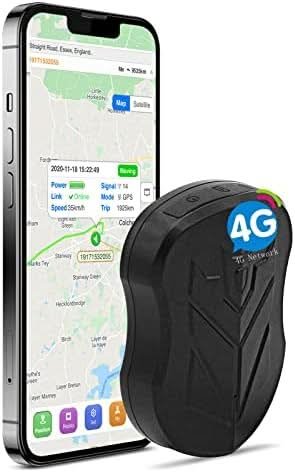
SinoTrack ST-905L 4G GPS Tracker
Real-time 4G tracking with a listen-in voice-monitor function and a waterproof magnetic housing.
CHECK ON AMAZON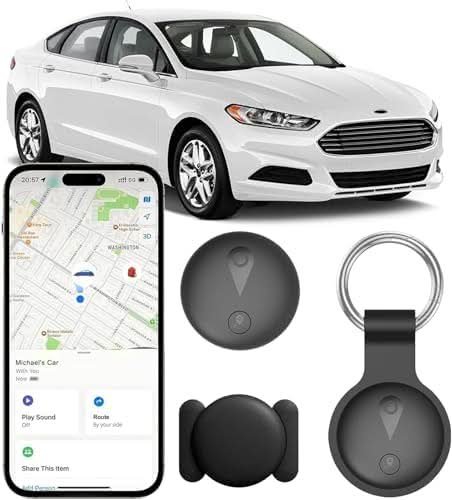
Pseul Mini Magnetic Vehicle Tracker (Apple Find My)
A magnetic, battery-powered Apple Find My tag with no subscription or monthly fee.
CHECK ON AMAZONGPS Trackers for Cars Compared
| Product | Link | Type | Best For | Key Spec |
|---|---|---|---|---|
| SinoTrack ST-905L 4G GPS Tracker | Check price | Cellular tracker | Voice monitoring | 4G real-time, listen-in function |
| Pseul Mini Magnetic Vehicle Tracker (Apple Find My) | Check price | Find My tag | No subscription | Apple Find My, no monthly fee |
| Tracki 4G LTE Magnetic GPS Tracker | Check price | Magnetic tracker | Proven reliability | 5-day real-time battery, unlimited range |
| SALIND OBD2 Plug-In 4G GPS Tracker | Check price | OBD-II tracker | Plug-in install | Continuous vehicle power, no battery |
| Apple AirTag 4-Pack | Check price | Bluetooth tag | Budget backup tracker | No subscription, Find My network |
| Awaretech Hardwired 4G GPS Tracker | Check price | Hardwired tracker | Remote engine cut-off | 4-constellation positioning, IPX5 |
1. SinoTrack ST-905L 4G GPS Tracker – Best for Voice Monitoring
This tracker runs on a 4G cellular network for real-time location reporting, with a listen-in voice-monitor function that lets an owner hear the sound around the vehicle remotely alongside its position. The listing describes a heavy-duty waterproof magnetic design with dustproof and shockproof protection.
Because tracking runs over 4G rather than Bluetooth, it can report location continuously, provided a SIM card is fitted, which is not included. The listing says it uses the maker own tracking platform for life with no platform subscription, but the SIM plan is a separate running cost.
It suits cars, motorcycles and other vehicles. Check SIM and network compatibility with Australian carriers before buying.
Pros
- Real-time 4G tracking
- Voice-monitor function
- Waterproof, dustproof and shockproof magnetic housing
- Maker platform with no platform subscription listed
Cons
- Requires a separately sourced SIM card
- Check network compatibility with Australian carriers before buying
Key specs: 4G real-time GPS tracking, voice monitor, magnetic, waterproof, SIM required (not included)
CHECK ON AMAZON2. Pseul Mini Magnetic Vehicle Tracker (Apple Find My) – Best No-Subscription Pick
This is a magnetic, battery-powered tag that clips under a vehicle with no wiring, sold as no SIM, no subscription and no monthly fee. It works with Apple Find My, so it is iPhone-only, and it is a Bluetooth tag rather than a true GPS tracker with its own cellular connection.
Like the Bluetooth tag further down this list, it relies on nearby Apple devices in the Find My network, which means it reports when something nearby can see it rather than continuously. The listing quotes up to 12 months of use from the battery and an IP68 waterproof rating, and the compact magnetic housing can be moved between vehicles.
It suits an iPhone owner who wants a low-cost way to find a parked car or a caravan, not live tracking of a moving vehicle.
Pros
- No SIM and no monthly fee
- Works with Apple Find My
- Up to 12 months of battery per the listing
- IP68 waterproof with a magnetic mount
Cons
- iPhone only, it does not work with Android
- Relies on nearby Apple devices, so no continuous live tracking
Key specs: Apple Find My, Bluetooth, magnetic mount, IP68, up to 12 months battery, no SIM or subscription
CHECK ON AMAZON3. Tracki 4G LTE Magnetic GPS Tracker – Best for Proven Reliability

This tracker runs GPS, Bluetooth and 4G LTE connectivity in a compact 40 by 45 by 18 millimetre magnetic housing that needs no wiring.
Real-time tracking covers unlimited distance rather than being geofenced to a local area, with geofence, movement and speed alerts available through the companion app, and battery life runs to around 5 days in continuous real-time mode or up to 60 days in battery-saving mode. A subscription plan is required and sold separately by Tracki rather than bundled into the unit price.
The subscription is an ongoing cost that is easy to miss when comparing the low upfront device price against the no-subscription option earlier in this guide, so it should be factored in before buying. Parents tracking a teen driver, or anyone wanting real-time tracking, are the buyers this one suits.
Pros
- Genuine real-time tracking with unlimited range
- Magnetic mount needs no wiring or installation
Cons
- Requires an ongoing subscription sold separately
- Battery life drops to around 5 days in continuous real-time mode
Key specs: GPS + Bluetooth + 4G LTE, magnetic mount, 5-day real-time battery (60-day battery-saver), geofencing, iOS/Android app
CHECK ON AMAZON4. SALIND OBD2 Plug-In 4G GPS Tracker – Best Plug-In Install
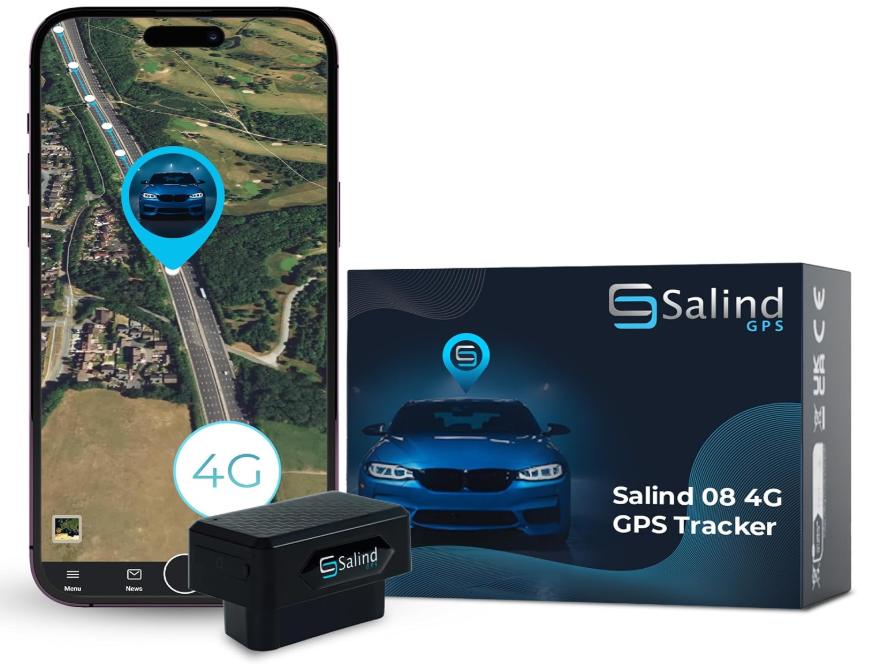
Rather than a magnetic add-on, this tracker plugs directly into a vehicle’s OBD-II diagnostic port, drawing continuous power from the car itself so there is no battery to charge or monitor. Installation is genuinely tool-free, limited to finding the OBD-II port and plugging it in.
Tracking runs over 4G with location, speed and motion alerts through a free app, and a SIM is included as part of a subscription plan starting from a low monthly rate rather than needing to be sourced separately like the tracker at the top of this guide.
OBD-II port access is not hidden, so this suits monitoring rather than covert tracking, and the subscription is mandatory from day one rather than optional. Parents, rideshare drivers or small fleet owners wanting a permanent always-on install with no battery management will find the setup here hard to beat.
Pros
- Tool-free OBD-II plug-in install with no battery to manage
- SIM included as part of the subscription, no separate sourcing needed
Cons
- Subscription is mandatory from the start
- OBD-II port access is visible, not a covert install
Key specs: OBD-II plug-in, continuous vehicle power, 4G tracking, geofencing, SIM + subscription included
CHECK ON AMAZON5. Apple AirTag 4-Pack – Best Budget Backup Tracker
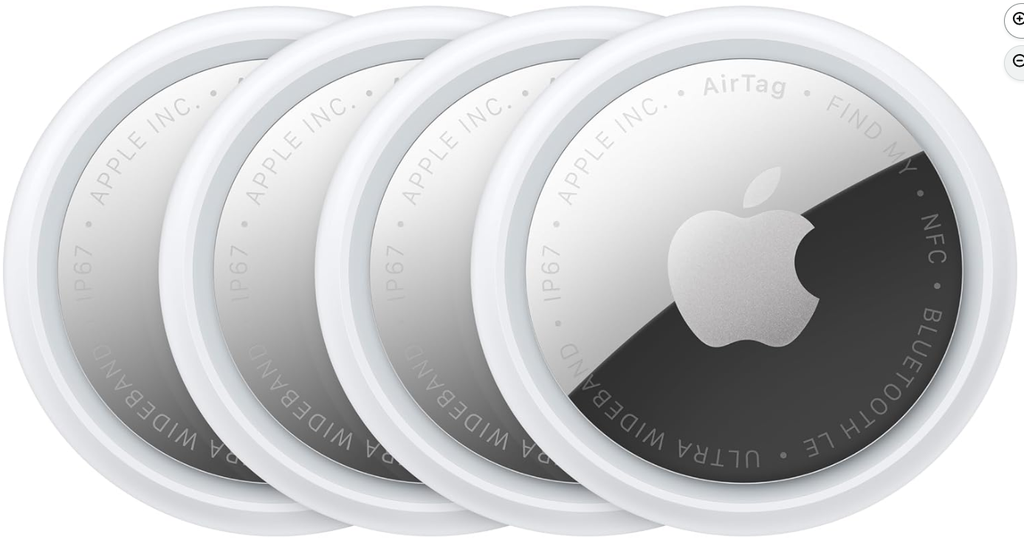
A genuinely different category of device sits at position five: a Bluetooth proximity tag rather than a cellular GPS tracker, relying on Apple’s crowdsourced Find My network of nearby iPhones to relay a position rather than its own independent connection.
In a populated area, that network is large enough to report a position almost as usefully as a live tracker, at roughly a third of the per-unit cost of a dedicated device and with no subscription at all, plus Ultra Wideband precision finding for locating the tag once nearby. In a remote or rural area with few iPhones passing by, position updates become far less reliable.
This is not a substitute for a dedicated tracker if genuine live location in remote areas or theft recovery is the goal, and full functionality depends on an iPhone rather than working equally on Android. Budget-conscious iPhone owners wanting a low-cost glovebox backup, rather than a primary security device, land on the cheapest per-unit option in this guide.
Pros
- No subscription at all, using Apple’s free Find My network
- Roughly a third of the per-unit cost of a dedicated tracker
- Ultra Wideband precision finding once nearby
Cons
- Not a live cellular tracker, position relies on nearby iPhones
- Unreliable in remote or rural areas with little iPhone traffic
Key specs: Bluetooth + Ultra Wideband, Find My network (no subscription), replaceable battery, iPhone-dependent for full features
CHECK ON AMAZON6. Awaretech Hardwired 4G GPS Tracker – Best for Remote Engine Cut-Off

The only tracker in this guide with remote engine and fuel cut-off, this hardwires permanently into a vehicle’s 12 to 24 volt power system, drawing on GPS, GLONASS, Galileo and BeiDou positioning for a more precise fix than GPS alone.
IPX5 waterproofing, ignition on/off alerts, overspeed and vibration/motion detection round out the feature set, and it ships with the power cable, relay and mounting adhesive needed for a proper install. A SIM is required but no subscription is mandatory, since the tracker works with a user-supplied SIM rather than a locked-in plan.
Installation is more involved than the magnetic or OBD options earlier in this guide, needing wiring and a relay rather than a plug-in or stick-on mount. Fleet or small business owners, or anyone with a high-value vehicle wanting professional-grade theft recovery, will not find a more serious anti-theft feature set elsewhere on this list.
Pros
- Only tracker in this guide with remote engine and fuel cut-off
- Four-constellation positioning (GPS, GLONASS, Galileo, BeiDou)
- No mandatory subscription, works with a user-supplied SIM
Cons
- Installation needs wiring and a relay, more involved than a plug-in or magnetic mount
Key specs: Hardwired 12-24V, GPS+GLONASS+Galileo+BeiDou, IPX5, remote engine/fuel cut-off, ignition + overspeed + motion alerts
CHECK ON AMAZONHow to Choose a GPS Tracker for Your Car
Decide whether you need continuous tracking or periodic check-ins. A cellular tracker with its own SIM reports position in real time whenever it has signal, while a Bluetooth or WiFi-based tracker with no subscription only checks in periodically or when a compatible phone passes nearby. Continuous tracking suits theft-recovery and active monitoring; periodic checks suit lower-stakes uses like an occasionally loaned car or trailer. For keys, bags and wallets, a Bluetooth tracker is a cheaper option than a GPS unit.
Factor the subscription into the real cost, not just the device price. A cellular tracker’s low upfront price is only part of the story if a monthly plan is required to keep it reporting, while a no-subscription device has a lower ongoing cost but usually trades away live, continuous tracking to get there. Checking whether a SIM and plan are included, required separately, or not needed at all changes the real cost picture considerably.
Hardwired trackers trade installation effort for reliability. A magnetic or OBD-II tracker installs in minutes with no tools, while a hardwired unit needs wiring and sometimes a relay but never needs a battery charged or a magnet checked for grip. The extra install effort buys a genuinely permanent, always-powered connection.
A Bluetooth tag is not a substitute for a cellular tracker in a remote area. Devices relying on a crowdsourced network, rather than their own independent connection, work well where there are plenty of nearby compatible phones and considerably less well on a rural property or a remote highway. Anyone tracking a vehicle that regularly leaves populated areas should prioritise a genuine cellular tracker over a proximity tag.
Check what alerts are actually included, not just location. Geofencing, overspeed alerts and motion or vibration detection turn a tracker from a passive map pin into an active alert system, and a remote engine or fuel cut-off feature, where available, is a meaningfully stronger theft deterrent than location data alone. Not every tracker in this guide includes all of these, so match the feature list to the actual concern, whether that is a teen driver, a fleet vehicle, or theft recovery.
A tracker only helps if someone is watching for the alert. Pairing a GPS tracker with a set of home security cameras covering where the vehicle is usually parked gives a second layer of evidence if a theft alert does trigger, rather than relying on location data alone after the fact.
Frequently Asked Questions
Do GPS trackers for cars need a SIM card?
Cellular trackers, which report position in real time, need a SIM card and usually an ongoing data plan, either included in a subscription or sourced separately depending on the device. Bluetooth or WiFi-based trackers marketed as no-subscription generally skip the SIM entirely but trade away continuous live tracking to do it.
Is it legal to put a GPS tracker on a car in Australia?
Tracking a vehicle you own, or that a minor in your care drives, is generally not an issue, but tracking someone else’s vehicle without their knowledge can breach state surveillance device laws. Checking the relevant state legislation before tracking any vehicle that is not clearly and solely yours to monitor is worth doing.
How long does a GPS tracker’s battery last?
It depends heavily on the tracking mode: continuous real-time tracking on a battery-powered magnetic tracker typically lasts around 5 days, while a battery-saving check-in mode can stretch to 60 days or more on the same hardware. Hardwired trackers avoid the question entirely by drawing continuous power from the vehicle.
What is the difference between a GPS tracker and an AirTag for a car?
A dedicated GPS tracker uses its own cellular connection to report live location anywhere with signal, while an AirTag relies on Apple’s crowdsourced network of nearby iPhones and has no independent connection of its own. An AirTag works well in populated areas at a much lower cost, but a genuine GPS tracker is more reliable for remote areas or serious theft recovery.
Can a GPS tracker cut off a car’s engine remotely?
Some premium trackers include a remote engine and fuel cut-off feature as a theft deterrent, though this is uncommon and usually reserved for hardwired, professional-grade units rather than basic magnetic or Bluetooth trackers. It is a genuinely different tier of feature from simple location tracking.
Where should a GPS tracker be placed on a car?
A magnetic tracker generally works best mounted low and out of sight, such as inside a wheel arch or under the chassis, away from metal panels that can interfere with the signal, while a hardwired or OBD-II tracker is installed at the diagnostic port or wired directly and does not need repositioning.
Verdict
The GF-11 covers occasional location checks with no ongoing cost, but anyone who actually needs live tracking should budget for a subscription: the Tracki brings the largest proven track record to that job, while the Awaretech is the one to reach for if remote engine cut-off and professional-grade theft recovery matter more than upfront price.