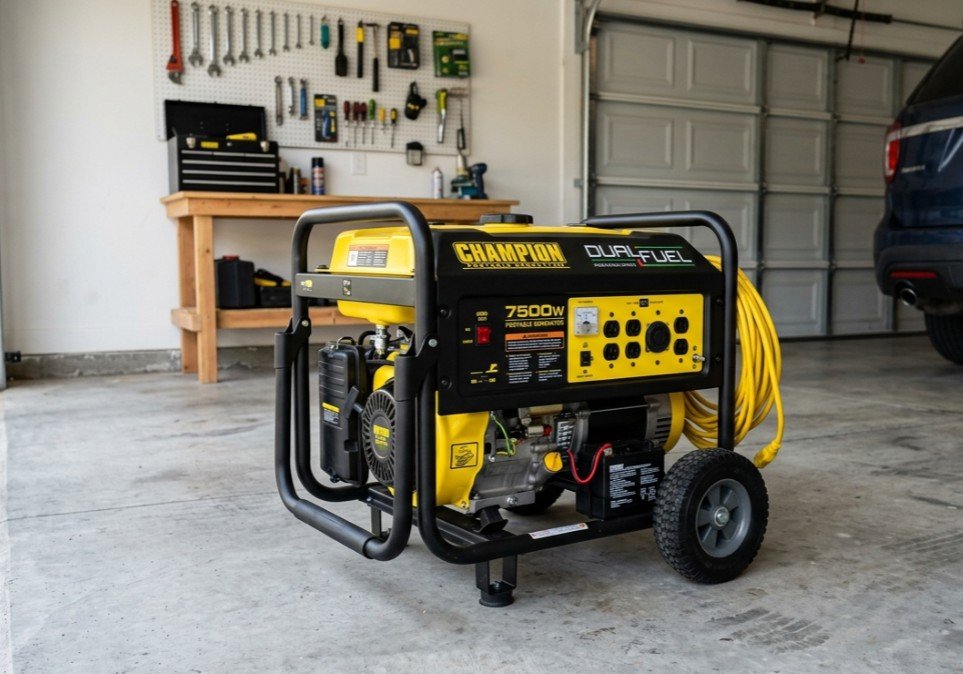
A portable generator is a petrol-powered engine driving an alternator, producing mains-voltage electricity wherever there is no grid connection or the grid has failed. The best portable generators in Australia produce a pure sine wave rather than a modified one, deliver between 2000W and 4500W, and carry enough fuel for five to seven hours at working load.
Two designs dominate, and the difference is not cosmetic. Inverter generators convert the output to DC and back, producing a clean sine wave safe for laptops, CPAP machines and anything with a circuit board, while throttling the engine to match demand. Open frame generators run the alternator at fixed speed, cost less per watt and cool better under heavy load, but run louder. Battery power stations are the silent alternative, with no fuel and no fumes, but far less sustained output.
Wattage is the figure that decides everything, and the spread here runs 2000W to 4500W. A fridge, lights and device charging sit around 1000W combined; add a microwave or power tools and 2500W is the floor; caravan air conditioning needs 3500W or more because of the startup surge, which briefly draws several times the running figure.
This guide compares five machines on rated and peak output, fuel capacity, runtime, outlet configuration and whether the design suits home backup, a caravan or a campsite.
Quick Picks
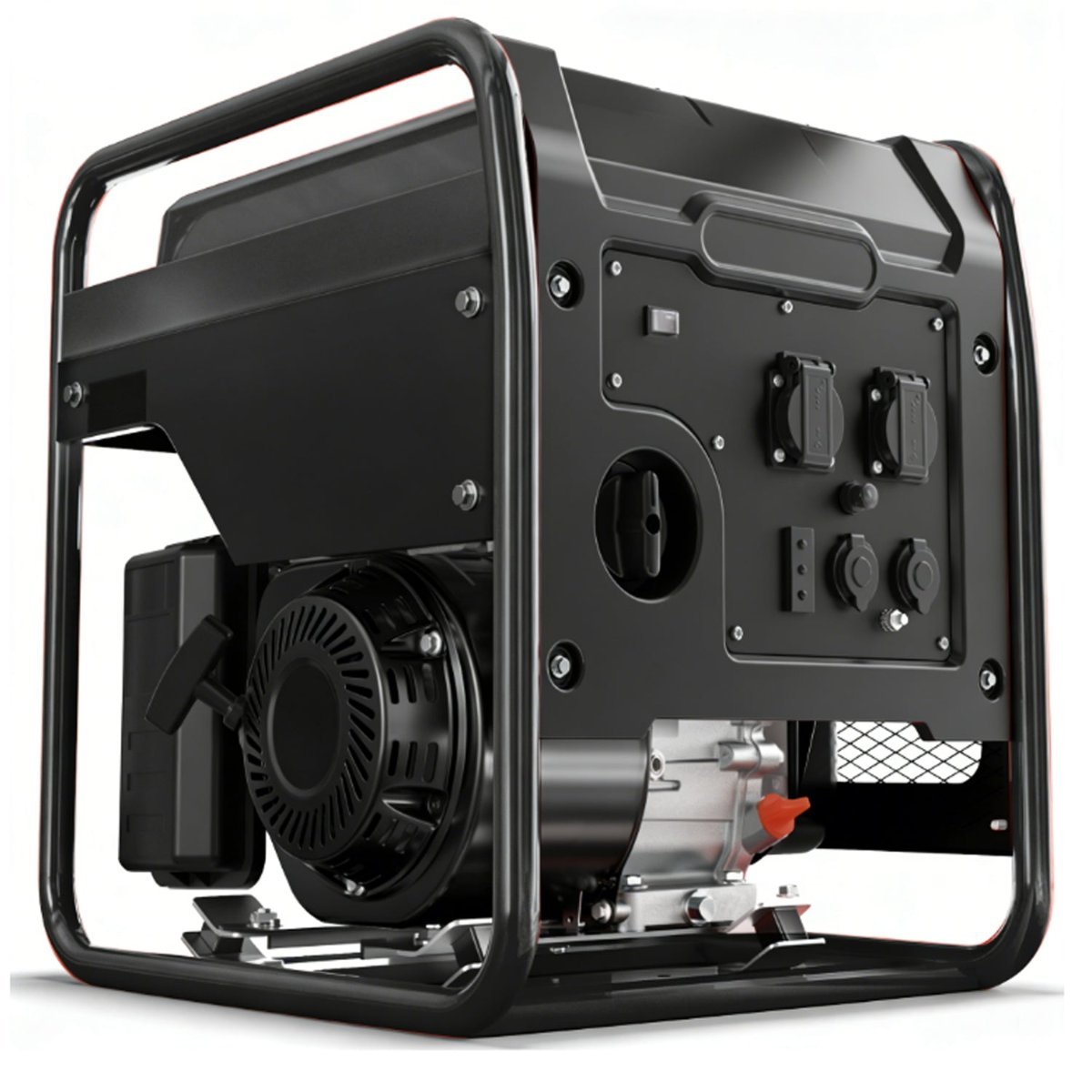
Advwin Petrol Inverter Generator
3500W of pure sine wave from a 12 litre tank, enough to run a household through a blackout.
CHECK CURRENT PRICEBest Portable Generators in Australia Compared
| Product | Link | Type | Best For | Key Spec |
|---|---|---|---|---|
| Advwin Petrol Inverter Generator | Check price | Inverter, petrol | Home backup | 3500W rated, 12L tank, 7h |
| Pulsar Ultra Light Quiet Inverter Generator | Check price | Inverter, petrol | Caravans and RVs | 4000W, RV ready |
| Genkins Open Frame Inverter Generator | Check price | Open frame inverter | Heavy loads | 4500W peak, 223cc, 30A |
| PowerSmart Portable Inverter Generator | Check price | Inverter, petrol | One-person carrying | 2500W, 79.8cc, 5.5h |
| Gentrax Max Inverter Generator | Check price | Inverter, petrol | Camping | 2000W max, 2 AC outlets |
1. Advwin Petrol Inverter Generator – Best for Home Backup
Three thousand five hundred watts rated and 3800 peak is the highest sustained output in this guide, and it comes out as a pure sine wave clean enough for laptops, televisions and anything with a circuit board in it.
The 12 litre tank is what makes it a backup unit rather than a camping one. Burning 1.71 litres an hour at rated load, it runs about seven hours flat out before refuelling, which covers an overnight outage without anyone getting up to top it up. At that output it will carry a fridge, lighting, a few power tools and the router at the same time.
Size and weight follow from the tank and the engine, so this is not the unit anyone carries to a campsite. For a home that loses power in summer storms, or a build site running tools all day, the runtime and the headroom are the whole point.
Pros
- 3500W rated and 3800W peak output
- Pure sine wave safe for electronics
- 12 litre tank gives around 7 hours at full load
- Fuel use of 1.71 litres per hour at rated power
- Suits home backup, sites, events and RV use
Cons
- Heavy compared with the camping units here
- Large tank makes it awkward to transport
Key specs: 3500W rated, 3800W peak, pure sine wave inverter, 12L fuel tank, 1.71L/h at rated power, around 7 hours runtime
CHECK CURRENT PRICE2. Pulsar Ultra Light Quiet Inverter Generator – Best for Caravans
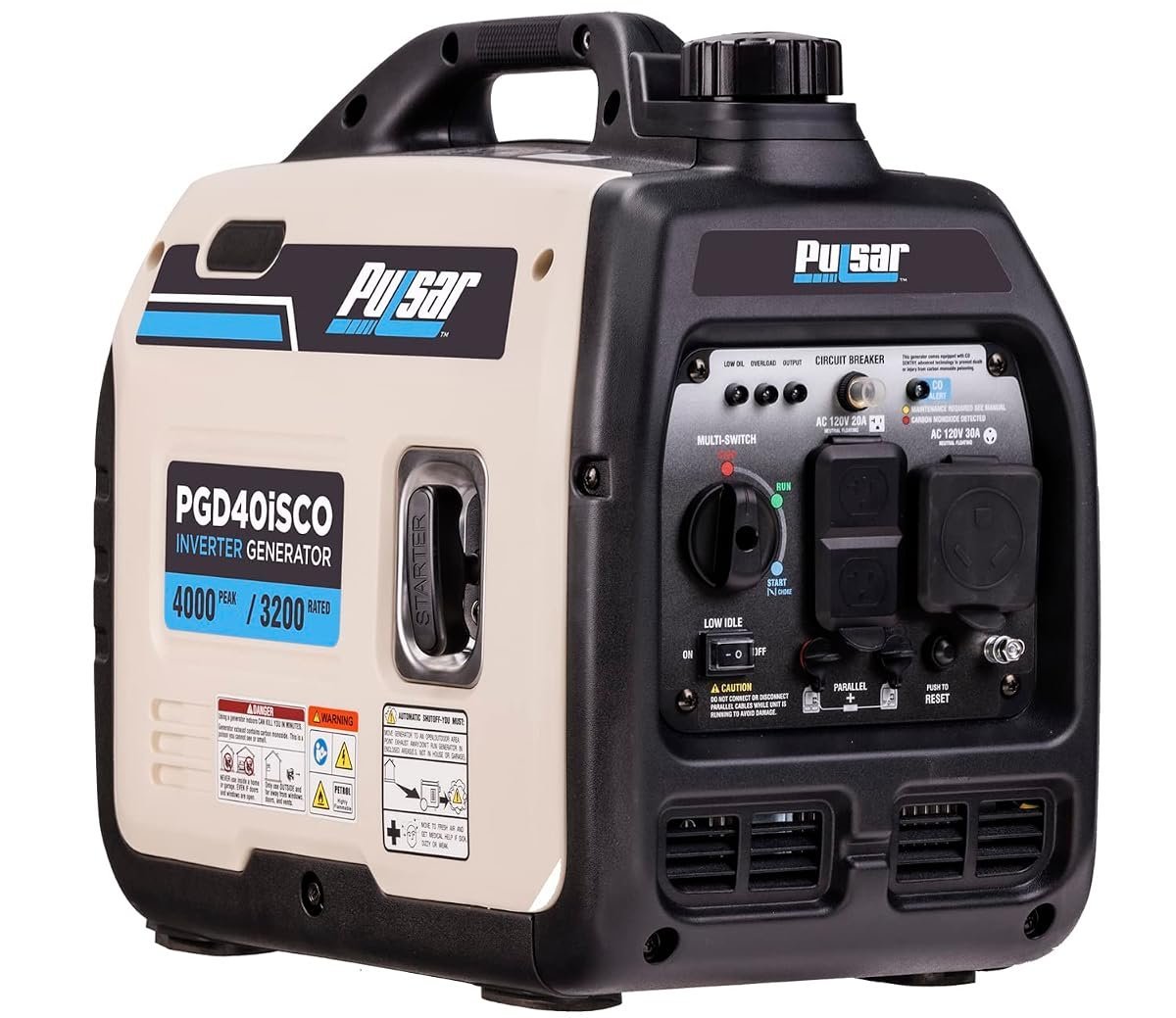
Pulsar builds this one around weight and noise rather than raw output, though 4000 watts still puts it near the top of the field. It arrives RV ready, with the outlet configuration caravans expect rather than an adaptor hunt.
Air conditioning is the reason RV owners buy a generator, and it is the load that defeats smaller units on startup surge. Four thousand watts clears that with room for a fridge alongside it. Running at half load stretches the tank to around four and a half hours, which covers an evening and a morning without refuelling mid-trip.
The compact tank that keeps the weight down also caps runtime below the Advwin above. Caravanners who move often and value a unit two people can lift into a tow vehicle will take that trade willingly.
Pros
- 4000W handles caravan air conditioning startup
- RV, AC and fridge ready out of the box
- Light for its output
- Around 4.5 hours at half load
- Quiet inverter operation
Cons
- Smaller tank than the home backup units
- Delivery lead time runs longer than local stock
Key specs: 4000W portable gas inverter generator, RV and AC ready, approximately 4.5 hours runtime at half load
CHECK ON AMAZON3. Genkins Open Frame Inverter Generator – Best for High Output
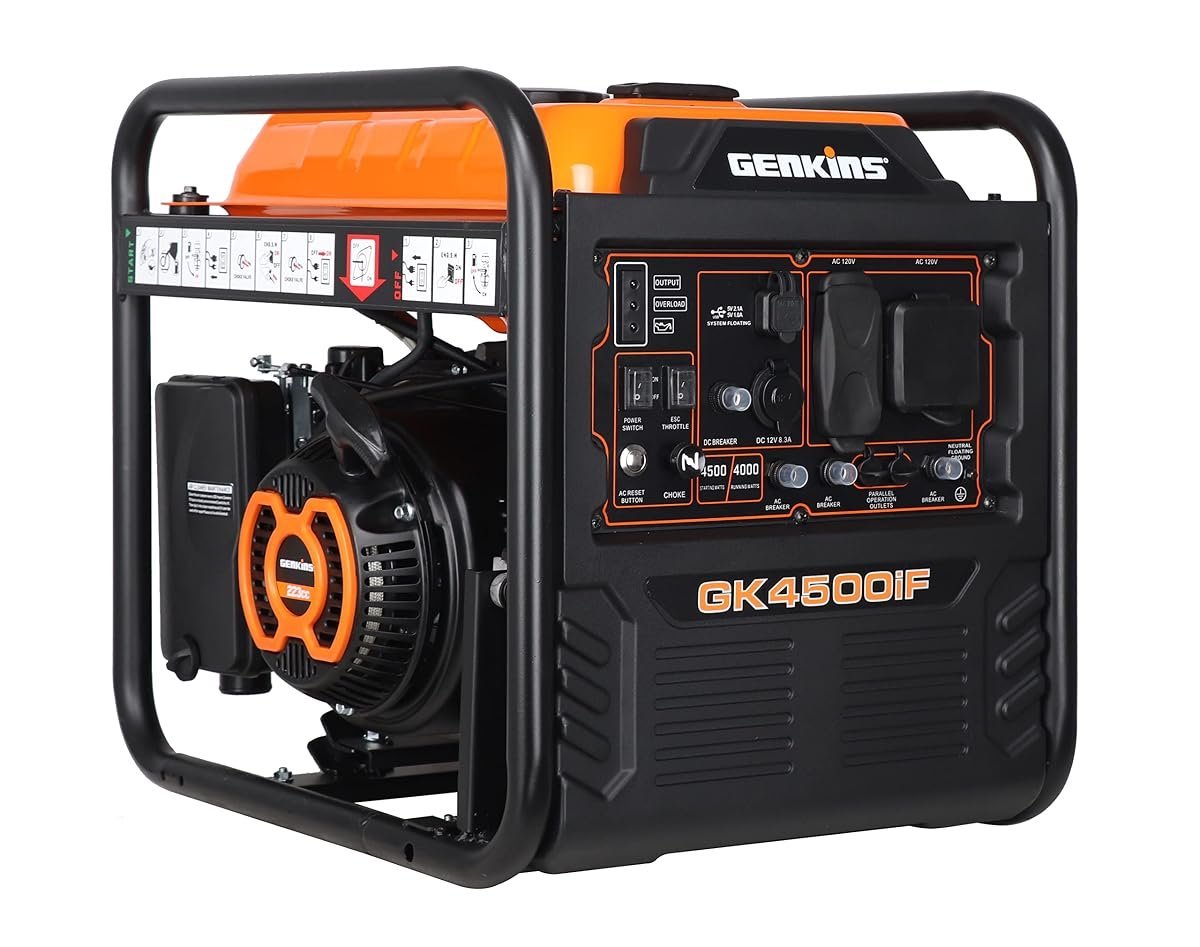
An open frame rather than an enclosed shell puts this apart from everything else here. A 223cc four-stroke overhead valve engine drives 4500 peak watts and 4000 running watts, fed through a true 30 amp outlet.
Thirty amp capability is the specification that matters for anyone plugging into a caravan or boat shore-power inlet, because a standard 15 amp outlet throttles what the generator can actually deliver. The open frame sheds heat better under sustained heavy load, which is why site and hire units are built this way, and it keeps servicing simple.
Dropping the enclosure costs noise insulation, so it runs louder than the sealed units and will not suit a quiet campground. Where the load is genuinely heavy and continuous, the cooling and the 30 amp outlet outweigh the extra decibels.
Pros
- 4500 peak and 4000 running watts
- True 30 amp outlet for shore-power inlets
- 223cc four-stroke OHV engine
- Open frame cools better under sustained load
- Pure sine wave output
Cons
- Louder than enclosed inverter units
- Long delivery lead time
Key specs: 4500W peak, 4000W running, 223cc 4-stroke OHV engine, true 30 amp outlet, pure sine wave, open frame
CHECK ON AMAZON4. PowerSmart Portable Inverter Generator – Best Lightweight Inverter
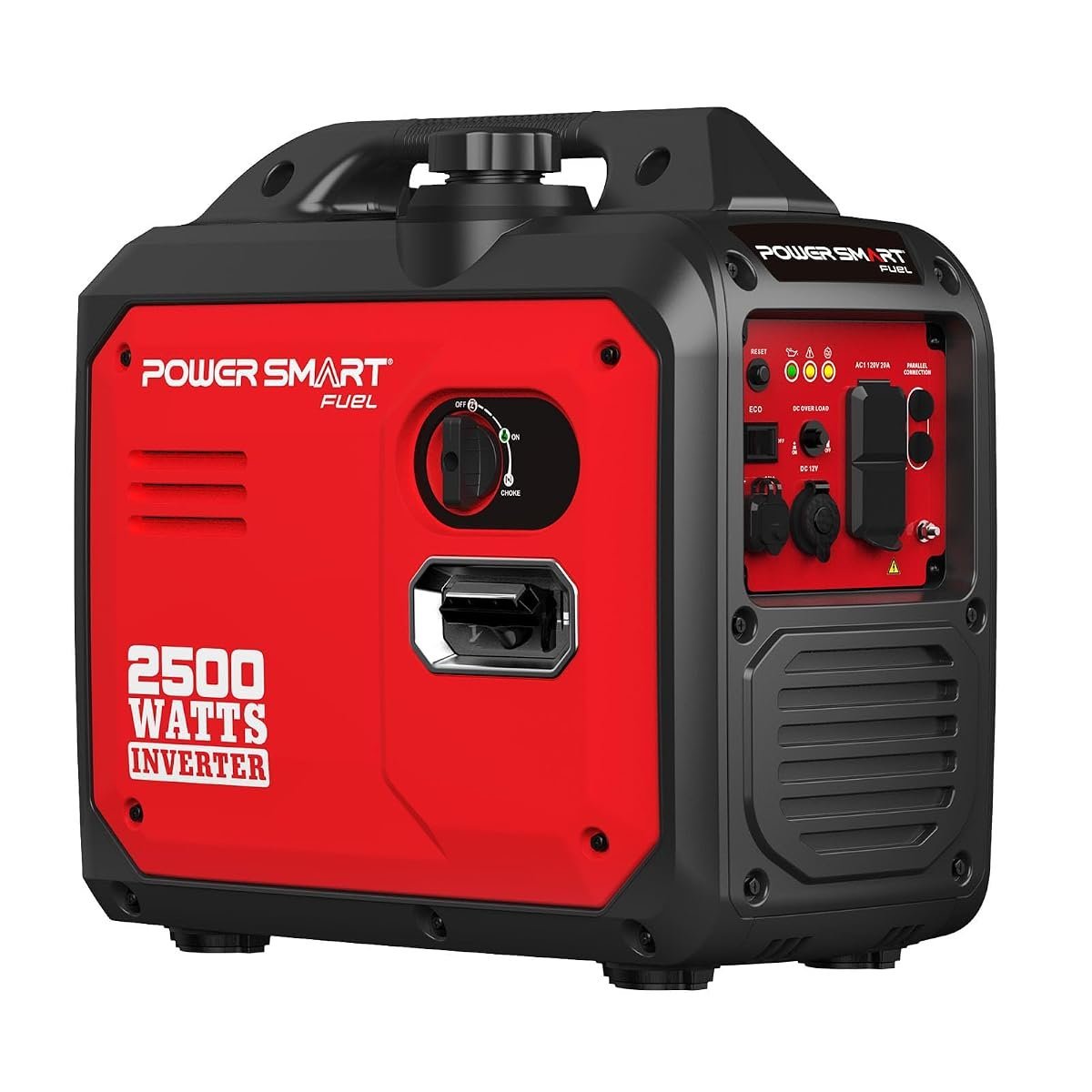
A 79.8cc engine producing 2500 watts sits at the practical minimum for running a fridge and a few appliances together, and the payoff is a unit one person can pick up and move.
Five and a half hours of runtime from a small engine comes down to efficiency rather than tank size, and it is enough to cover an evening at a campsite or a daytime outage. Twenty-five hundred watts will not start an air conditioner, but it handles a fridge, lights, phone charging and a laptop without complaint, which is what most people actually need.
Anyone planning to run power tools or air conditioning should step up to the 4000W units above. For campers and caravanners who prize a generator they can lift alone, this is the sensible size.
Pros
- Light enough for one person to carry
- 2500W covers fridge, lights and devices
- 5.5 hours of runtime
- Efficient 79.8cc engine
- Highest rated of the Amazon units here
Cons
- Will not start an air conditioner
- Not enough headroom for power tools
Key specs: 2500W portable inverter generator, 79.8cc petrol engine, approximately 5.5 hours runtime
CHECK ON AMAZON5. Gentrax Max Inverter Generator – Best for Camping
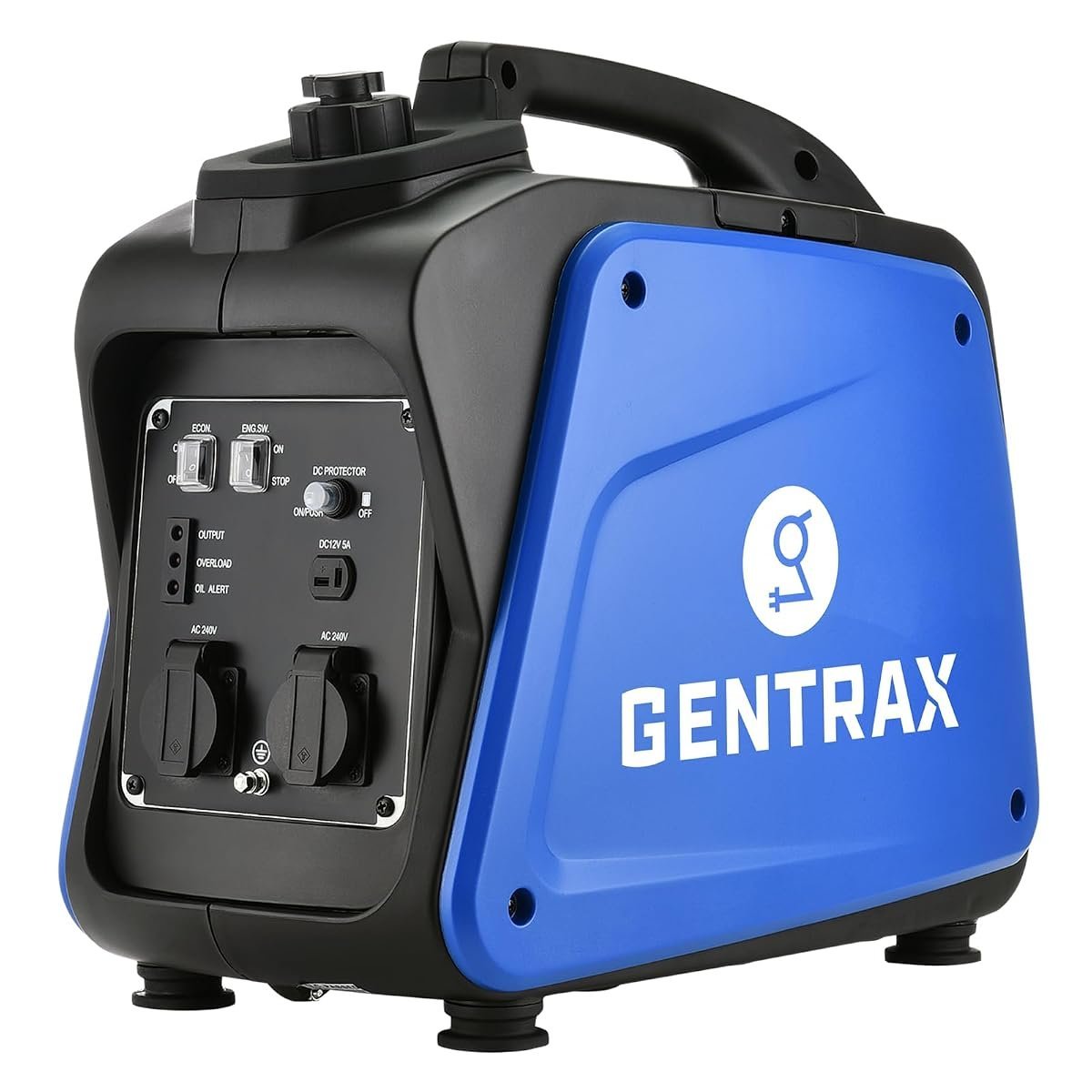
Two thousand watts maximum through two AC outlets, pure sine wave, from an Australian brand that has been selling into the camping market here for years. It is the smallest unit in this guide and the quickest to stow.
Camping loads are modest and intermittent: a 12 volt fridge topping up, lights, device charging, maybe a kettle if nothing else is running. Two thousand watts covers that, and the pure sine wave output means a CPAP machine or a laptop is safe on it. Local brand presence also means parts and service are reachable, which matters more on a petrol engine than on most purchases.
Two AC outlets and 2000 watts set a firm ceiling, and it is the wrong tool for home backup. As the unit that lives in a camper trailer and comes out a dozen weekends a year, the size and the local support are worth more than headroom nobody uses.
Pros
- Compact and light for camping
- 100 percent pure sine wave output
- Two AC outlets
- Australian brand with local parts and service
- Fastest delivery of the Amazon units here
Cons
- 2000W ceiling rules out home backup
- Only two outlets
Key specs: 2000W maximum output, 2 AC outlets, 100 percent pure sine wave, portable petrol inverter generator
CHECK ON AMAZONHow to Choose a Portable Generator
Add up your running watts, then double-check the surge. A fridge, lights and chargers total around 1000W continuous, but the fridge compressor draws two to three times that for a second or two on startup. Caravan air conditioning is the worst offender. Size the generator on the surge figure, not the running total, or it will trip under load.
Pure sine wave is not optional for electronics. A modified sine wave is cheaper to produce and will run a work light or a kettle happily, but it can damage laptops, televisions, battery chargers and medical equipment such as CPAP machines. Every unit in this guide produces a pure sine wave, and anything running sensitive gear should too.
Inverter or open frame depends on where it runs. Inverter units throttle the engine to match demand, so they are quieter and burn less fuel at part load, which suits campsites and residential streets. Open frame generators cost less per watt and shed heat better under sustained heavy load, which is why hire fleets use them.
Check the outlets against what you will plug in. A caravan or boat shore-power inlet needs a 30 amp outlet to draw full output; through a standard 15 amp socket the generator is throttled regardless of its rating. Count how many appliances run at once, because two AC outlets fills up faster than expected.
Understand the noise and where you can run it. Enclosed inverter units are the only sensible choice for a national park or a caravan park, and many have posted decibel limits. Never run any petrol generator indoors, in a garage, or near an open window, because carbon monoxide from a generator kills people in Australia every year.
Consider whether you need fuel at all. For quiet, fume-free backup that runs indoors, a portable power station does the job without petrol, though it will not sustain heavy loads the way an engine does. If the generator is for a worksite, the fuel, oil and spares need somewhere to live, which is what our tool boxes guide covers.
Frequently Asked Questions
What size portable generator do I need?
Add the running watts of everything that will run at once, then allow for startup surge, which can be two to three times the running figure. Around 2000W covers camping, 2500W handles a fridge with appliances, and 3500W or more is needed for caravan air conditioning or power tools.
What is the difference between an inverter generator and a regular one?
An inverter generator converts its output to DC and back to AC, producing a clean pure sine wave and letting the engine throttle down at light load, which cuts noise and fuel use. A conventional open frame unit runs at fixed speed, costs less per watt and is louder.
Can I run a portable generator in the rain?
No. Petrol generators are not weatherproof and water entering the alternator or outlets creates a serious shock risk. Use a proper vented generator cover or shelter that keeps rain off while allowing exhaust and heat to escape, and never run one in an enclosed space.
How long will a portable generator run on a tank?
Units here manage roughly four and a half to seven hours depending on tank size and load. Runtime figures are usually quoted at half or rated load, so expect less when running near capacity. A larger tank is the main reason home backup units are heavier.
Are portable generators safe to use at home?
Only outdoors, well away from windows, doors and vents. Carbon monoxide from a generator is odourless and kills, and running one in a garage or under a patio is a common fatal mistake. Never connect a generator to house wiring without a licensed electrician installing a transfer switch.
Can I take a generator to a campground?
Many Australian campgrounds and national parks restrict or ban generators, and those that allow them usually set a decibel limit and quiet hours. An enclosed inverter unit is the only realistic option, and it is worth checking the specific park rules before travelling.
Verdict
For a house that loses power in storm season, the Advwin is the one to buy, because 3500W and a seven hour tank cover an overnight outage without anyone getting up to refuel. Caravanners needing air conditioning should take the Pulsar instead, where 4000W clears the startup surge in a unit two people can lift. For weekends in a camper trailer, the Gentrax is the right size and the only one here with Australian parts and service behind it.