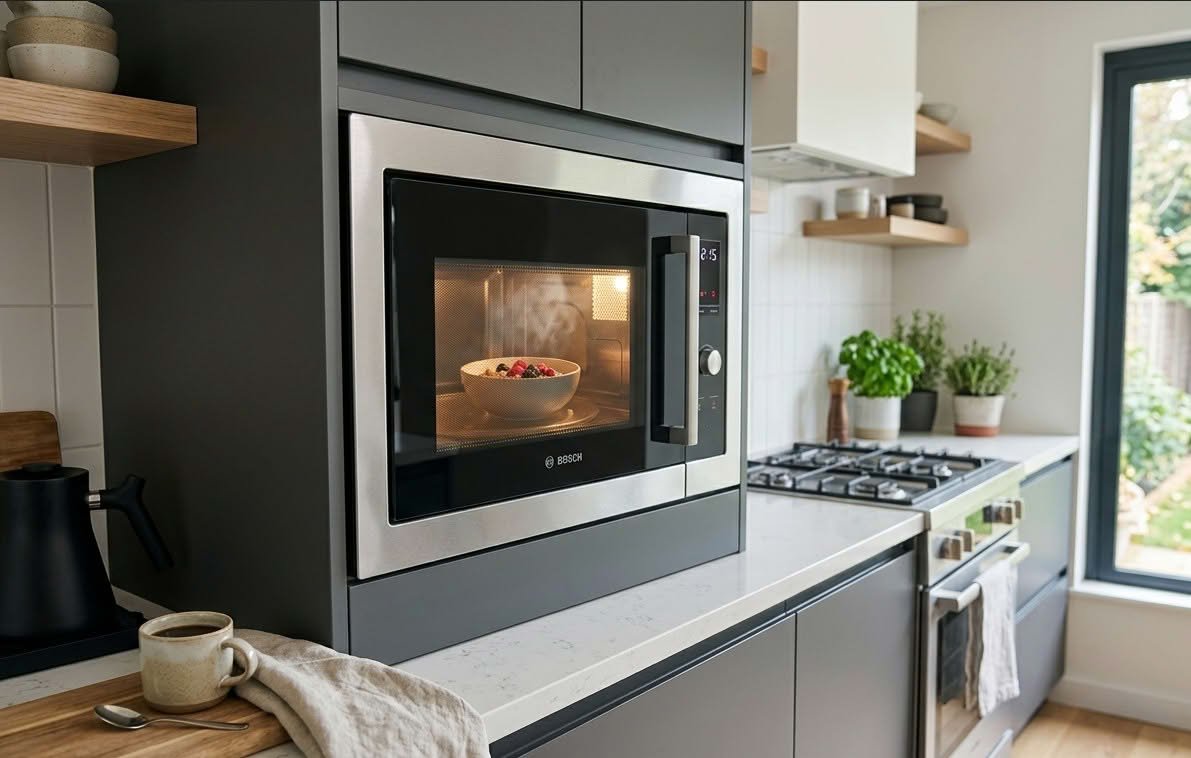
Most people shopping for a microwave check the litre capacity and stop there – but two microwaves with an almost identical cavity size can defrost a chicken breast unevenly enough that one side starts cooking before the other side has thawed, a difference CHOICE has flagged directly in its own kitchen testing. A microwave oven is a countertop or built-in appliance that uses electromagnetic radiation at a fixed 2450MHz frequency to agitate water molecules inside food, generating heat from the inside out instead of browning the surface the way a conventional oven does.
Three broad types cover almost everything sold in Australia. Solo microwaves just heat, defrost and reheat, with mechanical dial or digital button controls. Grill and convection microwaves add a browning element or a fan-forced oven mode, letting one appliance crisp a chicken skin or bake a small cake as well as reheat leftovers. Combi ovens push further again, folding in true air-fry function alongside the microwave and convection modes. Cavity design splits further into turntable models, where a rotating glass plate spins food under the emitter, and flatbed models, which use a stationary ceramic or glass base and a different emitter layout to fit larger or oddly shaped dishes without the turntable clipping the door.
The spec worth checking before wattage is whether the unit uses inverter technology. A standard microwave hits 100% power then cuts out entirely to average out a lower setting, which is why defrosted meat often ends up part-cooked at the edges; an inverter model holds a properly lower, steady power level the whole time, which is the difference CHOICE’s defrost tests are built to expose. Wattage still matters for raw reheating speed – the ten microwaves on this list run from 700W compact units up to a 1200W family-size model – but an inverter unit at 900W will often out-perform a non-inverter unit rated higher.
This guide runs from a compact 20L solo unit through a 42L air-fry combi and a stainless steel inverter, then across inverter and flatbed picks from LG, Panasonic and Sharp, a family-size Russell Hobbs, a Breville combi, a retro-styled countertop pick and a compact 20L Midea. Anyone weighing a combi microwave against a dedicated appliance instead should also check our best air fryers guide before deciding which one actually earns its bench space.
Quick Picks

Panasonic 20L Compact Microwave Oven
An 800W, 20L microwave with touch controls and an Australian plug and warranty, built for small benches.
CHECK ON AMAZON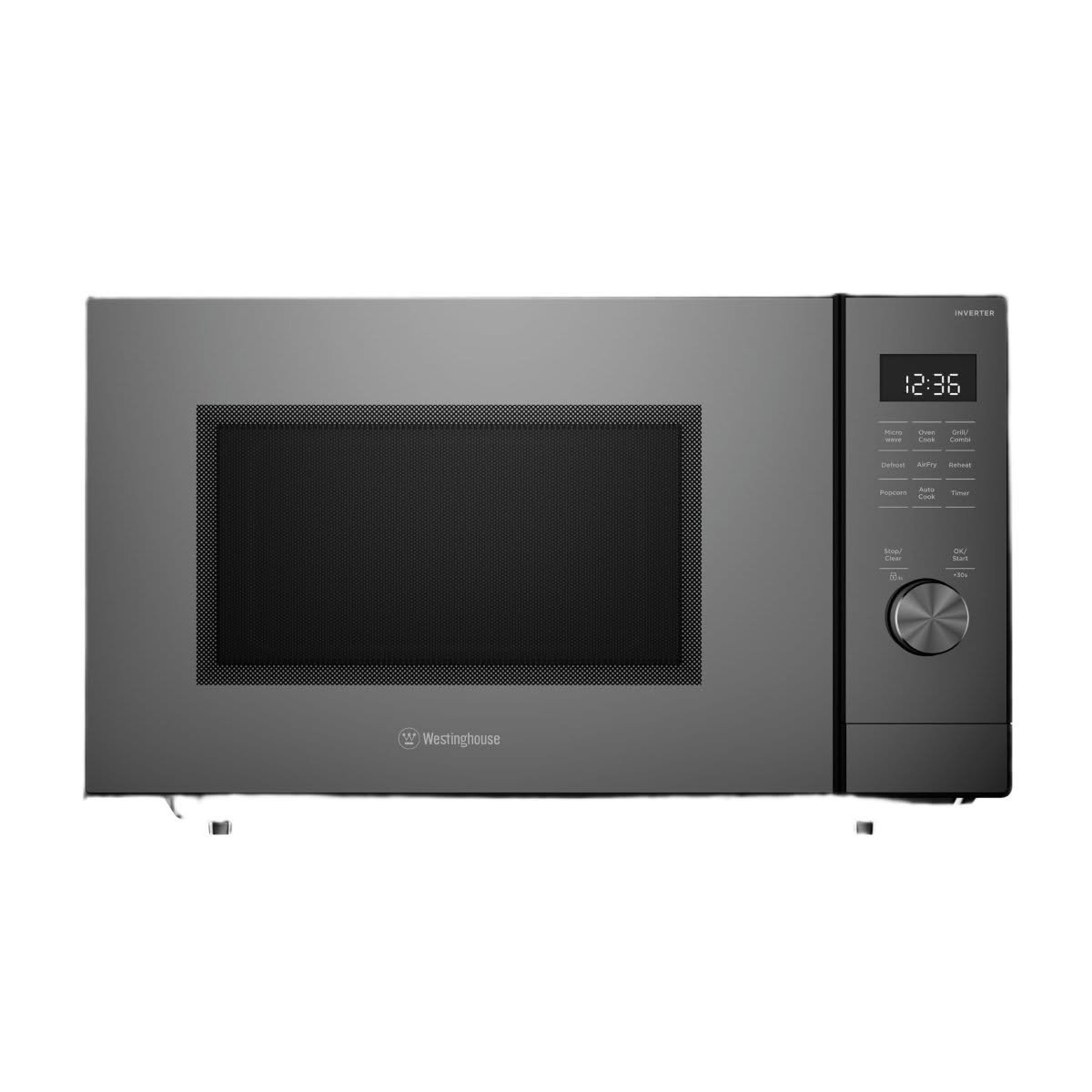
Westinghouse 42L Air Fry Combi Microwave
A 42L cavity with fan-forced, grill, microwave and AirFry modes, plus inverter technology.
CHECK ON AMAZON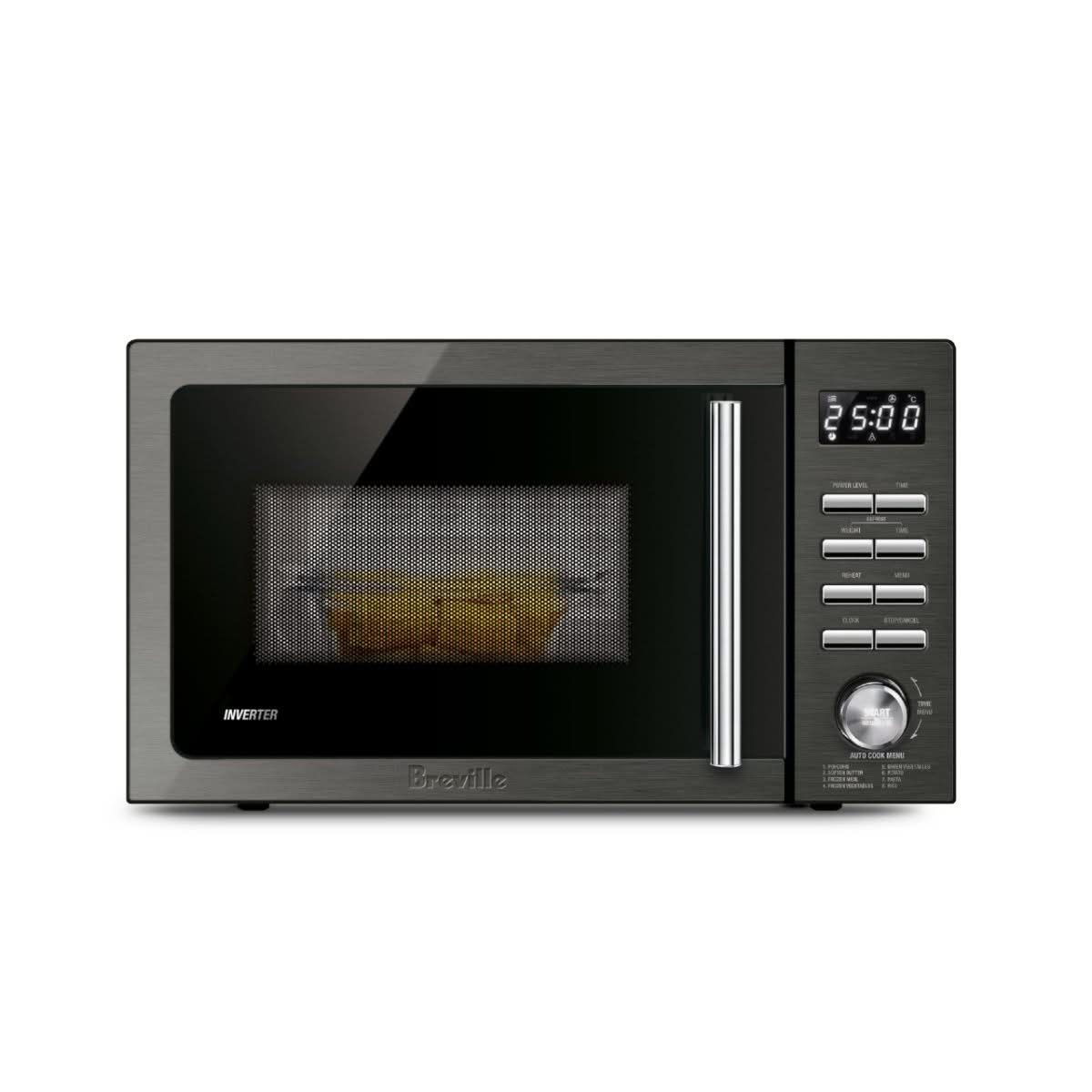
Breville Easy Wave 25L Inverter Microwave
A stainless steel 25L inverter microwave with 10 power levels and a press-the-dial instant start.
CHECK ON AMAZONBest Microwaves Australia Compared
| Product | Link | Type | Best For | Key Spec |
|---|---|---|---|---|
| Panasonic 20L Compact Microwave Oven | Check price | Solo, turntable | Compact everyday use | 800W, 20L |
| Westinghouse 42L Air Fry Combi Microwave | Check price | Combi, turntable | All-in-one combo cooking | 42L, 1100W, air fry + convection + grill |
| Breville Easy Wave 25L Inverter Microwave | Check price | Solo, inverter, turntable | Stainless steel finish | 900W, 25L, 10 power levels |
| LG NeoChef 25L Smart Inverter Microwave | Check price | Solo, inverter, turntable | Everyday inverter reheating | 1200W, 25L |
| Panasonic 27L Flatbed Inverter Microwave | Check price | Solo, inverter, flatbed | Larger or odd-shaped dishes | 1000W, 27L |
| Sharp R350EW 34L Inverter Microwave | Check price | Solo, inverter, turntable | Family-size everyday use | 1200W sensor, 34L |
| Russell Hobbs Family Size 34L Microwave | Check price | Solo, turntable | Value family-size pick | 1100W, 34L |
| Breville Combi Wave 3-in-1 | Check price | Combi, air fry, inverter | Premium all-in-one cooking | Air fry + convection + inverter microwave |
| Total Chef Retro 25L Microwave | Check price | Solo, turntable | Retro kitchen styling | 900W, 25L |
| Midea 20L Microwave Oven | Check price | Solo, turntable | Budget compact pick | 700W, 20L |
How We Picked
We researched this category online across a range of Australian and international retailers, compared specifications and current stock, and cross-checked standout picks against CHOICE’s microwave testing to see whether the popular opinion held up. About twenty-five listings were surveyed before narrowing to these ten, filtered for AU delivery, in-stock status, a complete published specification, and a mix of solo, grill and combi types instead of ten variations on the same basic reheater.
1. Panasonic 20L Compact Microwave Oven – Best Compact Pick
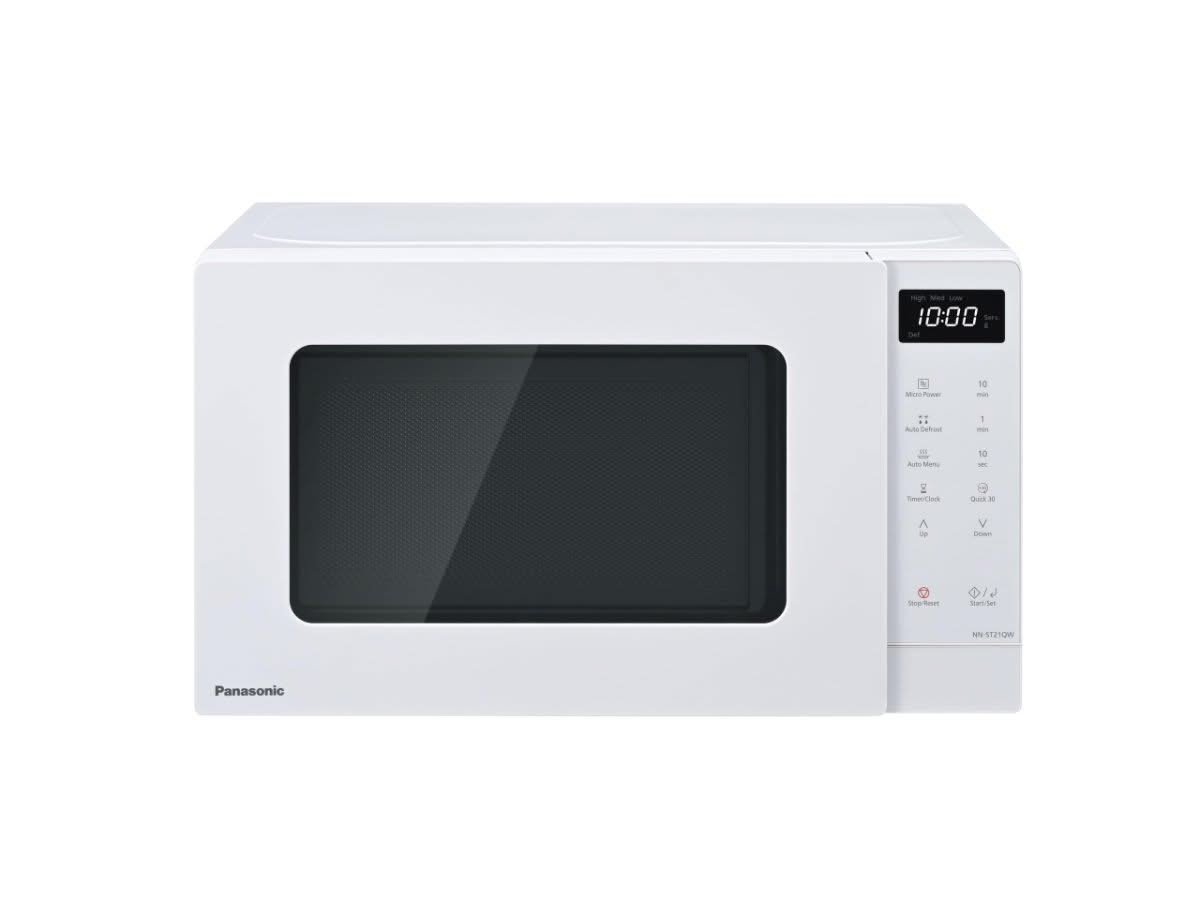
A 255mm turntable decides whether a dinner plate fits, and this 20L unit takes a standard plate flat. That makes it the sensible default for a share house, a granny flat or a bench already crowded by a kettle and a toaster, at about 44cm wide and 32cm deep.
The 800W motor is a step up on the 700W Midea at the other end of this list, and the controls are simple: touch buttons, five power levels, eight auto menu categories and an Add Time key. The Quick 30 button adds 30 seconds a tap up to five minutes, which is how most people end up using a microwave anyway. The listing does not mention inverter technology, so treat defrosting as power cycling and check a chicken breast halfway, which is where the LG NeoChef earns its extra.
The listing also states an Australian plug and an Australian manufacturer’s warranty. That matters more than it sounds: a grey-import microwave that fails can mean posting an 11kg box overseas. No frills, no grill, no fuss.
Pros
- 800W in a compact 20L footprint
- Touch controls with 8 auto menu categories and auto reheat
- Quick 30 and Add Time buttons for fast reheating
- Australian plug and Australian manufacturer’s warranty
Cons
- No inverter technology listed, so large cuts defrost less evenly
- No grill or convection function, so it only reheats and defrosts
- At 11kg it needs a firm shelf, not a flimsy microwave rack
Key specs: 20L; 800W; touch control; 5 power levels; 8 auto menus; 255mm turntable; ceramic enamel interior; Australian plug and warranty
CHECK ON AMAZON2. Westinghouse 42L Air Fry Combi Microwave – Best All-in-One Combo
At roughly 55cm wide and 51cm deep this is a big box, so measure the gap between the kettle and the wall before ordering. What the space buys is a 42L cavity with fan-forced, grill and microwave modes plus an AirFry setting, all with inverter technology behind them.
The listing’s own examples are the useful ones: roast a chicken on the fan-forced setting, grill cheese toasties, or defrost and reheat the traditional way. A knob and a touch panel share the controls, and the quick start key adds 30 seconds a press. In a Brisbane January, finishing a Sunday chook in a combi beats heating the whole kitchen with a full-size oven.
Against the Breville Combi Wave further down, this is the simpler machine with the bigger cavity, and the listing gives one 1100W microwave figure with no separate ratings for the grill or air-fry modes, so cooking times take some trial and error. Anyone who only reheats leftovers is paying for hardware that stays idle.
Pros
- 42L cavity with fan-forced, grill and microwave modes
- AirFry setting and inverter technology in one unit
- Knob and touch controls with a 30-second quick start
- Can stand in for a small oven in a rental kitchen
Cons
- It is a big footprint at about 55cm wide, so it will not squeeze onto a narrow bench
- No separate wattage for the grill or air-fry modes, so timings are guesswork at first
- Listing quotes a 12-month warranty only
Key specs: 42L; 1100W; fan-forced, grill and microwave; AirFry; inverter; knob and touch control; 50.7 x 55.3 x 33.1cm; 12-month warranty
CHECK ON AMAZON3. Breville Easy Wave 25L Inverter Microwave – Best Stainless Steel Pick
This is the second 25L inverter on the list, so the admission first: the LG NeoChef has the stronger motor at 1200W against this Breville’s 900W. What the Breville adds is a stainless steel cavity as well as a stainless exterior, which wipes clean without the staining a painted interior picks up after a few months of spaghetti reheats.
Inverter technology holds a steady lower power instead of cycling, and the listing counts ten power levels plus defrost by weight or time. Eight auto menus cover popcorn, soften butter, frozen meal, frozen vegetables, green vegetables, potato, pasta and rice, and pressing the dial starts cooking instantly, adding 30 seconds with each further push.
The black stainless finish suits a kitchen that already has a stainless fridge or dishwasher on show. Dial starts are fast and also easy to overshoot with a hand full of shopping, and the controls are buttons with no touch panel to wipe down.
Pros
- Stainless steel finish inside and out
- Inverter technology for even defrosting and reheating
- 10 power levels, 8 auto menus and defrost by weight or time
- Press-the-dial instant start
Cons
- 900W is slower than the 1200W LG for a large plate
- Each press of the dial adds 30 seconds, which is easy to overshoot
- The black stainless exterior shows fingerprints
Key specs: 25L; 900W; inverter; 10 power levels; 8 auto menus; stainless steel interior and exterior; button controls
CHECK ON AMAZON4. LG NeoChef 25L Smart Inverter Microwave – Best Everyday Inverter Pick
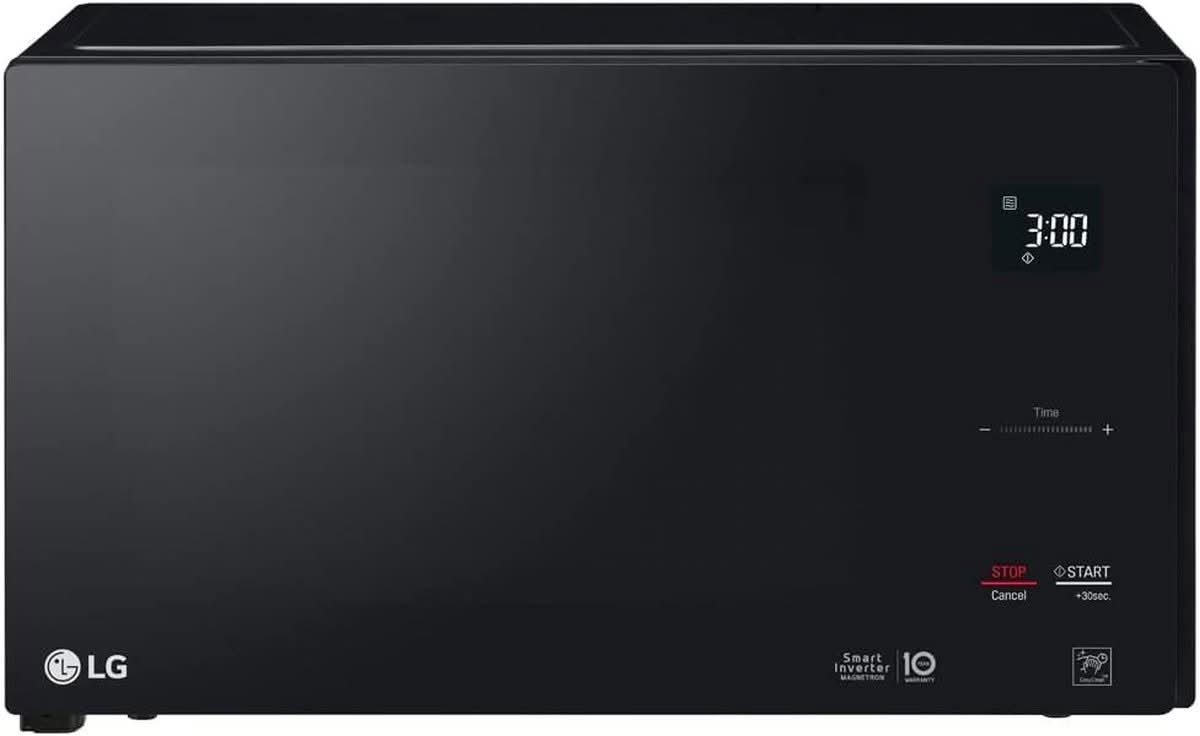
LG’s Smart Inverter is the technology this guide’s intro talks about in practice: instead of cycling full power on and off, it holds a properly lower wattage steady, which is why a bowl of soup comes out evenly warm instead of scalding in the middle and lukewarm at the edges.
At 1200W it’s one of the more powerful units in this lineup despite the mid-size 25L cavity, so full meals reheat faster than the compact picks above without needing the bulk of the family-size units further down. The anti-bacterial EasyClean interior coating is a real point of difference – it’s a coating baked into the cavity finish, not a spray-on add-on, and it wipes down noticeably easier than a bare enamel interior after a spill.
Tempered glass door and touch controls give it a cleaner look on the bench than the mechanical-dial picks in this guide, though that’s a straightforward do-you-prefer-touch-or-dial call instead of a functional advantage either way.
Pros
- True inverter technology for even heating, not just a marketing label
- 1200W output punches above its 25L size class
- EasyClean coating baked into the cavity, not sprayed on
Cons
- Touch controls are harder to repair than a mechanical dial if they ever fail
Key specs: 25L capacity | 1200W | LG Smart Inverter | Touch controls, tempered glass door
CHECK ON AMAZON5. Panasonic 27L Flatbed Inverter Microwave – Best Flatbed Design

Every other microwave in this guide spins food on a turntable. This one doesn’t – a flatbed design replaces the rotating glass plate with a stationary base and a different emitter arrangement, which Panasonic states gives roughly 31 percent more usable cooking area than a turntable model of the same external footprint. In practice that means a long oval casserole dish or two mugs side by side fit properly instead of clipping the door or a turntable’s edge.
Real Inverter technology carries over from the LG above, and Panasonic backs it with an Australian plug and an Australian manufacturer’s warranty instead of a grey-import unit reflashed for the local market – worth checking on any imported appliance brand, since a warranty claim on an actual grey import can mean shipping the unit overseas. Seventeen auto menus include auto reheat, and a separate trim kit is sold if it ever needs a built-in surround down the track.
The frameless, linear design reads as more modern than most of the picks here, and the integrated door-open button is a small detail that avoids a protruding handle catching a sleeve on a narrow bench.
Pros
- Flatbed design fits larger or awkward-shaped dishes without a turntable clipping the door
- Proper Australian-market unit with local plug and warranty
- 31 percent more usable cooking area than a comparable turntable model
Cons
- No turntable means round dishes can sit slightly off-centre under the emitter
- Solo (non-combi) microwave with no grill or air-fry function
Key specs: 27L capacity | 1000W | Panasonic Inverter, flatbed | 17 auto menus, Australian warranty
CHECK ON AMAZON6. Sharp R350EW 34L Inverter Microwave – Best Family-Size Pick

34L is enough cavity to fit a full casserole dish or a large dinner plate without wedging it in at an angle. Smart Sensor Technology reads steam and humidity inside the cavity to adjust cooking time automatically, so a bowl of leftovers doesn’t need a guessed time punched in by hand.
Sharp’s own Smart Inverter technology is the same even-heating approach as the LG and Panasonic above, applied here to the biggest cavity of the three. Twenty-three auto menus and a Favourite Key that stores up to three go-to presets suit a household that reheats the same handful of meals on repeat instead of something different every night.
A family of four or five running the microwave several times a day is the household that gets the most from the extra capacity here; a single person or couple is better served by the smaller LG above, since a large cavity mostly sits empty.
Pros
- Smart Sensor adjusts cooking time automatically, no guessed timings
- 34L cavity fits a full casserole dish
Cons
- Larger footprint takes up more bench space than the compact picks above
- Sensor-based auto cooking can misjudge an unusually shaped or covered dish
Key specs: 34L capacity | 1200W sensor | Sharp Smart Inverter | 23 auto menus, child lock
CHECK ON AMAZON7. Russell Hobbs Family Size 34L Microwave – Best Family-Size Pick

Same 34L class as the Sharp above, – the trade-off is that this one runs on straightforward power-level cycling instead of true inverter technology, so defrosting a large or unevenly shaped cut of meat needs more manual checking partway through than the Sharp or LG do automatically.
Ten power levels and six auto-cook functions cover popcorn, potato, frozen veg, beverages and a full dinner plate, and the stainless steel finish with an LED display that doubles as a kitchen clock gives it a polished look. It fits a 30cm dinner plate, the benchmark most family-size buyers actually care about.
The honest pitch here: near-identical usable capacity to the Sharp above, with slower, less even reheating as the trade-off.
Pros
- 34L cavity fits a full 30cm dinner plate
- Stainless finish and clock-display LED give a polished look
Cons
- No inverter technology, so defrosting needs more manual checking than the Sharp or LG above
- 1100W draws more power than the wattage-for-wattage inverter units for a comparable reheating result
Key specs: 34L capacity | 1100W | 10 power levels, 6 auto cook menus | LED display, stainless steel finish
CHECK ON AMAZON8. Breville Combi Wave 3-in-1 – Best 3-in-1 Combi
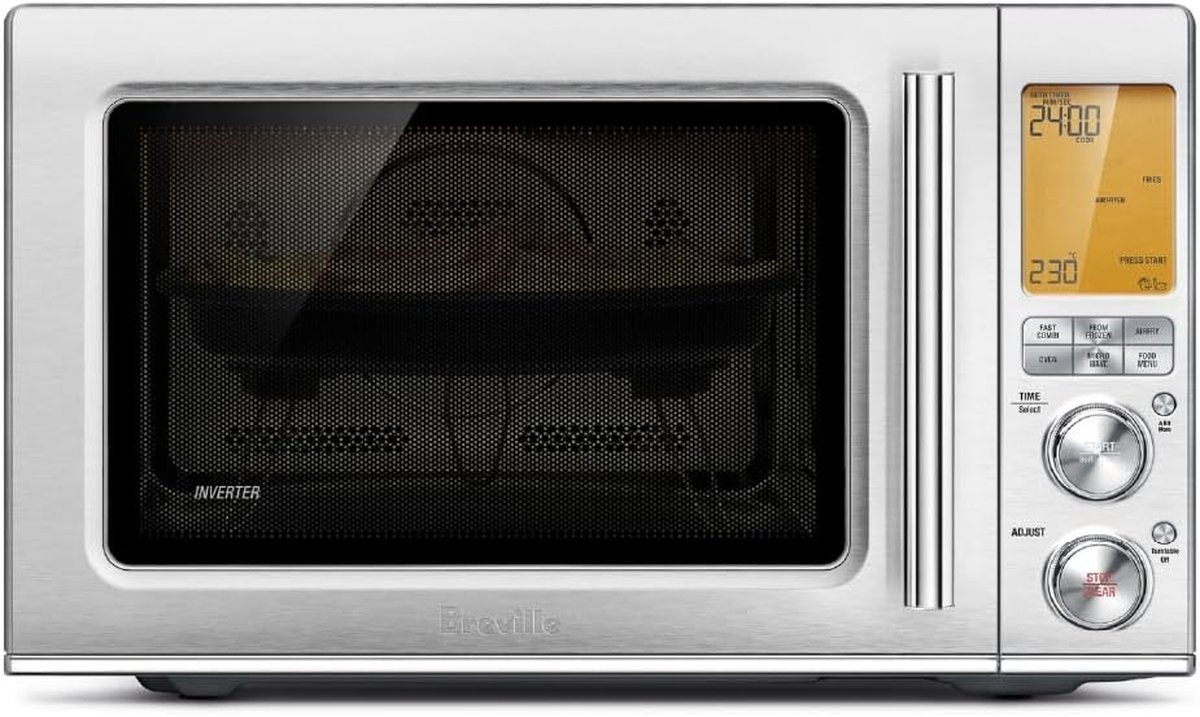
The most feature-rich microwave in this list, and the specs back that up. Air fryer, convection oven and inverter microwave run as three properly separate cooking modes in one cavity, with Breville’s Element IQ system steering power to wherever the current mode needs it instead of running one generic heat profile for everything.
The Power Smoothing inverter drops the old on-off cycling entirely, and Fast Combi mode blends convection, grill and microwave together to cut a normal oven’s cooking time meaningfully – actually useful on a weeknight instead of a gimmick reserved for weekend cooking. Nineteen smart presets handle the routine stuff, and a soft-close door plus a mute button take the beeping-and-clanging edge off that some combi units are known for.
This is the pick for a household that would otherwise own a separate air fryer, a small convection oven and a microwave and is trying to reclaim three appliances’ worth of bench space back into one. A household that just reheats leftovers most nights is better served by any of the solo inverter picks above, which are simpler to use.
Pros
- Three properly separate cooking modes (air fry, convection, microwave), not one mode with different names
- Element IQ steers power to where each mode actually needs it
- Soft-close door and mute button cut everyday noise
Cons
- More appliance than a household that only reheats needs
- Overkill for a household that only reheats and rarely cooks from scratch
Key specs: Air fry, convection oven, inverter microwave | Element IQ power system | 19 smart presets | Soft-close door, child lock
CHECK ON AMAZON9. Total Chef Retro 25L Microwave – Best Retro Style
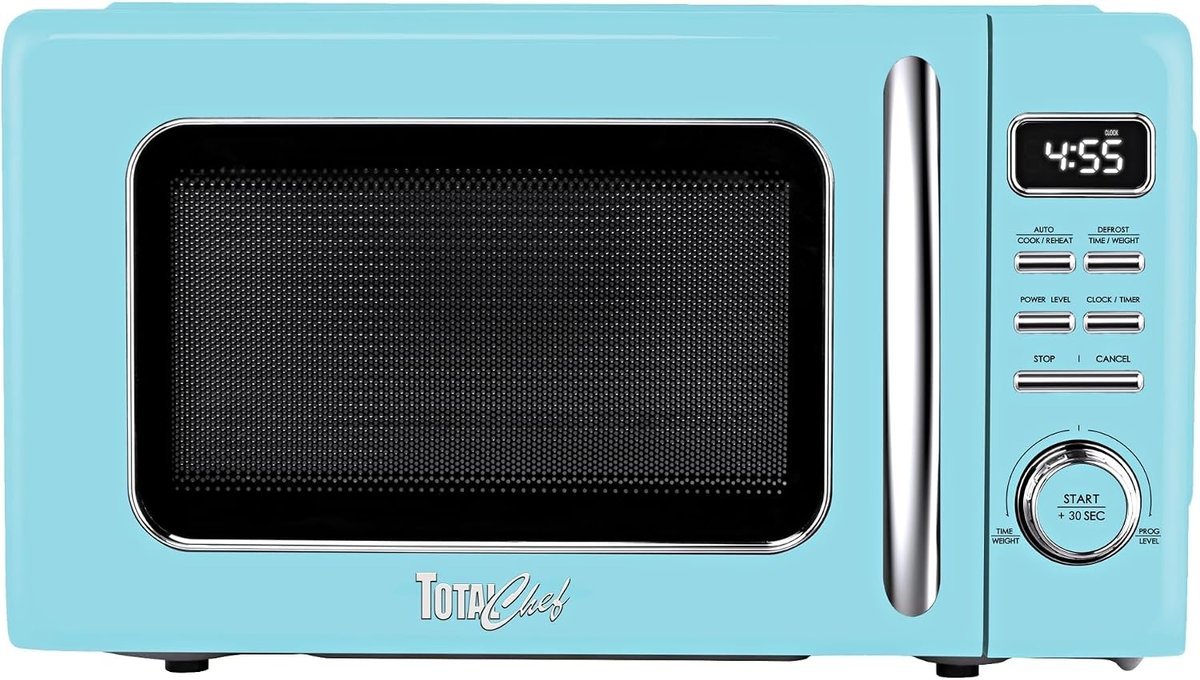
Every other microwave on this list disappears into a kitchen; this one is designed to be looked at. The rounded retro body and chrome-accented details suit a kitchen that’s already leaning into a mid-century or diner aesthetic, somewhere none of the flatbed or stainless-steel picks above would look at home.
Seven auto-cook programs and ten reheat presets cover the daily basics competently, and a dishwasher-safe glass turntable and roller ring keep cleanup simple despite the more elaborate exterior styling. At 900W it sits in the middle of this lineup’s power range – enough for real everyday use without pretending to compete with the 1200W family-size units.
It is a newer, more style-led listing than the established mainstream models, so the look is the reason to buy it. Worth checking the listing photos before ordering to confirm the exact finish matches expectations, since retro-style appliances can vary noticeably between what a listing photo implies and what actually turns up.
Pros
- Real styling difference from every other pick on this list
- Dishwasher-safe turntable and roller ring
- 900W covers everyday reheating and defrosting competently
Cons
- No grill or convection function despite the sleek styling
Key specs: 25L capacity | 900W | 7 auto cook, 10 reheat presets | Retro-styled body, glass turntable
CHECK ON AMAZON10. Midea 20L Microwave Oven – Best Quiet Compact Pick

Mechanically it does the same core job as the Panasonic compact pick at the top of this list: a 20L cavity with digital controls, at 700W against the Panasonic’s 800W. Eleven power levels is finer control than the Panasonic compact pick’s five, though the Panasonic has the extra auto menu (eight against seven) and the stronger motor.
The listing is new, so treat this as an option to keep an eye on instead of the first choice if reliability history matters – newer listings deserve a bit more caution than an established one. Quiet operation and a black easy-clean interior are worth having in any kitchen.
At 6.4kg it’s light and easy to relocate between a main kitchen and a granny flat or a share house room without needing help, and the compact footprint suits a share kitchen where bench space is properly contested.
Pros
- More auto menu presets than the compact pick at the top of this list
- Light and easy to relocate at 6.4kg
- Quiet operation, easy-clean interior
Cons
- Digital control panel has more that can fail long-term than a mechanical dial
Key specs: 20L capacity | 700W | 11 power levels, 7 auto menus | Digital control, easy-clean interior
CHECK ON AMAZONHow to Choose the Right Microwave
Inverter technology is worth the extra spend if you defrost meat regularly. A standard microwave simulates a lower power setting by switching full power on and off in bursts, which leaves the edges of a defrosting cut overcooked while the centre is still frozen. An inverter unit like the LG, Panasonic or Sharp above holds a real, steady lower wattage instead, and CHOICE’s own defrost testing is largely built around catching exactly this difference. Skip it if the microwave’s main job is reheating a cup of coffee and the occasional bowl of soup.
Turntable or flatbed comes down to what shape of dish actually goes in. A turntable needs clearance to spin, so a long casserole dish or a rectangular lasagne tray can catch the door on the way round. A flatbed design like the Panasonic above trades that rotation for a stationary base and a wider real cooking footprint – better for odd-shaped dishes, marginally worse for a dish that needs to be perfectly centred under the emitter.
Match the type to how much cooking actually happens, not how much you’d like to think happens. A solo unit does one job well and is the simplest to run. A grill or combi unit like the Westinghouse or the Breville Combi Wave above actually replaces a second or third appliance, but only pays off if it gets used for more than reheating – an air-fry function that never gets switched on is wasted hardware for warming up leftovers.
Bench space is the real constraint in most Australian kitchens. A rental in a Melbourne apartment block or an older Queenslander kitchen with a narrow original benchtop often can’t fit the 34L family-size units in this guide next to a kettle and a toaster – measure the actual gap before assuming a bigger cavity is automatically the better buy. A built-in unit solves the bench-space problem entirely, with the need for a proper installation, and none of the picks here is one, though Sharp and Panasonic both sell separate trim kits that give some of their countertop models a built-in surround.
Power use is small but not zero. Even a 1200W microwave running for five minutes a day draws very little over a year – microwaves are efficient by nature, converting most of their power draw directly into heating food instead of losing it to the room the way a conventional oven does. The real difference between the picks in this guide is features, not ongoing power use.
Check the plug and warranty are properly set up for the Australian market. Panasonic’s flatbed pick above states an Australian plug and an Australian manufacturer’s warranty specifically, which matters more than it sounds – a grey-import unit bought through an unofficial channel can mean shipping a faulty unit overseas for warranty service, or no warranty support at all. ACCC has recalled at least one Australian-market microwave for a fire-related fault, which is the kind of issue a real local warranty and recall register actually guards against.
You’ll Also Want
A microwave rarely sits alone on the bench for long – a microwave storage shelf with power outlets built in gives it (and a kettle or toaster) somewhere off the main benchtop entirely, useful in a kitchen where counter space runs out fast. Microwave-safe glass storage containers save the plastic-container-melting problem that comes with reheating in the wrong container, and a splatter cover keeps the cavity interior from turning into a weekly scrubbing job. If the new pick is a combi or grill unit, a set of silicone oven mitts rated for the higher grill and air-fry temperatures is worth having on hand instead of reaching for a tea towel. And if the kitchen refresh extends further, our best kettles in Australia guide covers the other countertop appliance most benches end up making room for.
Frequently Asked Questions
What wattage should I look for in a microwave?
Most household microwaves in Australia run between 700W and 1200W. 700W-800W suits a single person or couple reheating small portions; 900W-1100W handles a family’s everyday reheating and defrosting at a reasonable speed; 1200W with true inverter technology reheats fastest while still heating evenly instead of just blasting more raw power at the food.
What’s the actual difference between an inverter and a standard microwave?
A standard microwave can only run at full power, so it simulates lower settings by cycling on and off, which often leaves food unevenly heated or partly cooked at the edges while defrosting. An inverter microwave holds a properly lower, steady power level instead of cycling, giving more even results, particularly for defrosting meat or melting delicate ingredients like chocolate.
Is a turntable or flatbed microwave better?
Neither is objectively better – it depends on what’s being cooked. A turntable spins food for even exposure but needs clearance to rotate, so oblong or oversized dishes can catch the door. A flatbed microwave uses a stationary base and a different emitter layout for a properly larger usable cooking area, better suited to bigger or irregularly shaped dishes, with the loss of the automatic spinning motion.
How big a microwave do I actually need?
A 20L-25L microwave suits one or two people and fits a standard dinner plate. A 30L-34L microwave is the family-size range, comfortably fitting a large casserole dish or a 30cm dinner plate without wedging it in. Measure the actual bench gap before buying a larger unit – a 34L microwave takes up noticeably more space than a 20L one, and that space has to come from somewhere on an Australian kitchen bench.
Are combi microwaves (with air fry or grill) worth having?
A combi microwave is worth it for a household that would otherwise own a separate air fryer and small oven, since it actually replaces both while saving bench space. It’s not worth it for a household that mostly reheats leftovers, since the grill and air-fry hardware will largely sit unused.
Is an Australian-market microwave safer than a grey import?
Generally yes: an Australian-market unit with a local plug and manufacturer’s warranty has clearer recall and repair support than an unofficial grey import if a fault does turn up. ACCC has recalled at least one Australian-market microwave for a fire-related component fault, which is exactly the kind of issue proper local warranty and recall registration is meant to catch early.
Verdict
For most Australian kitchens, the Panasonic 20L at the top of this list or the LG NeoChef a few picks down cover everyday reheating and defrosting without asking for much bench space – the LG’s true inverter technology is worth choosing if defrosting meat evenly actually matters in that household. Anyone who wants fan-forced roasting and air frying on top of reheating should look at the Westinghouse 42L, as long as the bench has room for a unit that wide. And a household that would otherwise own a separate air fryer and a small oven gets the most from the Breville Combi Wave, which only makes sense once those other two appliances are factored into the comparison.