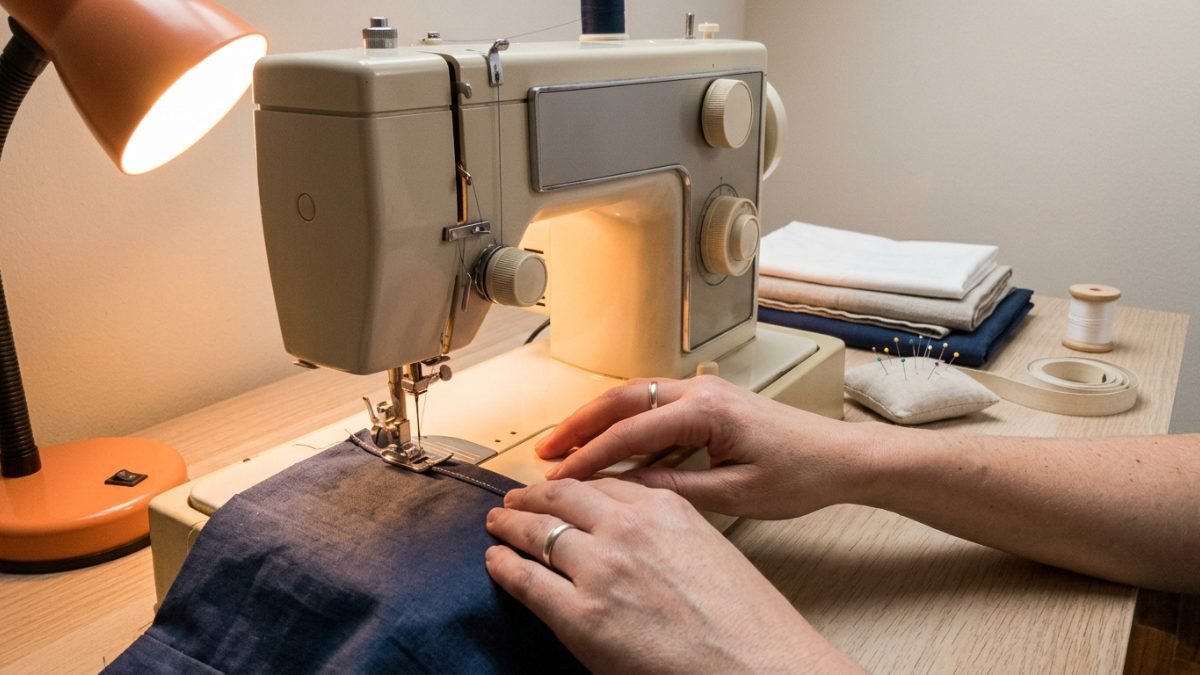
The best sewing machine in Australia is the one matched to the fabric it will spend its life on, not the one with the longest stitch list. A domestic machine forms a lockstitch from two threads, one fed from a spool above the fabric and one from a bobbin below, and almost everything else in the specification exists to control where that stitch lands. Stitch count, buttonhole automation and motor speed all follow from that one mechanism.
Fabric chooses the machine, not the reverse. A mechanical machine sets stitch width and length with dials, while a computerised machine moves that selection to a screen and automates the buttonhole. An overlocker sews no seams at all, instead trimming a raw edge and enclosing it with three or four threads in a single pass. A mini chain-stitch machine forms its stitch from one thread, which is what makes it portable and what makes the seam undo if that thread breaks.
Throat space is the measurement that decides what will physically fit under the arm, and the widest here offers 215 mm by 150 mm, or 8.5 inches by 6. The figures worth reading beside it are stitches per minute, which reaches 1,100 on the fastest machine below, the number of one-step buttonhole styles, and whether the frame is metal or plastic.
What follows spans a chain-stitch portable to a semi-industrial quilting machine, which is a wider gap than any other guide on this site covers. Each entry names the fabric weight the machine is built for, because that is the only specification all nine can honestly be compared on.
Quick Picks
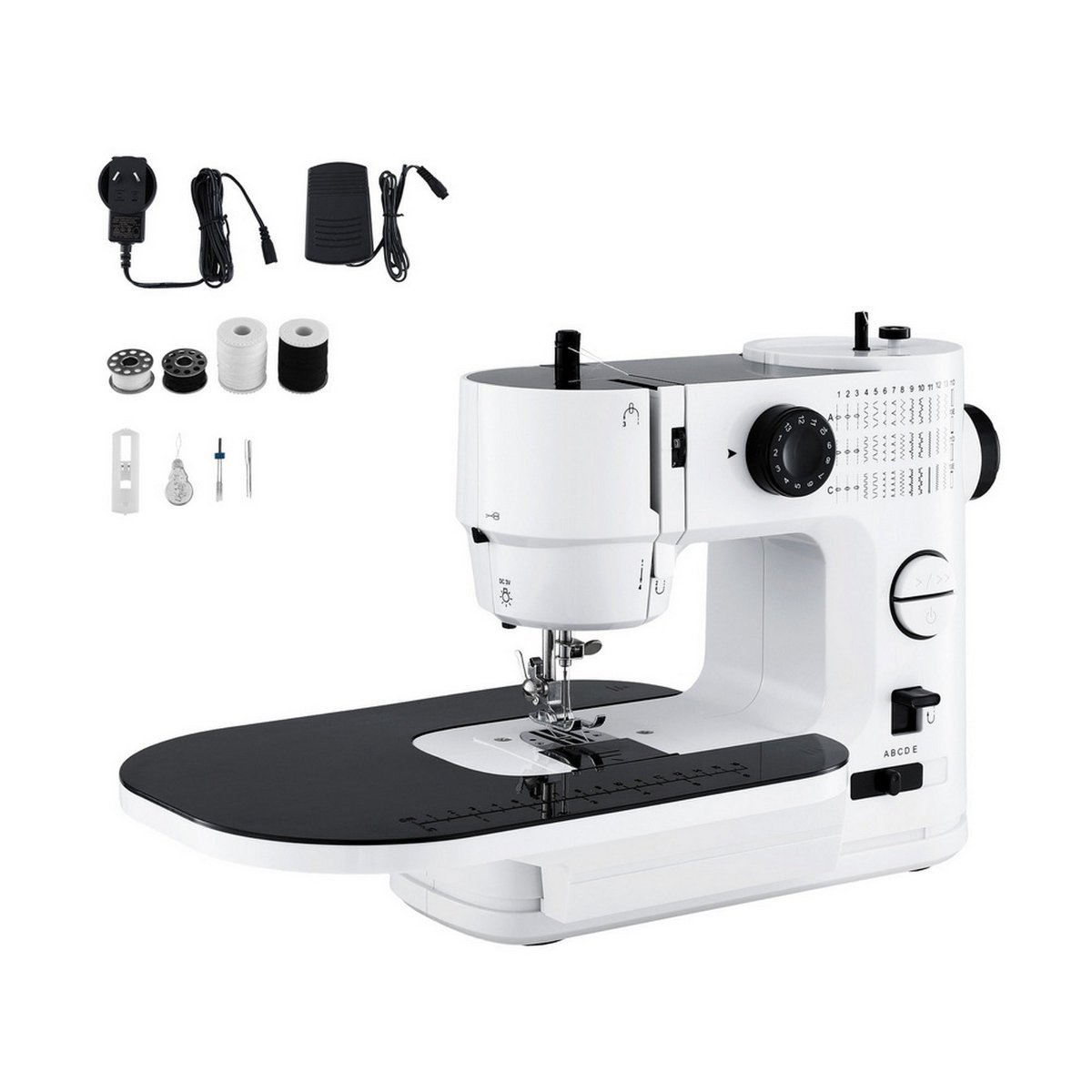
Devanti 39 Stitches Mini Sewing Machine
Thirty-nine patterns, three density levels and an extension table on a machine that stores in a cupboard.
CHECK CURRENT PRICE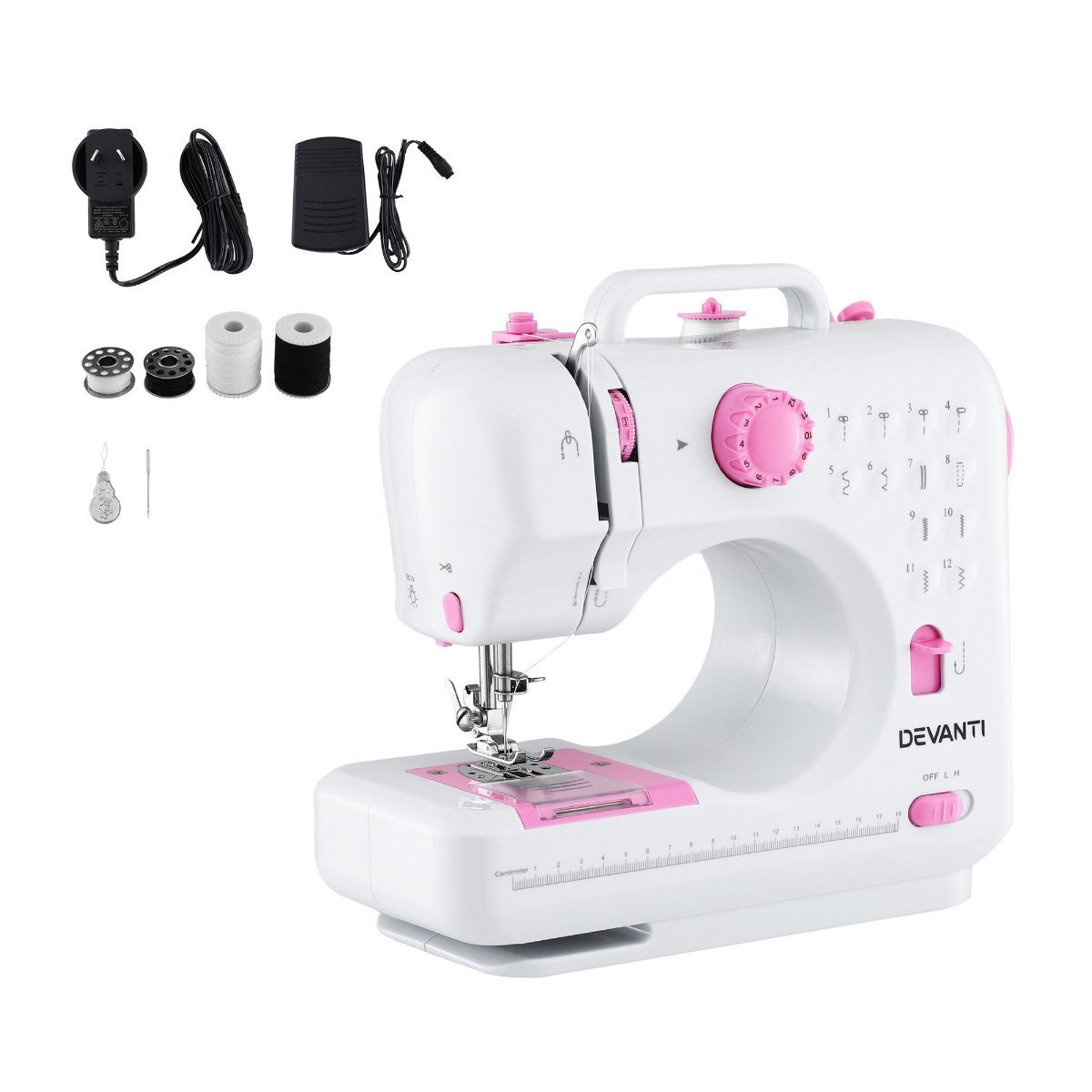
Devanti 12 Stitches Mini Sewing Machine
Twelve learnable patterns, automatic bobbin winding, and the option to run from four AA cells.
CHECK CURRENT PRICEBest Sewing Machine in Australia Compared
| Product | Link | Type | Best For | Key Spec |
|---|---|---|---|---|
| Devanti 39 Stitches Mini Sewing Machine | Check price | Mini, chain stitch | Portable use | 39 patterns, 5 mm max |
| Devanti 12 Stitches Mini Sewing Machine | Check price | Mini, chain stitch | First machine | 12 patterns, 2.5 mm max |
| Janome 5060QDC Computerised Sewing Machine | Check price | Computerised | Computerised sewing | 60 stitches, LCD |
| Janome 423S Metal Sewing Machine | Check price | Mechanical, metal body | Mechanical reliability | 24 stitches, metal body |
| Brother FS60X Electronic Sewing Machine | Check price | Computerised | Buttonholes | 60 stitches, 7 buttonholes |
| Singer Heavy Duty 6600C Sterling Sewing Machine | Check price | Computerised, heavy duty | Denim and canvas | 1,100 spm, 215 stitches |
| Brother 3034DWT Overlocker with Wide Table | Check price | Overlocker | Finishing raw edges | 3 or 4 thread, free arm |
| Juki MO-80CB Free-Arm Serger | Check price | Serger overlocker | Knits and jersey | Differential feed, free arm |
| Juki Haruka TL18QVP Semi-Industrial Machine | Check price | Semi-industrial straight stitch | Quilting | 215 x 150 mm throat |
1. Devanti 39 Stitches Mini Sewing Machine – Best Portable Machine
Thirty-nine stitch patterns and three density settings sit on a machine that measures 30.2 cm across and runs on a 9 W adaptor. An extension table, LED lamp, thread cutter and small parts drawer come in the box, which covers most of what a beginner would otherwise buy separately. A walking foot moves the fabric through rather than a conventional feed dog.
Maximum sewing thickness is 5 mm, which takes cotton, calico and a folded hem but stops short of denim seams or upholstery weight. Two speeds and a reverse lever give enough control for straight seams and backstitching at the ends. It handles general and medium-thick fabric as advertised, and the LED matters more than it sounds on a machine this small because the needle area is cramped.
Chain stitch is the compromise that makes the portability possible, and it deserves stating plainly: the seam is formed from a single thread, so if that thread breaks the stitching can unravel along its length. That rules the machine out for anything structural, and rules it firmly in for hemming, mending and craft work that never sees stress. Someone with a cupboard rather than a sewing room is the buyer.
Pros
- Thirty-nine patterns and three density settings
- Extension table, LED lamp and thread cutter included
- Light enough to store in a cupboard
Cons
- Chain stitch can unravel if the thread breaks
- 5 mm thickness limit rules out denim seams
Key specs: Mini chain stitch, 39 patterns, 3 density levels, walking foot, 5 mm maximum thickness, 2 mm stitch length, 2-speed with reverse, 9 W, 30.2 x 11.8 x 24.6 cm.
CHECK CURRENT PRICE2. Devanti 12 Stitches Mini Sewing Machine – Best First Machine
A shorter pattern list is the point rather than the shortfall, because twelve options can be learned in an afternoon where thirty-nine invite paralysis. Automatic bobbin winding and a wire cutter are built in, and the machine will run from a 6 V adaptor or four AA cells. The case is white with pink and stands 26 cm tall.
Maximum thickness drops to 2.5 mm, which is the practical difference between this and the model above it. Light cottons, quilting squares and single-layer repairs pass under the foot without complaint; a doubled denim hem will not. Power draw is 7.2 W, and the battery option means it can be used at a table with no socket nearby.
Against the 39-stitch model above, this trades half the pattern range and half the fabric thickness for a slightly smaller footprint and the AA option. Both share the same chain-stitch limitation, so neither should be trusted with a seam that carries load. Anyone buying a machine to find out whether they enjoy sewing loses very little by starting here.
Pros
- Twelve patterns is a learnable range for a beginner
- Runs from an adaptor or four AA cells
- Automatic bobbin winding and built-in cutter
Cons
- 2.5 mm thickness limit is the lowest here
- Same chain stitch that unravels if the thread breaks
Key specs: Mini chain stitch, 12 patterns, walking foot, 2.5 mm maximum thickness, 2 mm stitch length, 2-speed with reverse, adaptor or 4 x AA, 7.2 W, 28.6 x 12.3 x 26 cm.
CHECK CURRENT PRICE3. Janome 5060QDC Computerised Sewing Machine – Best Computerised Machine
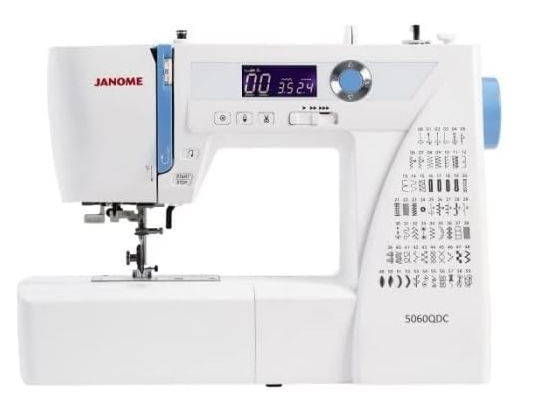
An LCD panel replaces the selector dial, and sixty stitches are chosen by number rather than by feel. The body is aluminium and the machine weighs 9 kg, which is heavy enough to stay where it is put while sewing at speed. An extension table comes with it, widening the bed for larger panels.
Weight and a metal frame are what separate a machine like this from a plastic-bodied one in use, because vibration is what throws a straight seam off line. Sixty patterns cover utility, stretch and decorative work, and the screen shows the selected stitch with its width and length rather than leaving it to a printed chart. The bed extension is the part quilters will use most.
What a screen adds in precision it also adds in cost and in parts that can fail outside a warranty, which is the trade against a purely mechanical machine. This sits at the premium end of this guide and earns it on frame and bed size rather than on stitch count alone. It is the machine for someone who has outgrown a dial.
Pros
- Sixty stitches selected by number on an LCD
- Aluminium body at 9 kg resists vibration
- Extension table widens the bed for quilting
Cons
- Premium end of this guide
- Electronics add parts a mechanical machine does not have
Key specs: Computerised, 60 stitches, LCD display, extension table, aluminium body, 9 kg, 28.8 x 48.8 x 41.6 cm.
CHECK ON AMAZON4. Janome 423S Metal Sewing Machine – Best Metal-Bodied Mechanical
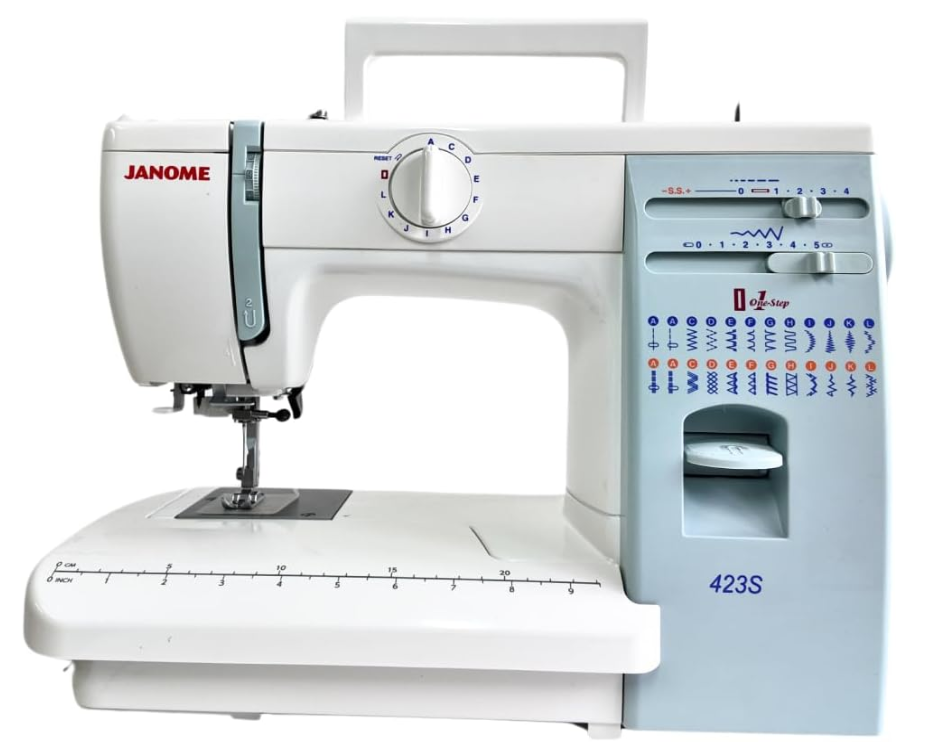
The body is metal, and on a sewing machine that single fact predicts more about its working life than any feature list. Twenty-four stitches are selected on a dial, with stitch width and length both variable rather than fixed per pattern. A hard cover is included instead of a dust bag.
An automatic one-step buttonhole is the one piece of automation, and it is the one worth having because a four-step buttonhole has to be turned by hand at each corner. Drop feed disengages the feed dogs for freehand embroidery and darning, which is how a mechanical machine does free-motion work. At 8 kg it stays planted.
Nothing here is automated beyond that buttonhole, so decorative work is slower than on a computerised machine and there is no screen to tell you what you selected. That absence is also the appeal, because there is correspondingly little to fail. A sewer who wants a machine their grandchild could still service is the clearest candidate.
Pros
- Metal body with a hard cover
- Automatic one-step buttonhole
- Drop feed for freehand embroidery and darning
Cons
- No screen and no stitch memory
- Decorative work is slower to set up than on a computerised machine
Key specs: Mechanical, 24 built-in stitches, automatic 1-step buttonhole, variable stitch width and length, metal body with hard cover, drop feed, 8 kg.
CHECK ON AMAZON5. Brother FS60X Electronic Sewing Machine – Best for Buttonholes
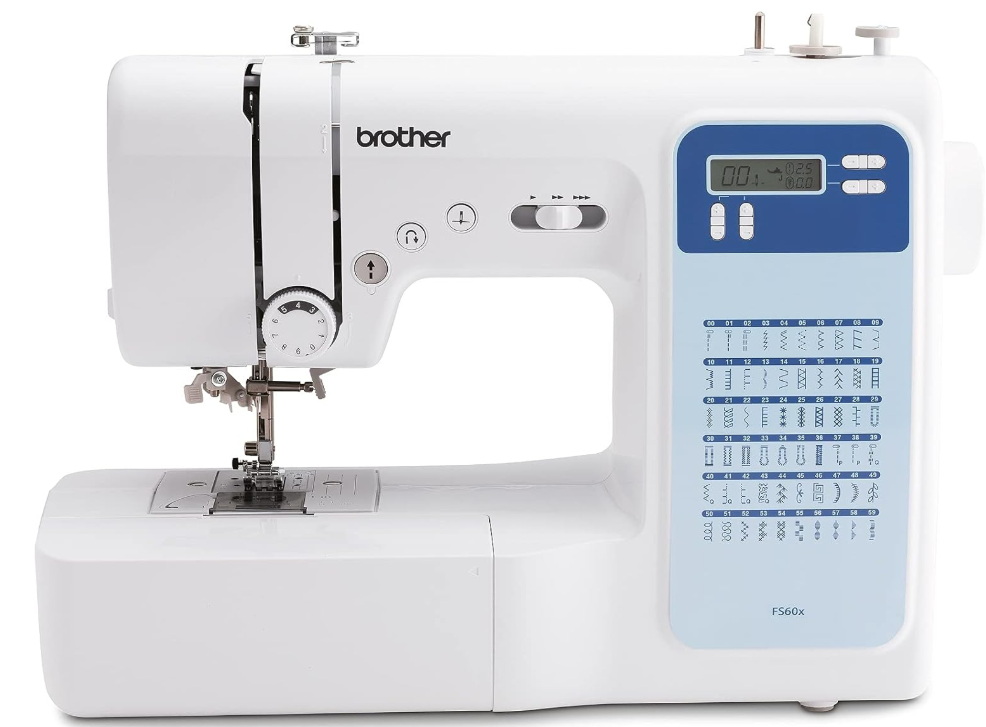
Seven one-step buttonhole styles is an unusual count, and it is the specification that makes this worth singling out for anyone sewing shirts or coats. Sixty electronic stitches sit behind quick-touch selection, with width and length adjusted on the panel. A needle threader and quick-set drop-in bobbin remove the two setup steps people most often give up on.
A start and stop button lets the machine run without the foot pedal, and the same control limits top speed, which is how a beginner sews a curve without overshooting it. Drop feed is included for free-motion work. At 6.6 kg it is the lightest of the full-size machines here, which makes it the easiest to move between a cupboard and a table.
Plastic in the outer shell is where the weight saving comes from, and it means more vibration through heavy fabric than the metal-bodied machines above show. For garment sewing at ordinary weights that matters less than the buttonhole range does. Shirtmakers and anyone who fastens what they sew will get more from this than from a machine with twice the decorative stitches.
Pros
- Seven one-step buttonhole styles
- Needle threader and quick-set drop-in bobbin
- Start and stop button with speed limiting
Cons
- Plastic shell vibrates more through heavy fabric
- Lightest full-size machine here, so it moves under load
Key specs: Computerised, 60 electronic stitches, 7 one-step buttonhole styles, needle threader, quick-set drop-in bobbin, drop feed, start and stop button with speed limiting, 6.6 kg.
CHECK ON AMAZON6. Singer Heavy Duty 6600C Sterling Sewing Machine – Best Heavy Duty
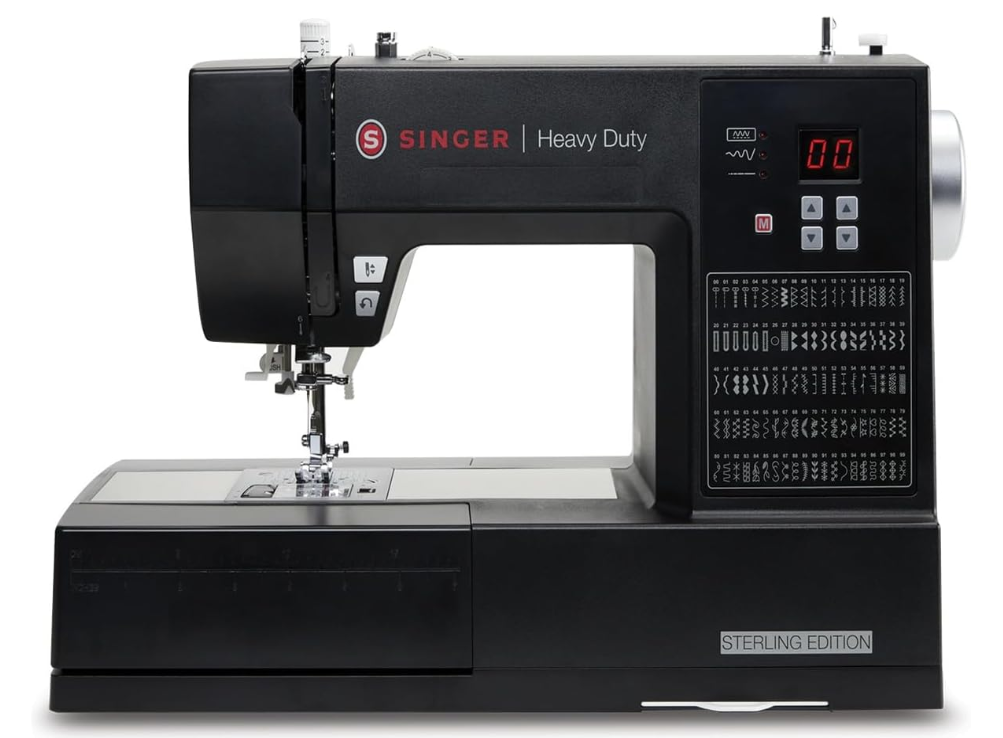
Eleven hundred stitches a minute is the headline figure, and it is roughly double what a domestic machine of the older generation managed. A heavy-duty metal frame carries that speed, and the finish is matte black rather than the usual white. Two hundred and fifteen built-in stitches sit behind the panel.
The motor is the reason to buy it, because denim, canvas and leather are what defeat lighter machines rather than what they refuse outright. Six one-step buttonhole styles and adjustable stitch length and width cover garment work as well. A speed slider brings the machine back down for delicate fabric, and a start and stop button removes the pedal for long runs.
Speed of that order is only useful with a frame stiff enough to hold alignment, which is why the metal chassis matters more than the stitch count in the specification. Two hundred and fifteen stitches is more than most sewers will use and should not be the reason to choose it. Anyone hemming jeans or making canvas bags will feel the difference against every lighter machine here.
Pros
- 1,100 stitches per minute on a metal frame
- Handles denim, canvas and leather
- Speed slider and start and stop button
Cons
- 215 stitches is more than most will use
- Heaviest-duty motor here is wasted on light fabric
Key specs: Computerised heavy duty, 1,100 stitches per minute, 215 built-in stitches, 6 one-step buttonhole styles, metal frame, five presser feet, speed control slider, 7.35 kg.
CHECK ON AMAZON7. Brother 3034DWT Overlocker with Wide Table – Best Overlocker
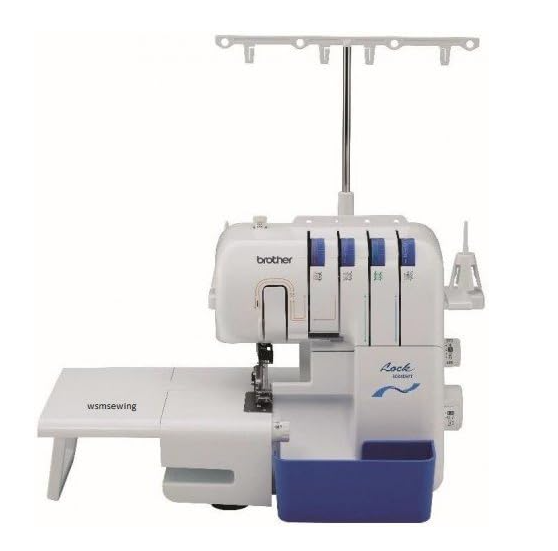
This does not sew seams, and understanding that before buying saves a good deal of disappointment. An overlocker trims a raw fabric edge and encloses it with three or four threads in one pass, which is the finish inside every shop-bought garment. A wide extension table and a waste tray come with it.
Three-thread and four-thread configurations cover the two jobs that matter, the first for finishing an edge and the second for a seam that stretches. Foot pressure is adjustable for fabric weight, a free arm handles cuffs and sleeves, and an instant rolled hem setting produces the narrow finish used on scarves and linings. LED lighting covers the cutting area.
An overlocker cannot replace a sewing machine because it will not topstitch, insert a zip or sew a buttonhole, so this is a second machine rather than a first. What it does replace is the frayed edge that makes home-made clothes look home-made. Anyone whose garments come apart at the seam allowance before they wear out should own one.
Pros
- Three or four thread overlocking in one pass
- Free arm plus wide extension table and waste tray
- Instant rolled hem and adjustable foot pressure
Cons
- Cannot topstitch, insert zips or sew buttonholes
- A second machine, never a first
Key specs: Overlocker, 3-thread or 4-thread, free arm, adjustable foot pressure, instant rolled hem, LED lighting, waste tray, wide extension table, 7.78 kg.
CHECK ON AMAZON8. Juki MO-80CB Free-Arm Serger – Best for Knit Fabrics
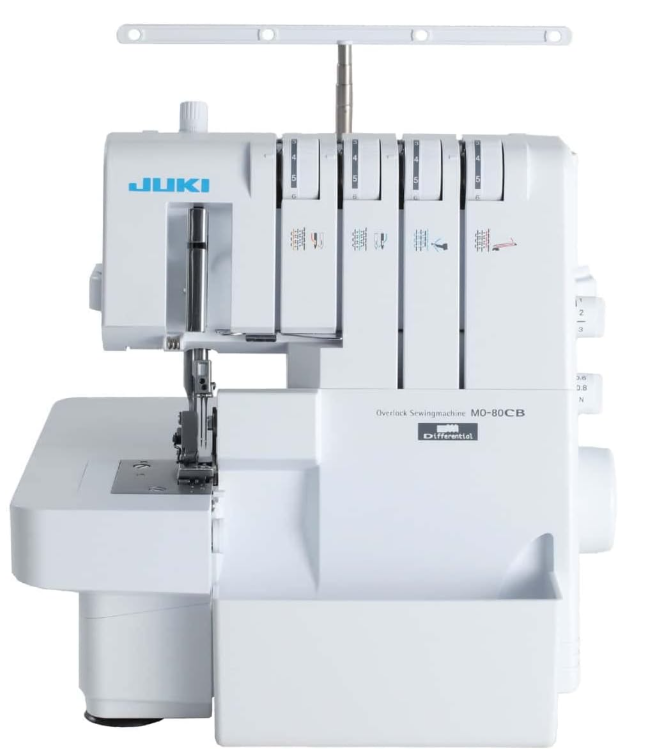
Differential feed is the control that separates this from a basic overlocker, and it is adjustable while the machine is running. It changes the relative speed of the front and rear feed dogs, which is how jersey is stopped from stretching into a wave as it passes under the needle. The auxiliary bed lifts off for free-arm work.
Knits and georgette are the fabrics that expose a machine without this control, and adjusting on the fly means a curved hem can be corrected mid-seam rather than unpicked. Cutting width is set by moving the knife, which switches the machine between a standard overlock and a rolled hem. A lever threads the lower looper, removing the step that most often ends an overlocking session early.
The threading remains the hardest part of owning any serger, and a lever for the lower looper reduces that difficulty without removing it. Set against the wide-table overlocker above, this gives finer control over stretch fabric and a smaller working area. Anyone sewing activewear, t-shirts or anything with elastane will use the differential feed on every garment.
Pros
- Differential feed adjustable while sewing
- Lower looper threading lever
- Free arm for cuffs, sleeves and trouser hems
Cons
- Threading is still the hardest part of ownership
- Smaller working area than the wide-table overlocker
Key specs: Serger overlocker, differential feed adjustable in motion, adjustable cutting width, adjustable presser foot pressure, free arm, lower looper threader, 6.35 kg.
CHECK ON AMAZON9. Juki Haruka TL18QVP Semi-Industrial Machine – Best for Quilting
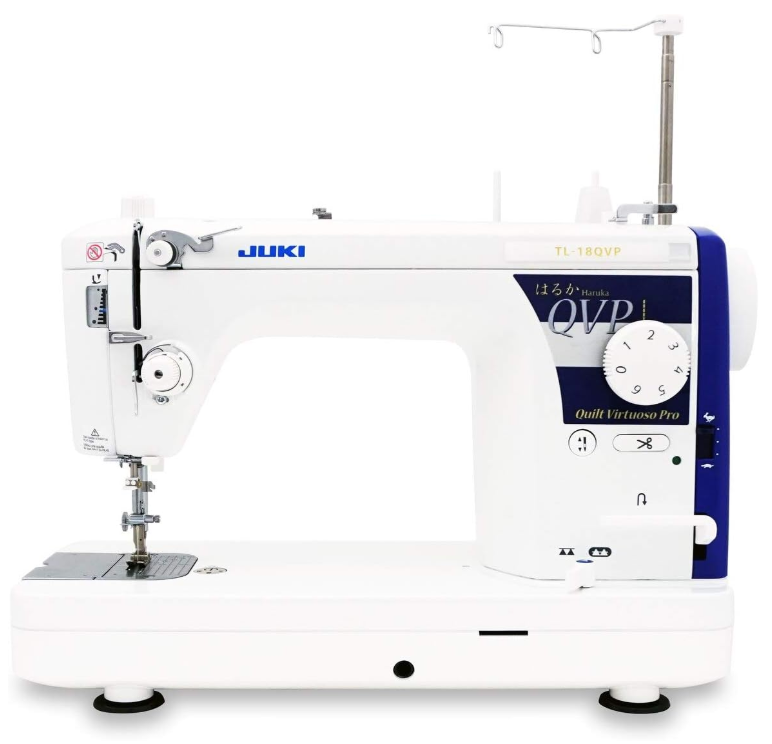
A semi-industrial straight-stitch machine does one stitch and does it through material that stops a domestic machine. Throat space measures 215 mm by 150 mm, or 8.5 inches by 6, which is the dimension that decides how much quilt can be gathered under the arm. The body is aluminium and weighs 12.7 kg.
Multiple layers of wadding and backing pass through smoothly and quietly, which is the whole argument for a machine of this type. It can be mounted on a frame and used in the manner of a long-arm machine, extending its working life well past the point a domestic machine would be replaced. An extension table adds to the already large bed.
One stitch is all it does, so there is no zigzag, no buttonhole and no decorative work of any kind, and it is the most expensive machine in this guide by a wide margin. Both facts point at the same buyer: someone who quilts enough that the throat measurement, not the feature list, is what limits them. For everyone else it is the wrong machine at the wrong outlay.
Pros
- 215 mm by 150 mm throat space for large quilts
- Sews multiple wadding layers smoothly and quietly
- Can be frame-mounted like a long-arm machine
Cons
- Straight stitch only, no zigzag or buttonhole
- Most expensive machine in this guide
Key specs: Semi-industrial straight stitch, 215 x 150 mm throat space, extension table, frame-mountable, aluminium body, 12.7 kg.
CHECK ON AMAZONHow to Choose a Sewing Machine
Start with the heaviest fabric you own. A machine that manages your worst case will manage everything lighter, and the reverse is never true. Maximum sewing thickness is the figure to check, and the range in this guide runs from 2.5 mm to material that stops a domestic machine outright. Denim hems and canvas are what expose a light machine.
Weigh the machine before admiring the stitch count. Mass and a metal frame are what hold a seam straight at speed, because vibration is what pushes a line off true. The machines here run from a mini that stores in a cupboard to 12.7 kg of aluminium, and the heavier ones stay where they are put. A plastic shell is not disqualifying, but it moves under heavy fabric.
Count the buttonhole steps, not the buttonhole styles. A one-step buttonhole is sewn in a single operation; a four-step buttonhole has to be turned by hand at each corner and is where beginners give up. One machine here offers seven one-step styles and another offers six, which matters far more to a shirtmaker than a hundred decorative stitches would.
Ignore stitch counts above about sixty. Beyond utility, stretch and a handful of decorative options, extra patterns are shelf appeal rather than capability, and one machine in this guide carries 215 of them. Nobody has ever chosen a machine they were happy with on the strength of pattern 178.
Budget for the chair as well as the machine. Sewing is done seated and still for long stretches, and a machine that encourages hours at a time makes the seat the limiting factor rather than the stitching. Anyone setting up a permanent sewing table should read up on ergonomic office chairs before spending the last of the budget on presser feet.
Treat an overlocker as a second machine. Two of the nine here trim and enclose a raw edge but will not topstitch, insert a zip or sew a buttonhole, so neither can be a household’s only machine. Buy the sewing machine first and add the overlocker when seam allowances start fraying before garments wear out. Australian Consumer Law guarantees cover a motor that fails to perform as described, whichever type you buy.
Frequently Asked Questions
What is the difference between an overlocker and a sewing machine?
A sewing machine joins fabric with a lockstitch and can topstitch, insert zips and sew buttonholes. An overlocker trims the raw edge and wraps it in three or four threads in one pass, which is the finish found inside shop-bought clothes. An overlocker cannot replace a sewing machine, so it is bought second.
Is a mechanical or a computerised sewing machine better?
Neither is better outright. A mechanical machine has fewer parts to fail and is easier to service, which is why metal-bodied mechanicals stay in use for decades. A computerised machine selects stitches on a screen and automates buttonholes, which saves setup time on garment work but adds electronics.
Can a mini sewing machine handle denim?
Generally no. The two mini machines in this guide top out at 5 mm and 2.5 mm of fabric thickness, which covers a single folded hem but not a doubled denim seam. Hemming jeans needs a full-size machine with a metal frame and a stronger motor.
What is a chain stitch and why does it matter?
A chain stitch is formed from a single thread looping back on itself, rather than two threads locking together. It lets a machine be small and cheap, but the seam can unravel along its length if the thread breaks. That makes it acceptable for craft work and hemming and unsuitable for anything structural.
How many stitches does a sewing machine actually need?
Most sewing uses fewer than ten. A straight stitch, a zigzag, a stretch stitch, a blind hem and a buttonhole cover the great majority of domestic projects. Machines advertising over a hundred patterns are adding decorative options rather than capability.
What does throat space mean on a sewing machine?
It is the gap between the needle and the body of the machine, and it sets how much fabric can be gathered to the right of the needle. It matters most for quilting, where a folded quilt has to pass through that gap. The largest here measures 215 mm by 150 mm.
Verdict
The question that decides this is not what you sew now but what you will still be sewing in five years. Anyone hemming and mending occasionally is well served by the Devanti 39-stitch portable and will not miss what it lacks. Anyone expecting to make garments should start at the Janome 423S for its metal body and drop feed, then add the Brother 3034DWT overlocker when seam allowances start fraying before the garment wears out.