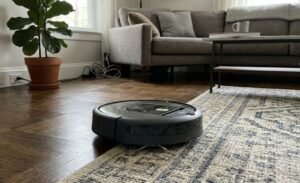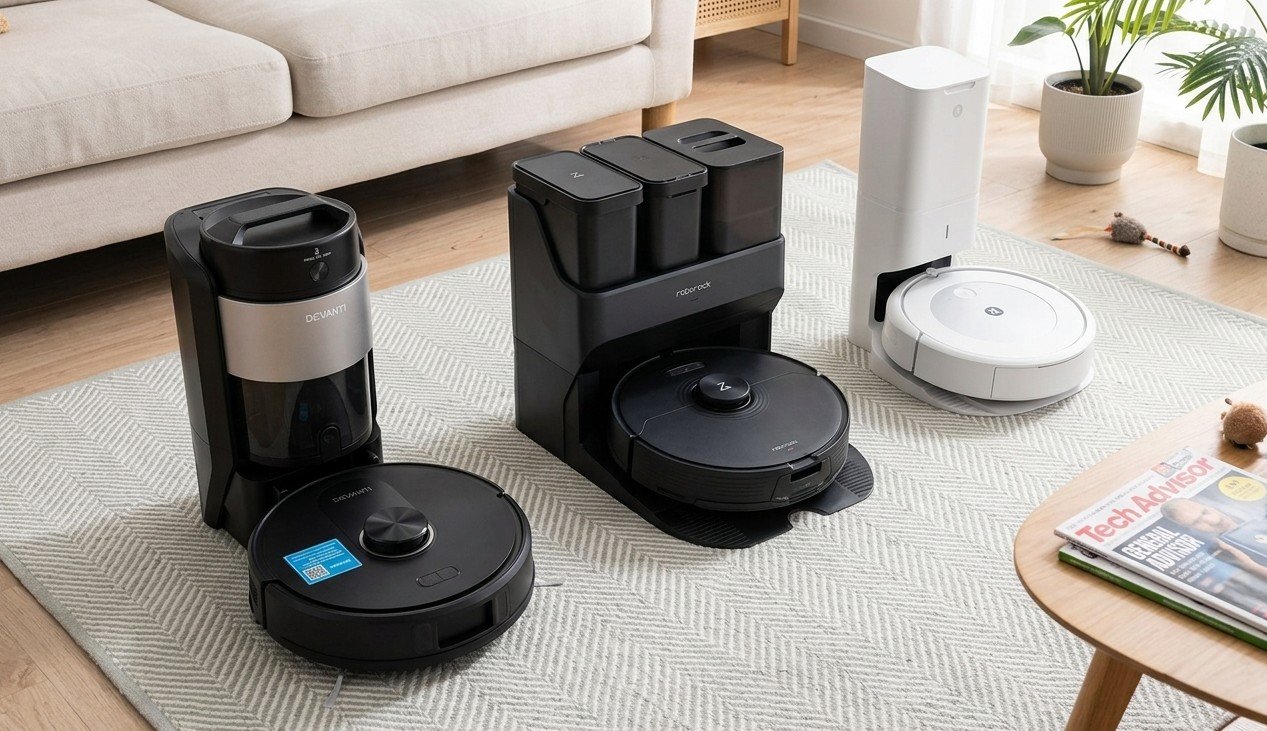
The best robot vacuum and mop in Australia is a single machine that dry-vacuums and wet-mops in the same run, carrying water in an onboard tank and either dragging a pad or turning a powered roller across hard floors. What separates a genuine mopping robot from a vacuum with a cloth attached is what happens to the dirty water, because a pad that is never rinsed simply redistributes the grime it collected in the first room.
What the machine does with a dirty mop separates three approaches. Trailing pad models drag a damp cloth behind the robot, which maintains a clean floor but cannot scrub. Powered roller and vibrating pad models apply pressure and movement to lift dried marks. Self-washing dock models rinse and dry the mop between passes with hot water, so the pad going onto the floor is clean every time.
Suction across this guide runs from 2,500 to 25,000 pascals and water tank capacity from 200 millilitres to 2.5 litres. The figures worth comparing alongside those are whether the dock washes the mop, whether the mop lifts clear of carpet, how the brush resists hair tangling, and whether the mop plate extends to reach edges.
Twelve vacuum and mop combinations, all in Australian stock, split into two groups: eight mid-range models carrying their own tank, and four premium machines whose docks wash and dry the mop between runs.
Quick Picks
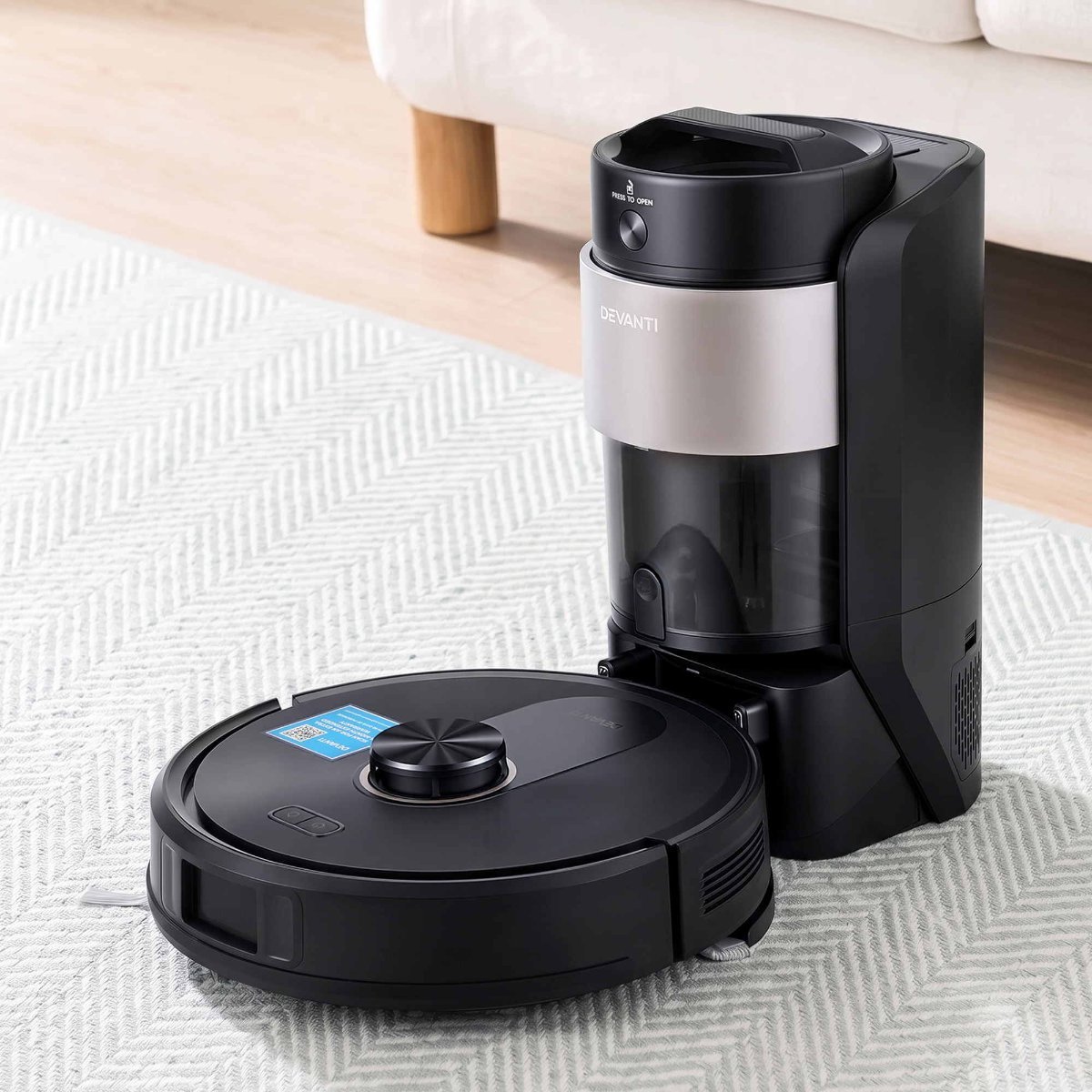
Devanti Self-Empty 6000Pa
Laser mapping, mopping and a 1.5 litre self-emptying dock at a genuine mid-range outlay.
CHECK CURRENT PRICE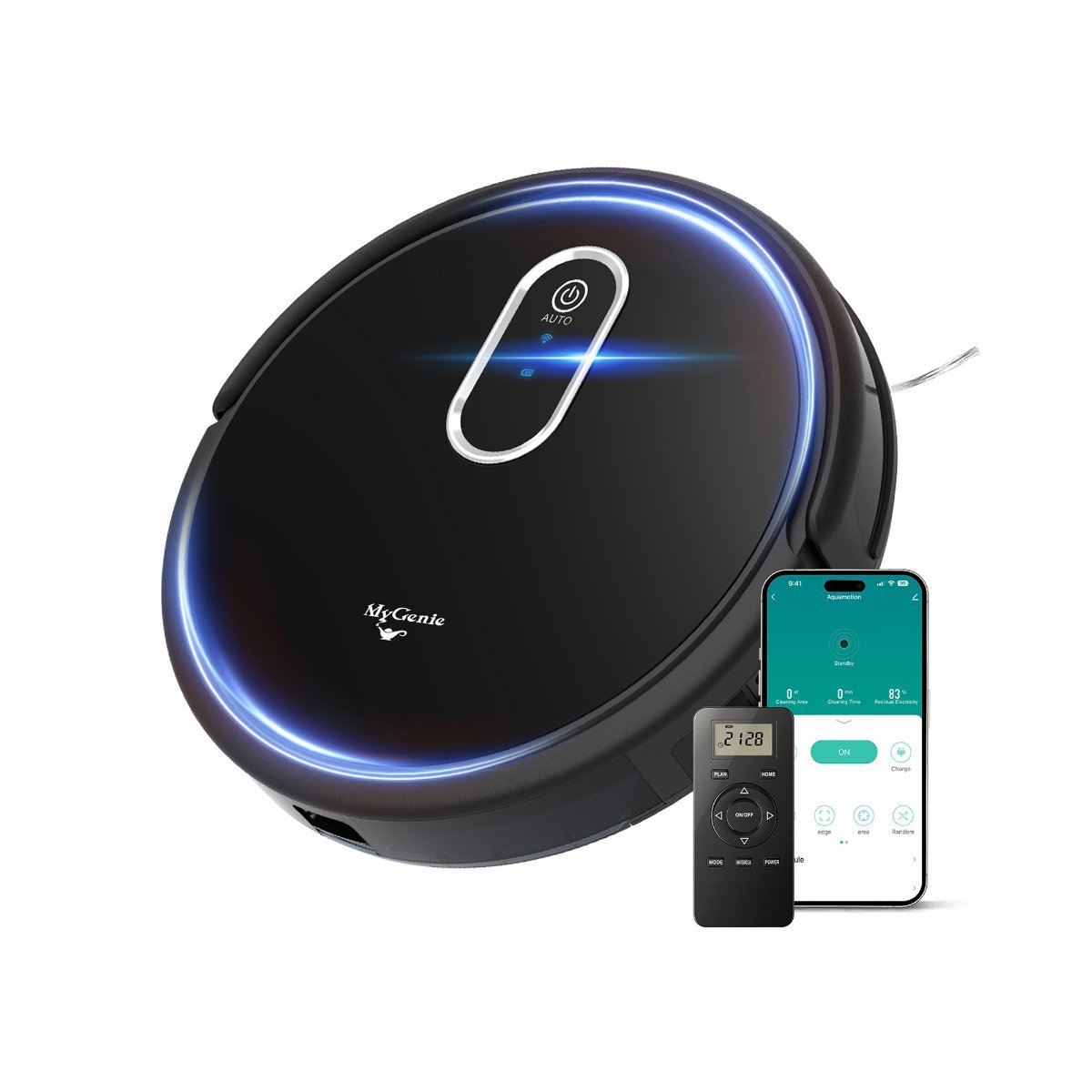
MyGenie HydraClean
A 250ml water tank and 450ml bin, the most generous onboard pairing among the mid-range models.
CHECK CURRENT PRICE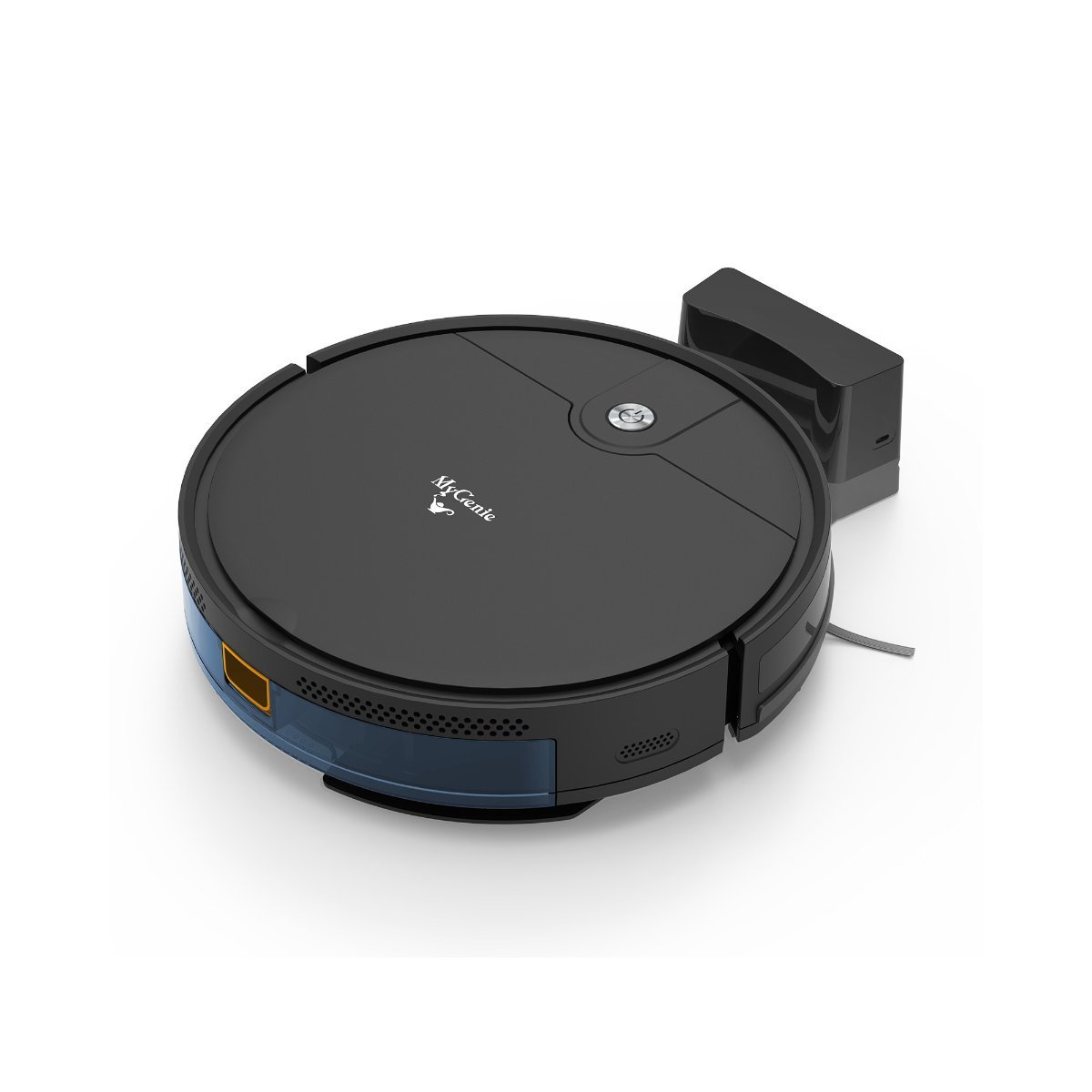
MyGenie ZX3000
Three adjustable mop water levels and HEPA filtration at the lowest outlay in this guide.
CHECK CURRENT PRICEThe Best Robot Vacuum and Mop in Australia: All 12 Compared
| Product | Link | Type | Best For | Key Spec |
|---|---|---|---|---|
| Devanti Self-Empty 6000Pa | Check price | Onboard tank, self-empty | Mapping plus mopping | 6000Pa, 200ml tank, 1.5L dock |
| Devanti App Control 6000Pa | Check price | Onboard tank | Suction for the money | 6000Pa, 200ml tank, 155 min |
| MyGenie Raptor Laser | Check price | Onboard tank | Value laser mapping | 5000Pa, LiDAR, no-go zones |
| MyGenie Laser Sonic AI | Check price | Onboard tank | Dual navigation | 4000Pa, LiDAR plus LIGHTSTREAM |
| MyGenie HydraClean | Check price | Onboard tank | Onboard water capacity | 3200Pa, 250ml tank, 450ml bin |
| MyGenie X Sonic Pro | Check price | Onboard tank | Quiet mopping | Under 55dB, 350ml tank, 600ml bin |
| MyGenie ZX3000 | Check price | Onboard tank | Lowest outlay | 3000Pa, 3 water levels, HEPA |
| MyGenie Vortex | Check price | Onboard tank | Low furniture | 2500Pa, 80mm high, 2 hr |
| Roborock Q7T+ | Check price | Self-empty dock | Anti-tangle brush | 10,000Pa, 270ml tank, 7 weeks |
| dreame L40 Ultra AE | Check price | Self-washing dock | Hot water mop washing | 19,000Pa, 75C wash, 10.5mm mop lift |
| LEFANT M5 Max | Check price | Self-washing dock | Suction and water capacity | 25,000Pa, 2.5L tanks, 80C wash |
| ECOVACS DEEBOT T80 Omni | Check price | Self-washing dock | Roller mop scrubbing | 18,000Pa, OZMO roller, TruEdge |
1. Devanti Self-Empty 6000Pa – Best Self-Emptying Mop Combo
Six thousand pascals with laser mapping, a mopping pass and a self-emptying dock is a combination that usually costs considerably more, and it is the strongest suction of the eight onboard-tank models here. LDS navigation with SLAM plans the route rather than guessing at it.
The 200ml water tank sets the honest scope of the mopping. That is a kitchen and bathroom in one run, not an open-plan ground floor end to end, so the mop pass suits the rooms that actually get dirty rather than pretending to cover a whole house. The 300ml dustbox empties into a 1.5 litre station between runs.
Runtime is 155 minutes with auto-recharge, and control works through either an app or the supplied remote, which keeps it usable when the network drops. At 9.8cm it clears most sofa bases. What it does not do is wash its own mop, so the pad still needs rinsing by hand after a run, which is the line separating this group from the four premium machines at the end of this guide.
Pros
- 6000Pa, strongest of the onboard-tank models here
- LDS laser navigation with SLAM mapping
- 1.5 litre self-emptying dust station
- 155 minutes runtime with auto-recharge
- App and physical remote both included
- 9.8cm height clears most furniture
Cons
- 200ml tank covers one area per run
- Mop pad must be rinsed by hand
- Dock empties dust only, it does not wash the mop
Key specs: 6000Pa suction, 3-in-1 sweep vacuum and mop, 1.5L self-emptying dock, 300ml dustbox, 200ml water tank, LDS laser navigation with SLAM, up to 155 minutes, app and remote control, 30.6 x 30.6 x 9.8 cm.
CHECK CURRENT PRICE2. Devanti App Control 6000Pa – Best Suction for the Money
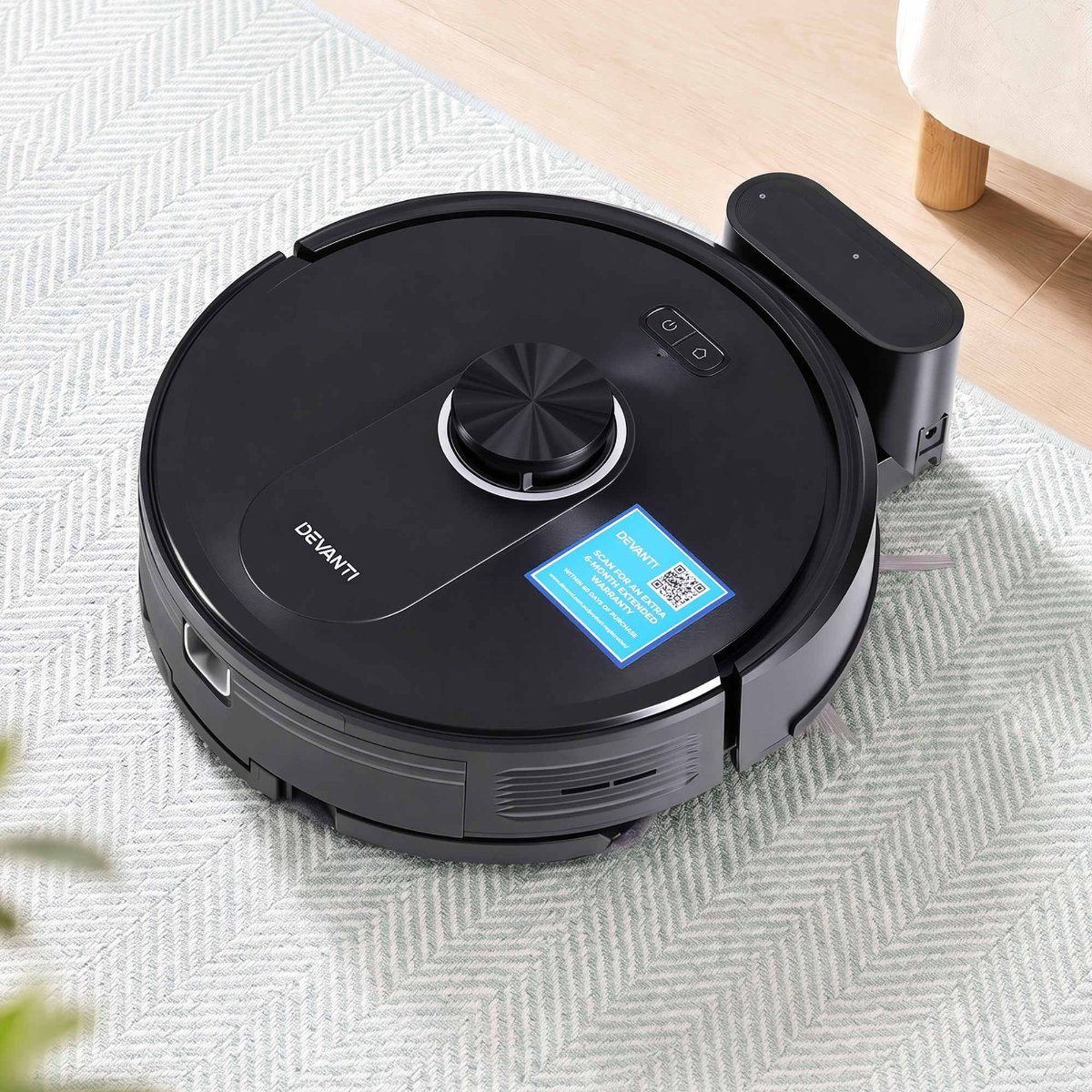
Identical suction, tank and runtime to the model above, minus the self-emptying station, which lands the strongest mid-range suction figure here at a noticeably lower outlay. LDS laser navigation and the SLAM algorithm are unchanged.
A 9.8cm profile matters more on a mopping robot than a dry one, because the floor under a bed or lounge is where dust turns to grime and stays. Getting a damp pad into that space is something no upright machine manages, and the listing is direct about the limit at the other end: very deep shag rugs are outside its range.
The 300ml dustbox needs emptying by hand every few runs, which is the entire difference from entry one. For a household mopping a kitchen and hallway a few times a week rather than a whole floor daily, that is a small enough chore to be worth the saving.
Pros
- 6000Pa, matching the dock model above
- LDS laser navigation plus SLAM algorithm
- 155 minute runtime with auto-recharge
- 9.8cm height reaches under low furniture
- App and remote control both supported
- Notably cheaper than the self-emptying version
Cons
- No self-emptying dock
- 200ml tank limits mopping range
- Not suited to deep shag rugs
Key specs: 6000Pa suction, LDS laser navigation with SLAM, sweep vacuum and mop 3-in-1, up to 155 minutes with auto-recharge, 300ml dustbox, 200ml water tank, app and remote control, robot 30.6cm diameter and 9.8cm high.
CHECK CURRENT PRICE3. MyGenie Raptor Laser – Best Value Laser Mapping
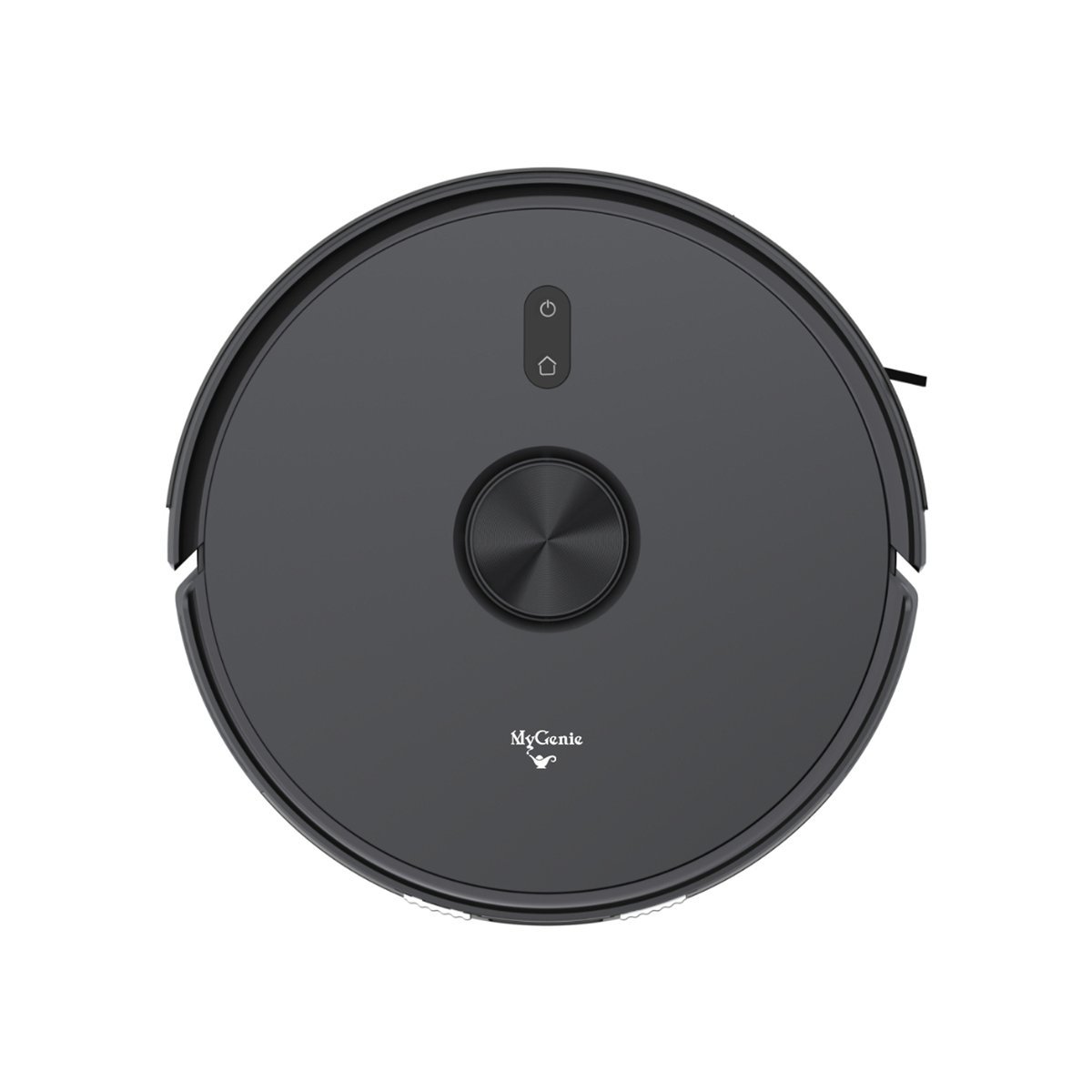
LIGHTSTREAM LiDAR mapping at this outlay puts real route planning into a bracket normally served by bump-and-turn navigation, and on a mopping robot that matters more than on a dry one. A machine that crosses the same wet floor twice leaves streaks; one that plans rows does not.
Suction is 5000Pa on a three-in-one sweep, vacuum and mop system. No-go zones are the practical payoff of the laser map, and on a mopping robot they earn their keep by fencing off rugs and timber thresholds that should never get wet, which a gyroscopic machine simply cannot be told about.
Scheduling, suction adjustment and return-to-dock run through the WiFi app, and runtime is 90 minutes with auto-recharge. The mop is a trailing pad rather than a pressurised system, so it maintains a clean floor rather than scrubbing a dried spill, which is true of every onboard-tank model in this guide.
Pros
- LIGHTSTREAM LiDAR with real-time floor plan
- 5000Pa on a 3-in-1 sweep, vacuum and mop
- No-go zones keep rugs and timber dry
- WiFi app with scheduling and suction control
- Auto-recharge and resume
- Lowest outlay of the laser-navigating models
Cons
- 90 minute runtime is short for a large floor
- No self-emptying dock
- Trailing pad maintains rather than scrubs
Key specs: LIGHTSTREAM LiDAR laser mapping, 5000Pa suction, 3-in-1 sweep vacuum and mop, WiFi app with scheduling, no-go zones and suction control, 90 minute runtime with auto-recharge.
CHECK CURRENT PRICE4. MyGenie Laser Sonic AI – Best Dual Navigation
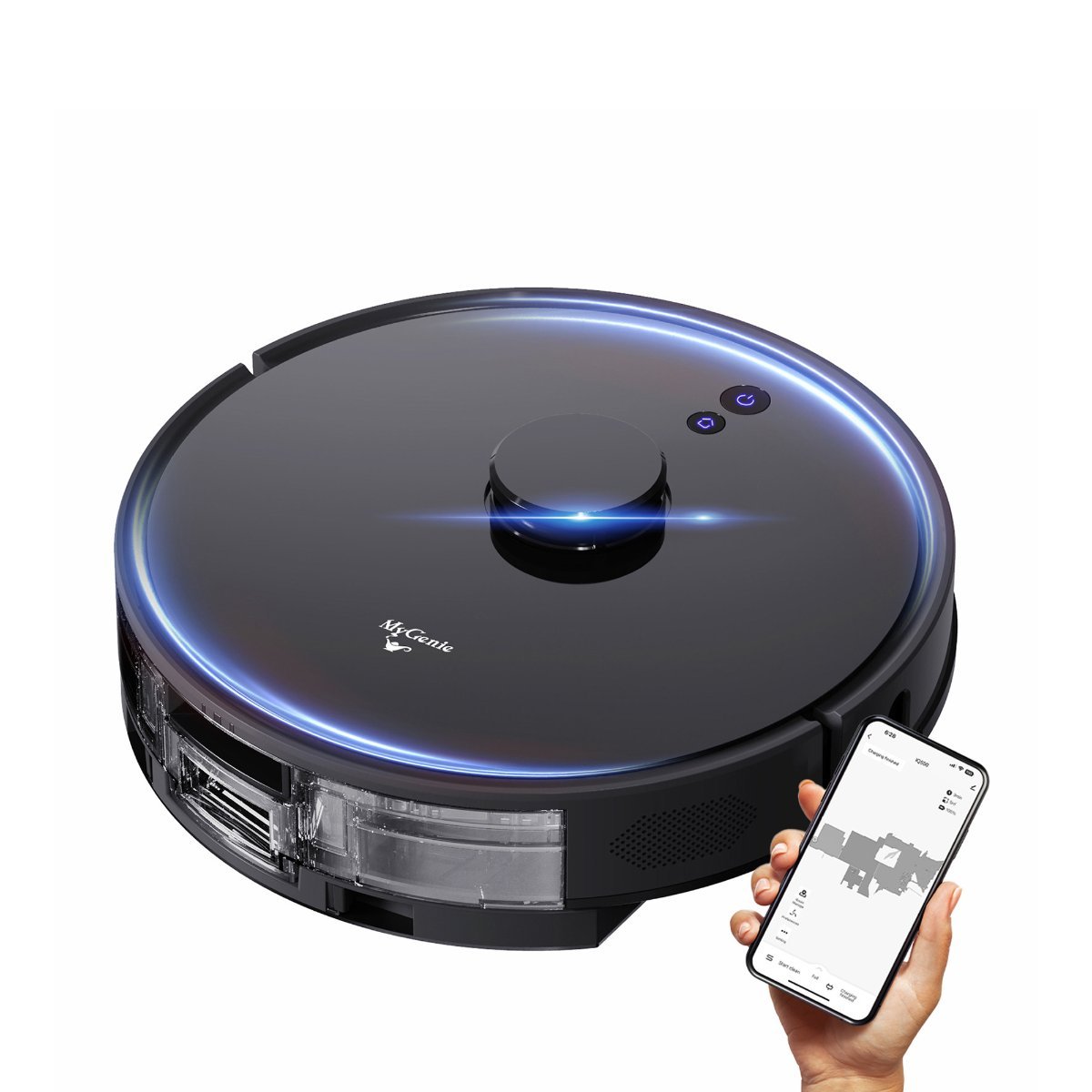
Two navigation systems run together here, LiDAR laser mapping paired with the LIGHTSTREAM Navigation System, which is a heavier stack than anything else at this price. Suction is 4000Pa across a three-in-one sweep, vacuum and mop pass.
The wet and dry capability is stated plainly rather than implied, and so is the surface it belongs on: hard floors, tiles, laminate and vinyl. That specificity is worth respecting, because mopping robots sold as universal are the ones that disappoint, and knowing the intended surface prevents the most common complaint about the format.
A 3200mAh battery supports extended runs with automatic docking between cycles, HEPA filtration catches the fine particles a mop would otherwise turn to mud, and the bin empties directly with no bag. App and remote control are both supported. Sitting below the 5000 and 6000Pa machines above, this competes on navigation quality rather than pull.
Pros
- LiDAR plus LIGHTSTREAM dual navigation
- 4000Pa with 3-in-1 sweep, vacuum and mop
- Genuine wet and dry capability, clearly specified
- 3200mAh battery with automatic docking
- HEPA filtration and bagless emptying
- App and included remote control
Cons
- 4000Pa trails the models above
- Hard floors only, not carpet
- No self-emptying dock
Key specs: 4000Pa suction, 3-in-1 sweep vacuum and mop, LiDAR with LIGHTSTREAM Navigation System, 3200mAh battery, automatic docking and recharge, HEPA filtration, bagless, app and remote control, suited to hard surfaces, tiles, laminate and vinyl.
CHECK CURRENT PRICE5. MyGenie HydraClean – Best Onboard Water Capacity
A 250ml water tank alongside a 450ml dust bin is the most generous onboard pairing among the mid-range machines here, and on a mopping robot tank size is the specification that decides how far it gets before someone has to intervene.
A brushless motor produces 3200Pa, and dual side brushes work with a central roller to draw dirt in from the edges rather than pushing it ahead of the mop, which is the sequencing that matters on a combination machine. Running noise stays under 65 decibels.
Gyroscopic navigation follows orderly paths by tracking the robot own movement, which costs less than a laser system and covers open floor well, but offers no no-go zones to protect a rug. A 3200mAh battery gives up to two hours before it returns to dock. Where the laser models above buy precision, this one buys capacity.
Pros
- 250ml water tank and 450ml bin, the largest onboard pairing here
- Brushless motor delivering 3200Pa
- Dual side brushes with central roller
- Under 65dB running noise
- Up to 2 hours from a 3200mAh battery
- Automatic docking and app control
Cons
- Gyroscopic navigation, so no no-go zones for rugs
- 3200Pa trails the laser models above
- App control is basic rather than full-featured
Key specs: 3200Pa from a brushless motor, 3-in-1 sweep vacuum and mop, 450ml dust bin, 250ml water tank, dual side brushes with central roller, under 65dB, gyroscopic navigation, 3200mAh battery, up to 2 hours, automatic docking.
CHECK CURRENT PRICE6. MyGenie X Sonic Pro – Best Quiet Mopping
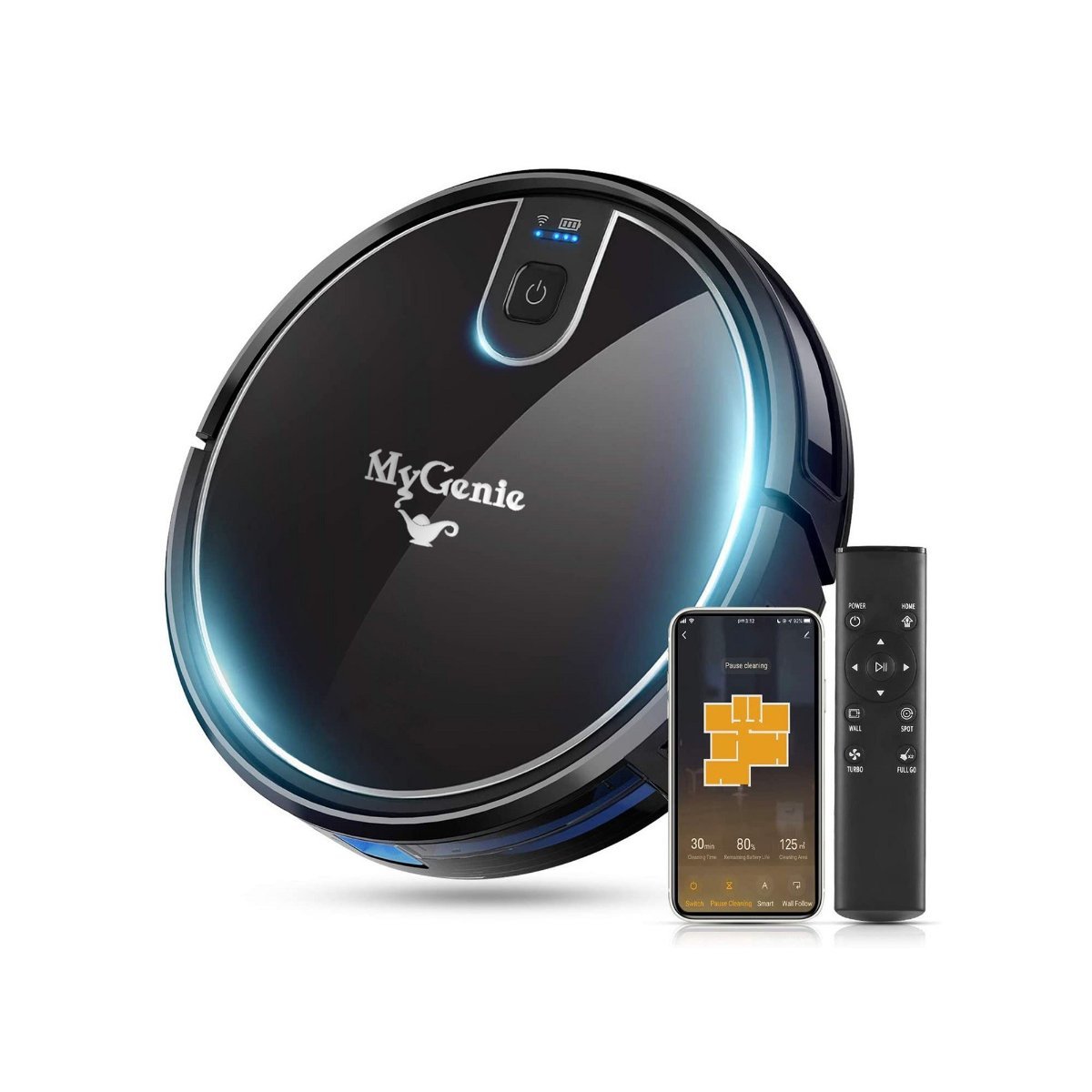
Under 55 decibels is the quietest machine here by a clear ten decibels, which on a logarithmic scale is a substantial gap rather than a marginal one. A brushless motor drives it and the robot connects over WiFi through the Smart Life app.
The 350ml water tank is the largest onboard capacity in this guide, paired with a 600ml dust bin that is also the biggest, so it runs longer between refills and emptyings than anything else in the mid-range group. Runtime is 90 to 120 minutes from a 2600mAh battery.
Back-to-base and anti-collision handle navigation without a laser map, and scheduling from the app means a mop run can start after everyone leaves, which is when a wet floor is least inconvenient. Charging takes 4 to 5 hours. Four side brushes, two HEPA filters, two mop cloths and a water tank are supplied, covering the first round of consumables.
Pros
- Under 55dB, the quietest here by a clear margin
- 350ml water tank, the largest onboard capacity
- 600ml dust bin, the largest in this guide
- Brushless motor with WiFi scheduling
- 90 to 120 minutes from a 2600mAh battery
- Spare HEPA filter and two mop cloths included
Cons
- Suction figure not published for this listing
- Anti-collision rather than mapped navigation
- Hard surfaces rather than deep carpet
Key specs: brushless motor, WiFi with Smart Life app, 2600mAh battery giving 90-120 minutes, 600ml dust capacity, 350ml water tank, under 55dB, back-to-base and anti-collision, 4-5 hour charge, bagless with HEPA filters, four side brushes and two mop cloths. Suction not published.
CHECK CURRENT PRICE7. MyGenie ZX3000 – Best Budget Pick
Three adjustable mop water levels at the lowest outlay in this guide is a better specification than the price implies, and it is the feature that separates a usable budget mopping robot from one whose mop function gets switched off after a week.
A single fixed flow rate is the usual compromise at this end, and it soaks timber while barely wetting tile. Being able to dial the water down for floorboards and up for a kitchen floor is what makes the mop worth using at all. Suction is 3000Pa with a 450ml bin and 250ml tank, matching the HydraClean above on capacity.
HEPA filtration captures allergens rather than redistributing them, gyroscopic navigation keeps coverage orderly, and the robot returns to its base on its own with a 4 to 6 hour recharge. Dual side brushes feed debris toward the intake ahead of the mop. As a first robot vacuum and mop, this covers the fundamentals without a premium.
Pros
- Lowest outlay in this guide
- Three adjustable mop water levels
- 3000Pa with a 450ml bin and 250ml tank
- HEPA filtration that does not redistribute allergens
- Gyroscopic navigation for orderly coverage
- Automatic docking and dual side brushes
Cons
- No laser mapping, so no no-go zones
- 4 to 6 hour recharge
- 3000Pa is mid-pack for suction
Key specs: 3000Pa suction, sweep vacuum and mop in one pass, 450ml dust bin, 250ml integrated water tank, active mop control with three water levels, HEPA filtration, gyroscopic navigation, automatic charging base, 4-6 hour charge, dual side brushes, remote control.
CHECK CURRENT PRICE8. MyGenie Vortex – Best for Low Furniture
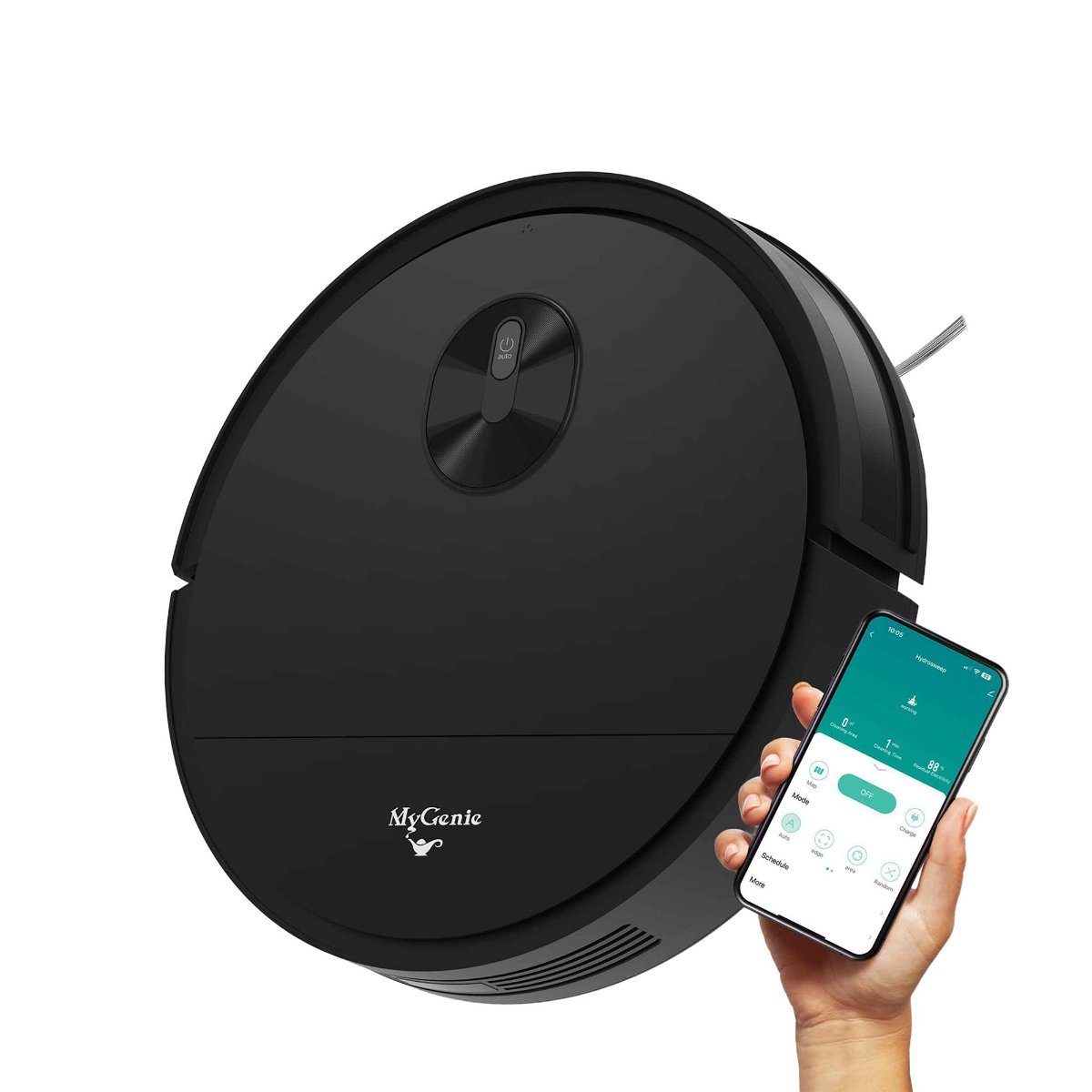
Eighty millimetres is the lowest profile here, roughly two centimetres under the Devanti models, and that gap decides whether the machine mops beneath a bed frame or stops at the edge of it. Floor that never gets mopped is where grime builds up longest.
Suction is 2500Pa, the lowest in this guide, across a three-in-one sweep, vacuum and mop system with dual side brushes and a central roller. The listing places it on hard floors and low-pile carpets, which is the honest boundary for that figure and worth taking at face value.
HEPA filtration and ultra-quiet running suit pet owners and allergy-sensitive homes, and it runs up to two hours before auto-recharging, with app and remote control both supported. Where a mopping robot exists to keep under-furniture floors from turning grey between proper cleans, height beats suction, and nothing here goes lower.
Pros
- 80mm high, the lowest profile in this guide
- 3-in-1 sweep, vacuum and mop
- Dual side brushes with central roller brush
- HEPA filtration and ultra-quiet operation
- Up to 2 hours runtime with auto-recharge
- App and remote control
Cons
- 2500Pa is the lowest suction here
- Hard floors and low-pile carpet only
- No mapping or no-go zones
Key specs: 2500Pa suction, 3-in-1 sweep vacuum and mop, dual side brushes with central roller, 80mm height, up to 2 hours runtime, auto-recharge, HEPA filtration, ultra-quiet operation, app and remote control.
CHECK CURRENT PRICE9. Roborock Q7T+ – Best Anti-Tangle Brush
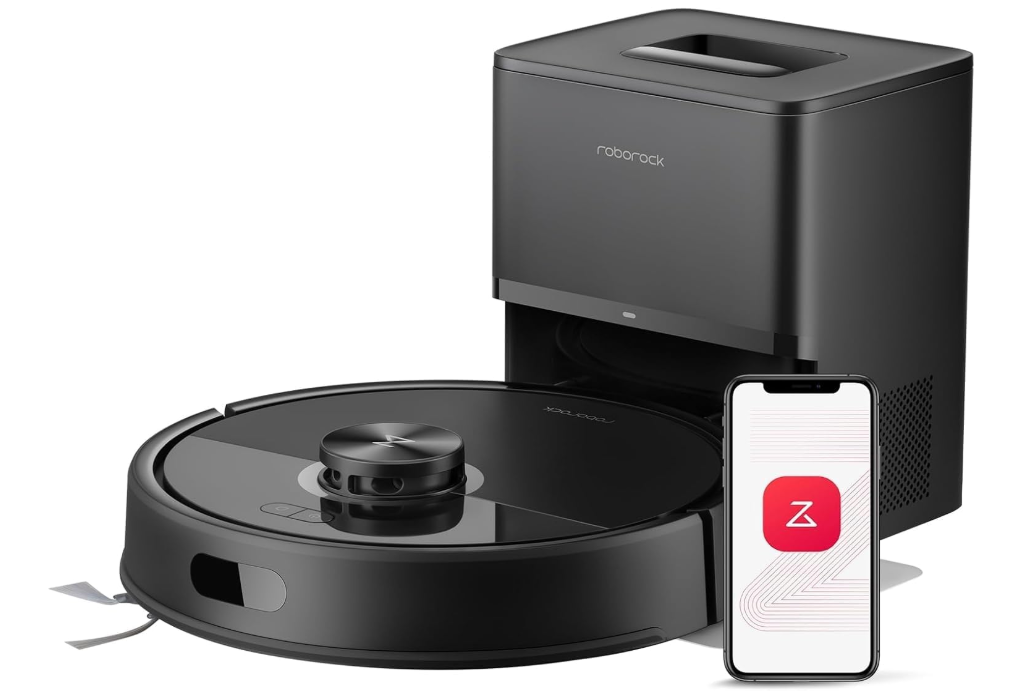
Ten thousand pascals is the point where this guide steps up a tier, and the anti-tangle hardware is what makes that suction sustainable. A JawScrapers comb main brush pairs with a tangle-free side brush so hair is cut and drawn through rather than wound into a collar.
On a combination machine, tangled hair does more damage than on a dry vacuum. A wrapped roller lifts off the floor slightly, which changes how evenly the mop behind it sits, so hair management and mopping quality are connected in a way that is easy to miss when comparing specification sheets.
Precise LiDAR builds 3D maps in seconds, and the app allows furniture, pet supplies and flooring materials to be added, so timber can be marked and treated differently from tile. A 400ml dustbin and 270ml tank support up to 150 minutes of mopping across three water flow levels, and the dock runs about seven weeks hands-free. It empties dust automatically but does not wash the mop, which the three machines below it do.
Pros
- 10,000Pa, double the strongest mid-range model here
- JawScrapers comb brush and tangle-free side brush
- About seven weeks hands-free dust emptying
- LiDAR 3D mapping with flooring marked in the app
- Three water flow levels for timber, tile and stains
- Vacuums and mops simultaneously
Cons
- Dock empties dust but does not wash the mop
- Substantial dock footprint
- 150 minute figure is mop-only running
Key specs: 10,000Pa HyperForce suction, DuoRoller JawScrapers main brush, tangle-free side brush, precise LiDAR 3D mapping, three app-controlled water flow levels, simultaneous vacuum and mop, 400ml dustbin, 270ml water tank, up to 150 minutes mopping, about 7 weeks hands-free.
CHECK ON AMAZON10. dreame L40 Ultra AE – Best Self-Washing Mop Dock
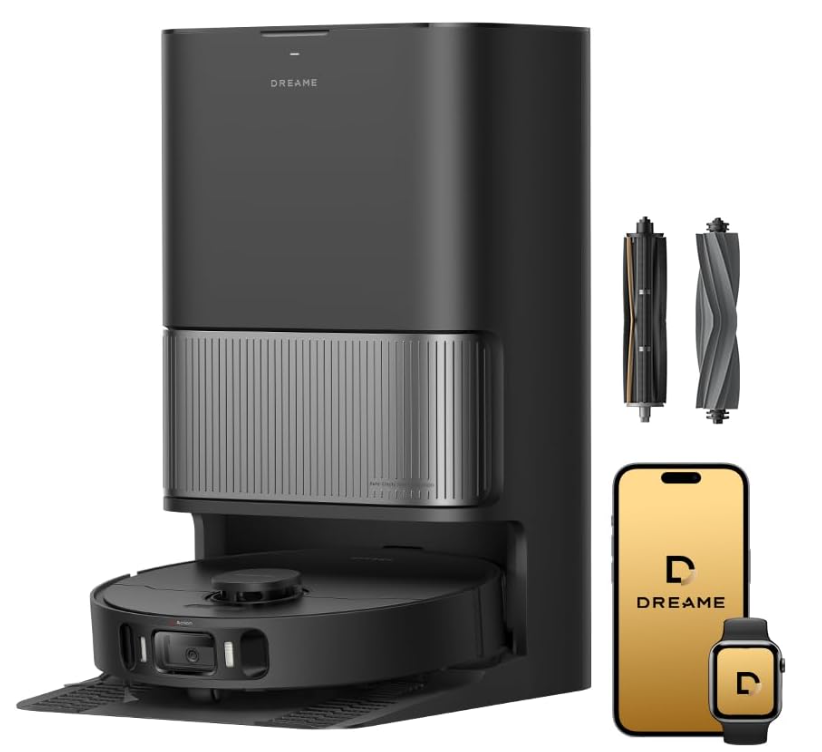
Washing the mop with 75 degree water and then hot-air drying it is the feature that separates this tier from everything above, because a pad that is rinsed between passes puts clean water on the floor instead of spreading the last room dirt. The PowerDock also self-empties dust for up to 100 days.
Mop lift is the other mechanism worth understanding. The pad raises up to 10.5 millimetres when the robot detects carpet, so a machine that mops tile and then crosses a rug does not drag a wet pad over it, which is the single most common complaint about combination robots without the feature.
Suction is 19,000Pa, and the brush arrangement pairs a TriCut brush that cuts long hair with a liftable rubber brush for large debris from floor gaps. MopExtend pushes the pad outward to reach edges and under furniture, and AI 3D obstacle avoidance recognises over 120 object types including cables and socks. Carpet handling is configurable between suction boost, mop lift or avoiding the zone entirely.
Pros
- 75 degree hot water mop washing with hot-air drying
- Self-empties dust for up to 100 days
- Mop lifts up to 10.5mm on carpet
- 19,000Pa with TriCut anti-tangle and liftable rubber brush
- MopExtend reaches edges and under furniture
- AI 3D avoidance recognising over 120 object types
Cons
- Premium outlay
- Full-size dock needs plumbing-free but permanent space
- More automation than a small apartment needs
Key specs: 19,000Pa suction, PowerDock with self-emptying to 100 days, 75 degree hot water mop washing and hot-air drying, mop lift to 10.5mm, TriCut anti-tangle brush plus liftable rubber brush, MopExtend edge coverage, AI 3D obstacle avoidance for 120-plus object types, configurable carpet modes.
CHECK ON AMAZON11. LEFANT M5 Max – Best Suction and Water Capacity
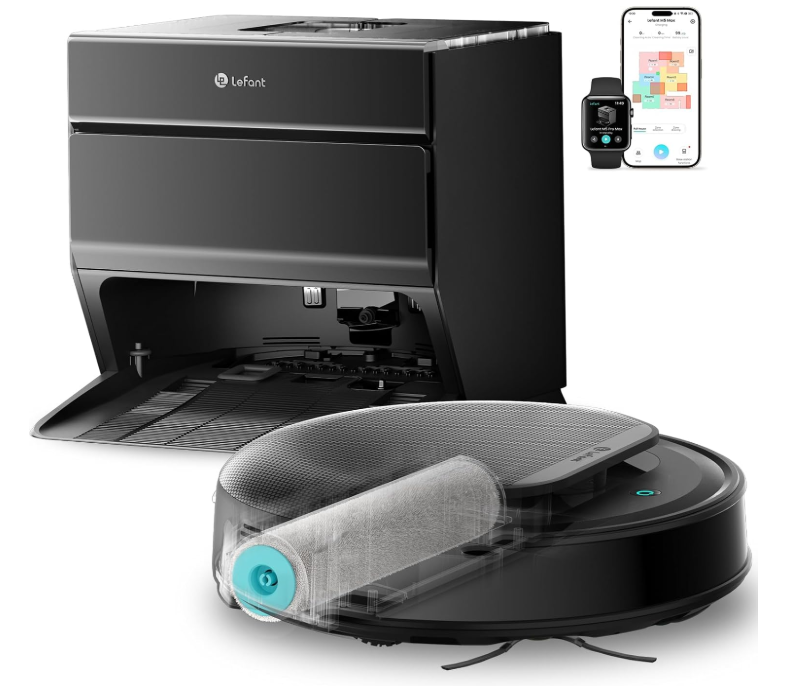
Twenty-five thousand pascals is the highest suction figure in this guide, ten times the entry-level model, and the water capacity is on the same scale: 2.5 litres clean and 2.5 litres dirty, against 200 to 350 millilitres on every onboard-tank machine here.
Separate clean and dirty tanks of that size change what a mopping robot can attempt. Onboard-tank models mop a room; this holds enough to mop a whole house several times over, and the sealed dirty tank means wastewater and debris never have to be handled by hand. The station washes the mop roller at 80 degrees and then cold-air dries it, with the drying duration selectable at two, three or four hours.
A V-shaped main brush works with a dual comb to guide hair into the suction path, and the manufacturer claims zero entanglement. A 3.2 litre auto-empty bag covers up to 120 days, the longest interval here. dToF navigation sweeps a 15 metre radius every 200 milliseconds, which maps faster than conventional LiDAR. Runtime is 180 minutes.
Pros
- 25,000Pa, the highest suction in this guide
- 2.5 litre clean and 2.5 litre dirty water tanks
- 3.2 litre auto-empty bag covering up to 120 days
- 80 degree hot water mop washing with selectable drying
- V-shaped brush and dual comb for zero entanglement
- dToF navigation sweeping every 200 milliseconds
Cons
- Large station footprint to house 5 litres of tanks
- Premium outlay
- Cold-air rather than hot-air mop drying
Key specs: 25,000Pa suction, V-shaped main brush with dual comb, 80 degree hot water roller washing, cold air drying selectable at 2, 3 or 4 hours, 3.2L auto-empty bag to 120 days, 2.5L clean and 2.5L dirty water tanks, dToF navigation over a 15 m radius every 200 ms, 180 minute runtime.
CHECK ON AMAZON12. ECOVACS DEEBOT T80 Omni – Best Roller Mop Scrubbing
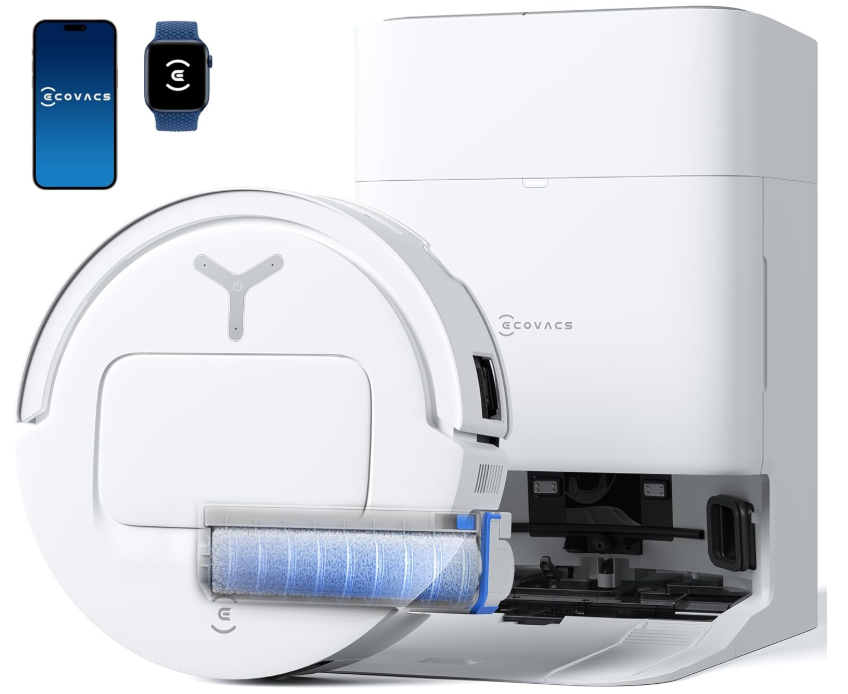
A roller mop turning at 220 rpm under sixteen times the pressure of a trailing pad is a different cleaning action entirely, and it is the reason this one belongs at the end of the guide. Every mid-range machine here wipes; this scrubs, and rinses in real time so each pass uses fresh water.
Dual spinning pads and flat trailing cloths both leave dirt lines because they redistribute what they pick up until someone rinses them. A roller that rinses continuously does not accumulate, which is the mechanical difference between maintaining a floor and actually cleaning it. TruEdge extends the roller to hug walls and furniture legs where dust collects along skirting.
Suction is 18,000Pa, and ZeroTangle 3.0 combines anti-tangle side brushes with a removable comb for the main roller, which the manufacturer puts at 90 per cent fewer wraps. The OMNI station handles ten functions including 167 degree Fahrenheit hot water mop washing, 113 degree hot air drying, self-emptying, refilling and re-mopping. It sits at the top of this guide and is the most automated machine in it.
Pros
- OZMO roller mop scrubbing at 220 rpm with 16x pressure
- Rinses in real time, so every pass uses fresh water
- TruEdge extends the roller to walls and furniture legs
- 18,000Pa suction
- ZeroTangle 3.0 reducing wraps by around 90 per cent
- 10-in-1 OMNI station with hot water washing and hot air drying
Cons
- Top of this guide for outlay
- OMNI station is large and needs permanent space
- Roller system means more consumable parts than a flat pad
Key specs: 18,000Pa suction, instant self-cleaning OZMO roller mop at 220 rpm with 16x pressure and real-time rinsing, TruEdge deep-edge cleaning, ZeroTangle 3.0 with anti-tangle side brushes and removable comb, 10-in-1 OMNI station with hot water mop washing, hot air drying, self-emptying, refilling and re-mopping.
CHECK ON AMAZONHow to Choose a Robot Vacuum and Mop
Ask what happens to the dirty water. This is the question that separates the two halves of this guide. Eight machines here carry a tank and drag a pad that keeps collecting grime until someone rinses it by hand. Four rinse the mop at the dock between passes with hot water, so what touches the floor is clean every time. On a large floor, that difference shows. Buyers who care mainly about dry pickup should compare the best robot vacuum in Australia instead, since two strong models there do not mop at all.
Check whether the mop lifts on carpet. A combination robot that mops tile and then crosses a rug will drag a wet pad over it unless the pad raises. One model here lifts up to 10.5 millimetres and offers carpet avoidance as an alternative. Without either, the practical answer is fencing the carpet off in the app, which needs a laser-mapping model to begin with.
Match tank size to floor area. Onboard tanks here hold 200 to 350 millilitres, which covers a kitchen and bathroom rather than a whole floor. The dock-fed machines carry 2.5 litres and refill the robot mid-run. If the plan is mopping one wet area a few times a week, an onboard tank is enough; whole-house mopping needs the larger system.
Pad, spinner or roller changes the cleaning action. A trailing pad wipes, spinning discs apply some pressure, and a powered roller scrubs. One machine here turns its roller at 220 rpm under sixteen times the pressure of a flat pad while rinsing continuously. For dried-on marks rather than light dust, that is the mechanism that matters. Set against every other format, the best vacuum cleaner in Australia puts these machines in context alongside barrels and cordless sticks.
Hair tangling affects mopping too. A brush roll wrapped in hair lifts slightly off the floor, which changes how the mop behind it sits and leaves uneven damp lines. Four machines here use anti-tangle brush designs, and in a home with pets or long hair that is worth more than an extra few thousand pascals.
Laser mapping earns its place on a wet machine. Streaks come from crossing the same damp floor twice, and a mapped robot plans rows instead of wandering. Mapping also enables no-go zones for timber thresholds and rugs, which a gyroscopic model cannot be told about. Six machines here map with LDS, LiDAR or dToF. Because a mop run is best scheduled for an empty house, home security cameras in Australia are a natural companion for checking on pets and on the robot itself while it works. Every appliance sold here carries consumer guarantees under Australian Consumer Law.
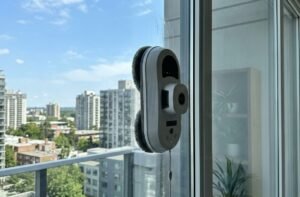
Robots can do the windows too: a robot window cleaner uses suction to climb the glass, with a safety rope as backup.
Frequently Asked Questions
Do robot mops actually clean floors properly?
They maintain floors well and scrub them only in the upper tier. A trailing damp pad lifts light dust and fresh marks, which handles daily upkeep. Dried-on spills need pressure, and only the roller and pressurised systems here supply it. Most households find a robot mop keeps floors presentable between occasional manual mopping rather than replacing it entirely.
What is a self-washing mop dock?
A dock that rinses the mop pad or roller between cleaning passes, usually with hot water, then dries it with warm or cold air. It matters because an unrinsed pad simply moves dirt from the first room into the last. Four machines in this guide wash at 75 to 80 degrees, and the rest need the pad rinsed by hand after each run.
Will a robot mop damage timber floors?
Not if the water level is controlled. Look for adjustable flow, since a single fixed rate that suits tile will over-wet floorboards. Several models here offer three water levels, and the laser-mapping machines can also be told to avoid timber areas entirely. Sealed timber generally tolerates a lightly damp pad; unsealed boards should be left alone.
How much water does a robot mop hold?
Onboard tanks in this guide run from 200 to 350 millilitres, which covers a kitchen and bathroom in one run. The dock-fed premium machines carry 2.5 litres in the station and refill the robot automatically, which is what makes whole-house mopping practical without a person topping it up.
Can it vacuum and mop at the same time?
Yes, and every machine here does. The brush and suction run at the front while the mop trails behind, so debris is lifted before water reaches it. That order matters, because mopping over loose dirt makes mud. What varies is whether the mop can be removed for dry-only cleaning, which most models allow.
Do I still need a regular vacuum?
Almost certainly. No robot here does stairs, upholstery, skirting boards or deep carpet properly, and mopping robots are built for hard floors specifically. Most households run one for daily maintenance alongside a stick vacuum for quick jobs or a barrel for weekly deep cleaning.
Verdict
Among the machines with onboard tanks, the Devanti Self-Empty 6000Pa offers the most complete package, pairing the strongest mid-range suction with laser mapping and a dock that empties the dust. Anyone whose real objection to robot mops is dirty water should step up to the dreame L40 Ultra AE, whose 75 degree mop washing and 10.5 millimetre mop lift address both the rinsing and the carpet problem in one machine. For dried-on marks rather than light dust, only the ECOVACS DEEBOT T80 Omni scrubs, turning a roller at 220 rpm and rinsing it in real time so every pass uses clean water.