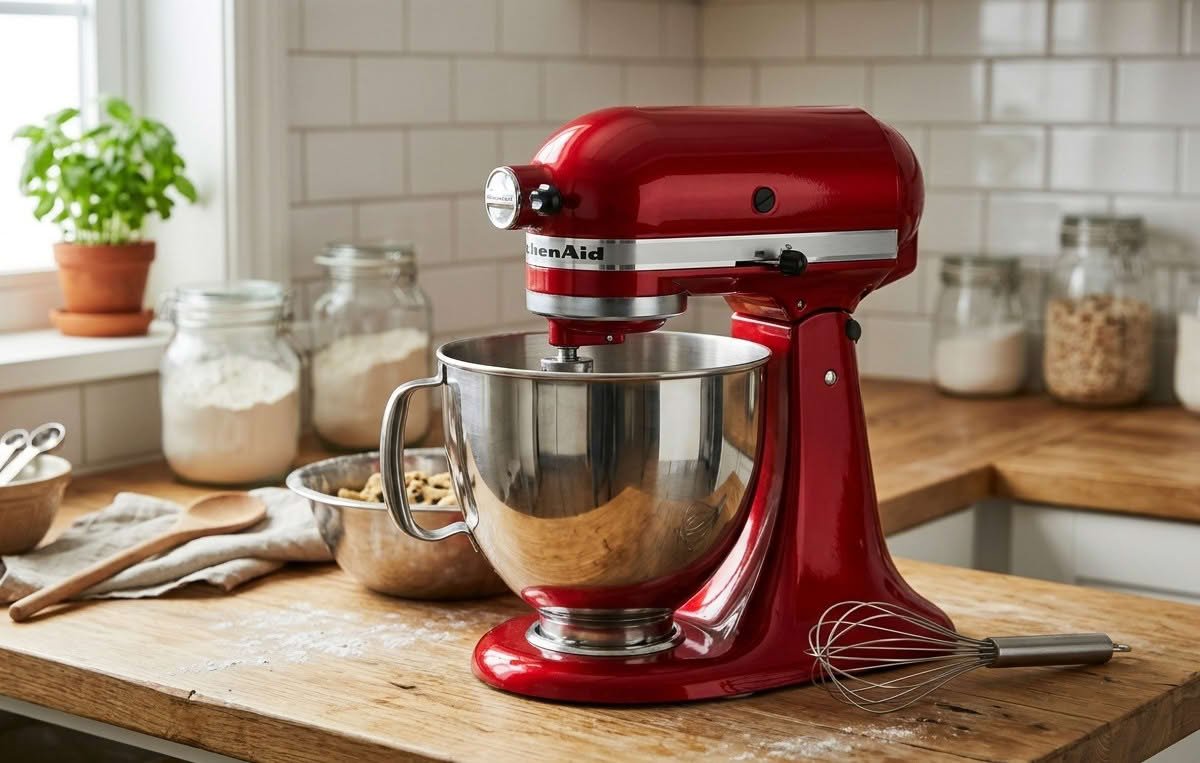
A stand mixer earns its bench space by doing the one job a hand mixer can’t: kneading real bread dough without your arms giving out halfway through. It’s a benchtop appliance with a motorised head that drives a beater, whisk or dough hook through a bowl locked onto the base, so the machine does the mixing while your hands stay free for the next step. Picking the best stand mixers in Australia for your own kitchen comes down to how heavy your baking actually gets and how much bench or cupboard space you’re willing to give up for it.
CHOICE splits stand mixers into two real categories worth knowing before you shop. Single tool attachment mixers use one drive shaft that swaps between a beater, whisk and dough hook, and handle heavier loads including real bread dough, the type a serious or regular baker wants. Twin tool attachment mixers run two smaller beaters side by side, whisk and mix well enough for cakes and batter, but struggle with anything dense, so dough still gets kneaded by hand. Beyond that split, compact mixers trade bowl size for a footprint that fits in a cupboard, and multi-function mixers add a grinder, blender or juicer attachment to the same motor base.
Bowl capacity is the spec that actually separates these nine picks, running from four litres up to seven across this lineup, and it decides how many dozen cookies or how much dough you can mix in one go without overloading the motor. The spec most buyers skip past is the attachment ecosystem: a mixer with a wide range of official add-ons (KitchenAid alone lists over a dozen) can become a pasta roller, a mincer or an ice-cream maker later, while a cheaper unit with no attachment line stays a mixer for its whole life.
Nine products make up this comparison, from a compact 4-litre unit built for a small kitchen to a multi-function machine that doubles as a blender and juicer. Every pick here comes from Amazon AU, because a full sweep of this site’s approved Australian retail partners turned up nothing beyond an unrelated concrete mixer at one hardware-focused merchant, no actual kitchen stand mixer in stock anywhere.
Best Stand Mixers Australia Compared
| Product | Link | Type | Best For | Key Spec |
|---|---|---|---|---|
| KitchenAid KSM45 Classic Tilt-Head Stand Mixer | Check price | Tilt-head, single tool | Iconic design | 4.3L / 275W |
| Bosch 7 in 1 Stand Mixer MUMS2VM40G | Check price | Multi-function | Blender, juicer, grinder | N/A / 900W |
| Sunbeam Mixmaster HeatSoft Planetary Stand Mixer | Check price | Tilt-head, heated bowl | Softening butter | 5.2L / 10 speeds |
| Breville the Scraper Beater Mixer | Check price | Tilt-head, scraper beater | Self-scraping design | 4.5L / 700W |
| Kenwood Go Compact Stand Mixer | Check price | Compact tilt-head | Small kitchens | 4L / 800W |
| DJZ 7L Stand Mixer | Check price | Tilt-head, heavy-duty | High-capacity batches | 7L / 1800W |
| Cuisinart SMD-50XA Precision Pro Digital Mixer | Check price | Tilt-head, digital | Value with digital controls | 5.2L / 1000W |
| Tefal Stand Mixer Bake Essential | Check price | Tilt-head, basic | Budget recognisable brand | 4.8L / 800W |
| Kitchen in the Box Fab Series Stand Mixer | Check price | Tilt-head, basic | Everyday budget use | 6L / 1300W |
How We Picked
The starting point was a stock sweep across every Commission Factory-partnered retailer this site works with, checked directly against each store’s own product catalogue. None stocked an actual kitchen stand mixer. Nine products were then shortlisted from Amazon AU, filtered for a recognisable brand with a real track record, genuine in-stock availability, and enough spread across price and bowl size that the list covers a small apartment kitchen through to a household that bakes bread weekly.
Cross-checks came from CHOICE’s kitchen mixer buying guide, which sets the single-tool-versus-twin-tool distinction used throughout this guide, and from ProductReview’s appliance reviews, where recurring buyer complaints about motor strain on heavy dough line up with the duty-cycle warnings on the lower-powered units here. We don’t physically test every product ourselves. Selections are informed by affiliate partnerships, but commission does not override editorial ranking when a lower-commission pick is the better one.
1. KitchenAid KSM45 Classic Tilt-Head Stand Mixer – Best Iconic Design
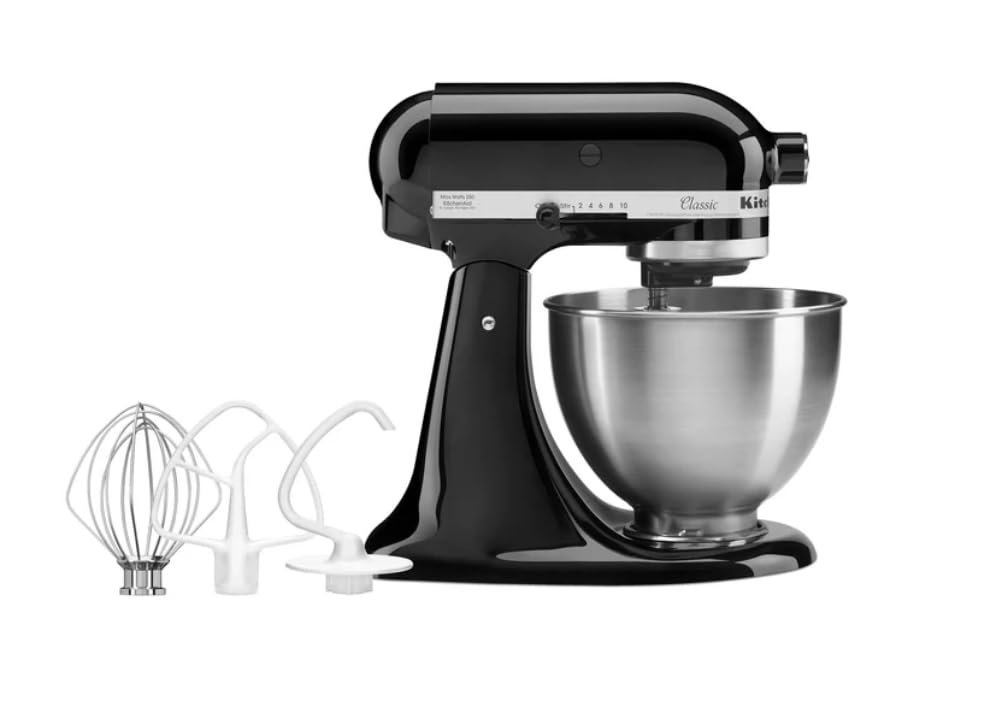
Ask most Australians to name a stand mixer and this is the shape they picture: the die-cast metal body, the tilt-head, the stainless steel bowl in a colour that’s meant to sit on the bench, not hide in a cupboard the way it might in a Melbourne apartment kitchen. The KSM45 is KitchenAid’s entry point into that design, 275 watts and 10 speeds driving a single tool through a 4.3-litre bowl, enough for roughly eight dozen cookies in one batch according to KitchenAid’s own figures.
The real case for paying more here isn’t this specific model’s power, it’s the ecosystem behind it. Over 18 official attachments exist for KitchenAid’s tilt-head range, a pasta roller, a food grinder, a spiraliser, each one clipping onto the same motor without buying a separate appliance. That’s the whole pitch. ProductReview.com.au’s buyers do flag the classic tilt-head range struggling on the densest bread doughs at this wattage, so anyone kneading sourdough weekly should look at the higher-wattage bowl-lift KitchenAid range instead of this entry model.
Pros
- The most recognisable stand mixer brand in Australia, with the widest attachment ecosystem of anything here
- Die-cast metal body built to outlast cheaper plastic-bodied units
- 4.7-star rating across the reviews this listing has collected
Cons
- 275W is on the lower end for a single-tool mixer, and dense bread dough pushes it
- Official attachments are sold separately and add up fast if you want more than the basics
Key specs:
- Motor: 275W, 10 speeds
- Bowl: 4.3L stainless steel
- Attachment type: single tool (beater, whisk, dough hook)
2. Bosch 7 in 1 Stand Mixer MUMS2VM40G – Best Multi-Function
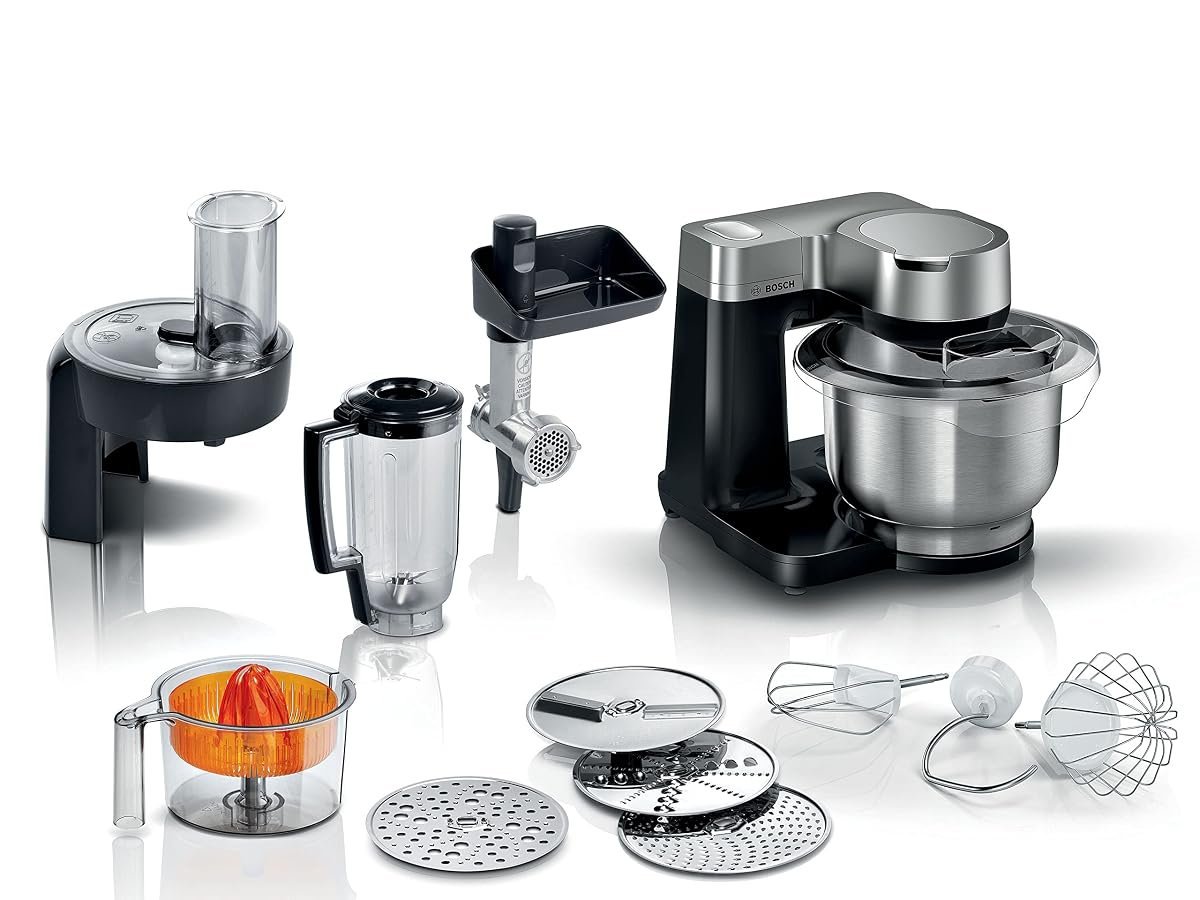
Most stand mixers stop at beater, whisk and dough hook. Not this one. It adds a blender jug, a juicer attachment and a grinder to the same 900W base, so a single appliance covers a smoothie, a batch of mince and a bowl of bread dough without three separate machines cluttering the pantry. For a smaller kitchen where every appliance has to earn its storage space, that’s a real point of difference from every other pick on this list.
The trade is complexity: more attachments mean more parts to wash, store and occasionally hunt for before a recipe. Sixty reviews sit at a 4.3-star average, a reasonable track record for a multi-function unit, though anyone who only wants a mixer and nothing else is paying for functions the Breville or Kenwood picks below don’t bother with.
Pros
- Blender, juicer and grinder attachments turn one motor into several appliances
- 900W motor, among the more powerful units on this list
- 60 reviews at 4.3 stars, a solid track record for a multi-function design
Cons
- More attachments to store and clean than a simple beater-whisk-hook mixer
- Priced at the top of this lineup, worth it only if the extra functions actually get used
Key specs:
- Motor: 900W, 7 speeds
- Attachments: dough hook, whisk, beater, blender, juicer, grinder
- Type: multi-function
3. Sunbeam Mixmaster HeatSoft Planetary Stand Mixer – Best for Softening Butter
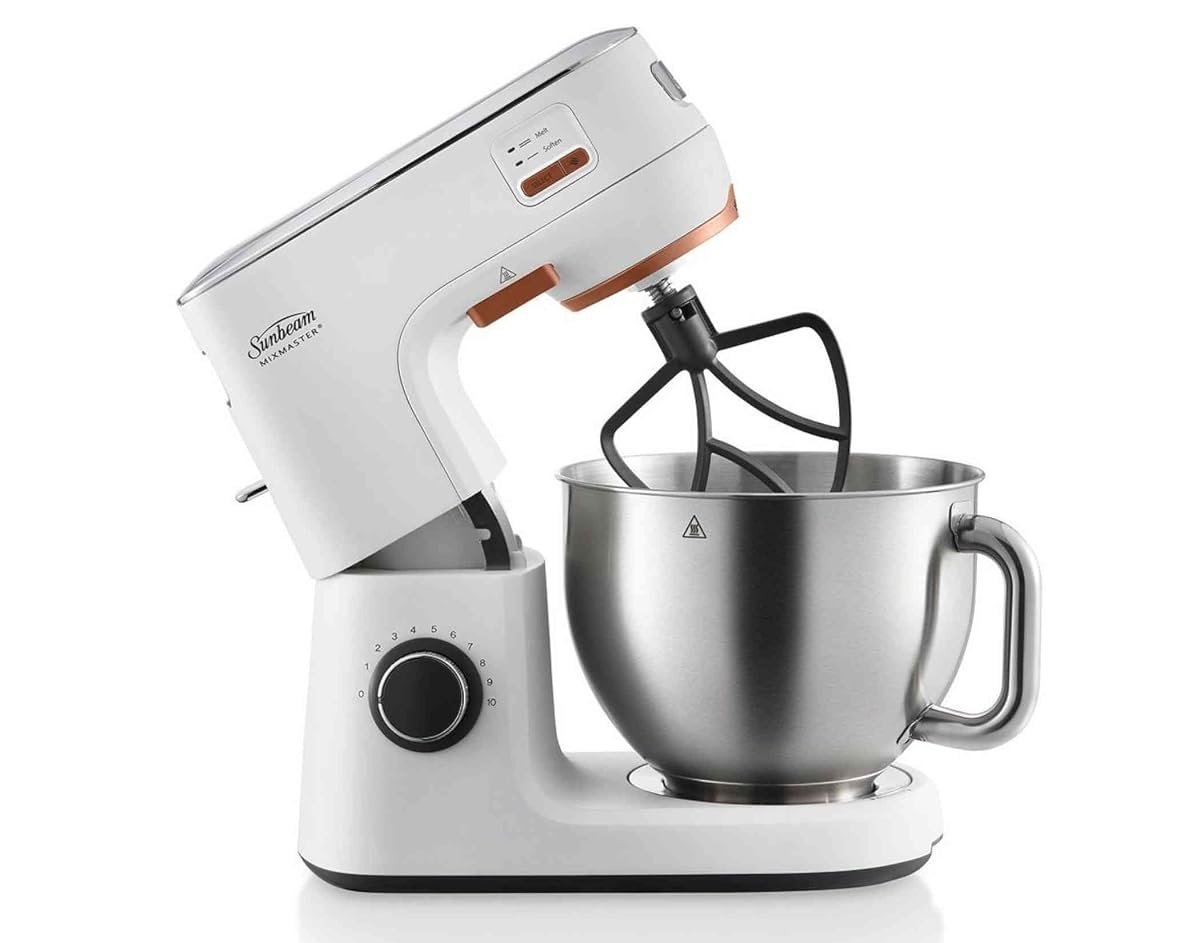
Softening butter to room temperature is the single most common thing a recipe asks for and forgets to give you time for. Sunbeam built a heating element into this bowl specifically to solve it: a Soften setting brings fridge-cold butter up to baking temperature in minutes, and a Melt setting goes hot enough to temper chocolate directly in the mixing bowl, no stovetop or microwave detour required.
It stands apart from the rest of this list because of that one feature, not because the base mixing performance is dramatically better. The 5.2-litre bowl and 10 speeds are competitive with the Bosch and Cuisinart above and below it in price, and the HeatSplash guard cuts down on the usual flour cloud when the head lifts. Seventeen reviews sit at a 4.0-star average, middling next to the KitchenAid and Kenwood picks here, so weigh the heating feature against a shorter review history before deciding it’s worth the premium.
Pros
- Built-in bowl heating softens butter or melts chocolate without a separate step
- 5.2L bowl, among the larger capacities on this list
- HeatSplash guard reduces mess when adding ingredients mid-mix
Cons
- 4.0-star average is lower than most other picks here, worth reading a few reviews before committing
- The heating feature adds a real cost premium over a mixer with the same bowl size and no heat function
Key specs:
- Motor: 10 speeds, 2 heat settings
- Bowl: 5.2L stainless steel
- Feature: HeatSoft bowl heating
4. Breville the Scraper Beater Mixer – Best Self-Scraping Design
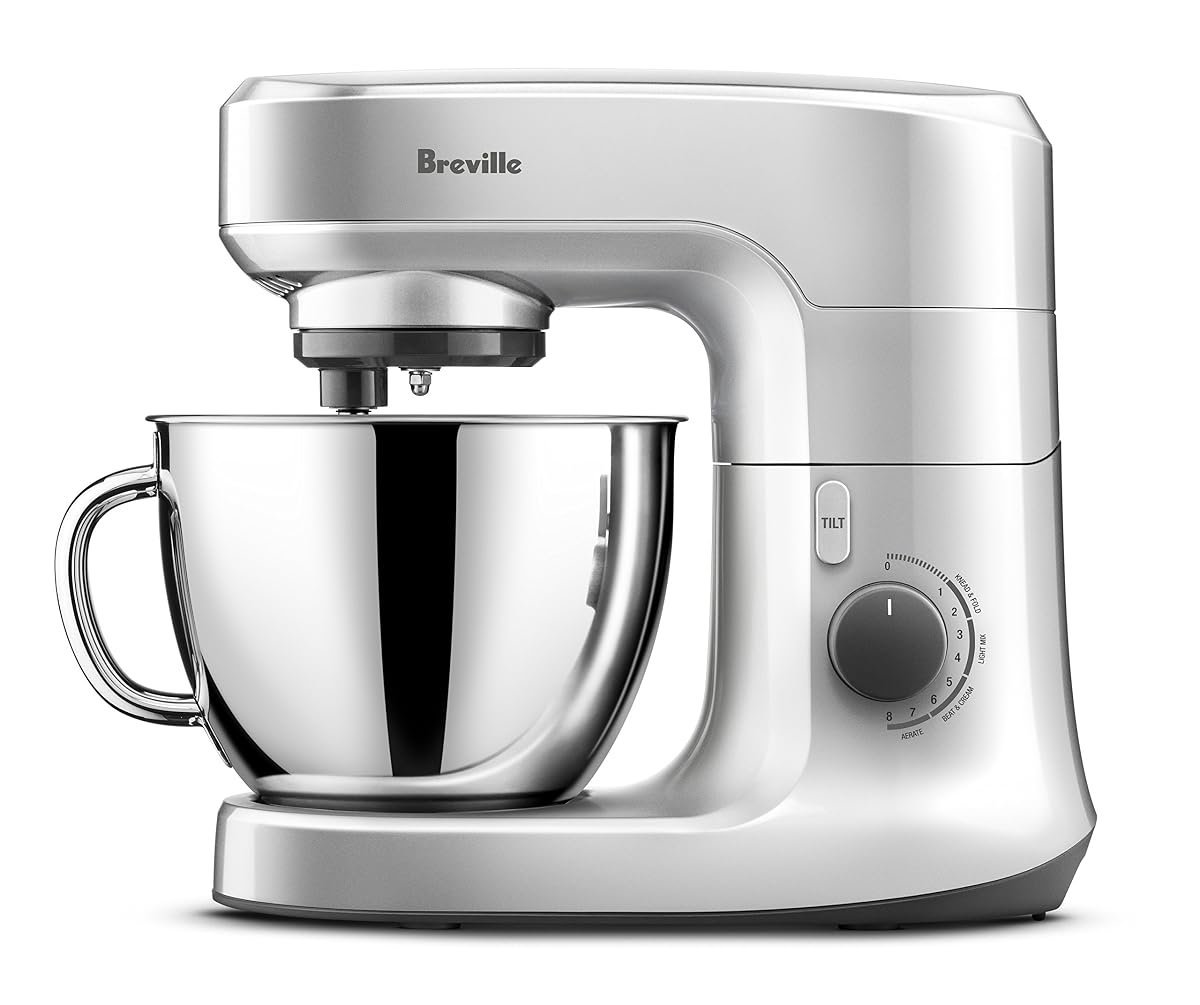
A rubber scraper edge runs around this beater’s rim, so it works its way around the inside of the bowl as it mixes, the exact feature CHOICE’s buying guide singles out as a real improvement, not a marketing add-on. Stopping the machine every few minutes to scrape down the sides by hand is the single most tedious part of using any stand mixer. This one is built specifically to cut that step out.
700 watts and 9 speeds through a 4.5-litre bowl put it squarely in the mid-tier alongside the Kenwood and DJZ picks either side of it, not a premium bowl-lift machine, but a well-reviewed everyday mixer at 56 reviews and 4.3 stars. ProductReview.com.au does carry a complaint or two about the Scraper Mixer overheating on dense bread dough pushed too far past its rating, so anyone baking sourdough loaves weekly should treat this as a cake-and-batter mixer first, not a bread machine.
Pros
- Scraper beater cuts down on manually scraping the bowl mid-mix
- 700W motor, a step up from the KitchenAid KSM45 above
- 56 reviews at 4.3 stars, a solid mid-tier track record
Cons
- Not built for continuous heavy bread dough the way a bowl-lift machine is
- 4.5L bowl is mid-sized, smaller than the Bosch, Sunbeam and DJZ picks here
Key specs:
- Motor: 700W, 9 speeds
- Bowl: 4.5L with double scraper beater
- Type: single tool, tilt-head
5. Kenwood Go Compact Stand Mixer – Best Compact, Space-Saving
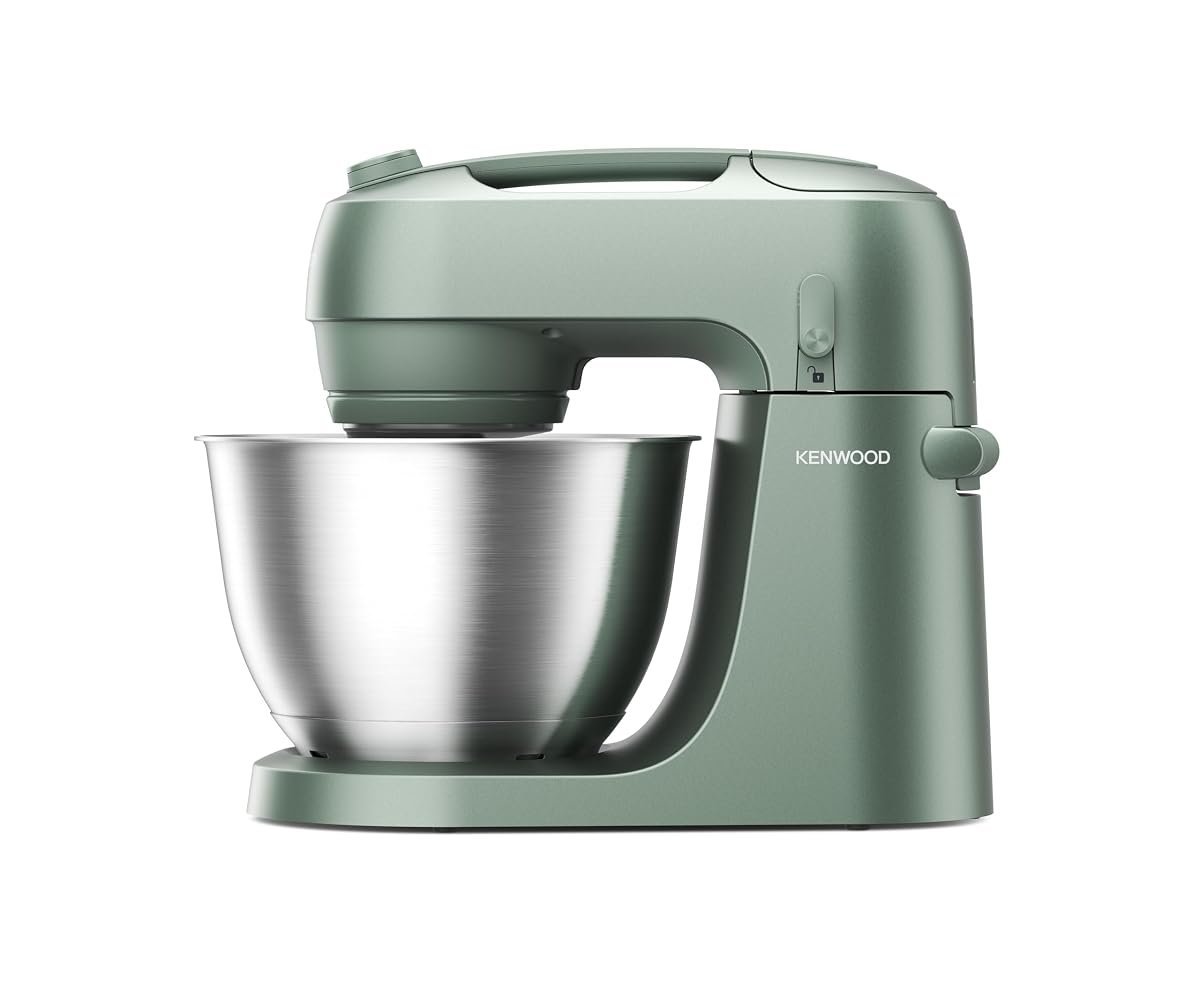
Thirty centimetres tall is short enough to fit under most kitchen cupboards without tilting it sideways, and the built-in carry handle means it’s designed to be stored away between bakes, not left permanently on the bench like the KitchenAid or Bosch above. For an apartment kitchen or a share house where bench space is already fought over, that’s the deciding factor, not raw power.
An 800-watt motor and a 4-litre bowl still stretch to 48 cupcakes or a batch of pizza dough in one go, according to Kenwood’s own figures, so the compact size isn’t costing much real capacity against the mid-tier competition. A rotating splash guard and an all-metal body round it out. Twenty-three reviews at 4.7 stars is a strong early track record, if a shorter one than the KitchenAid’s.
Pros
- 30cm tall, actually fits in a cupboard between uses
- All-metal body with a built-in carry handle for storage
- 4.7 stars across its reviews so far
Cons
- 4L bowl is the smallest capacity of the electric mixers on this list
- Fewer official attachments available than the KitchenAid range
Key specs:
- Motor: 800W, 6 speeds
- Bowl: 4L stainless steel
- Height: 30cm
6. DJZ 7L Stand Mixer – Best High-Capacity
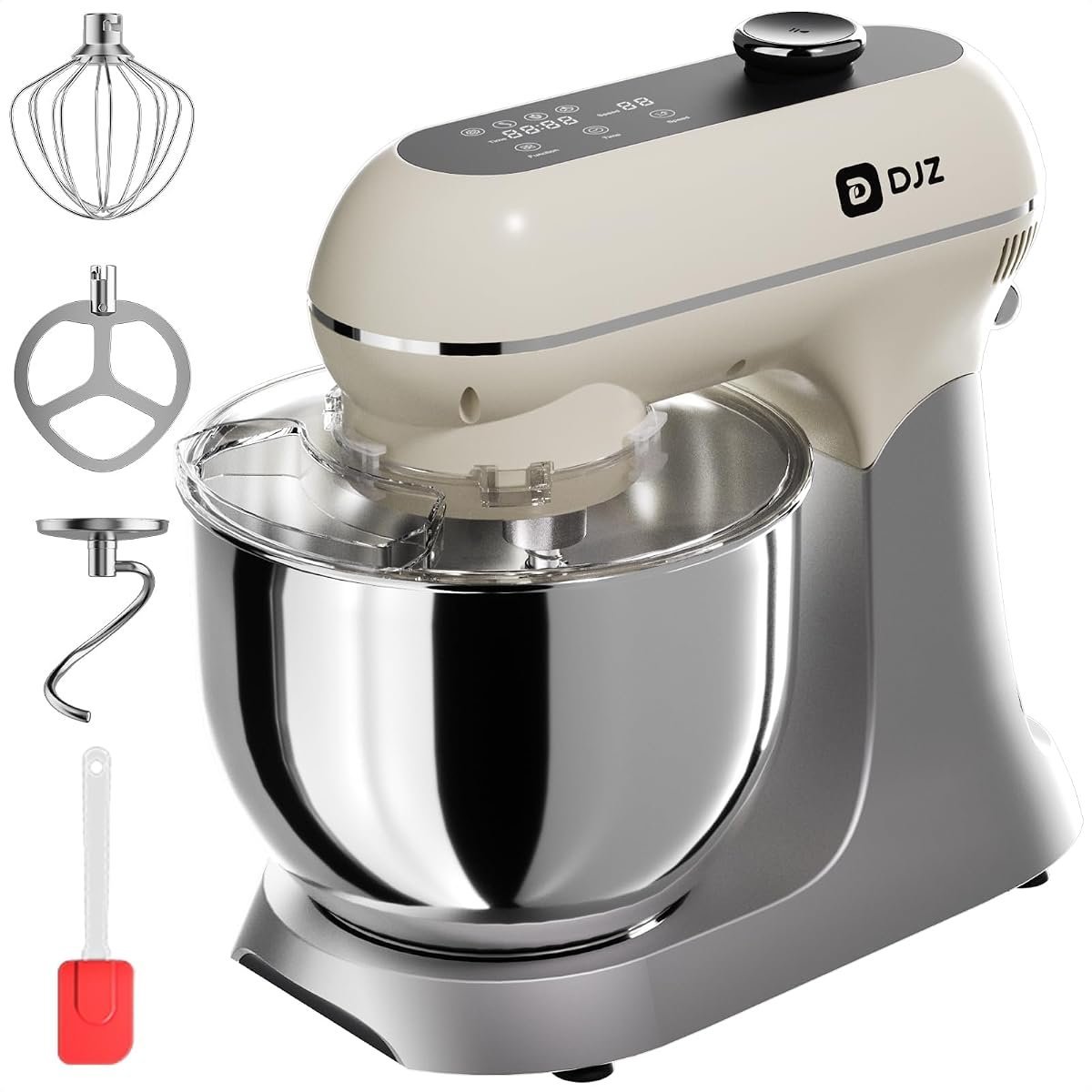
Seven litres is the largest bowl on this list by a real margin, and the 6-kilogram all-metal body behind it is built to stay planted on the counter while an 1800-watt motor works through a full kilogram and a half of dough. For a household that bakes for a crowd, a big family or a small home bakery testing recipes, that’s a different proposition entirely from the 4-to-5-litre mixers most of this list runs.
It’s also the newest and least-reviewed listing here, four reviews at a perfect average. Well, four reviews at five stars each, which is a promising sign but still a thin sample next to the KitchenAid’s or Kenwood’s review count. The dual knob-and-touch control and a claimed 55-decibel noise level (quiet enough for an early-morning bake before the rest of the house is up) are worth the trade-off if the bowl capacity is what you actually need, less so if you’re buying on brand reputation alone.
Pros
- 7L bowl and a 6kg all-metal body, built for properly large batches
- 1800W motor with 11 speeds, among the most powerful mixers on this list
- Claimed 55dB noise level, quieter than most stand mixers this size
Cons
- Review count is still thin, so the long-term reliability picture isn’t established yet
- Bulkier and heavier than every other pick here, worth checking it fits available bench space before ordering
Key specs:
- Motor: 1800W, 11 speeds
- Bowl: 7L stainless steel
- Weight: 6kg, all-metal body
7. Cuisinart SMD-50XA Precision Pro Digital Mixer – Best Value for Digital Controls
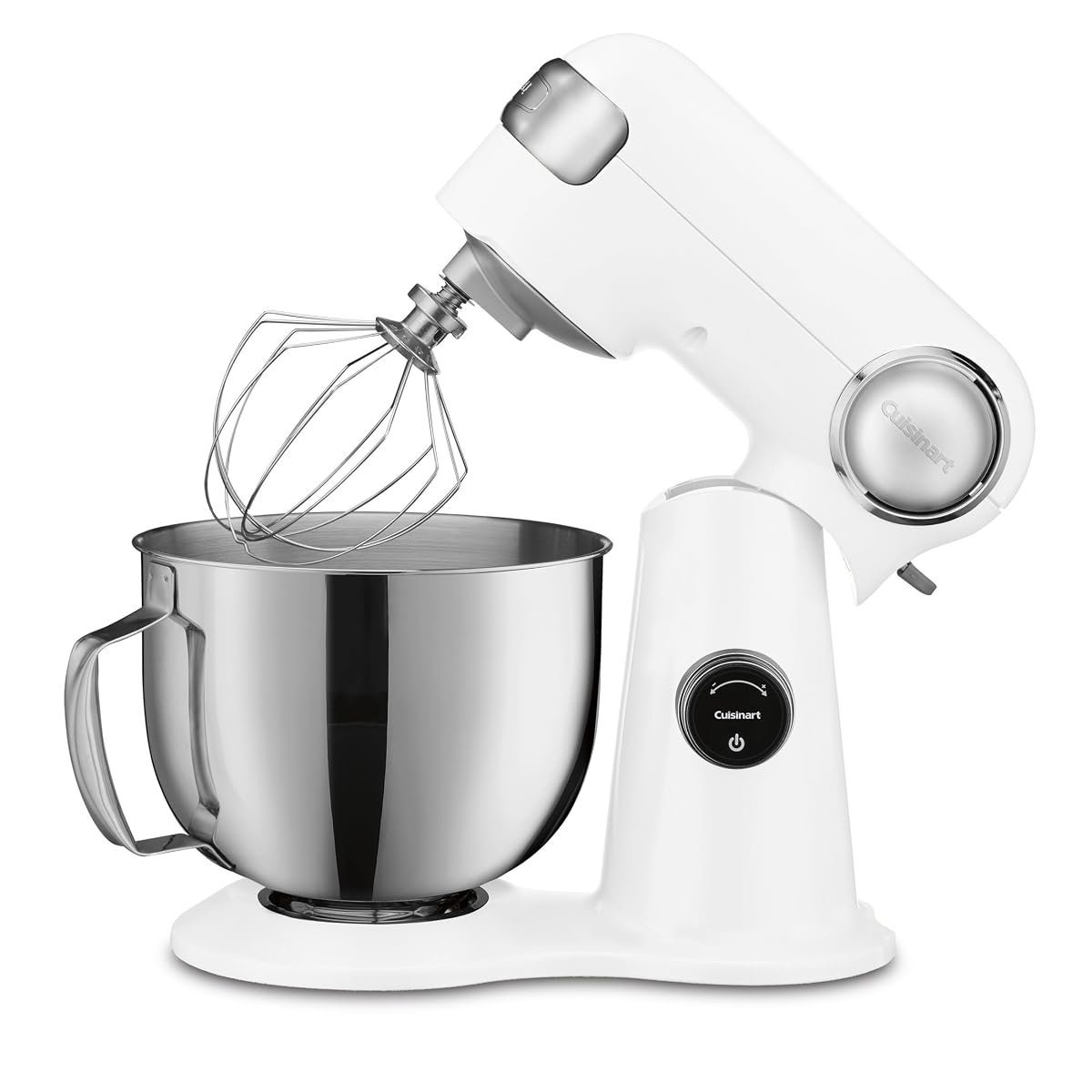
A 1000-watt motor and a 5.2-litre bowl put this on paper close to the Bosch and Sunbeam picks above, priced at roughly a quarter of what either of them costs. The difference shows up in the extras: a digital LED display with a countdown timer and 12 speed settings, features usually reserved for mixers well above this price point.
Attachment compatibility with an optional pasta maker and ice-cream maker keeps the KitchenAid-style ecosystem idea alive at a lower entry cost, though Cuisinart’s own attachment range is smaller than KitchenAid’s. Five reviews at 4.3 stars is a thin sample to judge long-term reliability against, so this is a value pick worth watching for a longer review history rather than one to buy purely on the spec sheet.
Pros
- 1000W motor and 5.2L bowl at a fraction of the Bosch or Sunbeam’s price
- Digital display with a countdown timer, unusual at this price point
- Compatible with optional pasta and ice-cream maker attachments
Cons
- Only five reviews so far, too few to call the reliability picture settled
- Attachment range is smaller than KitchenAid’s, so the ecosystem argument only goes so far
Key specs:
- Motor: 1000W, 12 speeds
- Bowl: 5.2L stainless steel
- Display: digital LED with timer
8. Tefal Stand Mixer Bake Essential – Best Budget Recognisable Brand
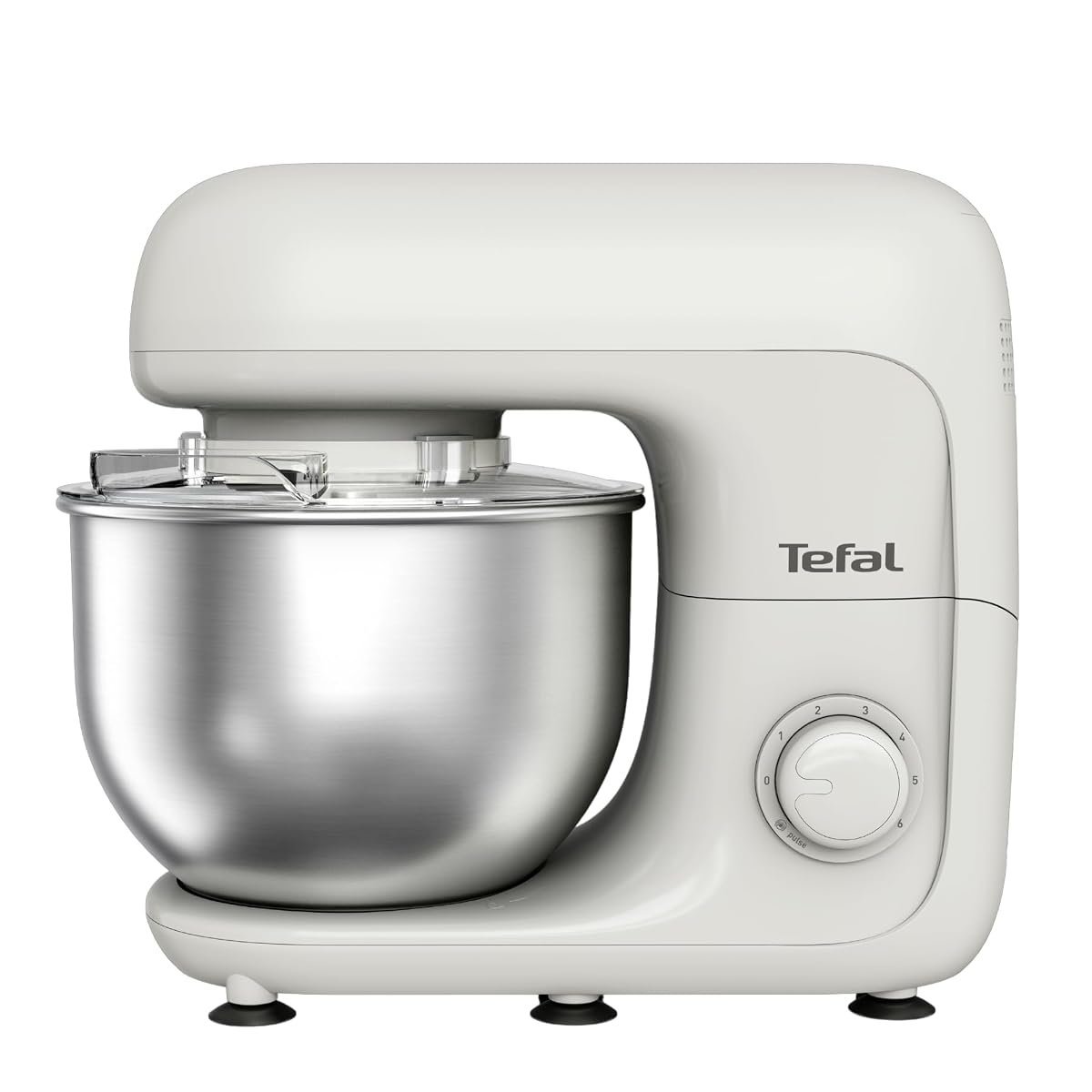
An 800-watt motor and a 4.8-litre bowl, enough for up to 1.8 kilograms of cake or cookie mixture in a single batch according to Tefal’s own figures, at a price that undercuts most of the mid-tier competition on this list. Tefal is a name most Australians already know from the small-appliance aisle at Harvey Norman or The Good Guys, not a generic marketplace brand with no history behind it.
It’s a straightforward machine: no digital display, no bowl heating, no multi-function attachments, just a planetary mixing action and a full pastry kit covering the basics most households actually need. Four reviews at 4.7 stars is early but promising, and it slots in as the sensible default for someone who wants a name-brand mixer without paying for features they won’t use.
Pros
- 800W motor and a 4.8L bowl at one of the lower prices on this list
- Recognisable, established small-appliance brand
- Full pastry kit (whisk, beater, dough hook) included as standard
Cons
- Review count is still low, worth watching for a longer track record
- No digital display or multi-function attachments if those matter to you
Key specs:
- Motor: 800W
- Bowl: 4.8L stainless steel
- Included: whisk, beater, dough hook
9. Kitchen in the Box Fab Series Stand Mixer – Best Everyday Budget Pick
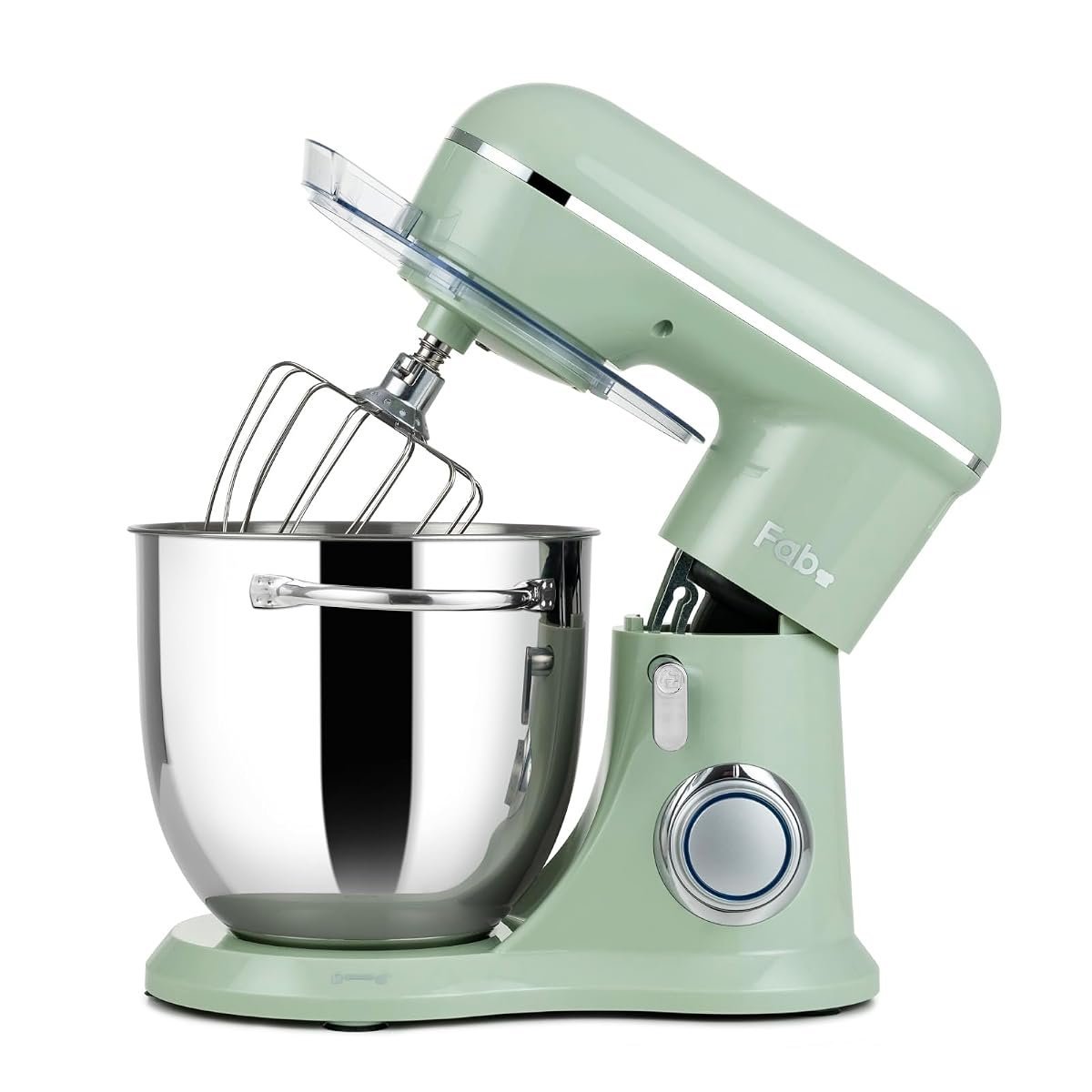
A 6-litre bowl and a 1300-watt motor with 10 speeds and pulse, priced under most of this list, and backed by 44 reviews at a 4.2-star average, an established track record for what’s a smaller, less well-known brand next to KitchenAid or Bosch. Dual handles on the bowl make it easier to lift off and pour than the single-handle bowls on some of the premium picks above.
This won’t match the KitchenAid’s attachment ecosystem or the Bosch’s multi-function range, and the brand doesn’t carry the same decades-long reputation Tefal or Sunbeam do. What it offers is a properly large bowl and a real speed range for an everyday household that bakes regularly but doesn’t need a pasta roller or a juicer attachment down the track.
Pros
- 6L bowl, one of the largest capacities on this list at this price
- 44 reviews at 4.2 stars, an established track record for a smaller brand
- Dual bowl handles make lifting and pouring easier than a single-handle design
Cons
- No attachment ecosystem beyond the included tools
- Brand doesn’t carry the decades-long reputation of Tefal, Sunbeam or KitchenAid
Key specs:
- Motor: 1300W, 10 speeds plus pulse
- Bowl: 6L stainless steel, dual handles
- Included: dough hook, beater, whisk
How to Choose a Stand Mixer in Australia
Decide between single tool and twin tool attachments first. CHOICE’s testing found single tool mixers, the type every pick in this guide uses, handle heavier loads and real bread dough. Twin tool mixers mix and whisk well but generally can’t cope with dense dough, so you’d still be kneading by hand.
Match bowl capacity to what you actually bake, not what looks impressive on the shelf. A 4-litre bowl like the Kenwood Go’s covers cakes and small batches without dominating the bench. Step up to the DJZ’s 7 litres only if you’re regularly baking for a crowd or running a small home bakery.
Motor wattage matters more once dough gets involved. Whisking cream or beating cake batter barely stresses any motor on this list. Kneading a full batch of bread dough is where a 275W entry-level mixer works harder than an 800W-plus unit, and where ProductReview.com.au’s overheating complaints tend to cluster.
Think about the attachment ecosystem before you buy, not after. KitchenAid’s range of over a dozen official attachments turns the same motor into a pasta maker or a mincer down the track. A cheaper mixer with no attachment line stays exactly what it is on day one. If you already own a bread maker for loaves, you may not need a mixer with a dough hook at all, just one that whisks and beats well.
Storage space decides more than most buyers expect. Got a bench already crowded with a kettle, a toaster and a coffee machine? A stand mixer left permanently out needs to earn that spot, especially in a Brisbane apartment or a Sydney share house where bench space is already tight. The Kenwood Go’s 30cm height and carry handle exist specifically for a kitchen where the mixer lives in a cupboard between bakes, not on permanent display like the KitchenAid.
Check the scraper and splash guard details, not just the headline speed count. CHOICE flags a scraper beater and a splash guard that lifts away with the motor head as a real usability improvement, not marketing filler. The Breville pick above builds the scraper into the beater itself instead of treating it as an optional extra.
You’ll Also Want
A digital kitchen scale makes bread and pastry recipes far more consistent than measuring cups, since baking ratios are typically given by weight, not volume, in most serious recipes.
Silicone baking mats or a set of proper cake tins round out what a stand mixer’s dough hook and beater actually produce, worth having on hand before the first big bake instead of improvising with foil.
If bread is the main reason you’re looking at a dough hook, a dedicated bread maker automates the whole loaf, from kneading through to baking, in one machine, no stand mixer plus oven combination needed.
A food processor covers the chopping, grating and pureeing jobs a stand mixer isn’t built for, a different tool worth pairing, not a substitute.
Frequently Asked Questions
What’s the difference between a stand mixer and a hand mixer?
A stand mixer holds its own bowl on a base and drives the beater or dough hook itself, freeing your hands for other tasks and handling heavier loads like bread dough. A hand mixer needs to be held throughout and generally can’t cope with dense dough the way a stand mixer can. If bread is the main reason you’re buying, a stand mixer with a genuine dough hook is the safer choice.
Do I need a mixer with more than one attachment?
Only if you plan to use them. A basic beater, whisk and dough hook set covers cakes, cream and bread dough, which is most home baking. Extra attachments like a pasta roller, grinder or blender jug, as seen on the Bosch pick above, add real versatility but also add cost, storage space and cleaning. Buy the ecosystem only if you’ll actually use more than the basics.
How much bowl capacity do I actually need?
Most households bake comfortably with a 4-to-5-litre bowl, which covers a standard cake, a batch of cookies or a loaf of bread dough. Go larger, toward the 6-to-7-litre bowls covered above, only if you’re regularly baking for a crowd, running a small home bakery, or want the extra headroom for bigger batches without splashing over the rim.
Why does my stand mixer overheat on bread dough?
Dense bread dough puts far more load on a motor than whisking cream or beating cake batter, and a lower-wattage mixer worked past its rating will overheat as a protective response. This is the single most common complaint pattern across budget-to-mid stand mixers on ProductReview.com.au. If you knead bread regularly, a higher-wattage single-tool mixer, not a twin-tool budget model, is the safer buy.
Are stand mixer attachments interchangeable between brands?
No. Attachment mounts are brand-specific and usually model-range-specific within a brand, so a KitchenAid attachment won’t fit a Bosch or Kenwood mixer, and even within KitchenAid’s own range, tilt-head and bowl-lift models use different attachment hubs. Check the exact model’s attachment compatibility before buying an add-on instead of assuming any stand mixer accessory fits any stand mixer.
Is a more expensive stand mixer always better?
Not necessarily. CHOICE’s own testing has found cheaper models that perform well and pricier ones that don’t, so price isn’t a reliable stand-in for quality on its own. What actually differs at a higher price is motor power for heavy dough, build quality under daily use, and access to a wider attachment ecosystem, features worth paying for only if you’ll actually use them.
Verdict
For most Australian households, the KitchenAid KSM45 remains the easiest recommendation here: the widest attachment ecosystem of anything on this list, a design that holds its resale value, and a track record longer than any other pick. Anyone wanting one machine to replace a blender and a mincer as well as a mixer should look at the Bosch 7-in-1 instead. For a small kitchen where storage space is the real constraint, the Kenwood Go’s 30-centimetre footprint solves a problem no amount of extra power fixes, and the Cuisinart Precision Pro is the pick for digital controls without the KitchenAid price tag.