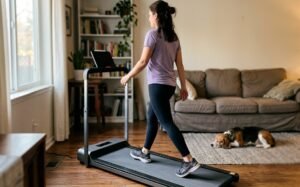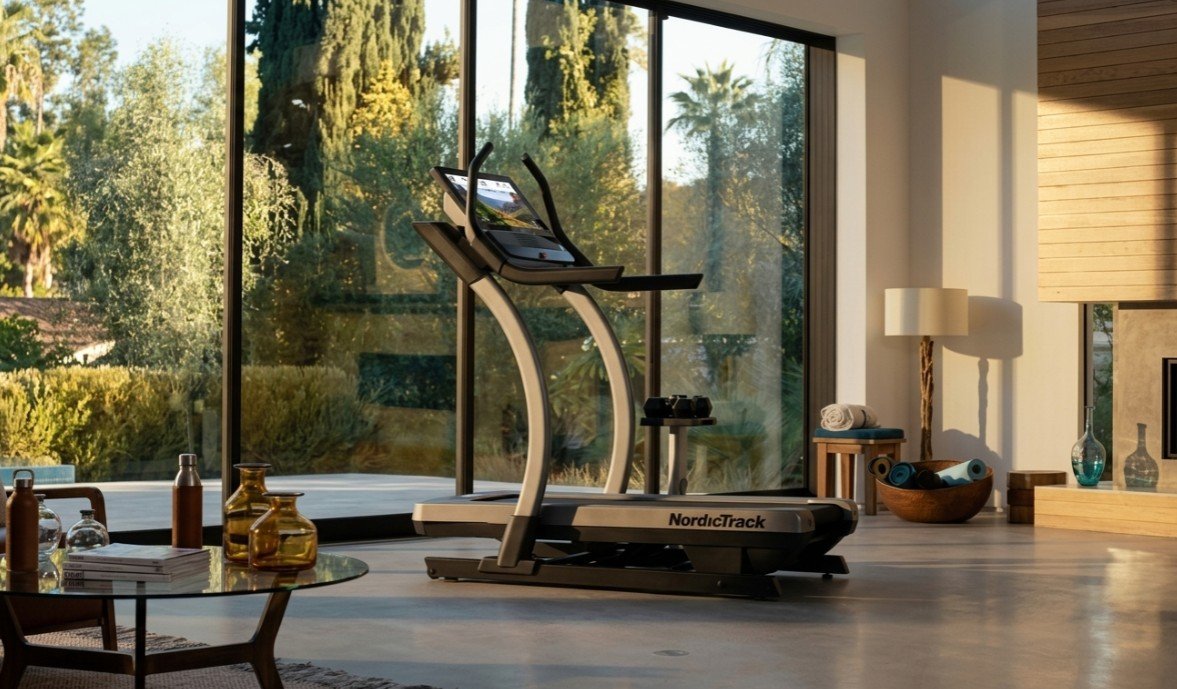
A treadmill is a motorised belt in a frame that lets you walk or run on the spot, with the motor setting the pace and the deck absorbing the impact your joints would otherwise take. The best treadmills in Australia are separated by three numbers before anything else: belt size, motor power and weight capacity.
Four kinds sit under the name. Running treadmills carry wide belts, handrails and motors above 2hp. Walking treadmills use narrower belts and slower top speeds. Incline trainers are built to climb rather than run flat. Folding treadmills trade belt length for a frame that stores away.
Belt width is the specification most people underestimate. Machines here run from 36cm to 50cm, and below about 45cm a natural running arm swing starts clipping the rails, which is why a 500mm belt costs what it does. After that, compare motor power against your intended pace, then the weight capacity, which spans 100kg to 150kg across this guide.
This guide compares ten treadmills sold in Australia, from a 1.0hp folding walker to a 40-level incline trainer. If the machine is going under a standing desk rather than in a spare room, our walking pad comparison covers that shape instead.
Quick Picks
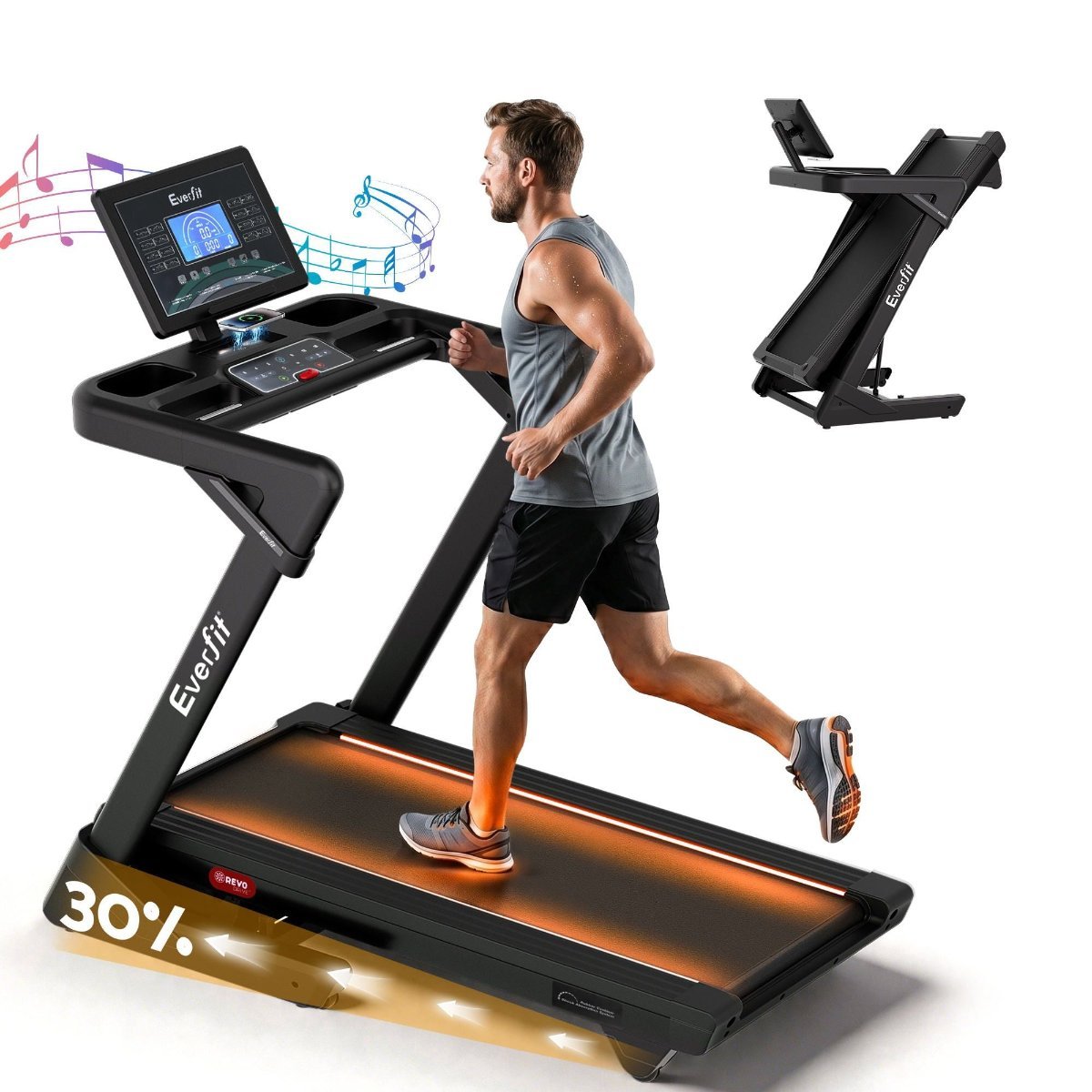
Everfit 500mm Wide Belt Treadmill with 30 Percent Auto Incline
A 130 x 50cm belt, 5.0hp motor and 30 percent auto incline.
CHECK CURRENT PRICE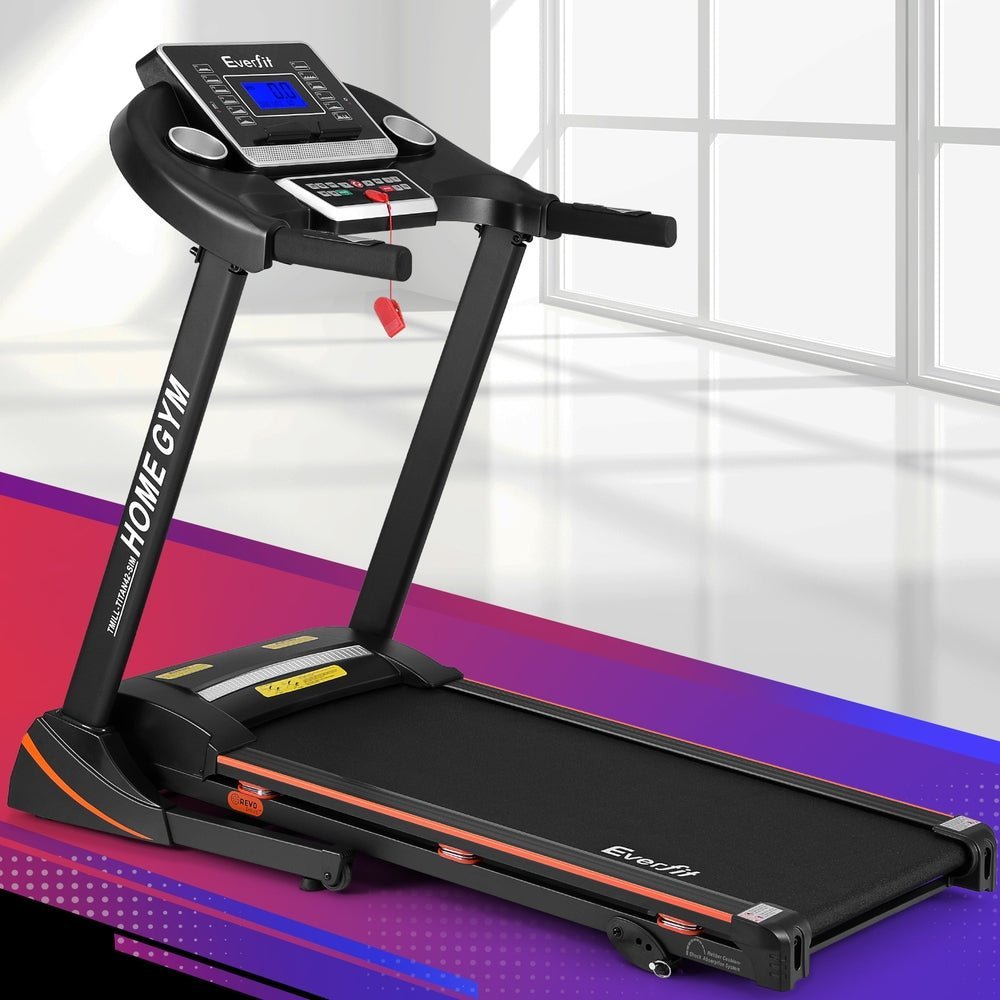
Everfit 420mm Treadmill with Hydraulic Fold
2.5hp across 0.8 to 18km/h, on six-point deck suspension.
CHECK CURRENT PRICE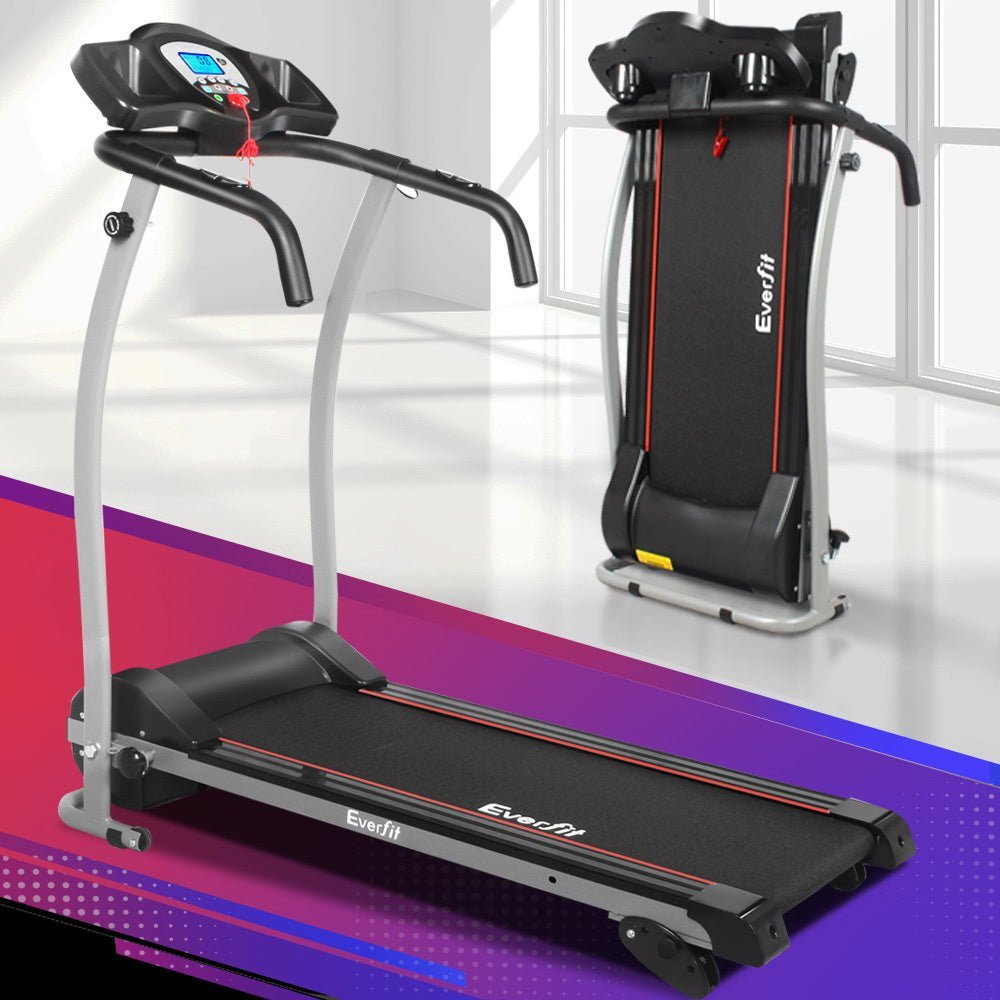
Everfit 360mm Foldable Treadmill
The cheapest full-frame treadmill here, with 12 programs and a folding deck.
CHECK CURRENT PRICEThe 10 Best Treadmills in Australia Compared
| Product | Link | Type | Best For | Key Spec |
|---|---|---|---|---|
| Everfit 500mm Wide Belt Treadmill with 30 Percent Auto Incline | Check price | Running treadmill | Genuine running | 130 x 50cm belt, 5.0hp, 24km/h |
| Everfit 480mm Treadmill with Massager | Check price | Running treadmill | Warm-down at the machine | 132 x 48cm belt, 5.0hp, massager |
| Everfit 450mm Treadmill with Auto Level Incline | Check price | Running treadmill | Programmed gradients | 3.5hp, auto incline, 5.5in LCD |
| Everfit 420mm Treadmill with Hydraulic Fold | Check price | Running treadmill | Jogging without the bulk | 2.5hp, 0.8 to 18km/h, 420mm belt |
| Everfit 450mm Fully Foldable Treadmill | Check price | Running treadmill | Storing under a bed | Folds to 12cm thick, 35.5kg |
| Everfit 400mm Treadmill with Manual Incline | Check price | Running treadmill | Walking on a gradient | 3 manual incline levels, 2.0hp |
| Everfit 360mm Foldable Treadmill | Check price | Walking treadmill | A first treadmill | 1.0hp, 36cm belt, 12 programs |
| Advwin Electric Incline Treadmill with LED Display | Check price | Walking treadmill | Apartments | 26.5cm folded height, 3 incline steps |
| Everfit CM01 Auto Incline Trainer | Check price | Incline trainer | Serious gradient work | 40 incline levels, 145cm belt |
| XTERRA Fitness TR150 Folding Treadmill | Check price | Running treadmill | An established brand | 41 x 127cm belt, 12 programs |
1. Everfit 500mm Wide Belt Treadmill with 30 Percent Auto Incline – Best for Runners
A 130 by 50cm belt is what separates a treadmill you can run on from one you walk on. Fifty centimetres of width means a natural arm swing does not clip the rails, and 130cm of length holds a full stride at pace rather than forcing you to shorten it.
Behind it sits a 5.0hp motor topping out at 24km/h, which is faster than most people will ever set it, and a 30 percent auto incline that reaches gradients a hill session actually needs. Sixteen programs and a patented wheel-buffer shock absorption system handle the rest, with LED lighting around the frame.
It weighs 77.9kg and stands 157 by 89 by 147cm unfolded, so this is a machine for a garage or a dedicated room rather than a bedroom corner, though the hydraulic fold-down takes the effort out of putting it away. Capacity is 150kg and it needs assembling.
Pros
- 130 x 50cm belt, wide enough for a natural running stride
- 5.0hp motor reaching 24km/h
- 30 percent auto incline for hill sessions
- 150kg weight capacity
- Hydraulic fold-down and patented shock absorption
Cons
- 77.9kg and 157cm long unfolded
- Assembly required
Key specs: 130 x 50cm running belt, 5.0hp motor, 1 to 24km/h, 30 percent auto incline, 16 programs, 150kg capacity, hydraulic fold-down, 157 x 89 x 147cm unfolded, 77.9kg, 1 year warranty.
CHECK CURRENT PRICE2. Everfit 480mm Treadmill with Massager – Best with Recovery Built In
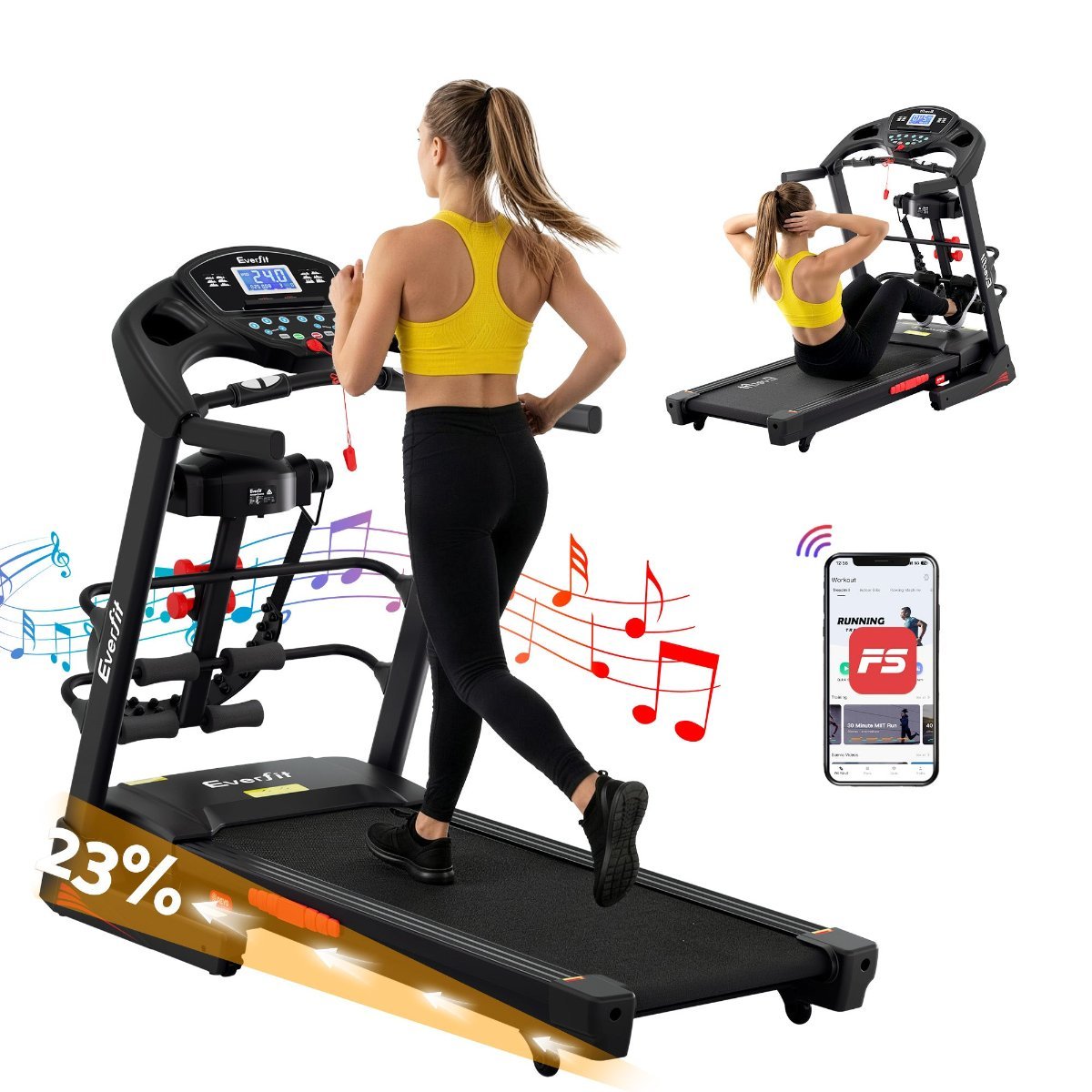
The massage belt on the front of this one is the unusual part, and it earns its place more than it sounds like it should: the ten minutes after a run are when most people skip the warm-down entirely, and having it attached to the machine removes the excuse.
The running surface is 132 by 48cm on a 16mm deck with a 1.6mm belt, driven by the same 5.0hp motor and 24km/h ceiling as the flagship above. Twelve programs and the same wheel-buffer shock absorption carry over, along with hydraulic folding.
At 183.5cm long unfolded it is the longest machine here, so measure the room before ordering, and 73.5kg net means two people to position it. Capacity matches the flagship at 150kg.
Pros
- Built-in massage belt for warm-downs
- 132 x 48cm belt on a 16mm deck
- 5.0hp motor to 24km/h
- 150kg capacity
- Hydraulic fold-down
Cons
- 183.5cm long unfolded, the longest here
- Heavy at 73.5kg net
Key specs: 132 x 48cm running belt, 5.0hp motor, 1 to 24km/h, 12 programs, built-in massager, 1.6mm belt on a 16mm board, 150kg capacity, hydraulic fold-down, 183.5 x 80.5 x 134.5cm, 73.5kg.
CHECK CURRENT PRICE3. Everfit 450mm Treadmill with Auto Level Incline – Best for Hill Training
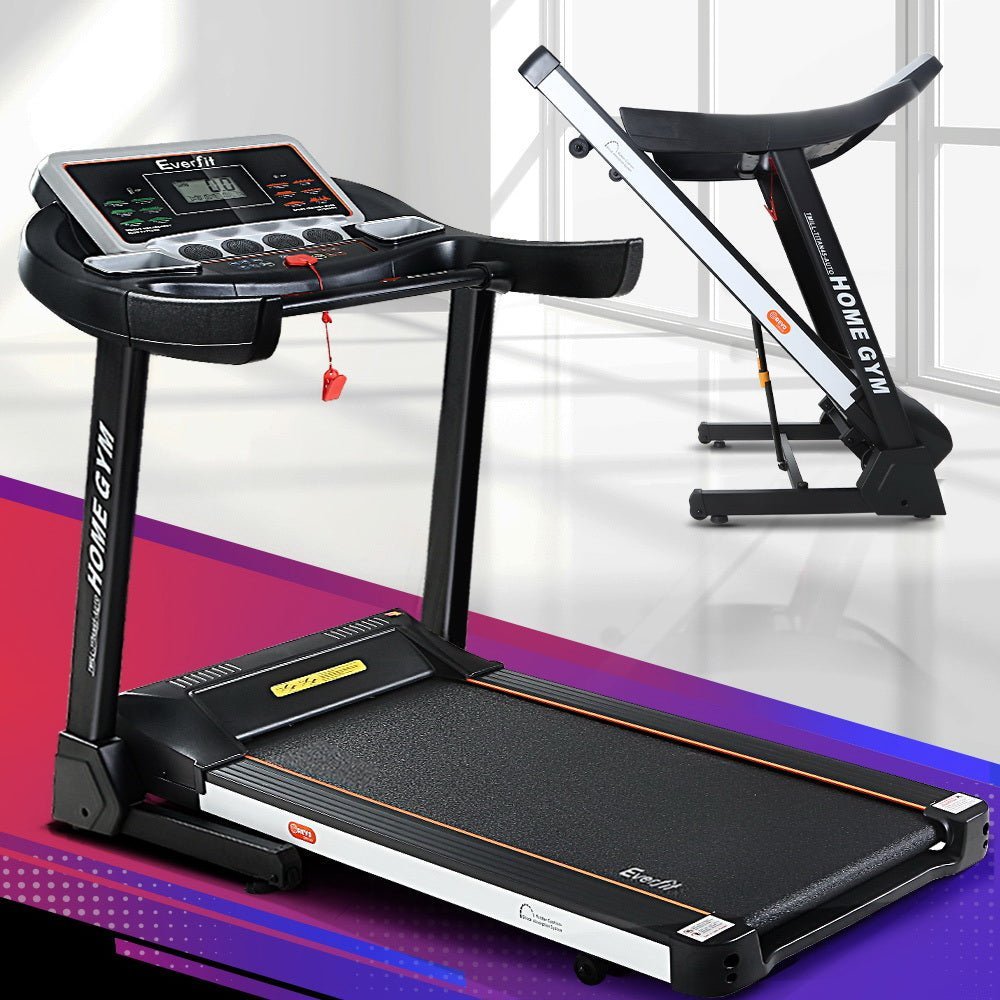
Motorised incline is the feature worth paying for on a mid-range machine, because a gradient you can change mid-run without stopping is the difference between following an interval program and inventing one. This one adjusts from the console.
A 3.5hp motor runs 18 speed levels across 12 programs, and the 450mm belt sits on six rubber cushion suspension points plus the wheel-buffer patent. A 5.5-inch LCD is the largest screen in the Everfit range here, and four speakers with MP3 and USB connection handle the audio.
Weight capacity drops to 110kg against the 150kg of the two machines above it, which is the main compromise for the lower price. Start and stop plus speed up and down sit on the handles, and the fold is manual up with a hydraulic descent.
Pros
- Motorised auto incline adjustable from the console
- 3.5hp motor with 18 speed levels
- 5.5-inch LCD, the largest here
- Six-point rubber cushion suspension
- Four speakers with USB and MP3
Cons
- 110kg capacity, lower than the flagships
- Manual lift to fold, hydraulic only on the way down
Key specs: 450mm running belt, 3.5hp motor, 18 speed levels, 12 programs, auto incline, 5.5-inch LCD, six-point rubber cushion suspension, 110kg capacity, 4 speakers with USB and MP3.
CHECK CURRENT PRICE4. Everfit 420mm Treadmill with Hydraulic Fold – Best Mid-Range
Everything most people need and nothing they do not is the case for this one. A 2.5hp motor covers 0.8 to 18km/h, which spans a recovery walk to a pace few runners hold for long, and the 420mm belt suits jogging rather than sprinting.
Six-point deck suspension takes the impact out of the stride, and the hydraulic fold-down means the deck lowers itself instead of dropping. Twelve programs, a 5-inch LCD and twin speakers with USB and MP3 round it out.
Capacity is 110kg and there is no motorised incline, so hill work means stopping to change it if the frame allows it at all. For a household that will use a treadmill three times a week and put it away between sessions, the specification is honest.
Pros
- 2.5hp motor across 0.8 to 18km/h
- Six-point deck suspension
- Hydraulic fold-down
- 5-inch LCD with 12 programs
- Twin speakers with USB and MP3
Cons
- No motorised incline
- 110kg weight capacity
Key specs: 420mm running belt, 2.5hp motor, 0.8 to 18km/h, 12 programs, 5-inch LCD, six-point deck suspension, hydraulic fold-down, 110kg capacity, twin speakers with USB and MP3.
CHECK CURRENT PRICE5. Everfit 450mm Fully Foldable Treadmill – Best Flat-Folding
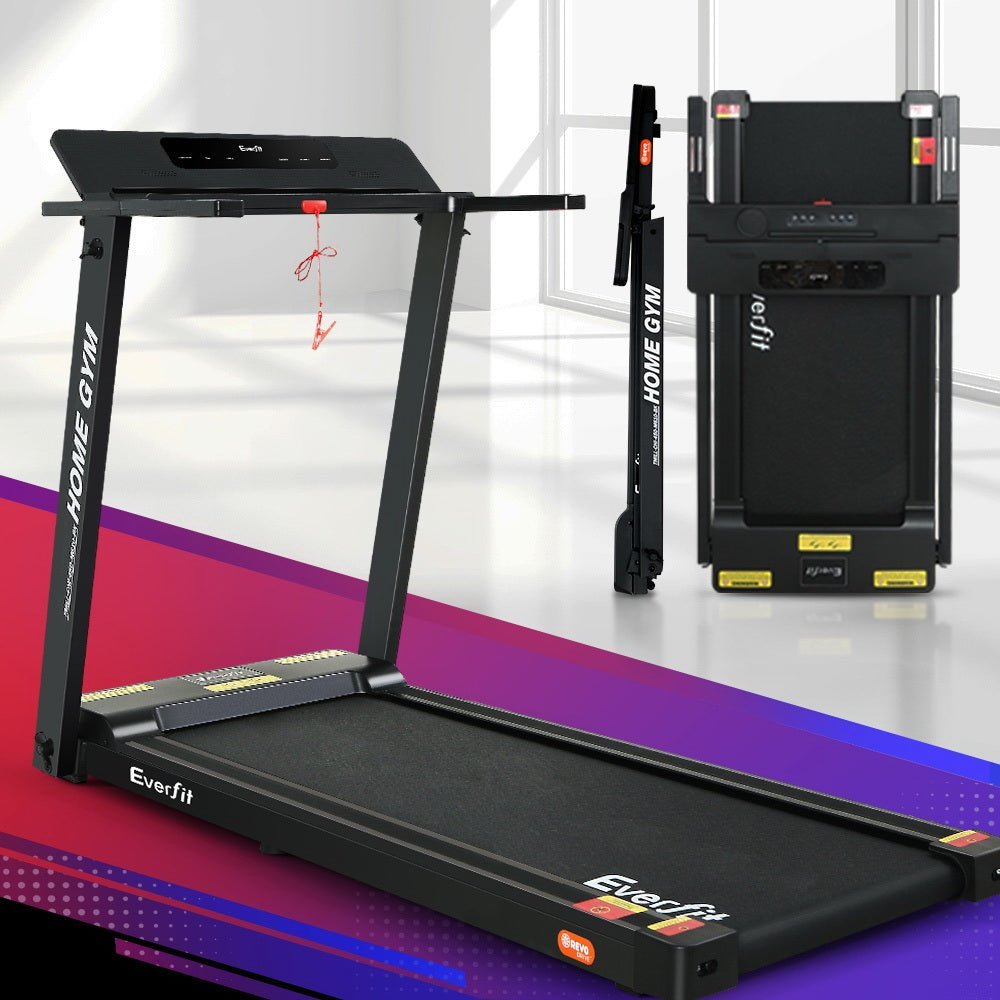
Folding to 12cm thick is the specification that matters here. Most treadmills fold upright and still take a corner of the room; this one collapses to 142 by 70 by 12cm, which slides under a bed or stands behind a wardrobe door.
The belt is a genuine 117 by 45cm despite that, wide enough to jog on rather than only walk, and a 2.5hp motor drives 14 speed levels through 12 programs. Net weight is 35.5kg, roughly half what the flagship machines weigh, so one person can move it.
Capacity is 120kg, and the trade for the flat fold is a shorter belt than the machines above and no motorised incline. For an apartment where the treadmill cannot be left out, nothing else here folds this small.
Pros
- Folds flat to 12cm thick
- 117 x 45cm belt despite the fold
- 35.5kg, movable by one person
- 2.5hp motor with 14 speed levels
- 120kg capacity
Cons
- Shorter belt than the fixed-frame machines
- No motorised incline
Key specs: 117 x 45cm running belt, 2.5hp motor, 14 speed levels, 12 programs, folds to 142 x 70 x 12cm, 120kg capacity, 35.5kg net weight.
CHECK CURRENT PRICE6. Everfit 400mm Treadmill with Manual Incline – Best Manual Incline
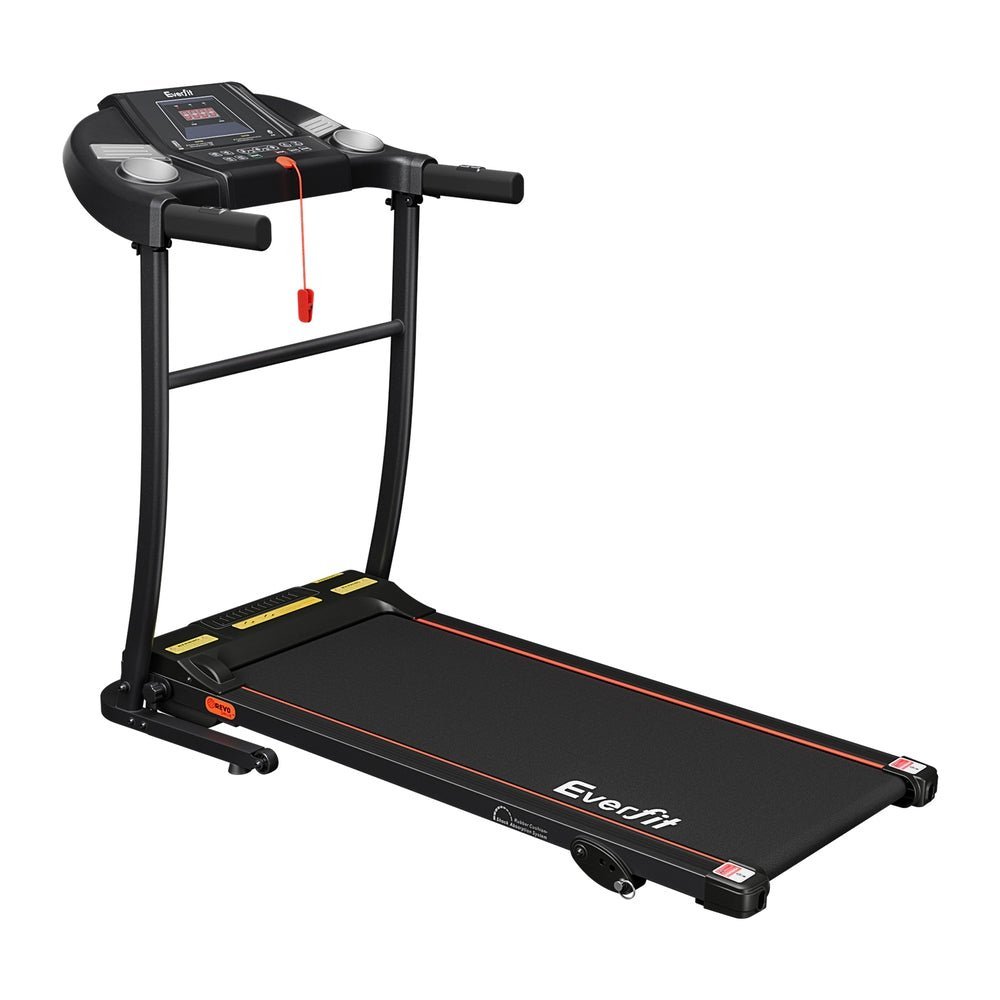
Three manual incline positions put a gradient under a walk for a fraction of what a motorised system costs. You set it before you start rather than during, which suits steady incline walking far better than interval work.
A 2.0hp motor runs to 12km/h on a 110 by 40cm belt, which is a jogging pace rather than a running one, and twelve programs sit behind a monitor showing speed, time, distance, calories and heart rate.
Capacity is 100kg, the lowest of the Everfit machines here, and at 110 by 143cm it is compact by treadmill standards. This is a walking and light jogging machine, and pricing it against the 450mm models makes that clear.
Pros
- Three manual incline levels
- 110 x 40cm belt in a compact frame
- 2.0hp motor with 12 programs
- Heart rate on the monitor
- Among the smallest footprints here
Cons
- 100kg capacity, the lowest of the Everfit machines
- 12km/h ceiling suits jogging, not running
Key specs: 110 x 40cm running belt, 2.0hp motor, 1 to 12km/h, 12 programs, 3 manual incline levels, 100kg capacity, monitor with speed, time, distance, calories and heart rate.
CHECK CURRENT PRICE7. Everfit 360mm Foldable Treadmill – Best Budget Pick
This is the cheapest way into a full-frame treadmill with handrails, and the specification is honest about what that buys: a 1.0hp motor, a 36cm belt and a 12km/h ceiling that is theoretical rather than practical on a belt this narrow.
Twelve speed levels and twelve programs give it more structure than the price suggests, and it folds for storage like the dearer models. Capacity is 100kg.
A 36cm belt is narrow enough that running on it means watching your feet, so treat this as a walking and brisk-walking machine. Anyone who expects to run within six months should spend up to the 450mm models rather than replace this one.
Pros
- The lowest entry price for a full-frame treadmill
- 12 speed levels and 12 programs
- Folds for storage
- 100kg capacity
- Lubricating oil and manual included
Cons
- 36cm belt is narrow for running
- 1.0hp motor limits sustained pace
Key specs: 36cm running belt, 1.0hp motor, 0.8 to 12km/h, 12 speed levels, 12 programs, 100kg capacity, foldable frame, 240V.
CHECK CURRENT PRICE8. Advwin Electric Incline Treadmill with LED Display – Best for Small Rooms
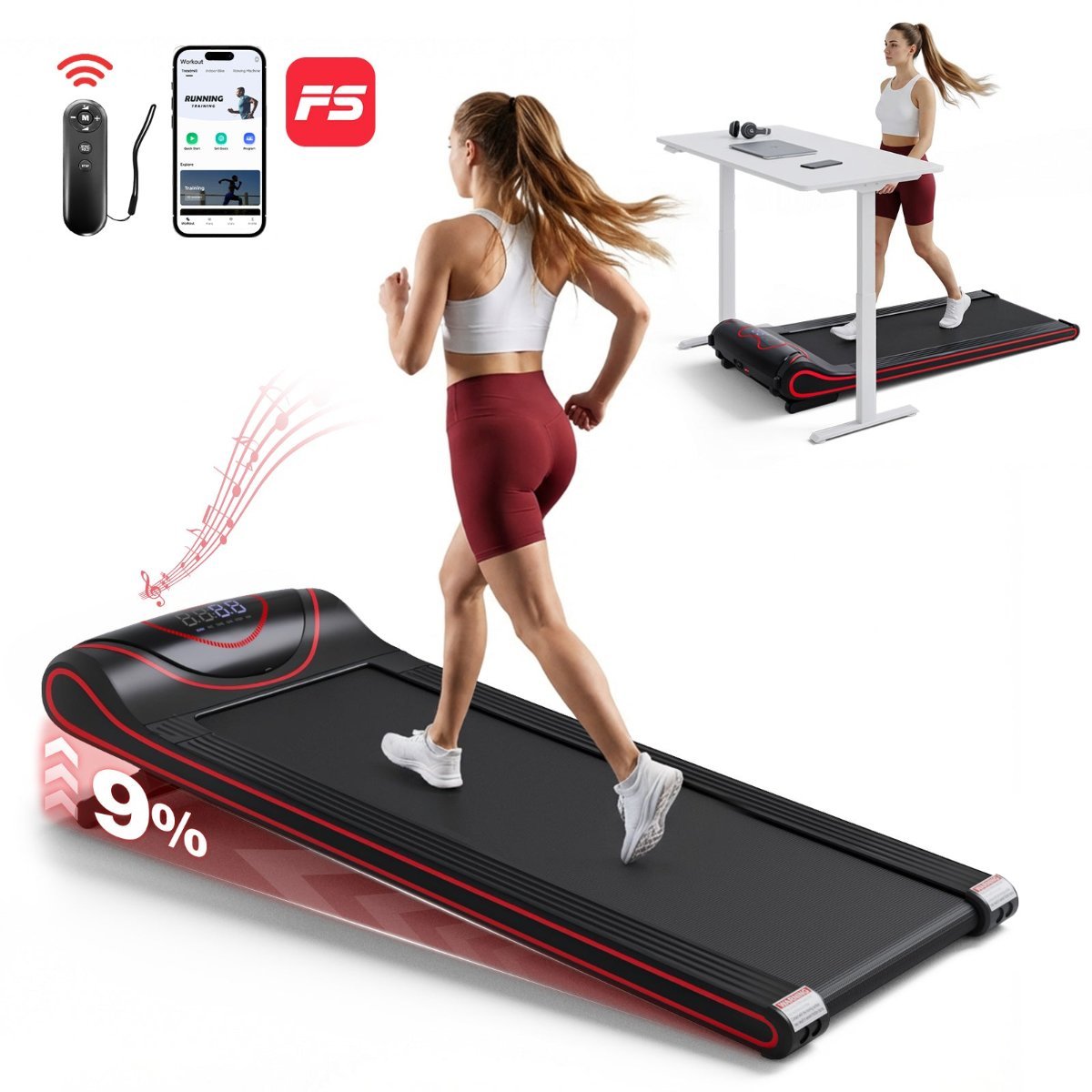
Folded to between 20 and 26.5cm tall, this is the flattest machine in the guide, and at 29.5kg it is also the lightest with handrails. Those two figures together are why it suits an apartment where the treadmill has to disappear between sessions.
Three incline steps at 3, 6 and 9 percent cover gradient walking, and the low-noise motor peaks at 2.25hp with 0.75hp continuous, which is honest labelling rather than a peak figure quoted alone. An LED ambient display runs across the console.
Top speed is 8km/h, so this is firmly a walking and light jogging machine, and the 110 by 40cm belt reflects that. Load capacity is 120kg, higher than several dearer machines here.
Pros
- Folds to between 20 and 26.5cm tall
- 29.5kg, the lightest full-frame machine here
- Three incline steps at 3, 6 and 9 percent
- 120kg load capacity
- Low-noise motor with honest continuous power rating
Cons
- 8km/h ceiling rules out running
- 110 x 40cm belt is walking width
Key specs: 110 x 40cm running belt, 2.25hp peak and 0.75hp continuous motor, 1 to 8km/h, incline at 3, 6 and 9 percent, LED ambient display, 120kg capacity, 135.5 x 57.5 x 20 to 26.5cm folded, 29.5kg.
CHECK CURRENT PRICE9. Everfit CM01 Auto Incline Trainer – Best Incline Trainer
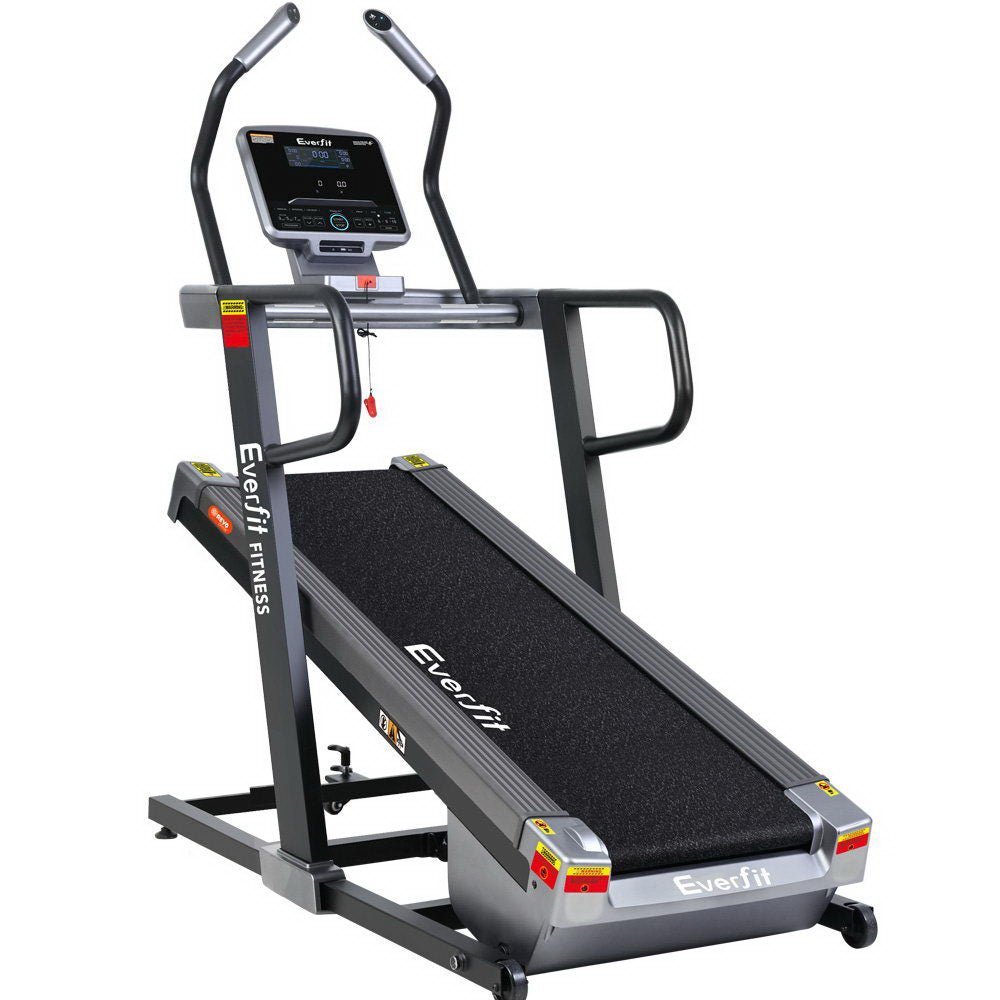
Forty incline levels is the number that puts this in a different class from every other machine here, where the best of the rest manages a 30 percent auto incline and most offer three manual steps. An incline trainer is built to climb rather than to run flat.
The belt is 145 by 46cm, the longest in this guide, driven by a 4hp motor to 20km/h, and a patented spring suspension system takes the load out of the descent. Bluetooth and app connection sit alongside a speaker, MP3 and USB, on a 5-inch LED screen.
It is by a wide margin the most expensive machine on this page and it carries a 150kg capacity to match the build. Anyone training for hills or wanting steep-gradient walking at low speed will use the incline range daily; anyone running flat will not.
Pros
- 40 incline levels, far beyond anything else here
- 145 x 46cm belt, the longest in this guide
- 4hp motor to 20km/h
- Patented spring suspension system
- Bluetooth and app connection with 150kg capacity
Cons
- The most expensive machine in this guide
- Incline range is wasted on flat running
Key specs: 145 x 46cm running belt, 4hp motor, 0.8 to 20km/h, 40 incline levels, 150kg capacity, 5-inch LED screen, patented spring suspension, Bluetooth and app connection, speaker with MP3 and USB.
CHECK CURRENT PRICE10. XTERRA Fitness TR150 Folding Treadmill – Best Compact Folding
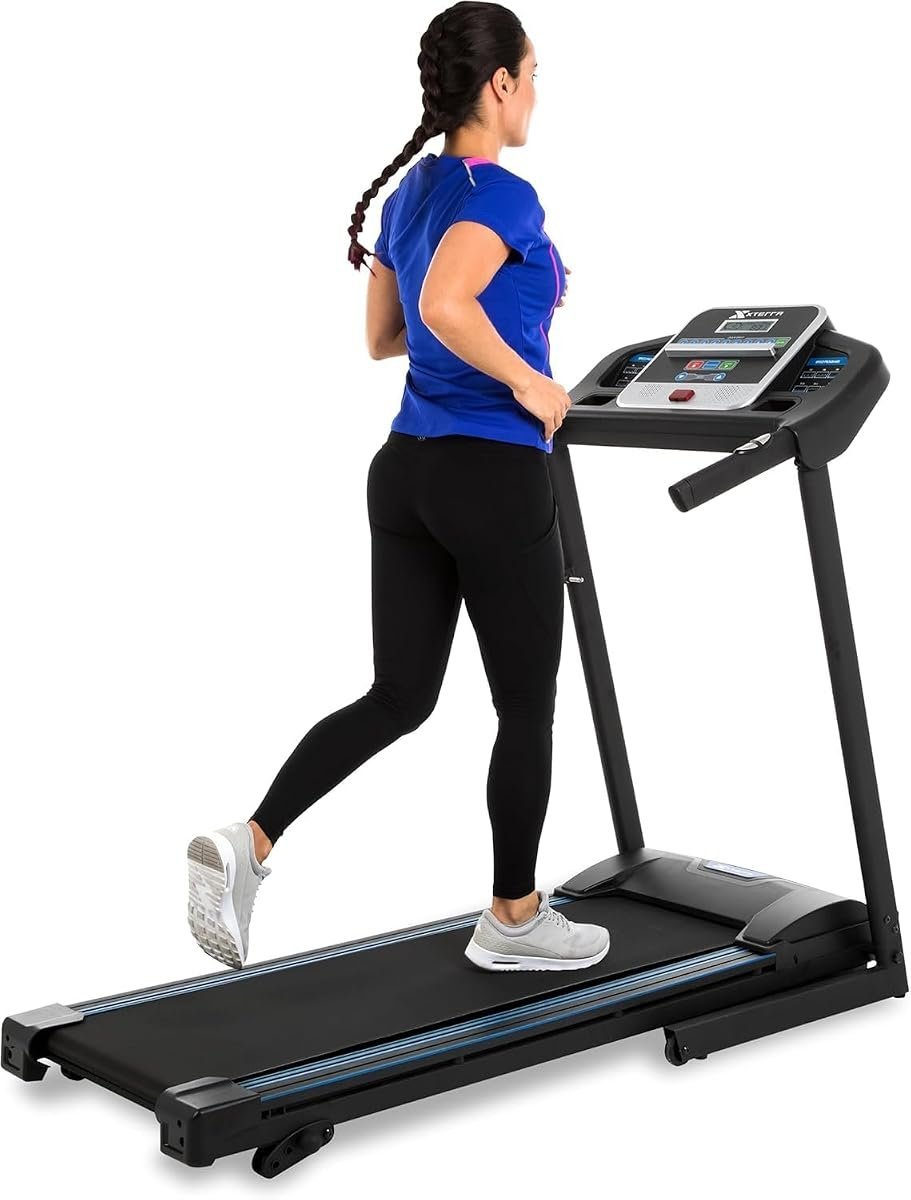
XTERRA is a fitness brand with a catalogue behind it rather than a marketplace label, and on a page otherwise filled with house brands that pedigree is the reason to consider the TR150. It carries 4.8 stars, though from only 28 ratings on this listing.
The running area is roughly 41 by 127cm, close to the 450mm Everfit machines, on an alloy steel frame rated past 115kg. A 2.25hp motor covers about 0.8 to 16km/h, twelve preset programs and three manual incline settings sit behind a 5-inch LCD, and a pull knob folds the deck.
An XTERRA+ fitness app subscription comes with the purchase, which none of the Commission Factory machines include. Delivery runs about a week and a half rather than next day, and at 161cm long unfolded it needs the same floor space as the mid-range machines above.
Pros
- Established fitness brand with a full catalogue
- 41 x 127cm running area on an alloy steel frame
- 12 preset programs and 3 manual incline settings
- XTERRA+ fitness app included with purchase
- Pull-knob deck folding
Cons
- Only 28 ratings on this listing
- Delivery takes around a week and a half
Key specs: Roughly 41 x 127cm running area, 2.25hp motor, about 0.8 to 16km/h, 12 preset programs, 3 manual incline settings, 5-inch LCD, alloy steel frame rated past 115kg, 161 x 73 x 130cm.
CHECK ON AMAZONHow to Choose a Treadmill
Match the belt to your stride, not your budget. Walking needs about 40cm of width and 110cm of length. Running needs 45cm and preferably 130cm, because a narrow belt makes you shorten your stride and watch your feet. The widest machine here is 50cm and the narrowest 36cm, and that gap decides what the treadmill is actually for.
Read continuous motor power, not peak. Peak horsepower is a marketing figure the motor hits briefly. Continuous power is what it sustains, and one machine in this guide quotes both, at 2.25hp peak against 0.75hp continuous. For running, 2.5hp continuous or better is the sensible floor.
Decide whether incline needs to be motorised. Manual incline is set before you start and left there, which suits steady gradient walking. Motorised incline changes mid-session from the console, which is what interval and hill programs need. The range here runs from three fixed steps to 40 powered levels.
Check the folded dimensions and the doorway. These machines run from 29.5kg to nearly 78kg, and the heaviest are two-person carries. One here folds to 12cm thick and slides under a bed; the largest is 157cm long with the deck up. Measure the route from the front door before ordering, not after.
Weight capacity is structural, so leave headroom. Capacities here span 100kg to 150kg, and the figure covers the user in motion, where impact loads run well above standing weight. Buying within 10kg of the limit is how decks and motors fail early. Cross-training helps here too, and exercise bikes take the impact out of the equation entirely on recovery days.
Plan for maintenance and recovery from the start. Belts need lubricating oil periodically, which most of these include in the box, and a treadmill running on a dry belt burns out its motor. Bodies need the same attention: stretching after a run does more for consistency than any program on the console, and a massage chair covers it at the other end of the budget.
If running is hard on your knees or hips, a low-impact cross trainer gives a similar cardio workout without the jolt.
For stretching or strength work after a run, a yoga mat with the right grip stays put once you start to sweat.
Frequently Asked Questions
What belt size do you need to run on a treadmill?
About 45cm wide and 130cm long for running, and 40cm by 110cm is enough for walking. Below 45cm of width a natural arm swing starts catching the rails and most people shorten their stride to compensate. Belts in this guide range from 36cm to 50cm wide.
How much motor power does a home treadmill need?
For walking, 1.0hp to 2.0hp is adequate. For running, look for 2.5hp continuous or more, and check whether the number quoted is continuous or peak, since peak is a brief maximum rather than a sustained rating. The machines here span 1.0hp to 5.0hp.
Is a manual or an electric treadmill better?
Electric, for almost everyone. A motor holds a steady pace so you can follow a program instead of driving the belt yourself, and it makes interval work possible. Manual treadmills cost less and need no power point, but the belt only moves while you push it, which changes your gait.
What is the average lifespan of a treadmill?
Between seven and twelve years for a home machine used a few times a week, and considerably less if the belt is never lubricated. Motor and deck are what fail, usually because the machine was run near its weight limit or the belt was left dry. Most of these include lubricating oil in the box.
Do treadmills need assembly?
Most arrive part-built, with the deck assembled and the uprights, console and safety key left to fit. Allow an hour or so and check the box weight first: machines here ship between roughly 33kg and 88kg, and the heavier ones are a two-person lift through a doorway.
Are treadmills good for losing weight?
They help, because they make regular cardio easy to do at home in any weather, and walking at an incline burns more than flat walking at the same speed. Weight loss still comes down to overall energy balance, so treat the treadmill as one input rather than the whole plan.
Verdict
Anyone who genuinely runs should take the 500mm wide belt Everfit, where a 130 by 50cm deck, a 5.0hp motor and 30 percent auto incline cover everything short of a commercial gym. For a household that will walk and jog a few times a week, the 420mm hydraulic model has the honest specification at a fraction of the outlay, and the 450mm fully foldable machine is the one to choose if the treadmill has to disappear under a bed between sessions.