The best portable projector in Australia is a compact LED or laser unit that throws an image of roughly 30 to 200 inches from under a metre to six metres away, connects by HDMI, USB or wireless screencast, and either plugs into mains power or runs from an internal battery. The number that decides whether it works in your room is ANSI lumens, because brightness rather than resolution is what a projector loses to ambient light.
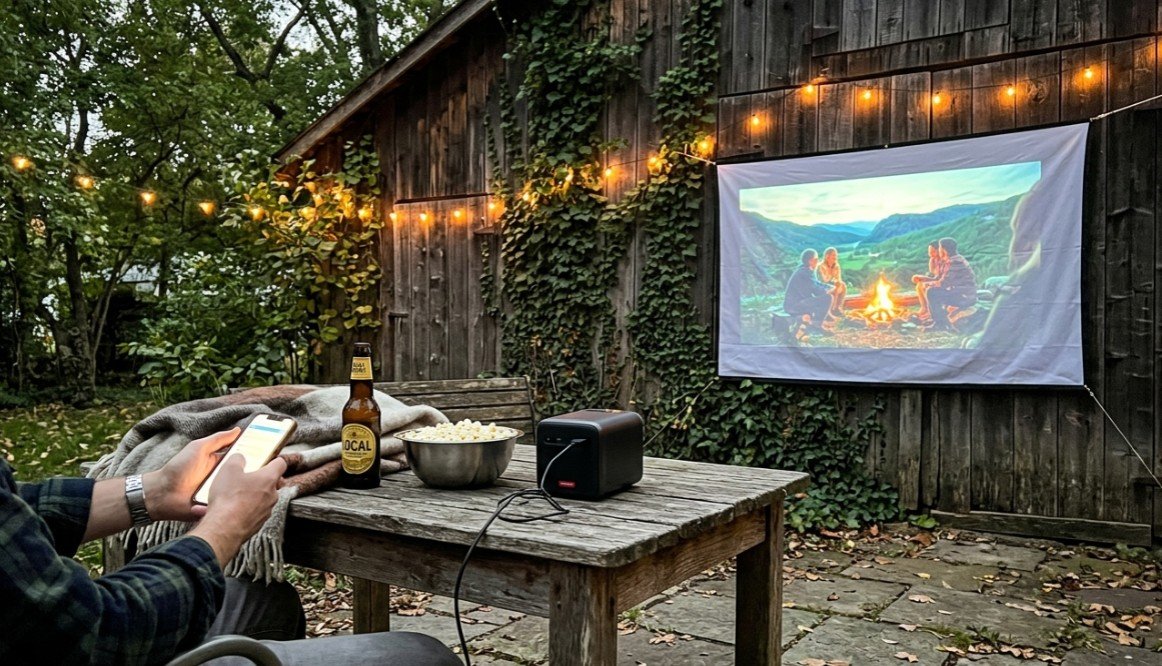
Where a projector will live decides which of three groups it belongs to. Mains-powered mini projectors are the cheapest way to a large image and need a dark room. Battery-powered units trade brightness for the ability to run in a backyard or on a camping trip. High-brightness portables push past 1,000 ANSI lumens so the picture survives dusk and lamplight.
Brightness across this guide runs from 150 to 1,000 ANSI lumens, and projection size from 100 to 200 inches, or roughly 2.5 to 5.1 metres diagonally. The specifications that matter alongside those are native resolution rather than supported resolution, throw distance, keystone and focus automation, and whether there is a battery at all.
Of everything in Australian stock worth the shelf space, six units made this comparison: three mains-powered mini projectors, one bright compact model that sets itself up, and two battery units built for watching outdoors.
Quick Picks
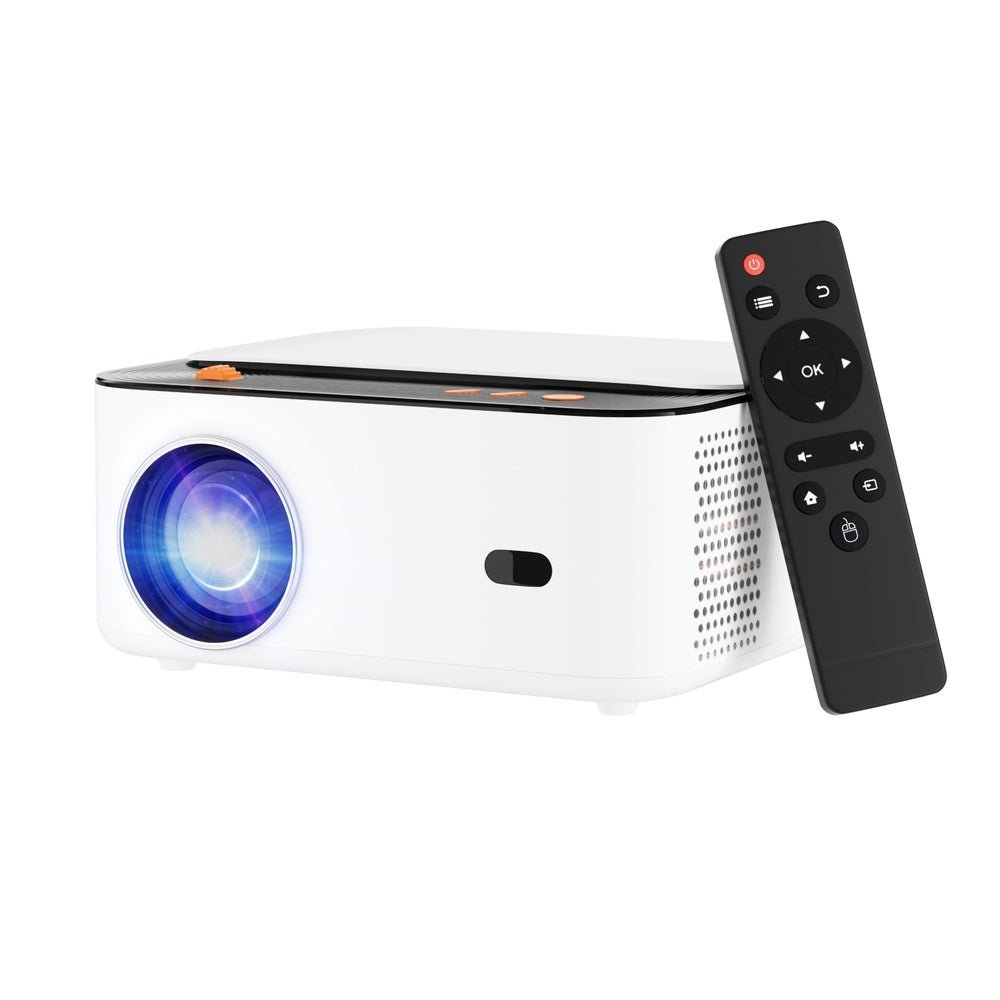
Devanti VP-300
Native 1080p with Android built in, so Netflix and YouTube run without plugging anything in.
CHECK CURRENT PRICE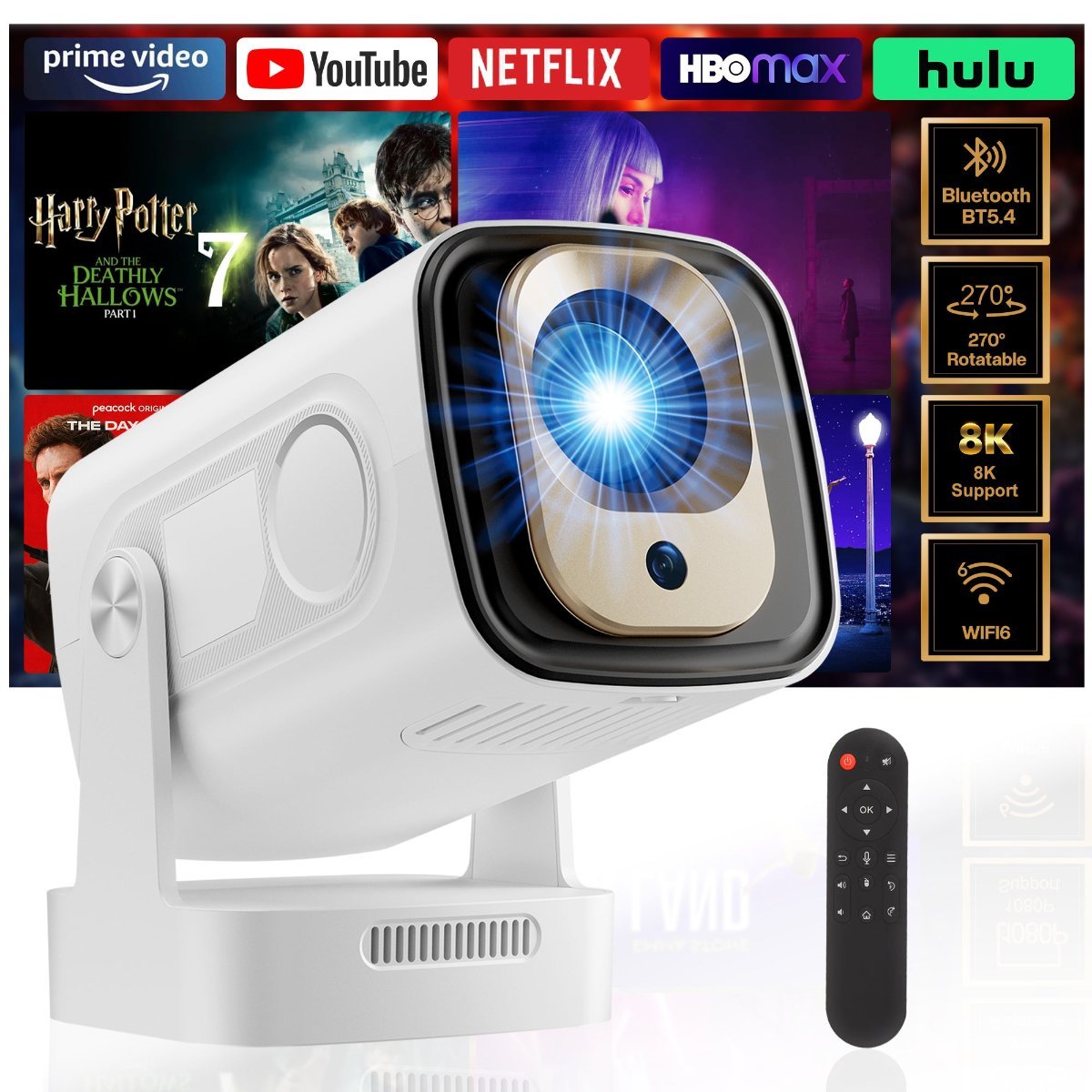
Advwin Mini Projector
330 ANSI lumens with automatic focus and keystone, the brightest mains unit here.
CHECK CURRENT PRICE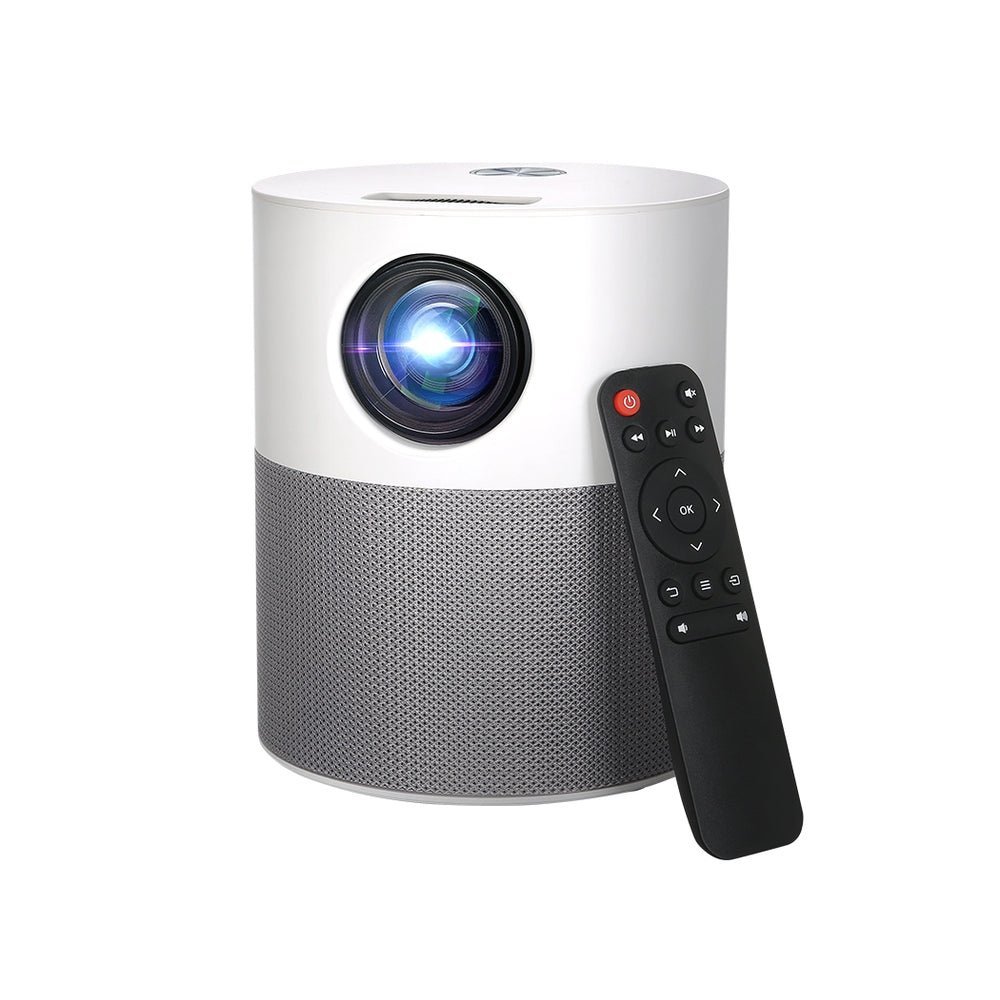
Devanti VP-150 1080p
A true 1920 x 1080 panel and a 50,000 hour lamp at the lowest outlay in this guide.
CHECK CURRENT PRICEThe Best Portable Projector in Australia: All 6 Compared
| Product | Link | Type | Best For | Key Spec |
|---|---|---|---|---|
| Devanti VP-300 | Check price | Mains mini projector | Built-in streaming | Native 1080p, 230 ANSI, Android, 30-200″ |
| Devanti VP-150 1080p | Check price | Mains mini projector | True 1080p on a budget | Native 1080p, 150 ANSI, 50,000 hr lamp |
| Devanti VP-150 720p | Check price | Mains mini projector | Smallest footprint | Native 720p, 360 degree flip, 10.4 cm wide |
| Advwin Mini Projector | Check price | Mains mini projector | Brightness and auto setup | 330 ANSI, Android 14, WiFi 6, auto focus |
| Nebula Capsule 3 | Check price | Battery projector | Watching anywhere | 1080p, 200 ANSI, 2.5 hr battery, Google TV |
| Nebula Mars 3 | Check price | Battery projector | Outdoor and backyard | 1080p, 1000 ANSI, 5 hr battery, 40 W speaker |
1. Devanti VP-300 – Best Smart Features
Android runs on the projector itself, which is the practical difference between this and the two cheaper units below it: Netflix, YouTube and Prime Video play without a stick, a laptop or a phone tethered to it. The panel is a genuine 1920 x 1080, and an LED light source puts out 230 ANSI lumens.
Setup flexibility is unusually good at this end of the market. Four-dimensional keystone correction and a 360 degree image flip mean the unit does not have to sit square to the wall or even the right way up, projection size runs from 30 to 200 inches, and the best throw distance is 0.9 to 6.1 metres, which covers everything from a bedroom wall to a garage. Inputs cover USB, HDMI, VGA, AV and audio, and a carry bag is included.
At 230 ANSI lumens this still needs the lights off or heavy curtains drawn, which is true of every mains unit in this guide. The security update commitment runs to at least 31 March 2027, worth noting on a device that connects to a home network and runs streaming apps. Anyone who wants one box rather than a projector plus a streaming stick should start here.
Pros
- Native 1920 x 1080 panel
- Android built in for Netflix, YouTube and Prime Video
- 230 ANSI lumens, brightest of the three Devanti units
- 4D keystone correction and 360 degree flip
- 30 to 200 inch projection, 0.9 to 6.1 m throw
- USB, HDMI, VGA, AV and audio inputs, carry bag included
Cons
- 230 ANSI lumens still requires a dark room
- Mains power only, no battery
- Remote needs two AAA batteries, not supplied
Key specs: native 1920 x 1080, 4K input support, 230 ANSI lumens, LED light source, Android system, 4D keystone, 30-200 inch projection, 0.9-6.1 m throw, 4:3 and 16:9, USB/HDMI/VGA/AV/audio, 21.5 x 18 x 9.2 cm, security updates to at least 31 March 2027.
CHECK CURRENT PRICE2. Devanti VP-150 1080p – Best Native 1080p Value
A true 1920 x 1080 LCD panel at the lowest outlay in this guide is the whole proposition, and it matters because the unit directly below costs slightly more for a 720p panel. Brightness is 150 ANSI lumens and the lamp is rated to 50,000 hours, the longest here by a wide margin.
Wireless screencasting over 2.4 GHz WiFi covers phones, tablets and laptops, and a built-in bass speaker means it works without external audio for casual viewing. HDMI, USB, AV and audio ports handle consoles, hard drives and external speakers, and a remote is supplied. Power draw is 66 W.
One hundred and fifty ANSI lumens is the dimmest mains unit here, so this one genuinely needs a dark room rather than merely preferring one, and the 14.2 cm cube footprint is chunkier than the compact model below. Set against the Android unit at the top of this guide, the trade is streaming apps and 80 extra lumens against a materially lower outlay for the same panel resolution.
Pros
- Native 1920 x 1080 panel at the lowest outlay here
- 50,000 hour lamp life, the longest in this guide
- 2.4 GHz WiFi screencasting
- Built-in bass speaker
- USB, HDMI, AV and audio inputs, remote included
Cons
- 150 ANSI lumens, the dimmest unit here
- No built-in streaming apps
- Mains power only
Key specs: native 1920 x 1080, LCD, 150 ANSI lumens, 50,000 hour lamp life, 2.4 GHz WiFi screencast, built-in speaker, USB/HDMI/AV/audio, 66 W, 14.2 x 14.2 x 17.4 cm, remote included.
CHECK CURRENT PRICE3. Devanti VP-150 720p – Best Compact Design
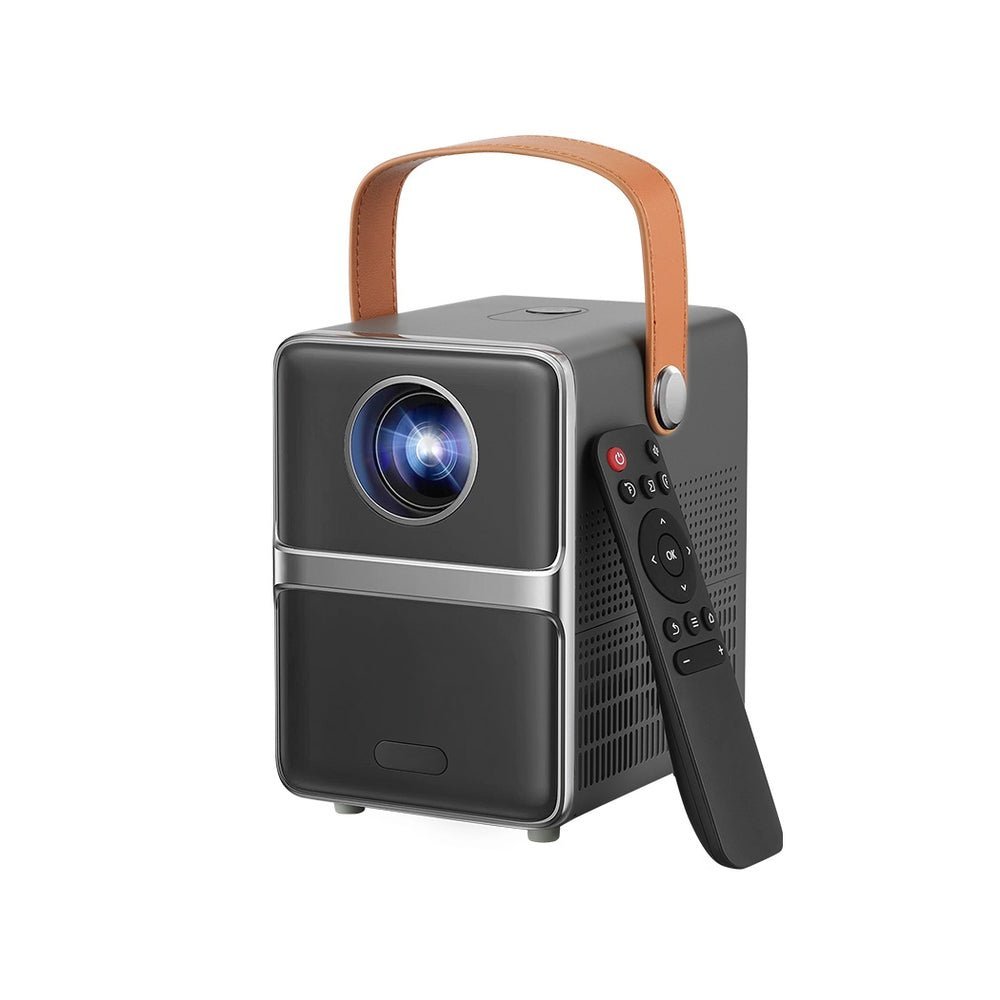
Ten point four centimetres across makes this the smallest unit in the guide, and the specification worth reading carefully rather than skimming. It is listed as 4K compatible, and that refers to the input signal it will accept: the panel itself is natively 1280 x 720, so a 4K source is downscaled to 720p before it reaches the wall.
That distinction decides whether this is the right buy. As a genuinely pocketable projector for a child’s room, a caravan or a spare wall, 720p at close range is perfectly watchable and the 360 degree flip plus electric zoom by remote make placement easy. As a way to watch 4K content at 4K, it is not that, and no projector at this price is.
Lamp life is 30,000 hours, screen mirroring runs over 2.4 GHz WiFi, and HDMI, USB, AV and audio cables are included in the box alongside the remote. Buyers who want the resolution the title implies should take the native 1080p unit above instead, which costs about the same and has a panel to match.
Pros
- Smallest footprint here at 10.4 cm wide
- Electric zoom by remote
- 360 degree image flip for flexible placement
- Screen mirroring over 2.4 GHz WiFi
- HDMI, AV and audio cables included
Cons
- Native panel is 1280 x 720 despite 4K appearing in the listing title
- 30,000 hour lamp, shorter than the 1080p unit above
- Mains power only
Key specs: native 1280 x 720, accepts 1080p and 4K input, 2.4 GHz WiFi screen mirroring, 360 degree flip, electric zoom by remote, built-in speaker, USB/HDMI/AV/audio, 30,000 hour lamp, 10.4 x 13.7 x 15.5 cm, security updates to at least 31 March 2027.
CHECK CURRENT PRICE4. Advwin Mini Projector – Best Brightness for the Money
Three hundred and thirty ANSI lumens is the highest figure among the mains-powered units here, roughly double the cheapest and about 40 per cent above the Android model at the top of this guide. Android 14 runs on board, WiFi 6 handles dual-band wireless and Bluetooth 5.4 covers external speakers and headphones.
Automation is where it separates itself. Instant auto focus and automatic keystone correction square and sharpen the picture without manual adjustment, and a 270 degree rotatable body throws onto a wall or a ceiling without propping the chassis on books. The throw ratio is 0.8:1, which is short enough to fill a 130 inch image from a modest distance, and the aspect ratio is 16:9 with a 2000:1 contrast ratio and a 30,000 hour lamp.
The listing leads with 8K support, which like the compact unit above describes an input signal rather than the panel, and the native resolution is not published. Treat the 330 ANSI lumens and the automatic setup as the reasons to buy, not the headline number. Rooms with some ambient light, or anyone tired of nudging a projector into square, gain the most.
Pros
- 330 ANSI lumens, brightest mains unit here
- Android 14 with WiFi 6 and Bluetooth 5.4
- Instant auto focus and automatic keystone correction
- 270 degree rotatable for wall or ceiling projection
- 0.8:1 short throw ratio, up to 130 inch image
- 30,000 hour lamp life
Cons
- Native panel resolution not published in the listing
- 8K in the title refers to input support, not the panel
- 2000:1 contrast is modest
- Mains power only
Key specs: 330 ANSI lumens, LTPS panel, Android 14, WiFi 6 dual-band, Bluetooth 5.4, auto focus, auto keystone, 270 degree rotatable, 0.8:1 throw ratio, up to 130 inch image, 16:9, 2000:1 contrast, 8000 K colour temperature, 30,000 hour lamp. Native resolution not stated.
CHECK CURRENT PRICE5. Nebula Capsule 3 – Best Battery Powered
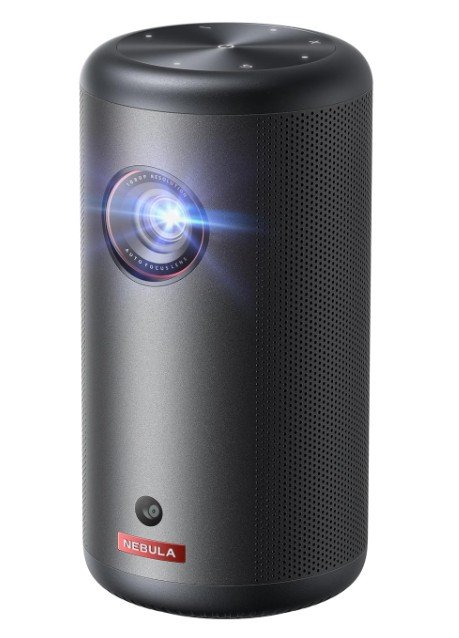
A can-sized chassis with its own battery is the thing no mains unit in this guide can offer, and it is what makes a projector usable on a balcony, in a tent or at a friend’s place with no setup. The panel is 1080p at 200 ANSI lumens, and the battery runs about 2.5 hours of video, which covers a feature film.
Google TV is built in and the unit is Netflix certified, which is a narrower claim than it sounds and a useful one: plenty of Android projectors cannot run Netflix at full resolution because the app blocks uncertified hardware. Auto focus squares the image on placement, the maximum image is 120 inches, and Dolby Digital handles the audio.
Two hundred ANSI lumens is dimmer than the Advwin unit above it and needs genuine darkness, so this is an after-sunset projector rather than a dusk one. Against the brighter outdoor model below, the trade is half the brightness and half the battery life for something that actually fits in a bag. Buy it for portability first and brightness second, in that order.
Pros
- Battery powered, roughly 2.5 hours of video
- Google TV built in and Netflix certified
- Native 1080p with 4K input support
- Auto focus
- Up to 120 inch image, Dolby Digital audio
- Smaller than a 500 ml can
Cons
- 200 ANSI lumens needs full darkness
- 2.5 hour battery is half the outdoor model below
- 120 inch maximum image, smaller than entries 1 and 6
Key specs: native 1080p, 4K input support, 200 ANSI lumens, Google TV, Netflix certified, auto focus, up to 120 inch display, Dolby Digital, 2.5 hour video playtime, WiFi.
CHECK ON AMAZON6. Nebula Mars 3 – Best for Outdoor Viewing
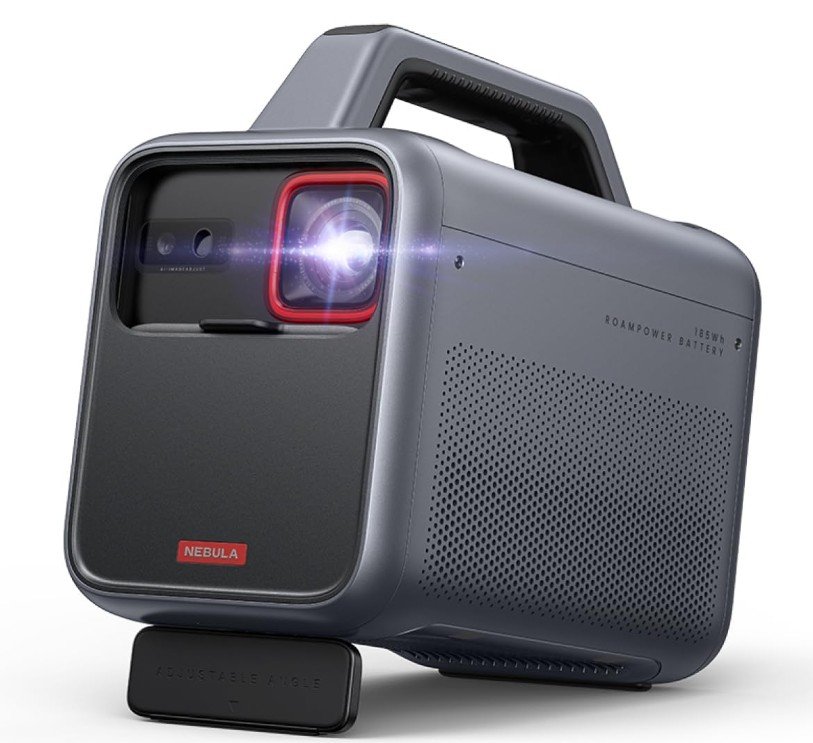
One thousand ANSI lumens is triple the brightest mains unit in this guide and five times the battery-powered model above it, which is the difference between waiting for full dark and starting a film at dusk. Native resolution is 1080p, the battery runs up to five hours, and the maximum image is 200 inches.
Outdoor use is designed in rather than tolerated. A 40 W speaker is loud enough to carry across a backyard without a separate Bluetooth speaker, which is usually the second purchase a portable projector forces, and autofocus with keystone correction squares the picture on uneven ground where a tripod is never quite level. WiFi and Bluetooth are both fitted, and 4K input is supported.
This is the largest and heaviest unit here and sits at the top of the guide for outlay, so it is the wrong answer for a bedroom wall where a cheap mains unit does the same job in the dark. Where it earns its keep is the specific scenario nothing else here handles: a backyard, a party, no power point, and light still in the sky.
Pros
- 1000 ANSI lumens, brightest here by a factor of three
- Up to five hours of battery
- 40 W speaker, no external audio needed
- Autofocus and keystone correction
- Up to 200 inch image
- WiFi and Bluetooth with 4K input support
Cons
- Largest and heaviest unit in this guide
- Highest outlay here
- Overkill for a dark indoor room
Key specs: native 1080p, 1000 ANSI lumens, 4K input support, 40 W speaker, up to 5 hours battery, autofocus, keystone correction, up to 200 inch image, WiFi and Bluetooth.
CHECK ON AMAZONHow to Choose a Portable Projector
Read ANSI lumens, and ignore any other brightness number. Manufacturers quote LED lumens, light source lumens or a bare lumens figure that can be three to five times the ANSI measurement, which is the one taken at the screen. Every unit in this guide is listed by its ANSI figure, and the spread runs from 150 to 1,000. Under about 300, plan on a fully dark room.
Check native resolution, not supported resolution. A projector that accepts a 4K signal downscales it to whatever its panel actually is. One unit in this guide is titled 4K and has a 1280 x 720 panel, and another leads with 8K without publishing a native figure at all. The specification worth comparing is the panel, and if a listing does not state it, treat that as the answer.
Decide on battery before anything else. It is the one thing that cannot be added later. Mains units are brighter per dollar and fine indoors; battery units cost more for less brightness and work in a backyard, a caravan or a campsite. Australian summers make the outdoor case stronger here than in most markets, and only two units in this guide can do it.
Match throw distance to the room before you buy. A 0.8:1 short throw fills a large image from close range, while a longer throw needs several metres of clear floor. One unit here quotes 0.9 to 6.1 metres for 30 to 200 inches. Measure the wall-to-couch distance first, because no amount of keystone correction fixes a projector that physically cannot fill the wall.
Automatic focus and keystone are worth more than they sound. Manual focus on a tripod that sinks slightly into grass means adjusting the picture every time someone bumps it. Two units here correct automatically, and it removes the most irritating part of moving a projector between rooms or outdoors.
Source resolution has to come from somewhere. A 1080p panel only pays off if what feeds it is sharp, which is why aerial footage is a common reason people buy a projector at all. If that is the plan, the best drones in Australia shoot the 4K that survives downscaling to a large screen. Every projector sold here also carries consumer guarantees under Australian Consumer Law regardless of the manufacturer’s stated warranty.
Frequently Asked Questions
How many ANSI lumens do I need?
Under about 300 ANSI lumens, plan on a fully dark room. Between 300 and 700, a room with curtains drawn in daytime is workable. Above 1,000, the picture holds up at dusk outdoors. The spread in this guide runs from 150 to 1,000, and brightness matters more than resolution for whether an image is watchable at all.
Is a budget 4K projector really 4K?
No. At the cheaper end of this guide the listing is describing the input signal it accepts, not the panel. One unit here is titled 4K and is natively 1280 x 720. Look for the words native resolution in the specifications, and if a listing never states one, assume the panel is lower than the headline.
Do portable projectors work outside during the day?
Not usefully. Even 1,000 ANSI lumens, the brightest here, is designed for dusk onward rather than daylight. Direct sun washes out any portable projector regardless of the figure quoted, so plan outdoor viewing for after sunset and choose brightness according to how much ambient light remains.
Do I need a projector screen?
Not necessarily. A flat, matte, light-coloured wall works well and costs nothing. A screen improves contrast and gives a defined edge, and it matters more as the image gets larger or the projector gets dimmer. On a 150 ANSI lumen unit, a proper surface makes a bigger difference than it does on a 1,000 lumen one.
How long does a projector lamp last?
The LED sources in this guide are rated between 30,000 and 50,000 hours. At three hours a night, 30,000 hours is over 27 years, so lamp life is rarely the thing that ends a projector’s life on these units, unlike older bulb-based models that needed replacement lamps.
Can I run Netflix directly on a portable projector?
Only on units certified for it. Several Android projectors cannot run Netflix at full resolution because the app blocks uncertified hardware, and the workaround is an external streaming stick. One unit in this guide is explicitly Netflix certified with Google TV built in, and another runs Android with the major apps available.
Verdict
Nothing else here throws 330 ANSI lumens, which makes the Advwin unit the one to beat among the mains models, with automatic focus and keystone correction on top of the brightness. Anyone who wants a genuine 1080p panel and built-in streaming without a separate stick is better served by the Devanti VP-300, whose Android system and 0.9 to 6.1 metre throw cover most indoor rooms. Backyard viewing is a different problem entirely, and only the Nebula Mars 3 solves it, with 1,000 ANSI lumens, five hours of battery and a speaker loud enough to skip the external audio.