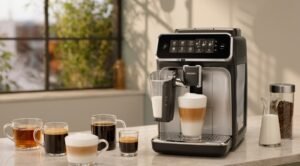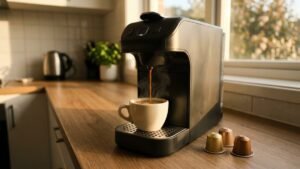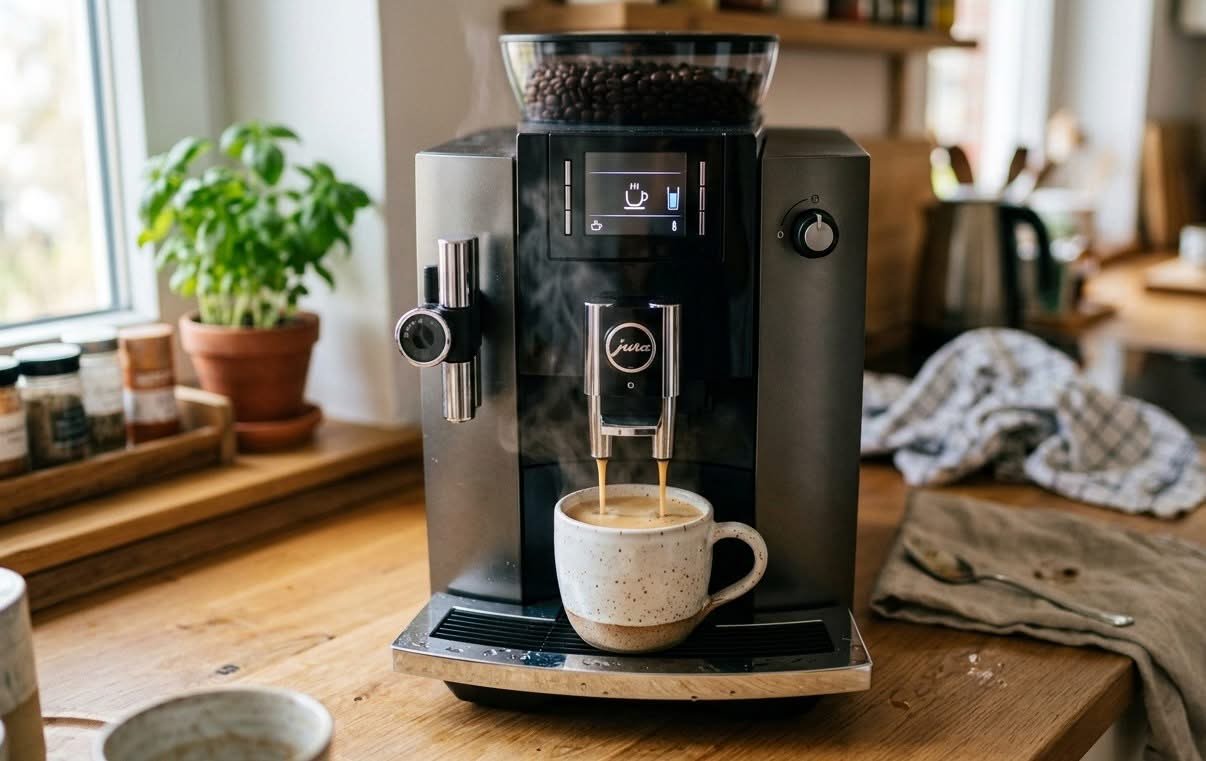
An automatic coffee machine grinds fresh beans and brews espresso at the push of a button, without a portafilter, tamper or separate grinder to operate by hand. The best automatic coffee machines australia shoppers buy are also called bean-to-cup machines, and they sit apart from manual espresso machines, capsule machines and drip filter machines, which all cover different parts of the same broader coffee machine category.
Automatic coffee machines fall into a few clear tiers. Entry-level machines grind and brew one or two recipes with a manual milk frother. Mid-range machines add a colour touchscreen and a wider recipe menu. Premium machines add automatic milk systems, multiple user profiles and specialty grinders. Compact machines trade recipe range for a smaller footprint.
A standard automatic machine grinds between 6 and 9 grams of coffee per shot (about 0.2 to 0.3 ounces), and most machines on the market run water pressure between 15 and 19 bar. Recipe count, grinder quality and milk system are the specs that actually change daily use, more than the touchscreen or housing finish.
This guide compares automatic coffee machines across grinder technology, recipe count and milk system to identify which machine suits a given household size and coffee routine.
Quick Picks

Jura E8 Automatic Coffee Machine
27 coffee specialities and a grinder that resets for freshness every cycle.
CHECK ON AMAZON
Philips Baristina Espresso Machine
A genuinely compact machine that grinds, tamps and brews in one swipe.
CHECK ON AMAZON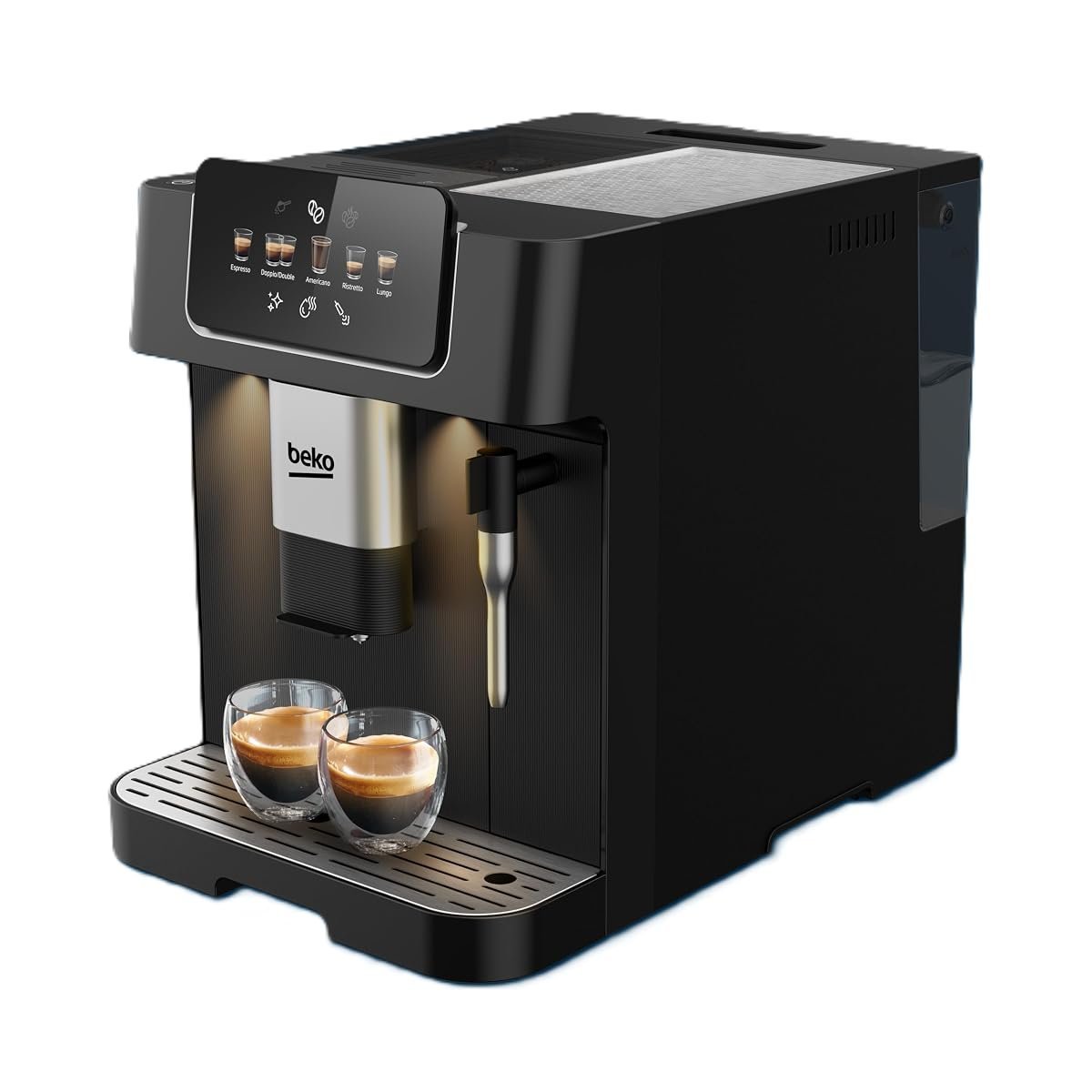
Beko CaffeExperto Espresso Machine CEG7302B
A genuine touchscreen bean-to-cup machine at the lowest price in this guide.
CHECK ON AMAZONBest Automatic Coffee Machines Australia Compared
| Product | Link | Type | Best For | Key Spec |
|---|---|---|---|---|
| Jura E8 Automatic Coffee Machine | Check price | Premium bean-to-cup | Dedicated coffee households | 27 specialities, resetting grinder |
| KitchenAid KF8 Espresso Machine | Check price | Design-led bean-to-cup | Kitchen styling as a feature piece | Porcelain finish, automatic rinse |
| KitchenAid KF6 Espresso Machine | Check price | Multi-user bean-to-cup | Households with different coffee preferences | 4 user profiles, 15 recipes |
| Philips 3300 Series Espresso Machine | Check price | Milk-focused bean-to-cup | Easy-clean milk drinks | LatteGo system, 40% quieter grinder |
| De’Longhi Magnifica Start Espresso Machine | Check price | Entry-level bean-to-cup | Simple everyday use | 4 recipes, manual milk frother |
| Beko CaffeExperto Espresso Machine CEG7348X | Check price | Recipe variety bean-to-cup | Households wanting genuine drink variety | 18 recipes, TFT touchscreen |
| Philips Fully Automatic Espresso Machine 1200 | Check price | Value bean-to-cup | Lowest-cost genuine bean-to-cup | Ceramic grinders, AquaClean filter |
| De’Longhi Magnifica S Espresso Machine | Check price | Two-cup bean-to-cup | Two-coffee-drinker households | Brews 2 espressos at once |
| Philips Baristina Espresso Machine | Check price | Compact bean-to-cup | Small kitchens, espresso-only drinkers | Compact size, swipe-lever operation |
| Beko CaffeExperto Espresso Machine CEG7302B | Check price | Budget bean-to-cup | Lowest-price genuine touchscreen automatic | 5 presets, dual nozzle, 19-bar |
1. Jura E8 Automatic Coffee Machine – Best Premium Bean-to-Cup
Jura fits this machine with a fifth-generation P.A.G.2 grinder that resets after every grind cycle, which preserves more of the bean’s flavour than a grinder left running warm between cups. Twenty-seven coffee specialities are available across hot brew, light brew and sweetened finishes, a far wider spread than the recipe counts on the machines further down this list.
A 3.5-inch colour display and J.O.E. quality assistant walk through timing and maintenance prompts, which matters more on a machine this complex than on a simpler one-touch design. At 27 centimetres wide, it’s also compact enough for a standard kitchen bench despite the feature list inside.
The specialities and grinder technology come at the highest price in this guide by a wide margin, which only pays off for a household that will genuinely use the range on offer rather than making the same flat white every morning. It suits a dedicated coffee household more than a first automatic machine.
Pros
- 27 coffee specialities across hot, light and sweetened brews
- P.A.G.2 grinder resets every cycle for fresher flavour
- Compact 27cm width for the feature set on offer
Cons
- Highest price in this guide by a significant margin
- More range than a household making one drink daily will use
Key specs: 27 specialities, P.A.G.2 grinder, 3.5-inch colour display, 27cm wide
CHECK ON AMAZON2. KitchenAid KF8 Espresso Machine – Best Design Statement
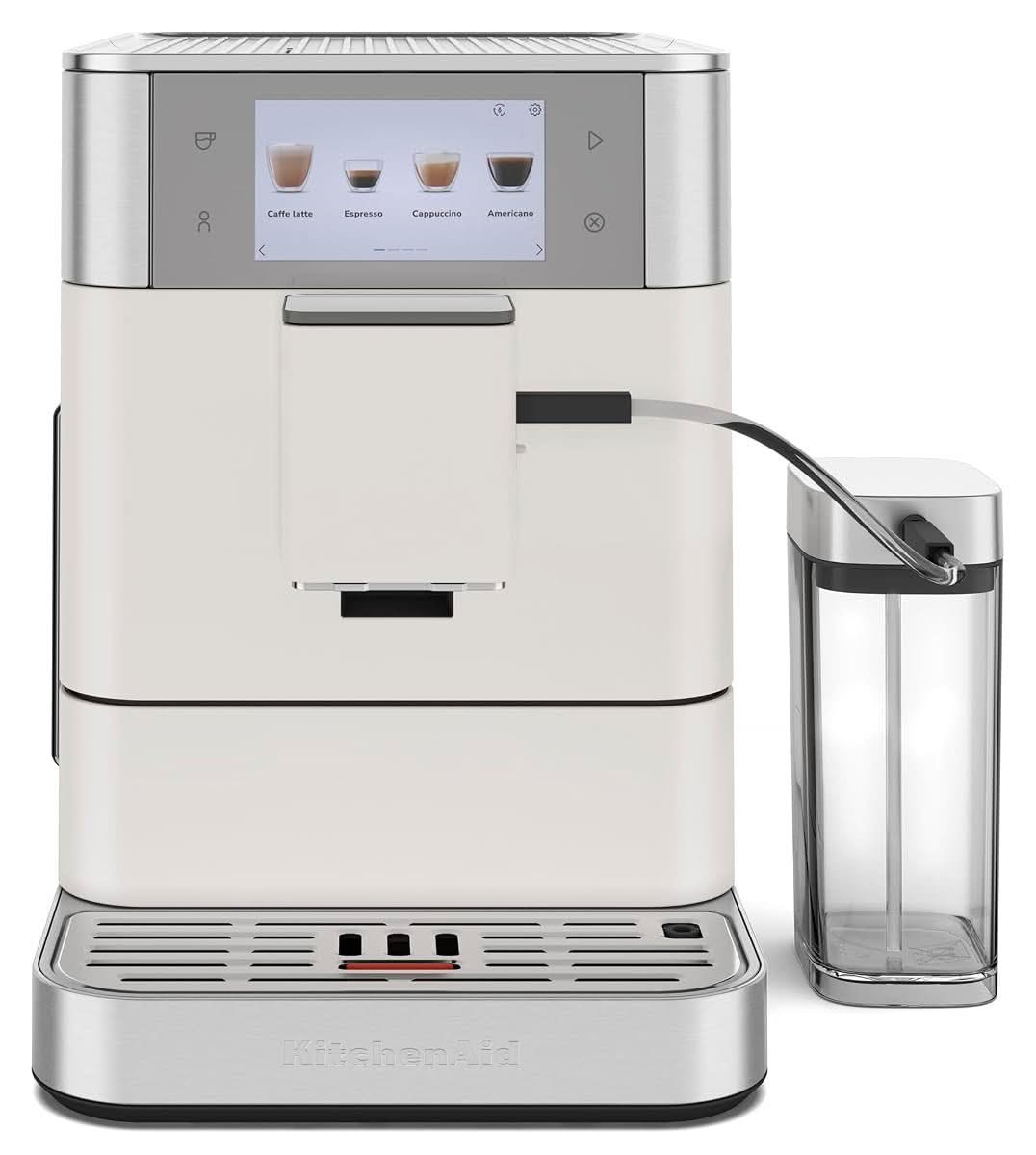
KitchenAid finishes this machine in porcelain over a metal-clad frame, a distinctly different look from the stainless steel and black plastic finishes on every other machine in this guide. The build is designed to sit on the counter as a feature piece rather than an appliance tucked away.
Automatic rinse cycles run the brew unit when needed and prompt a milk frother rinse after milk-based drinks, with a further clean notification when a fuller clean is due. That level of self-maintenance prompting is ahead of the simpler machines later in this list.
The porcelain finish demands more careful handling than a stainless or plastic housing, since it can chip if knocked the way a metal body wouldn’t. It suits a kitchen where the machine’s styling matters as much as its coffee, at a price that reflects the finish rather than any grinding or brewing advantage over the KF6 below it.
Pros
- Distinctive porcelain finish, unlike any other machine in this guide
- Automatic rinse cycles with clean notifications
- Metal-clad construction underneath the porcelain shell
Cons
- Porcelain is more prone to chipping than a metal or plastic housing
- Priced for the finish rather than any brewing advantage over the KF6
Key specs: Porcelain finish, metal-clad frame, automatic rinse cycles
CHECK ON AMAZON3. KitchenAid KF6 Espresso Machine – Best User Profiles

The KF6 drops the porcelain shell of the KF8 above for stainless steel, and adds four user profiles so a household of coffee drinkers can each save their own strength, size and milk preferences rather than resetting the machine each time. Fifteen recipe options cover espresso through to flat white and cappuccino.
A 2.2-litre water tank and 2.4-inch colour display round out a machine built for a household making multiple different drinks daily, and the removable bean hopper makes switching bean varieties a twist-and-lift job rather than a full teardown.
Four saved profiles matter far less to a single-person household than a shared kitchen, so anyone living alone gets less value from this specific feature than a share house or family would. It’s the pick for a household where everyone wants their coffee made their own way without adjusting settings each time.
Pros
- Four user profiles save individual drink preferences
- 15 recipe options and a 2.2L water tank
- Removable bean hopper for switching bean varieties easily
Cons
- User profiles add little value for a single-person household
- Stainless finish is less distinctive than the KF8’s porcelain
Key specs: 1450W, 2.2L water tank, 15 coffee options, 4 user profiles
CHECK ON AMAZON4. Philips 3300 Series Espresso Machine – Best Milk System

Philips builds this machine around its LatteGo milk system, a two-part attachment that clips on and off for cleaning without the tubing a traditional frother relies on. Six presets cover espresso, coffee, iced coffee, cappuccino, latte macchiato and hot water from one machine.
The full-colour display lets strength, volume and milk level be adjusted per drink and saved, and a 40%-quieter SilentBrew grinder makes this noticeably less disruptive first thing in the morning than a standard grinder running at full noise.
LatteGo’s simplicity trades some of the froth customisation a traditional steam wand offers, so anyone chasing latte-art-level microfoam should look at a manual machine instead. It suits a household that wants consistently good milk drinks without cleaning frother tubing after every use.
Pros
- LatteGo milk system clips off for tube-free cleaning
- 40% quieter SilentBrew grinder
- Six presets including iced coffee
Cons
- Less froth customisation than a traditional steam wand
- Six presets is fewer than the premium Jura machine above
Key specs: 6 presets, LatteGo milk system, 15-bar pressure, SilentBrew grinder
CHECK ON AMAZON5. De’Longhi Magnifica Start Espresso Machine – Best Simple One-Touch Entry
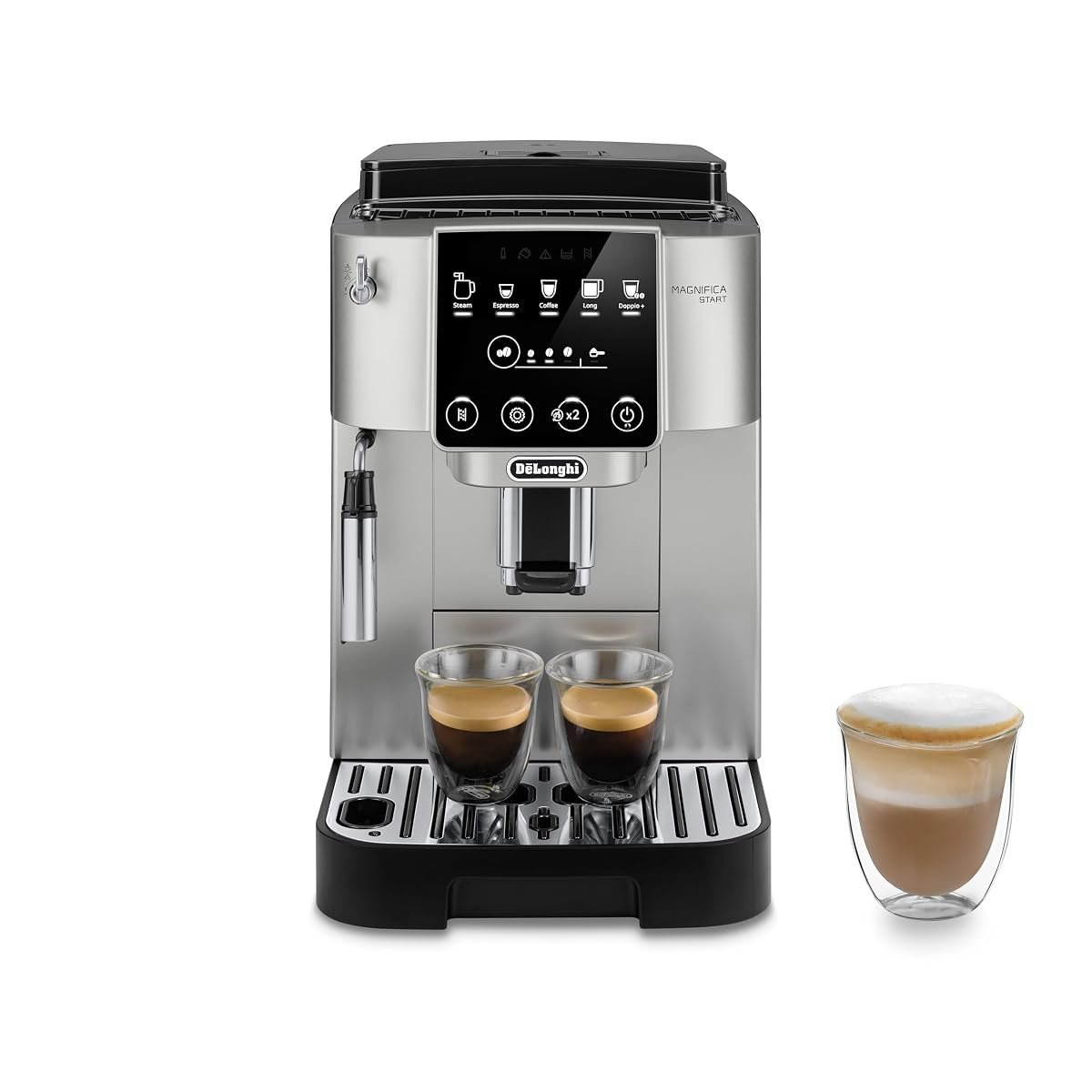
The Magnifica Start keeps De’Longhi’s bean-to-cup grinding at a simpler entry point than the Magnifica S below it, built around a soft-touch control panel with black-and-white icons rather than a full colour display. Four one-touch recipes cover the everyday basics.
A traditional milk frother lets froth be built up manually rather than through an automatic system, which suits anyone who already knows how to texture milk and wants control over the result rather than a fixed automatic setting.
Four recipes is fewer than the six-to-eighteen presets on several machines in this guide, and manual frothing takes more practice than an automatic milk system. It suits someone wanting the fresh-ground bean-to-cup basics without paying for a colour touchscreen or automatic milk system.
Pros
- Simple soft-touch control panel, easy to learn
- Traditional milk frother for manual texture control
- Includes bean container and pre-ground coffee case
Cons
- Only 4 one-touch recipes, fewer than most machines in this guide
- Manual milk frothing takes more practice than an automatic system
Key specs: 1450W, soft-touch panel, 4 one-touch recipes, traditional milk frother
CHECK ON AMAZON6. Beko CaffeExperto Espresso Machine CEG7348X – Best Recipe Variety
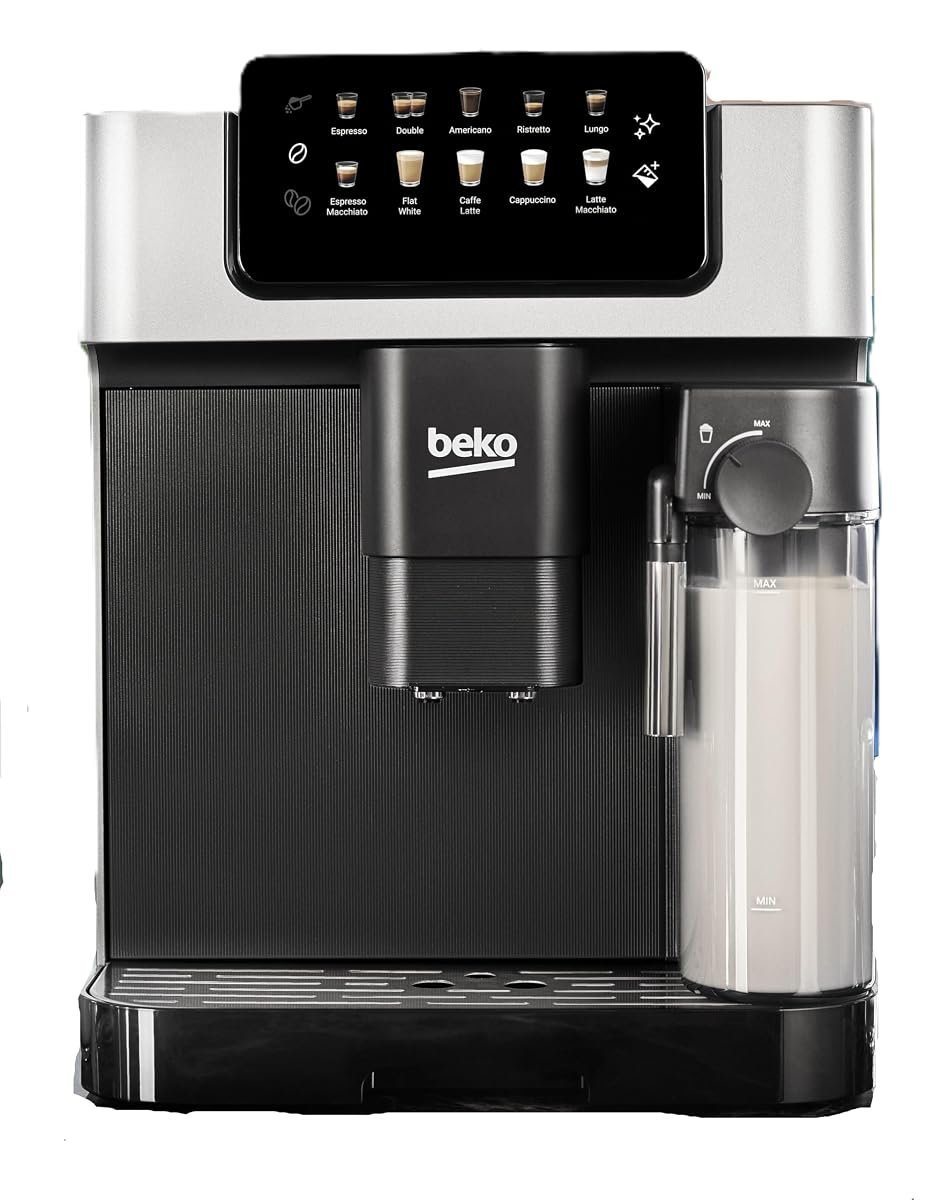
Beko packs 18 customisable recipes into this machine, covering espresso, cappuccino, latte, americano, macchiato and iced drinks with adjustable temperature and strength on each, the widest recipe count of any machine in this guide short of the premium Jura above.
An integrated milk frother handles lattes and cappuccinos automatically, and a TFT touchscreen keeps navigating 18 recipes manageable rather than overwhelming, which matters given how many options this machine offers compared with the four-to-six recipe machines earlier in this list.
Eighteen recipes only pay off if a household actually rotates through more than the usual two or three drinks, so a household making the same flat white daily gets less from the range here than from a simpler, cheaper machine. It suits a household wanting genuine variety without paying Jura-level pricing for it.
Pros
- 18 customisable recipes, widest range short of the premium Jura
- Integrated automatic milk frother
- TFT touchscreen keeps navigation manageable
Cons
- More recipe variety than a one-or-two-drink household will use
- Touchscreen navigation takes longer to learn than a simpler panel
Key specs: 18 recipes, integrated milk frother, TFT touchscreen
CHECK ON AMAZON7. Philips Fully Automatic Espresso Machine 1200 – Best Ceramic Grinder Value
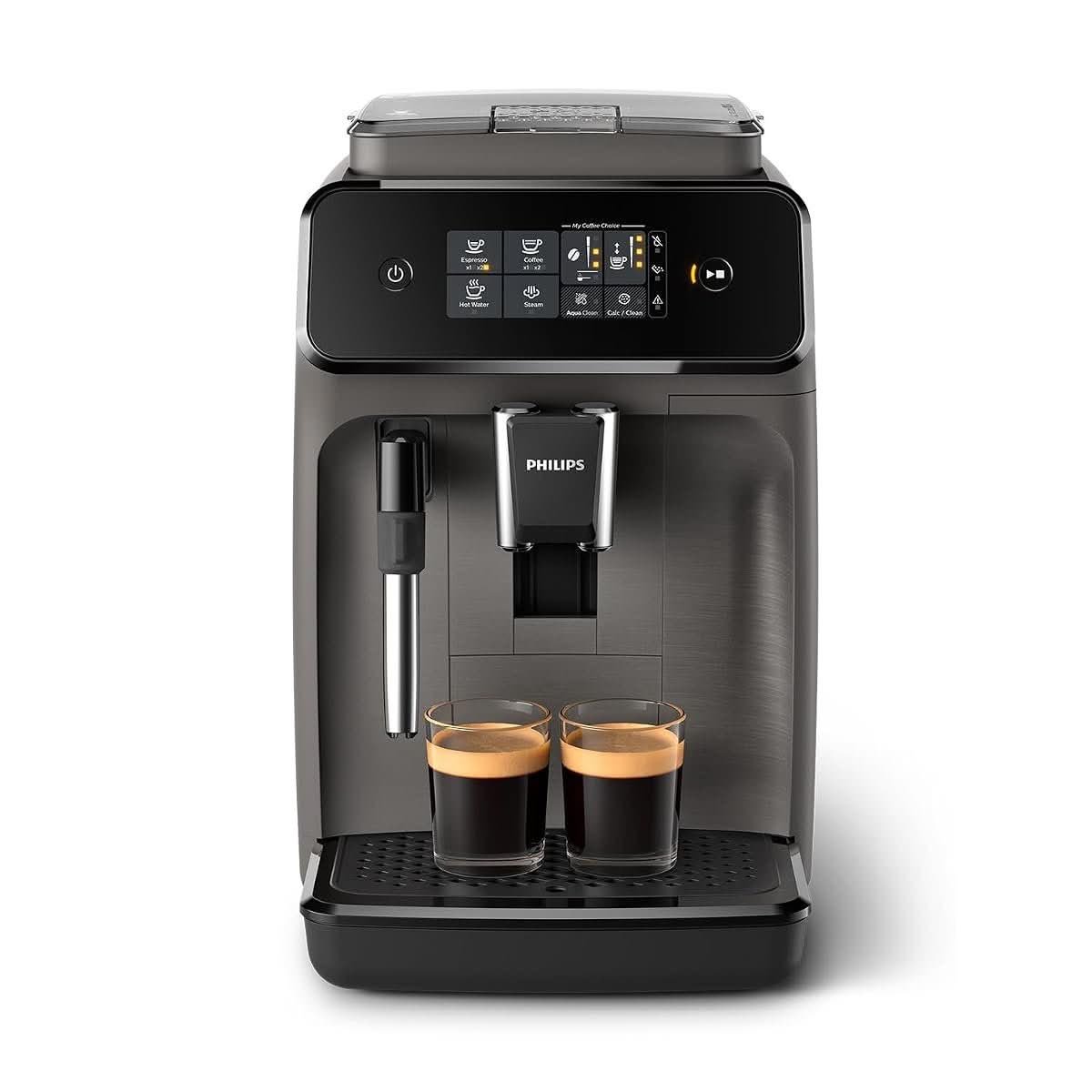
Philips fits this entry-level machine with 100% ceramic grinders, the same core grinding material used on pricier machines, in the cheapest bean-to-cup package in this guide. A Pannarello frother made of just two parts keeps milk texturing simple and easy to clean.
An intuitive touch display and the My Coffee Choice menu let strength and quantity be adjusted across three settings, a simpler system than the full recipe menus on the Beko or KitchenAid machines above, but enough for two coffee varieties done consistently well.
Two coffee varieties is a narrower spread than almost every other machine in this guide, so anyone wanting iced coffee, macchiato or a wide recipe list should look further up this list. It’s the pick for a household wanting genuine ceramic-grinder bean-to-cup coffee at the lowest entry price here.
Pros
- 100% ceramic grinders at the lowest price in this guide
- Two-part Pannarello frother is easy to clean
- AquaClean filter extends descaling intervals
Cons
- Only 2 coffee varieties, narrower than every other machine here
- No colour display or multi-recipe menu
Key specs: 100% ceramic grinders, 2 coffee varieties, AquaClean filter
CHECK ON AMAZON8. De’Longhi Magnifica S Espresso Machine – Best Simultaneous Two-Cup Brewing
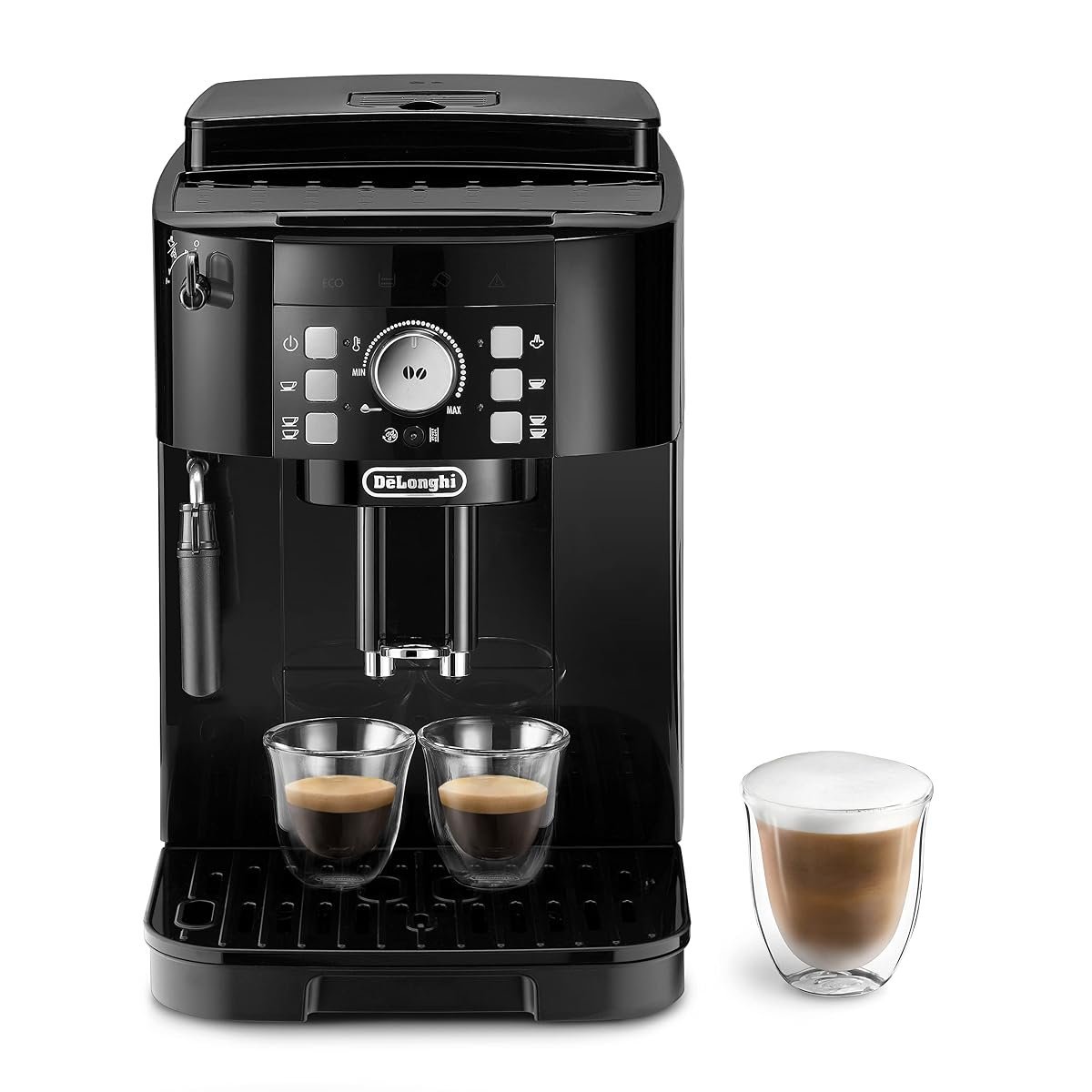
The Magnifica S steps up from the Start model earlier in this list with the ability to brew two espressos at once, alongside conical steel grinders calibrated for consistent grinding rather than the simpler grinder setup on the entry Magnifica. Four one-touch recipes and adjustable temperature control round out the feature set.
Grinding the exact amount of beans per shot rather than a fixed dose is the other upgrade over the Start model, aimed at reducing waste and keeping grounds fresher at the point of brewing. A manually adjustable milk frother gives the same hands-on froth control as the Start model.
Two-cup brewing matters most for a household serving coffee to guests or partners at the same time rather than one person brewing solo each morning. It suits a two-coffee-drinker household more than someone living alone, where the feature goes largely unused.
Pros
- Brews two espressos simultaneously
- Conical steel grinders calibrated for consistent dosing
- Grinds the exact bean amount per shot to reduce waste
Cons
- Two-cup brewing adds little for a single-person household
- Manual milk frother needs more practice than an automatic system
Key specs: 4 one-touch recipes, conical steel grinders, 2 espresso at once
CHECK ON AMAZON9. Philips Baristina Espresso Machine – Best Compact
The Baristina strips the automatic coffee machine down to a swipe-lever operation and a genuinely compact footprint, smaller than every other machine in this guide. Swiping the handle grinds, tamps and brews in one motion, with no barista skills or menu navigation required.
Sixteen-bar pressure and an automatic grinder still deliver freshly ground beans per cup despite the small size, which is the main trade-off other compact coffee makers usually sacrifice for their footprint. Cafe Crema is the machine’s specialty output alongside standard espresso.
The compact size and single swipe-lever action mean fewer recipe options and no colour display or milk system, so anyone wanting lattes or cappuccinos built in should look to the Philips 3300 series above instead. It suits a small kitchen or a single espresso drinker who values counter space over recipe range.
Pros
- Genuinely compact footprint, smallest machine in this guide
- One-motion swipe-lever grinds, tamps and brews
- 16-bar pressure with automatic fresh grinding
Cons
- No built-in milk system for lattes or cappuccinos
- Fewer recipe options than every other machine in this guide
Key specs: 16-bar pressure, automatic grinder, compact footprint
CHECK ON AMAZON10. Beko CaffeExperto Espresso Machine CEG7302B – Best Budget Touchscreen
This is Beko’s simpler CaffeExperto model, dropping to five preset coffee options against the 18 on its sibling earlier in this list, at a lower price than every other machine in this guide bar none. A colour touchscreen still handles navigation despite the reduced recipe count.
A dual nozzle lets two coffees brew simultaneously, matching the De’Longhi Magnifica S above on that specific feature at a considerably lower price, and 19-bar pressure with a 2-litre tank cover the core espresso and cappuccino basics.
Five presets is enough for classic Americano, single or double espresso, ristretto and lungo, but won’t stretch to the iced drinks or macchiato options on the pricier Beko above. It’s the pick for a household wanting a genuine touchscreen bean-to-cup machine at the lowest price in this guide.
Pros
- Lowest price of any machine in this guide
- Colour touchscreen despite the budget price
- Dual nozzle brews two coffees simultaneously
Cons
- Only 5 presets against 18 on the pricier Beko model
- No iced coffee or macchiato presets
Key specs: 5 presets, 19-bar pressure, 2L capacity, dual nozzle
CHECK ON AMAZONHow to Choose an Automatic Coffee Machine
Grinder technology is the core of any automatic machine. A resetting grinder like Jura’s P.A.G.2 preserves more flavour between cups than a grinder left idle, while ceramic grinders on entry-level machines still deliver genuine fresh-ground coffee at a lower price.
Recipe count is only worth paying for if you will use it. A household making the same flat white daily gets little from 18 presets, while a household rotating through espresso, macchiato and iced coffee will use a wider menu properly. Readers wanting a manual alternative can compare options in our guide to the best coffee machines in Australia, which covers portafilter and capsule machines alongside automatics.
Milk system ranges from a fully automatic system like LatteGo to a traditional manual frother. Automatic systems are faster and easier to clean, while manual frothers give more control over texture for anyone who already knows how to steam milk.
User profiles matter for a shared household more than someone living alone. A machine with multiple saved profiles lets each person keep their own strength, size and milk settings rather than adjusting the machine before every cup.
Footprint and finish vary from a genuinely compact swipe-lever machine to a full-size unit with a colour display. A smaller kitchen should prioritise footprint over recipe count, since a wide menu is no use if the machine doesn’t fit the counter.
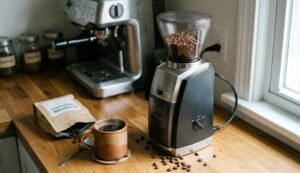
Grind freshness is the main reason to choose an automatic machine over a capsule system, since beans are ground per cup rather than pre-packaged. Readers wanting more control over the grind itself, for a manual machine or a standalone grinder, can also check our guide to the best coffee grinders in Australia.
Frequently Asked Questions
What is the difference between an automatic and a manual coffee machine?
An automatic coffee machine grinds beans and brews at the push of a button, with no portafilter or tamper to operate by hand. A manual machine requires the user to grind, dose, tamp and pull the shot themselves, offering more control at the cost of a learning curve.
Do automatic coffee machines grind fresh beans?
Yes, genuine automatic or bean-to-cup machines grind whole beans immediately before brewing, which is the main difference from a capsule machine using pre-packaged coffee. Always check for an integrated grinder rather than a pod or capsule slot.
How many recipes does an automatic coffee machine need?
It depends on how varied your coffee routine is. A household making the same one or two drinks daily needs as few as four or five presets, while a household wanting iced coffee, macchiato and specialty drinks benefits from a machine with 15 or more.
Is an automatic milk system better than a manual frother?
An automatic system like LatteGo is faster and easier to clean, while a manual frother gives more control over milk texture for someone who already knows how to steam milk properly. Neither is objectively better, they suit different routines.
How much coffee does an automatic machine grind per shot?
Most automatic machines grind between 6 and 9 grams of coffee per shot, roughly 0.2 to 0.3 ounces, adjustable on machines with a strength setting. This is a similar dose to a manual espresso shot.
Are premium automatic coffee machines worth the price?
Only if the household will use the extra recipes, user profiles or grinder technology a premium machine offers. A household making one or two drink types daily gets little extra value from an 18-recipe machine over a simpler four-recipe one.
Verdict
Anyone building a coffee routine around genuine variety and grinder quality gets the clearest case for the Jura E8 Automatic Coffee Machine, since 27 specialities and a resetting grinder outperform every other machine in this guide. A household wanting an easy-clean automatic milk system without the premium price should look instead at the Philips 3300 Series Espresso Machine, where LatteGo handles lattes and cappuccinos without frother tubing to clean. For a small kitchen or a single espresso drinker, the Philips Baristina Espresso Machine covers fresh-ground bean-to-cup coffee in the smallest footprint here.