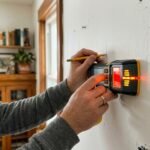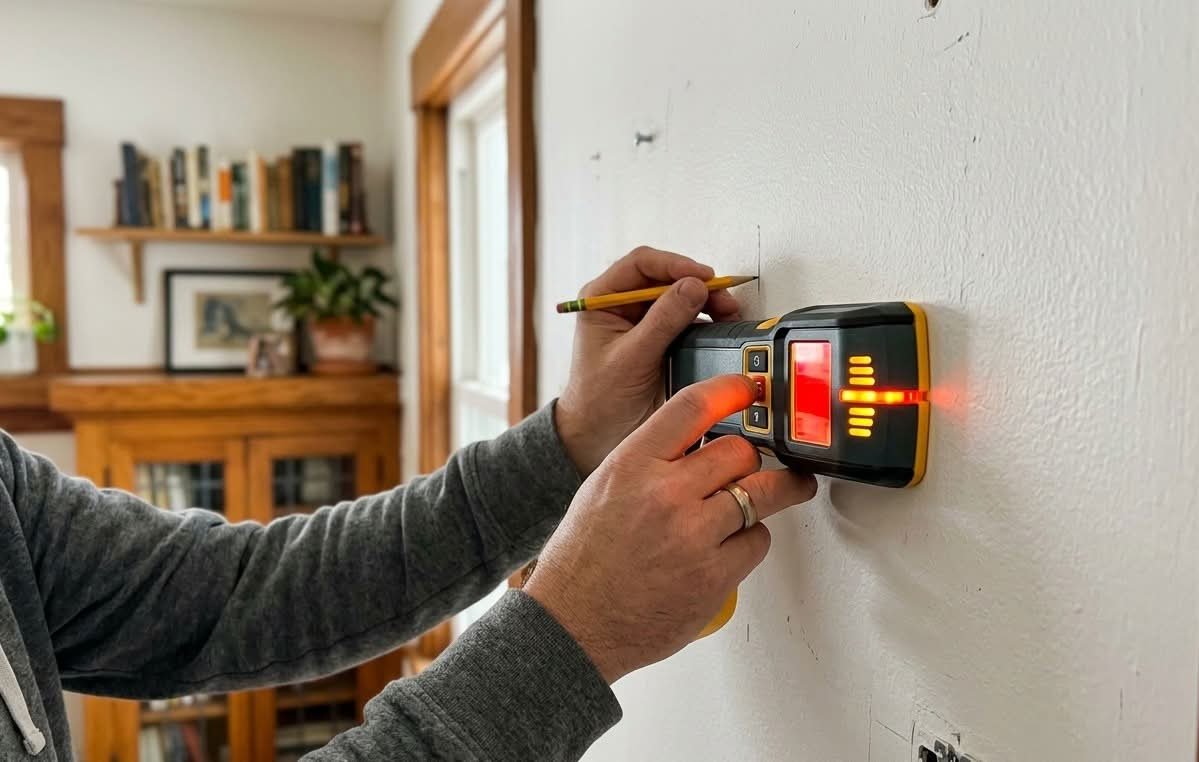
A stud finder is a handheld tool that locates the timber or steel framing behind a sheet of plasterboard, sensing a shift in density, magnetism or electrical capacitance as it passes over the wall. The best stud finders Australia sells today go further, flagging a live electrical cable before a drill bit gets anywhere near it.
Every model on the market works one of three ways. Magnetic stud finders use rare-earth magnets to snag the metal nails or screws already driven into a timber stud, giving an instant, batteryless read with no calibration step. Electronic stud finders measure the change in capacitance as a single sensor crosses a stud, working whether or not a metal fastener sits inside it. Multi-sensor wall scanners line up several electronic sensors side by side so the display shows a stud’s full width in one pass, instead of a single point that has to be walked back and forth to find both edges.
Stud spacing in Australian timber-frame walls typically runs at 450mm or 600mm centres (about 17.7 or 23.6 inches), depending on the wall’s structural load, so a detection width narrower than that range should still pick up the next stud without a gap. The criteria that matter most are detection depth through plasterboard, whether the unit warns of live wiring, and how clearly it marks the result for a pencil line.
Fitting a floating shelf, a TV bracket or a grab rail all start the same way: find the framing before drilling into it. The ten stud finders compared here range from pocket-sized magnetic tools through to multi-sensor electronic scanners with live-wire warnings, weighed up on detection depth, one-handed operation and how each one marks its result. Most of these jobs finish with a screw driven home, and anyone still assembling a tool kit can compare options in our guide to the best impact drivers.
Quick Picks
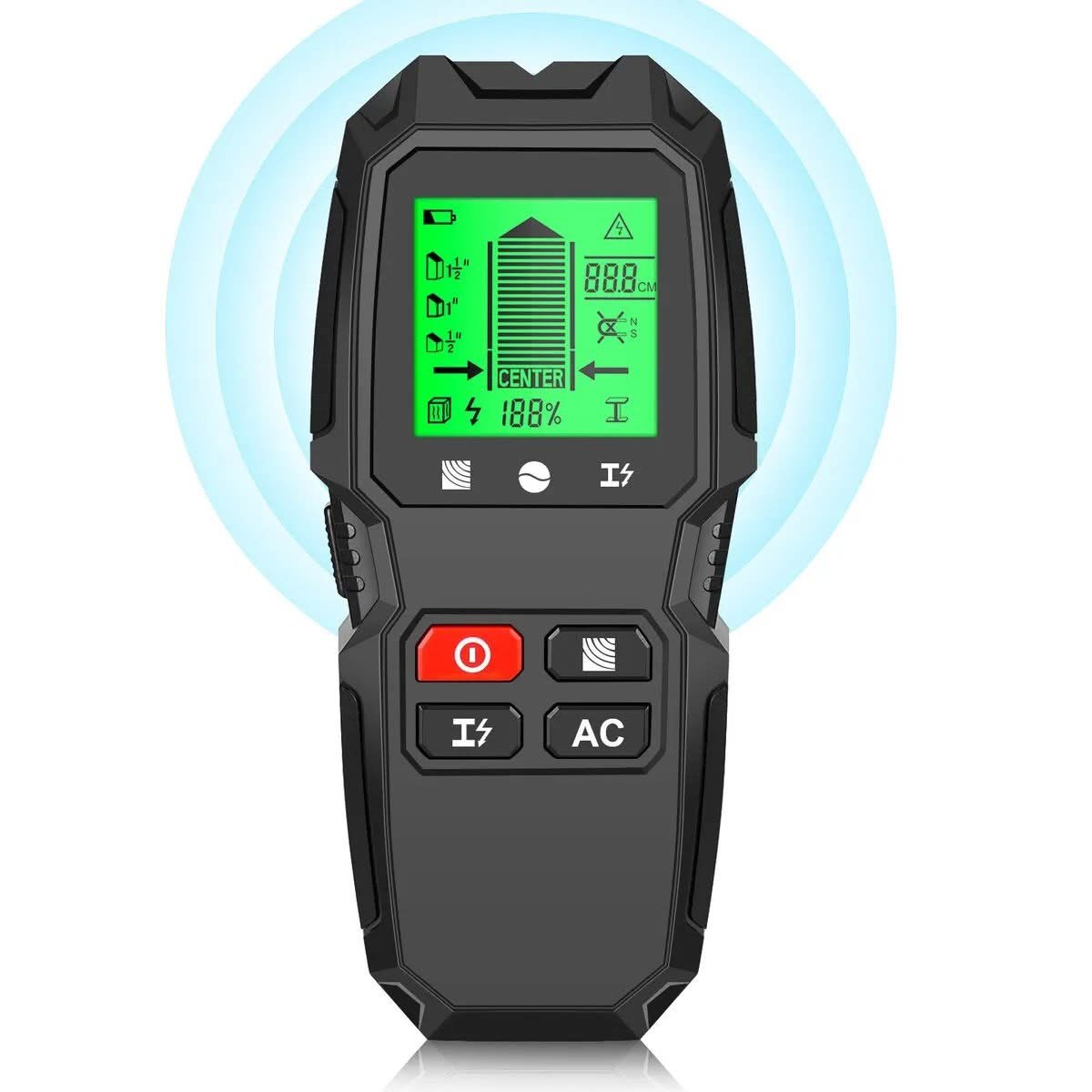
5 in 1 Stud Finder Wall Scanner
Five detection modes cover wood studs, metal, live wires and cables in a single pass.
CHECK CURRENT PRICEBest Stud Finders Australia Compared
| Product | Link | Type | Best For | Key Spec |
|---|---|---|---|---|
| 5 in 1 Stud Finder Wall Scanner | Check price | 5-in-1 electronic | Cables and pipes before drilling | LCD display, 5 detection modes |
| Franklin Sensors ProSensor M210 | Check price | 13-sensor electronic | Wide or engineered studs | Full stud width display, live wire alert |
| Bosch UniversalDetect | Check price | 3-mode electronic | Guided step by step scanning | 25/50/100mm depth settings, touchscreen |
| RYOBI Stud Finder | Check price | Multi-LED electronic | One handed use | Auto depth scan to 38mm |
| HANMATEK SF1 Cable Finder Detector | Check price | 4-in-1 electronic | Multiple wall materials | Self calibrating, audio and light alert |
| Franklin Sensors ProSensor M70 | Check price | 7-sensor electronic | Compact multi sensor use | Detects to 38mm, no calibration |
| Klein Tools MSF100 | Check price | Magnetic with level | Built in level marking | Rare earth magnet, bubble vial |
| Calculated Industries StudMark | Check price | Magnetic with markers | Marking several studs | 2 removable markers, no batteries |
| CH Hanson 03040 Magnetic Stud Finder | Check price | Compact magnetic | Simple no battery use | 2 way level, scan depth 25mm |
| Stanley S50 Electronic Stud Sensor | Check price | Budget electronic | Lowest cost pick | 3 stage LED, detects to 19mm |
1. 5 in 1 Stud Finder Wall Scanner – Best for Detecting Cables and Pipes Before Drilling
This wall scanner packs five detection modes into one handheld unit, switching between wood stud, ferrous metal, non-ferrous metal, live AC wire and general cable detection from a single button. A backlit LCD screen sits above the grip and reports the mode, signal strength and a centre marker, so the housing does not need to be pulled away from the wall to read a result.
In use it settles quickly once held flat against gyprock, and the live-wire mode is the one most buyers reach for first, since an internal wall in an Australian home almost always runs at least one circuit through it before it reaches a power point. Switching modes mid-scan does not require a fresh calibration pass, which speeds up a job that touches more than one wall.
The plastic housing and small battery compartment keep the unit light, though the LCD is smaller than the dedicated electronic scanners further down this list. This suits a homeowner drilling into an unfamiliar wall for the first time rather than a tradesperson who already knows the house, since cable and pipe detection sits inside the same tool as the stud finder.
Pros
- Five detection modes cover studs, metal and live wiring in one pass
- LCD readout shows signal strength and centre point together
- No recalibration needed when switching modes
Cons
- Screen is smaller than the dedicated electronic scanners in this guide
- Plastic housing feels less rugged than the tool-brand entries
Key specs: 5 detection modes, LCD display, single button mode switching, handheld plastic housing
CHECK CURRENT PRICE2. Franklin Sensors ProSensor M210 – Best for Wide or Engineered Studs
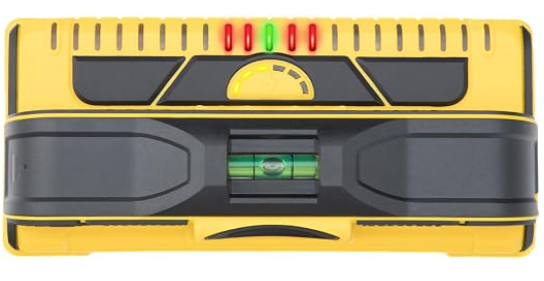
Thirteen sensors run side by side inside the M210’s housing, each one reading density independently rather than relying on a single point that has to be swept back and forth. A wide LED display lights up across the full width of a detected stud at once, showing both edges and the centre in the same pass.
Live-wire detection runs alongside the stud sensors, so a warning appears if the scanner crosses an energised cable rather than only after a separate mode is selected. The unit reads through plasterboard to a depth of roughly 43mm, enough for a standard sheet plus a reasonable render or tile buildup.
The wide sensor array is the reason to reach for this model over a single-point scanner: engineered studs, doubled-up framing and wide structural members show their true edges instead of one ambiguous beep. It costs more than most of the other electronic models here, which makes more sense on a renovation with a lot of wall area to cover than for a single picture hook.
Pros
- 13 sensors show a stud’s full width in one pass
- Live-wire detection built in, no separate mode
- Reads through plasterboard to about 43mm deep
Cons
- Premium price for occasional, light use
- Runs on batteries with no low-battery display readout
Key specs: 13 sensors, live wire detection, detection depth about 43mm, LED width display
CHECK ON AMAZON3. Bosch UniversalDetect – Best for Guided, Step-by-Step Scanning
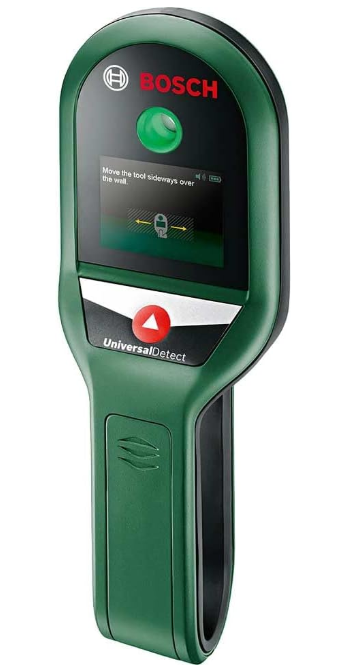
A 2.4 inch colour touchscreen sits front and centre on the UniversalDetect, walking a first-time user through each scan with on-screen instructions rather than leaving them to interpret a row of LEDs. Three detection settings cover wood at 25mm, live cable at 50mm and metal at 100mm, selected directly from the touchscreen menu.
A traffic-light LED ring around the marking hole turns green once the scan is stable enough to trust, which cuts down on the false starts that come from moving the sensor too fast across gyprock. The touchscreen also stores a short set of usage tips, useful for anyone who has not picked up a stud finder before.
Running on four AAA batteries rather than a single small cell, it is bulkier in the hand than the compact magnetic picks in this guide, and the touchscreen adds a feature that a tradesperson doing this daily may not need over a simpler sensor array. It suits a household planning several jobs across a renovation, where the guided steps save more time than they cost in bulk.
Pros
- Touchscreen guides each scan step by step
- Three depth settings for wood, live cable and metal
- Traffic-light LED confirms a stable, trustworthy reading
Cons
- Bulkier than the compact magnetic and pocket models here
- Touchscreen is more feature than an experienced user may need
Key specs: 2.4 inch touchscreen, 3 detection settings (25/50/100mm), traffic light LED marking guide, 4x AAA batteries
CHECK ON AMAZON4. RYOBI Stud Finder – Best One-Handed Design
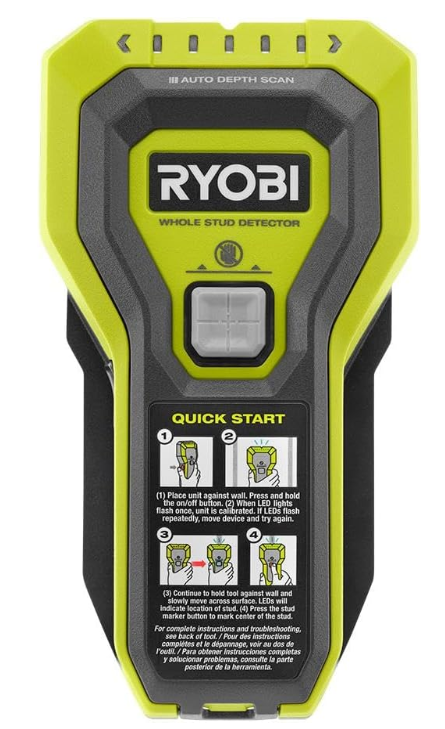
Single-button, one-handed operation is the whole design brief here: a row of LEDs lights up progressively as the sensor approaches a stud, then holds steady across its full width once centred. A small notch on the housing marks the centre point directly onto the wall without switching to a pencil first.
Auto Depth Scan technology adjusts for wall thickness up to about 38mm, which covers standard plasterboard without any manual calibration step. It reads both wood and metal studs, though it does not include a dedicated live-wire warning mode, so pairing it with a separate voltage tester is worth considering before drilling near a power point.
The one-handed layout is the standout feature here rather than raw sensor count, and it suits jobs like hanging curtain rods or a run of shelf brackets where speed matters more than a wide multi-sensor readout. Buyers wanting live-wire detection built into the same unit are better served by the HANMATEK entry later in this guide, or the wall scanner at the top of it.
Pros
- True one-handed operation with a built-in marking notch
- Auto depth scan adjusts to wall thickness automatically
- Detects both wood and metal studs
Cons
- No dedicated live-wire warning mode
- Simple LED display without a screen for extra readouts
Key specs: Wood and metal detection, one handed design, auto depth scan to 38mm, built in centre marker
CHECK ON AMAZON5. HANMATEK SF1 Cable Finder Detector – Best for Detecting Multiple Wall Materials
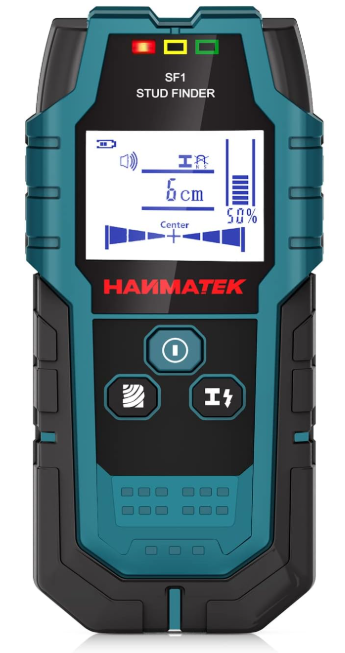
Four detection functions share one large LCD readout on the SF1: metal, wood, magnetism and AC cable, switched from a single mode button rather than four separate tools. The screen shows signal strength as a bar graph alongside the centre point, so the read stays visible without glancing away from the wall.
A self-calibration step runs each time the metal-detection button is pressed, provided the sensor starts away from any nail, cable or existing metal in the wall. Both an audible alarm and a light indicator confirm a detection, useful in a noisy room or a poorly lit roof cavity.
The rubberised back protects painted or papered walls from scuff marks during longer scanning sessions, a small but practical detail on a budget-friendly electronic model. Anyone mounting a television, a garage shelf or a cabinet gets metal, timber and live cable checked in the same pass, rather than reaching for three separate tools.
Pros
- Four detection functions on one large LCD screen
- Automatic self-calibration before each metal scan
- Sound and light alerts together
Cons
- Calibration step must be done away from existing metal or cable
- Auto shutoff after five minutes can interrupt a longer job
Key specs: 4 detection functions, LCD signal strength display, self calibrating, audio and light alert, auto shutoff
CHECK ON AMAZON6. Franklin Sensors ProSensor M70 – Best Compact Multi-Sensor Pick
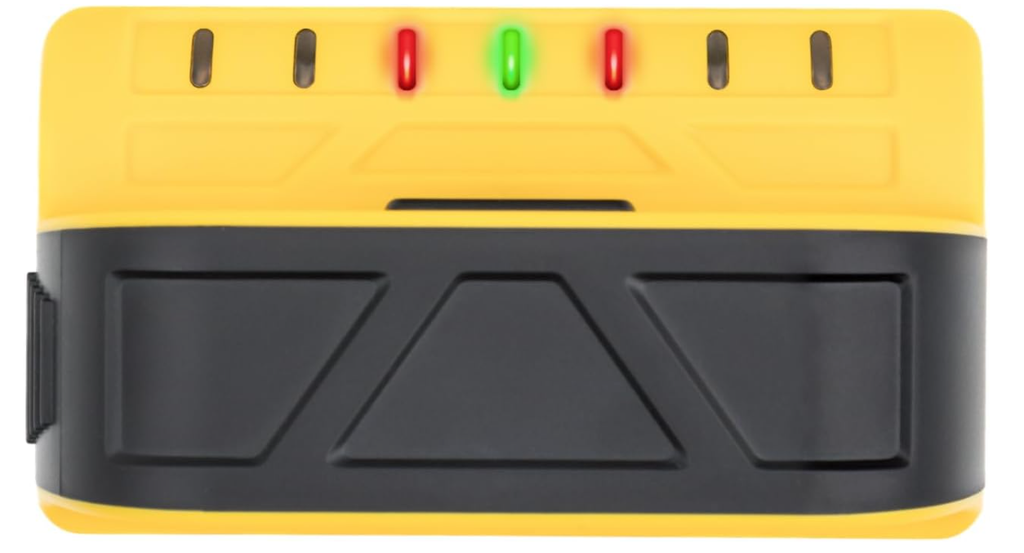
Seven sensors are packed into a housing barely wider than a smartphone, giving the M70 most of the width-reading advantage of its 13-sensor sibling in a smaller, cheaper unit. Press and hold the single button to begin scanning, with no calibration step required before each use.
Because it does not need a calibration pass, the M70 can start scanning directly over an existing stud without giving a false reading, something several single-sensor electronic models cannot do reliably. Detection depth runs to about 38mm, matching standard plasterboard thickness with a small margin for paint or a thin render coat.
It skips the live-wire warning mode that the M210 includes, so it suits lighter jobs like picture rails and curtain brackets rather than work near a switchboard or power circuit. The compact size also makes it easier to slip into a toolbox than the touchscreen model further up this list.
Pros
- 7 sensors show a stud’s width without walking the sensor back and forth
- No calibration needed, even starting over a stud
- Compact housing fits easily into a toolbox
Cons
- No live-wire detection mode
- Uses non-rechargeable AAA batteries only
Key specs: 7 sensors, detection depth about 38mm, no calibration required, AAA batteries
CHECK ON AMAZON7. Klein Tools MSF100 – Best Magnetic Stud Finder with a Built-in Level

No battery compartment exists on the MSF100 at all: a rare-earth magnet does the detecting, snapping onto the metal nails or screws already holding a timber stud together. A centre notch and a bubble vial are built into the same housing, so a level line can be marked at the same time as the stud position.
In use it is dragged slowly across the wall until the magnet pulls toward a fastener, at which point it sits in place hands-free while a pencil mark goes down. A felt pad on the back stops the housing from scuffing painted or wallpapered plasterboard during that process.
It only finds studs that already have a metal fastener close to the surface, so it will miss framing timber with no nail or screw nearby, unlike the electronic models earlier in this guide. Pocket-sized and rated for a drop from about 3 metres, it suits a toolbox that already has a stud finder but wants a lighter option for quick, occasional marking jobs.
Pros
- No batteries or calibration needed
- Built-in level and centre notch for marking
- Compact enough for a pocket or nail pouch
Cons
- Only detects studs near an existing metal fastener
- Not a substitute for a live-wire check before drilling
Key specs: Rare earth magnet, built in bubble level, felt pad backing, drop rated to 3m, no batteries
CHECK ON AMAZON8. Calculated Industries StudMark – Best for Marking Several Studs at Once
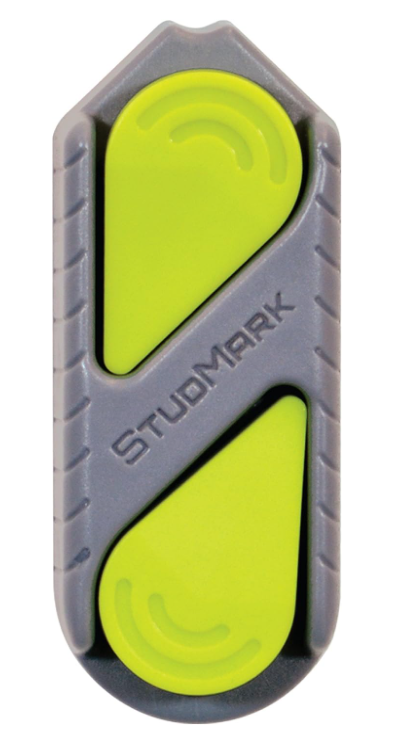
Two spare magnetic markers ship in the box with the StudMark, letting it hold its own position on a wall while marking up to two further stud locations at the same time. Stronger rare-earth magnets keep the main unit and both markers in place hands-free once each finds a fastener.
Working across a run of wall for shelving or a cabinet, all three magnets can stay stuck in place while the tape measure or spirit level comes out, avoiding the pencil-mark guesswork that comes from checking one stud, walking away, then coming back. The maker does not recommend it for plaster walls, where thickness varies too much for a magnet-only reading to stay reliable.
Like the other magnetic entries here, it only finds fasteners already in the timber, so a wall framed without visible nails near the surface needs an electronic scanner instead. It is a strong pick for anyone mounting a longer fitting, such as a shelf or curtain track, across several studs in one sitting rather than checking a single point.
Pros
- Two extra markers hold multiple stud positions at once
- No batteries, magnet only detection
- Compact and pocket sized
Cons
- Not recommended for plaster wall surfaces
- Still relies on a nearby metal fastener to work
Key specs: 2 removable magnetic markers, marks up to 3 stud locations, rare earth magnets, no batteries, 2 year warranty
CHECK ON AMAZON9. CH Hanson 03040 Magnetic Stud Finder – Best Simple, No-Battery Pick
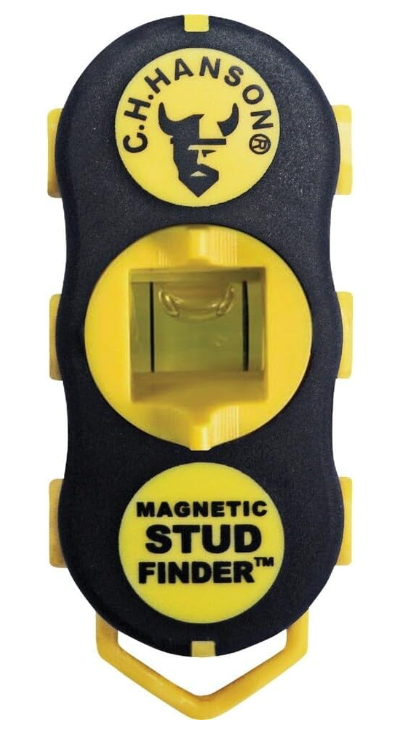
A rotating two-way level is built into this pocket magnet, letting it double as a small spirit level once a stud is found and marked. The magnet itself is strong enough to hold the tool in place on the wall hands-free while a pencil line goes down.
Scan depth is rated to about 25mm, enough for standard plasterboard, and there is no power button, screen or calibration step to work through before using it. It works the same way every time it is picked up, which suits anyone who only reaches for a stud finder a few times a year and does not want to relearn a menu.
It shares the same limitation as the other magnetic tools in this guide: it needs an existing nail or screw close to the surface of the stud to detect anything at all. For a single picture frame or a small bracket, that trade-off matters less than the simplicity of a tool with nothing to break or charge.
Pros
- Built-in two-way level for marking
- No batteries, screen or calibration required
- Small enough to fit in a pocket or tool pouch
Cons
- Only detects studs with a metal fastener nearby
- Scan depth is shallower than the electronic models here
Key specs: 2 way rotating level, scan depth about 25mm, magnetic detection, no batteries
CHECK ON AMAZON10. Stanley S50 Electronic Stud Sensor – Best Ultra-Budget Pick
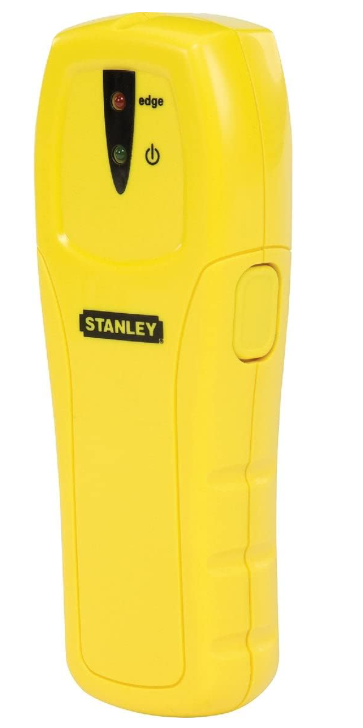
Three LED lights are the entire interface on the S50, lighting up in stages as the sensor approaches the edge of a stud rather than displaying a graph or a number. It is the simplest electronic model in this guide, with a single button to turn it on and start the scan.
Detection depth runs to about 19mm, shallower than the multi-sensor scanners higher up this list, which is enough for a single layer of standard plasterboard but leaves less margin for render, tile or a thicker wall lining. There is no live-wire warning mode, so a separate check is still worth doing near any power point or switch.
It is the cheapest tool in this guide by a wide margin, and that low cost is the entire appeal: a spare stud finder kept in a drawer for the rare job that needs one, rather than a primary tool for anyone renovating regularly. Buyers who expect to use a stud finder often are better off stepping up to one of the multi-sensor models earlier in this guide.
Pros
- Lowest cost tool in this guide
- Simple three stage LED display, easy to learn
- Compact and lightweight
Cons
- Shallower detection depth than multi-sensor models
- No live-wire warning mode
Key specs: 3 stage LED detection, detection depth about 19mm, single button operation
CHECK ON AMAZONHow to Choose a Stud Finder
Detection method decides how the tool works before anything else does. Magnetic stud finders find the metal fastener already in a stud, electronic models read the stud itself through a change in capacitance, and multi-sensor scanners line up several electronic sensors to show a stud’s full width in one pass. A magnetic pick is the simplest and cheapest option for occasional use, while an electronic or multi-sensor model reads more reliably on framing that has nothing metal near the surface.
Detection depth needs to clear the plasterboard sheet plus any paint, tile or render sitting on top of it, so a shallow 19mm rating leaves less margin than a model reading to 38mm or more. Standard plasterboard alone is usually enough margin for most entries in this guide, but a thicker wall lining or a second sheet fitted over an old one calls for a deeper-reading model.
A live-wire warning adds real value near any wall with a power point, light switch or downlight run behind it, since it flags an energised cable before the drill bit does. Not every model includes it, and a magnetic stud finder cannot detect wiring at all, so a separate voltage tester is worth keeping in the toolbox regardless of which stud finder gets used.
Display and feedback type ranges from a simple row of LEDs through to a full touchscreen. LED-only models are the quickest to read at a glance, LCD screens add signal strength and mode information, and a small number of models add step-by-step guidance on a touchscreen. A first-time user benefits most from a clear screen or a guided display, while an experienced renovator working through several walls a week may prefer the speed of a simple LED readout.
What the wall is made of rules a stud finder in or out before any spec sheet matters. Stud finders are built for timber or steel-framed walls under plasterboard or gyprock, not solid masonry, so a besser block wall or a brick veneer’s outer skin will not give a useful reading. Most interior walls in an Australian home are stud-framed even where the exterior is brick veneer, which is where a stud finder earns its keep.
What happens after the framing is marked is worth planning for before buying. Once the stud position is marked, most jobs move straight to driving a screw or running a cable through the cavity, and a job that needs to open the wall up rather than just drill into it calls for a different tool again. Anyone planning that kind of work can compare options in our guide to the best reciprocating saws before starting.
Frequently Asked Questions
What is a stud finder used for in Australian homes?
A stud finder locates the timber or steel framing behind a wall’s plasterboard, giving a secure point to drill or screw into before hanging shelves, TV brackets, curtain rods or heavier fittings. Drilling into a stud rather than only the plasterboard sheet holds far more weight and avoids a fitting pulling loose over time.
Do stud finders work through plasterboard and gyprock?
Yes, both magnetic and electronic stud finders are designed to work through standard plasterboard, often called gyprock in Australia. Electronic models read through the sheet using capacitance, while magnetic models rely on a metal fastener already inside the stud being close enough to the surface to detect.
Can a stud finder detect live electrical wiring?
Some electronic stud finders include a dedicated live-wire detection mode that warns before the sensor crosses an energised cable, while simple magnetic models cannot detect wiring at all. Even with a live-wire warning built in, it is worth switching off power at the board before drilling near a light switch or power point.
How far apart are wall studs in Australian houses?
Stud spacing in Australian timber-frame walls commonly runs at 450mm or 600mm centres, depending on the wall’s structural load, so once one stud is marked the next is usually a short, predictable distance away. Older homes and non-standard renovations can vary from this spacing, which is why scanning rather than measuring is still worth doing.
Are magnetic stud finders as accurate as electronic ones?
A magnetic stud finder is accurate at finding a fastener it can detect, but it only works where a nail or screw already sits close to the wall surface, so it will miss framing timber with nothing metal nearby. Electronic models detect the stud itself through a change in density or capacitance, which makes them more reliable on a wall with no visible fastener pattern.
Do stud finders work on brick or besser block walls?
Stud finders are built for timber or steel-framed stud walls and plasterboard, not solid masonry, so they will not give a useful reading on a brick veneer’s outer skin or a besser block wall. For fixing into masonry, a masonry drill bit and the right wall plug do the job instead of a stud finder.
Verdict
For a first stud finder that also checks for cables and pipes before drilling, the 5 in 1 Stud Finder Wall Scanner covers the most ground without a big outlay. Anyone hanging heavier fittings across engineered or doubled-up studs gets more certainty from the Franklin Sensors ProSensor M210’s 13-sensor width readout, while a simple magnetic pick like the CH Hanson 03040 handles occasional picture-hanging jobs for the lowest running cost in this guide.