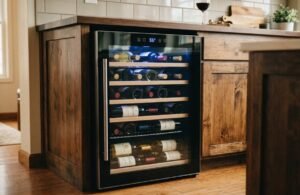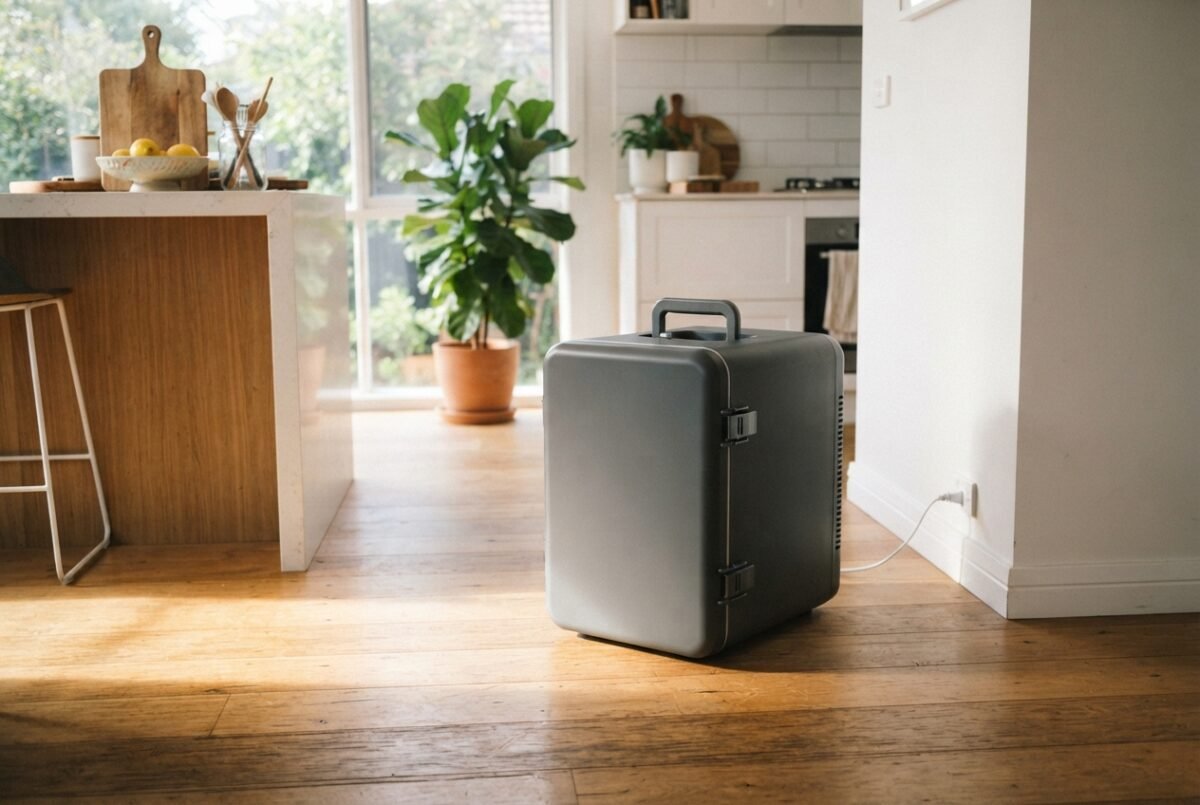
A portable fridge is a compressor-driven refrigerator built to run off a vehicle’s 12V or 24V socket as well as household mains power, holding whatever temperature you set it to anywhere between roughly 20 degrees and minus 20. That last detail is the whole category. An electric cool box chills relative to the air around it, so a 20-degree drop on a 38-degree afternoon in Mildura still leaves the milk sitting at 18. The best portable fridge in Australia holds four degrees in a hot boot on a gravel road, without ice and without flattening the starter battery.
Three mechanisms are sold here and only two of them are fridges. Compressor fridge-freezers, which the trade calls two-way units, run on 12V, 24V or 240V and work the same way as the fridge in your kitchen. Three-way absorption fridges add LPG as a third power source and run almost silently, though they have to sit level to work at all. Thermoelectric cool boxes use a solid-state plate with no compressor, and Choice’s own testing found that none of them could hold safe food temperatures in anything but the mildest conditions. Every pick below is a compressor unit for exactly that reason. Dual-zone models split the box into two compartments so one side freezes while the other stays at fridge temperature, and upright models trade the chest shape for a door and shelves.
Capacity in litres is the spec that decides everything else, and the ten fridges here run from 18L to 95L. The number most buyers skip is daily power draw. Of the ten, only four publish a figure at all, and those four span 0.2 kilowatt-hours to 1.32 kilowatt-hours per 24 hours. That is a sixfold spread, and it decides whether a single deep-cycle battery lasts one night or most of a week.
This page compares ten compressor fridges from 18L to 95L, all confirmed in stock in Australia, from a single-person box you can carry one-handed to a 95L upright meant to live in a caravan annexe. It is deliberately a fridge list, not a cooler list, so if you want something cheaper that runs on ice and no power at all, the best esky in Australia is a different buy entirely. One honest boundary: none of these are the specialist touring brands that cost several times as much, and none were physically tested here.
Quick Picks
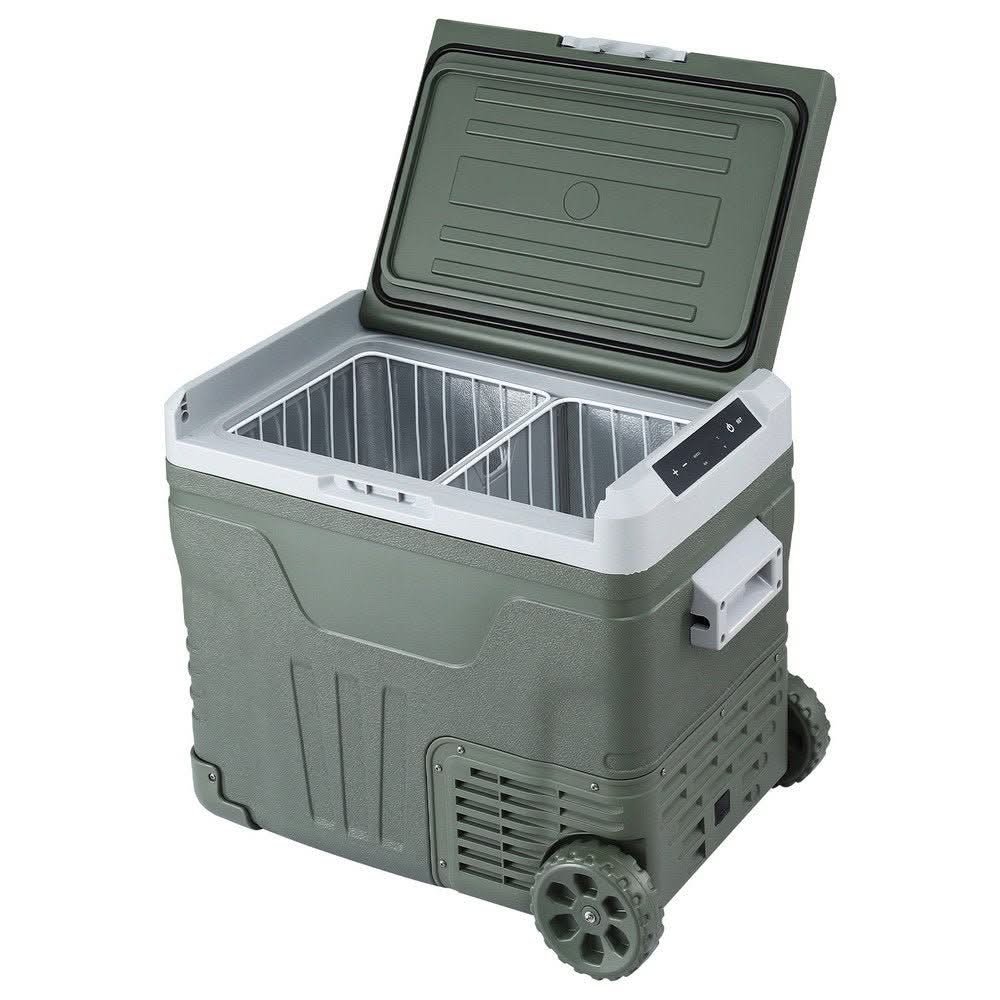
Glacio 50L Portable Fridge Freezer
Fifty litres with off-road wheels and a pull rod, and a divider that doubles as a cutting board.
CHECK CURRENT PRICE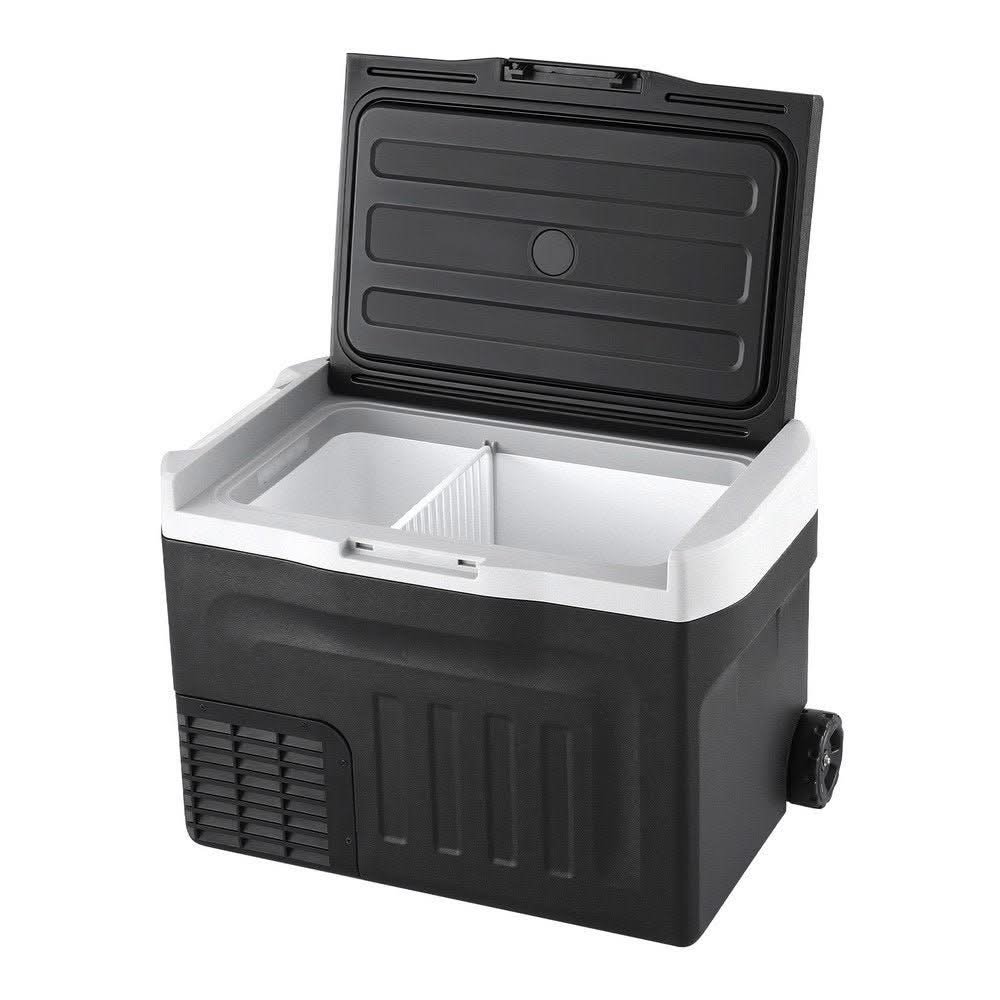
Glacio 30L Portable Fridge Freezer
The same minus 20 floor in a case short enough to sit behind the front seats of a dual cab.
CHECK CURRENT PRICE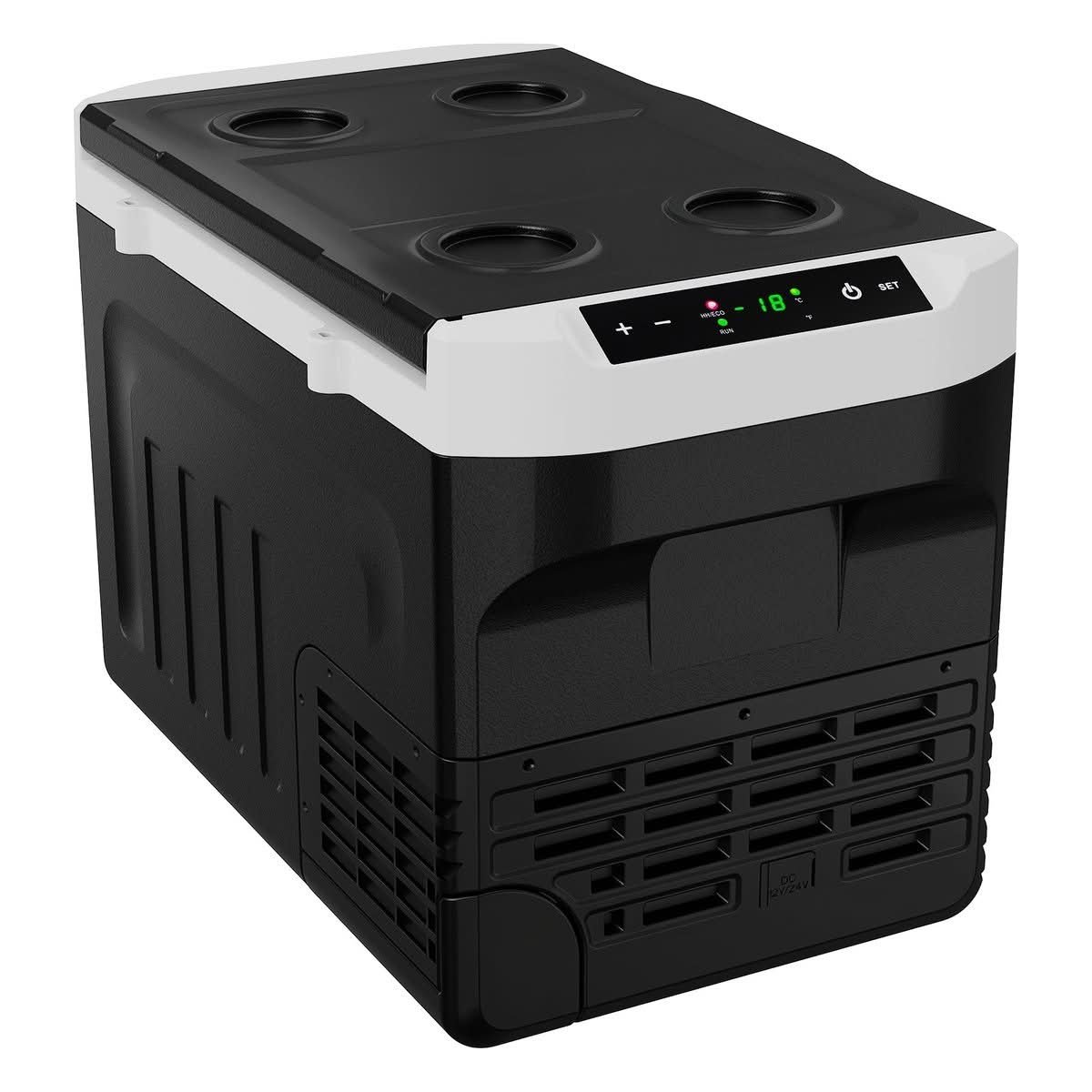
28L Dual-Zone Portable Fridge Freezer
Two compartments and a 20-minute pull-down to zero, in the smallest footprint here.
CHECK CURRENT PRICEBest Portable Fridge Australia Compared
| Product | Link | Type | Best For | Key Spec |
|---|---|---|---|---|
| Glacio 50L Portable Fridge Freezer | Check price | Chest, single zone | Family long weekend | 50L, 1.32kWh per 24h |
| Glacio 30L Portable Fridge Freezer | Check price | Chest, single zone | Couples and solo trips | 30L, minus 20C floor |
| 28L Dual-Zone Portable Fridge Freezer | Check price | Chest, dual zone | Fresh and frozen at once | 28L, under 0.5kWh a day |
| Companion 30L Single Zone Fridge Freezer | Check price | Chest, single zone | Component quality | 30L, LG compressor |
| San Hima 75L Dual-Door Camping Fridge | Check price | Chest, dual zone | Extended touring | 75L, 5-year compressor warranty |
| Koolatron 50L Bluetooth Car Fridge | Check price | Chest, single zone | Corrugated tracks | 50L, 30-degree incline rating |
| Gecko 95L Upright Fridge Freezer | Check price | Upright, door and shelves | Caravans and sheds | 95L, lockable door |
| Kogan 50L Wheeled Fridge Freezer | Check price | Chest, wheeled | Lowest cost per litre | 50L, reversible removable door |
| ICE 20L Compressor Fridge Freezer | Check price | Chest, single zone | Longest battery life | 20L, 0.2kWh per 24h |
| Igloo 18L Compact Fridge Freezer | Check price | Chest, single zone | Solo trips | 18L, dimmable display |
1. Glacio 50L Portable Fridge Freezer – Best for a Family Long Weekend
Fifty litres is the size Choice puts at a week for two or a long weekend for a family, and this is the least expensive way into that bracket on this page. The case measures 61cm long, 38 deep and 54 tall, with off-road wheels and a pull rod at one end, so it drags across gravel instead of needing two people to lift it. The divider inside comes out and doubles as a cutting board, which reads like marketing copy until you are standing at a campsite with nowhere flat to cut an onion.
The compressor pulls down to minus 20 and holds it, and the published draw is 1.32 kilowatt-hours over 24 hours in ECO mode. At around 30 to 40 cents per kilowatt hour on most Australian retail plans, that is a few tens of cents a day when the fridge is plugged into the house, which is not the problem. The problem is the same 1.32 kilowatt-hours coming out of a 12V battery: on a 100 amp-hour deep-cycle battery it works out to a bit over two days before you need a charge. Three-stage battery protection shuts the fridge off before it flattens the battery, which matters more than the litres if it is running off the starter battery in a ute.
Two things to know before you buy. It arrives needing assembly, which for this unit means fitting the wheels and the handle yourself. And the brand’s record with Australian owners is mixed: reviewers across the Glacio range repeatedly flag plastic latches snapping and lid hinges working loose after a lot of travel (and those are the exact parts that take a beating on corrugations). Buy it for a couple of trips a year on sealed roads and it is good value. Take it up the Gibb River Road every winter and the steel-cased units further down are the safer spend.
Pros
- Off-road wheels and a pull rod, so no two-person lift
- Removable divider doubles as a cutting board
- Two-way reversible lid opens from either side
- Four cup holders moulded into the lid
- Three-stage battery protection and an SAA-approved mains plug
Cons
- Ships flat enough that you fit the wheels and handle yourself
- Draws more over 24 hours than any other fridge here, so a second night off-grid needs a charge source
- Latch and hinge failures recur across the brand’s Australian reviews, and they are the parts dirt roads punish
- No app or wireless control, so temperature is set on the panel only
Key specs: 50L capacity, minus 20C to 20C, 12V/24V/240V, 1.32kWh per 24 hours in ECO, under 45dB, R600a refrigerant, 61 x 38 x 54cm, 1-year warranty
CHECK CURRENT PRICE2. Glacio 30L Portable Fridge Freezer – Best Compact Fridge for Two
Two-thirds the capacity of the 50L above, in a case 53cm long instead of 61, running the same minus 20 to 20 range off the same compressor platform. Choice rates 35L as a weekend for two or a week travelling alone, so 30L sits just under that mark: enough for a couple’s Friday-to-Sunday with drinks, or a solo week if you are disciplined about what goes in. It keeps the retractable handle and the off-road wheels, and swaps the cutting-board divider for a plain wire rack.
The published draw is the same 1.32 kilowatt-hours per 24 hours as the bigger unit, which is the odd thing about this pair, with rated power of 60W on 12V or 72W on 24V. So going smaller here buys you no extra battery life at all, only space and a lower price. That makes the choice between the two purely about where the fridge has to fit. If it lives behind the front seats of a dual cab instead of in a trailer, the shorter case is the one that goes in, and the same latch-and-hinge caution from the entry above applies.
Pros
- Short enough to sit behind the front seats of a dual cab
- Retractable handle and off-road wheels for the walk from car to camp
- No assembly needed out of the box
- Same minus 20 floor as the 50L version
Cons
- Draws the same published 1.32kWh a day as the 50L, so the smaller size buys no battery life
- Plain wire rack instead of the cutting-board divider on the bigger model
- Nothing in a bare wire rack stops bottles shifting, so pack it tight before a dirt road
- Same latch and hinge complaints across the brand’s Australian reviews
Key specs: 30L capacity, minus 20C to 20C, 12V/24V/240V, 60W on 12V and 72W on 24V, 1.32kWh per 24 hours, under 45dB, R600a refrigerant, 53 x 34 x 42cm, 1-year warranty
CHECK CURRENT PRICE3. 28L Dual-Zone Portable Fridge Freezer – Best Dual-Zone Under 30 Litres
Dual-zone normally starts at 45L and up, which is what makes this one unusual: 28 litres split into two compartments by a removable divider, so one side holds frozen mince while the other keeps milk at four degrees. The case is 59cm long, 33 deep and 31 tall and weighs about 12kg empty, light enough to carry one-handed by either moulded handle when it is empty and firmly two-handed once it is loaded.
In MAX mode it claims zero degrees inside 20 minutes, and in ECO the published figure is under half a kilowatt-hour a day. That is roughly a third of what the two units above draw, and it is the strongest single argument for this fridge: on a 100 amp-hour battery it will run most of a long weekend without a top-up. Battery protection has three settings, low, medium and high, so you can let it work harder off a dedicated deep-cycle battery and dial it back when it is on the starter battery.
The catch is what 28 litres means once you split it. Two compartments of about 14 litres each, and 14 litres of freezer fills up after a couple of meals. The listing quotes 39 cans across the whole box, which is a fair number until you remember cans are the easiest thing in the world to pack. Anyone feeding more than two people should go straight to the 50L units. For a couple touring with a mix of fresh and frozen food, nothing else here runs two temperatures in a box this small.
Pros
- Two independent temperature zones in the smallest case here
- Under half a kilowatt-hour a day in ECO, the lowest draw of the three partner-stocked picks
- Zero degrees in about 20 minutes on MAX
- Three-level battery protection, switchable to suit the battery it runs on
Cons
- Split in half, each side is only about 14 litres, so the freezer side fills after two meals
- The divider has to come out completely to use all 28 litres as one space
- No wireless control, which the 20L unit further down does include
- About 12kg empty is heavy for the size, because part of the case is sheet metal
Key specs: 28L total across two zones, 20C to minus 20C, 12V/24V DC and 220-240V AC, under 0.5kWh a day in ECO, under 45dB, three-level battery protection, 59 x 33 x 31cm, about 11.8kg
CHECK CURRENT PRICE4. Companion 30L Single Zone Fridge Freezer – Best LG Compressor Pick
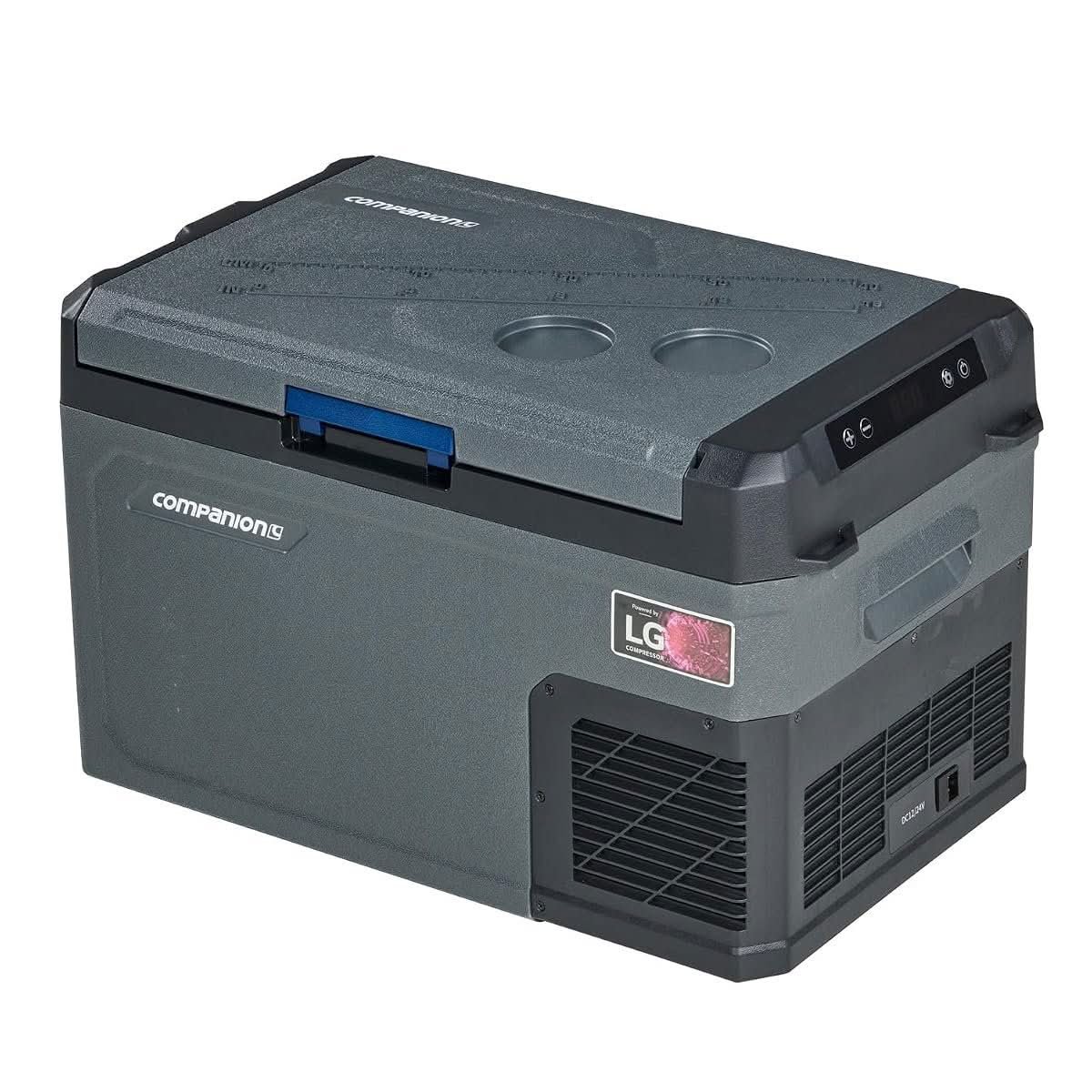
Companion has been selling camping gear in Australia long enough that most people have owned one of its stoves or lanterns, and this 30L box is the one pick here carrying a name that predates the 12V fridge boom. Inside is a dual-speed LG compressor, the same brand of compressor fitted to fridges costing several times more. Forty cans is the quoted capacity and the lid is reversible, so it opens away from whichever side you park it on.
Single zone is the honest limitation and the product name says so: the whole 30 litres runs at one temperature. Set it to minus 18 and everything freezes, set it to four and nothing does. That is a real constraint next to the 28L dual-zone unit above, which manages both at once in a smaller case. What you get in exchange is a better compressor and a three-stage battery monitor, and at 61cm wide by 36.5 deep it sits square in a boot instead of tall in a footwell.
It is the most expensive 30-litre box here by a clear margin and it is worth being straight about why: you are paying for the compressor and a service network you can actually reach, not for extra features. No app, no USB port, no interior light, no second zone. For someone who camps twice a year and wants the fridge still working in five years, that is the right trade. For someone chasing the most specification for the money, it is not.
Pros
- Dual-speed LG compressor, the strongest component pedigree here
- Reversible hinged lid opens from either side
- Three-stage battery monitor
- Stocked and dispatched domestically, so a warranty claim stays onshore
Cons
- One temperature for all 30 litres, so fridge and freezer at the same time is out
- The dearest 30-litre unit here, and the premium buys component quality instead of features
- No app, no USB charging port and no interior light
- The listing carries no customer ratings yet, so there is no buyer consensus to lean on
Key specs: 30L single zone, dual-speed LG compressor, 40 cans, reversible hinged lid, three-stage battery monitor, 61.4 x 36.5 x 37.4cm
CHECK ON AMAZON5. San Hima 75L Dual-Door Camping Fridge – Best for Extended Touring
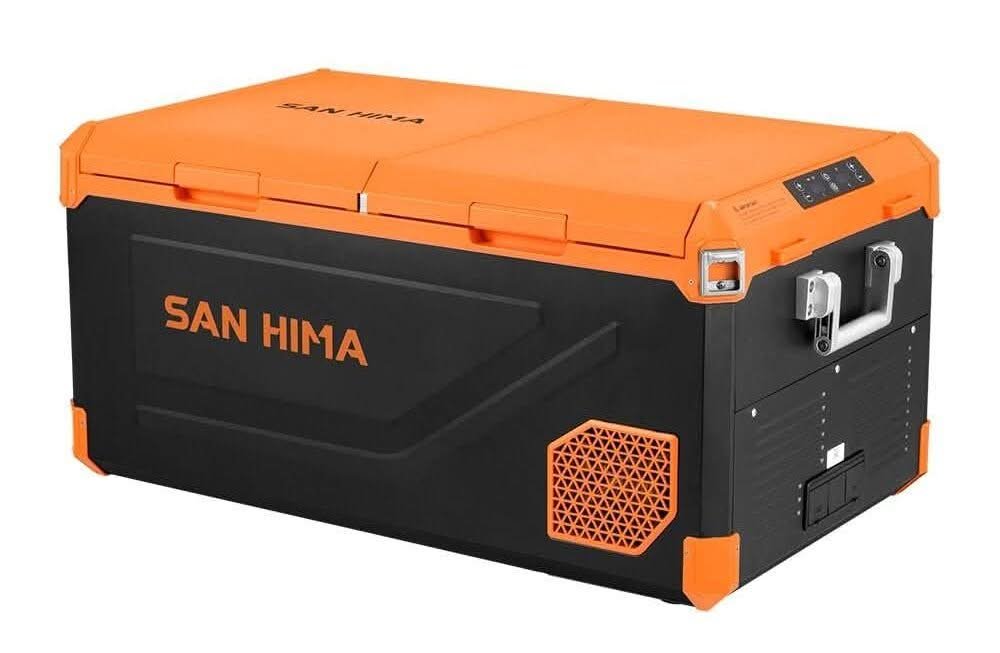
Seventy-five litres in two separately controlled compartments, each able to run as a fridge or a freezer, and either one able to be switched off entirely when you are not carrying a full load. That last feature is the one that earns its keep on a long trip: run both zones out of Broome with a fortnight of food, then shut one down on the way home and roughly halve the draw.
The build is what puts this above most of the list. The casing is cold-rolled steel instead of moulded plastic, the insulation is 50mm cyclopentane, and the compressor is an LG. The lid opens from either end or lifts off completely, which is the difference between reaching into a fridge and unpacking half of it to find the butter. Two USB-A ports on the side charge phones, there are power ports at both ends so the cable reaches whichever way it loads in, and there is a bottle opener moulded into the case.
The warranty is the strongest here by a distance: one year on the unit and five on the compressor. That five-year figure is the one to read carefully, because compressor failure is the expensive failure and it is the complaint that recurs most in Australian reviews of budget 12V fridges. Its six verified ratings average 4.4 out of 5, which is a thin sample but a consistent one.
The cost is bulk. At 90cm long it is easily the longest box here and it will not sit across the back of a wagon; it wants a ute tray, a trailer or a folded rear seat. It is also the most expensive pick on this page. For two people doing a fortnight up the coast it earns that. For weekend trips it is more fridge than the job needs, and the 50L units cost a good deal less.
Pros
- Two independently controlled zones, either usable as fridge or freezer
- Either compartment can be switched off to cut power draw
- Five-year compressor warranty, the longest here
- Detachable lid that also opens from either end
- Two USB-A ports for charging phones off the fridge
Cons
- At 90cm long it needs a ute tray or a trailer, not a wagon boot
- The dearest pick here by a fair margin
- Six ratings is a thin basis for judging long-term reliability
- The app is one more thing to keep paired, and the panel does everything it does anyway
Key specs: 75L across two zones, LG compressor, minus 20C to 20C, 12V/24V DC and 240V AC, 50mm cyclopentane insulation, two USB-A ports, 90 x 41.4 x 52.3cm, 1-year unit and 5-year compressor warranty
CHECK ON AMAZON6. Koolatron 50L Bluetooth Car Fridge – Best for Corrugated Tracks
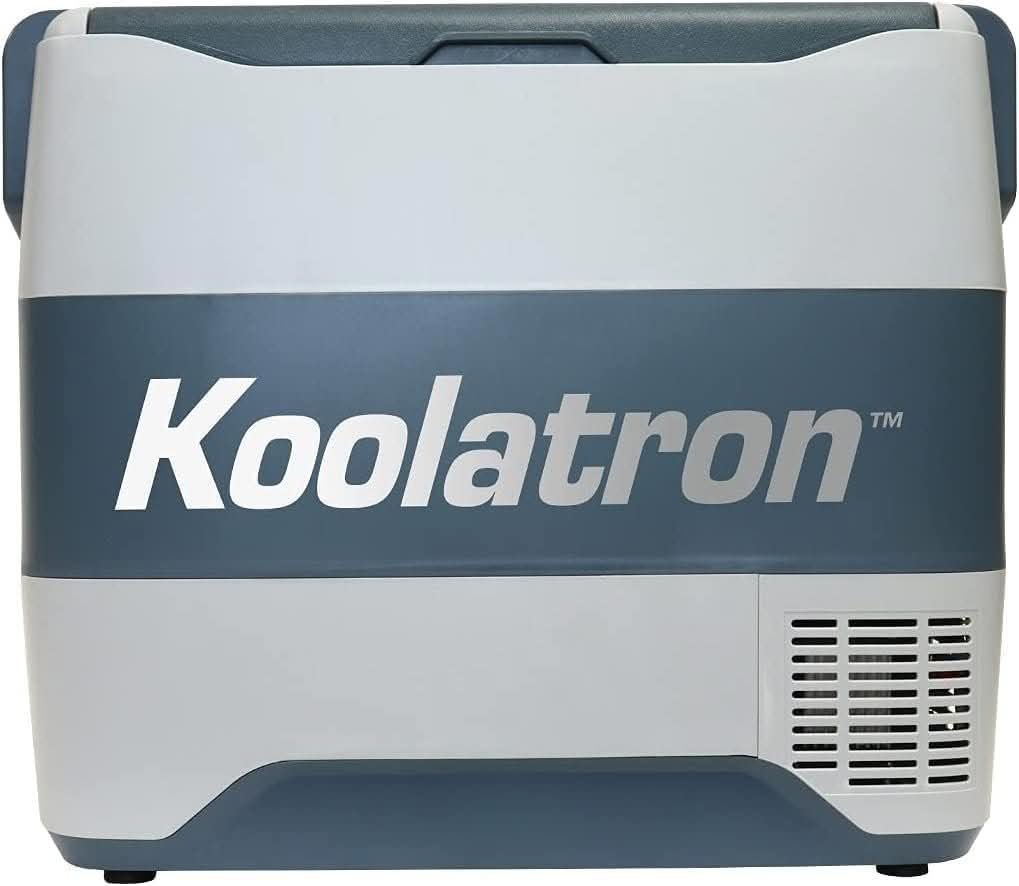
One line in this fridge’s specification does something none of the others attempt: it is rated to keep running on an incline of up to 30 degrees. Compressor fridges dislike being tilted, which is why a fridge sitting in a boot on a steep rutted track can quietly stop cooling with no warning light to tell you. Thirty degrees covers most 4WD tracks and every boat ramp in the country.
It is also the quietest here on paper, under 40 decibels against the 45 most of this list quotes. Five decibels sounds trivial and is not: it is the difference between a fridge you can hear from a swag and one you cannot. Pull-down is quick too, 32 degrees to minus 6 in under half an hour, and the floor runs to minus 22, the coldest on this page. Seventy-two cans, an interior LED, a wire basket and a drain channel for cleaning it out.
Its 4.2 out of 5 across nine ratings is a middling score on a small sample, and there is no Australian review listing for the brand to cross-check it against. Stock is the more immediate issue: the listing was down to its last unit with more on the way when we checked. If it shows as available when you look, it is the pick for anyone whose fridge spends its life on dirt. If not, the wheeled 50L two entries down matches the capacity for noticeably less.
Pros
- Rated to keep cooling on an incline of up to 30 degrees
- Under 40dB, the quietest figure quoted here
- Minus 22C floor, the coldest on this page
- Reaches minus 6 from 32 degrees in under 30 minutes
- Interior light, wire basket and a leak-proof drain channel
Cons
- Stock was down to a single unit when we checked, with more on the way
- 4.2 from nine ratings, and no Australian review listing to cross-check
- Single zone, so it is all fridge or all freezer
- Wireless control is Bluetooth only, so you have to stand next to the fridge to use it
Key specs: 50L, minus 22C to 10C, 12V DC and 220V AC, under 40dB, rated to inclines of 30 degrees, 72 cans, wireless app control
CHECK ON AMAZON7. Gecko 95L Upright Fridge Freezer – Best Upright for Caravans

Every other fridge here is a chest that opens from the top. This one is an upright, 83cm tall with a door and shelves, and it is the only pick that suits a caravan annexe or a shed where you would rather not bend over a lid every time you want a beer. Ninety-five litres also makes it the largest capacity on this page, by 20 litres.
Two features are unusual on a 12V unit. There is a proper door lock with two keys, which matters when the fridge lives in an annexe or on a work site instead of inside a locked vehicle. And the interior carries an anti-microbial coating, a real consideration for something that spends months closed up in a humid climate. Anyone who has opened a caravan fridge in February, after it sat shut through a Darwin wet season, knows precisely what problem that is trying to solve.
The upright shape is the whole trade-off. Cold air falls out of a vertical cabinet in a way it cannot out of a chest, so every door opening costs more than a lid opening and the compressor works harder in the same conditions than the 75L chest above. It also has to stand level and stay standing, which rules out packing it into a boot for a beach trip. This is a fridge for somewhere it can live, not somewhere it travels. There is no published power figure and no ratings yet either, which for the biggest unit here is the thing to ask about before committing.
Pros
- The only upright here, so it takes shelves and a door instead of a lid
- Largest capacity on this page at 95 litres
- Lockable door with two keys
- Anti-microbial interior coating
- Runs on 12V or 24V and works off solar
Cons
- Cold air spills out of the door every time it opens, so it works harder than a chest
- Has to stand upright and level, which rules out most vehicle boots
- No published daily power consumption figure
- No customer ratings on the listing yet
Key specs: 95L upright, 12V/24V, lockable door with two keys, anti-microbial interior coating, solar compatible, 46 x 45 x 83cm
CHECK ON AMAZON8. Kogan 50L Wheeled Fridge Freezer – Best Wheeled Fifty Litre
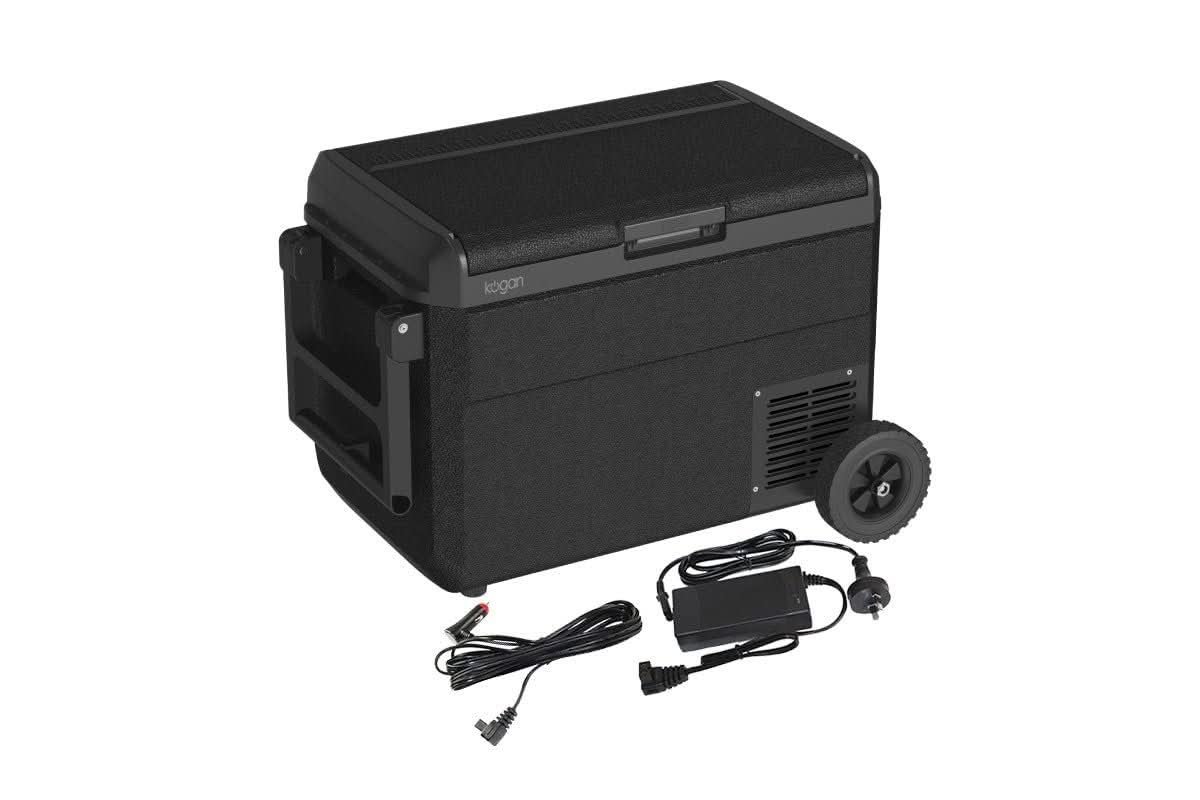
Fifty litres, all-terrain wheels, a pull handle, and a door that is both reversible and fully removable, which is a small thing until you are loading it into a tight tray. It undercuts every other 50L unit here on price, and undercuts the Koolatron above by a wide margin while matching it on capacity.
What it does not match is detail. No published noise figure, no published power draw, no stated temperature range on the listing and no ratings yet, and the specification runs to five bullet points where the bigger names run to fifteen. Three-level battery protection and both AC and DC adapters are included, which covers the essentials. Dispatch runs two to three days instead of next-day. If cost per litre is the deciding factor this is the answer on this page; if you want to know what you are getting before it turns up, the 50L at the top publishes far more.
Pros
- The least expensive 50-litre unit here
- All-terrain wheels and a pull handle
- Door is reversible and fully removable
- Three-level battery protection with both AC and DC adapters included
Cons
- The listing publishes no noise rating, no power draw and no temperature range
- No customer ratings yet
- Dispatch is two to three days, not immediate
- Hard-cased plastic body, where the dearer chests here use steel
Key specs: 50L, 12V/24V DC and 100-240V AC, three-level battery protection, reversible removable door, all-terrain wheels, touch control
CHECK ON AMAZON9. ICE 20L Compressor Fridge Freezer – Best Low Power Draw
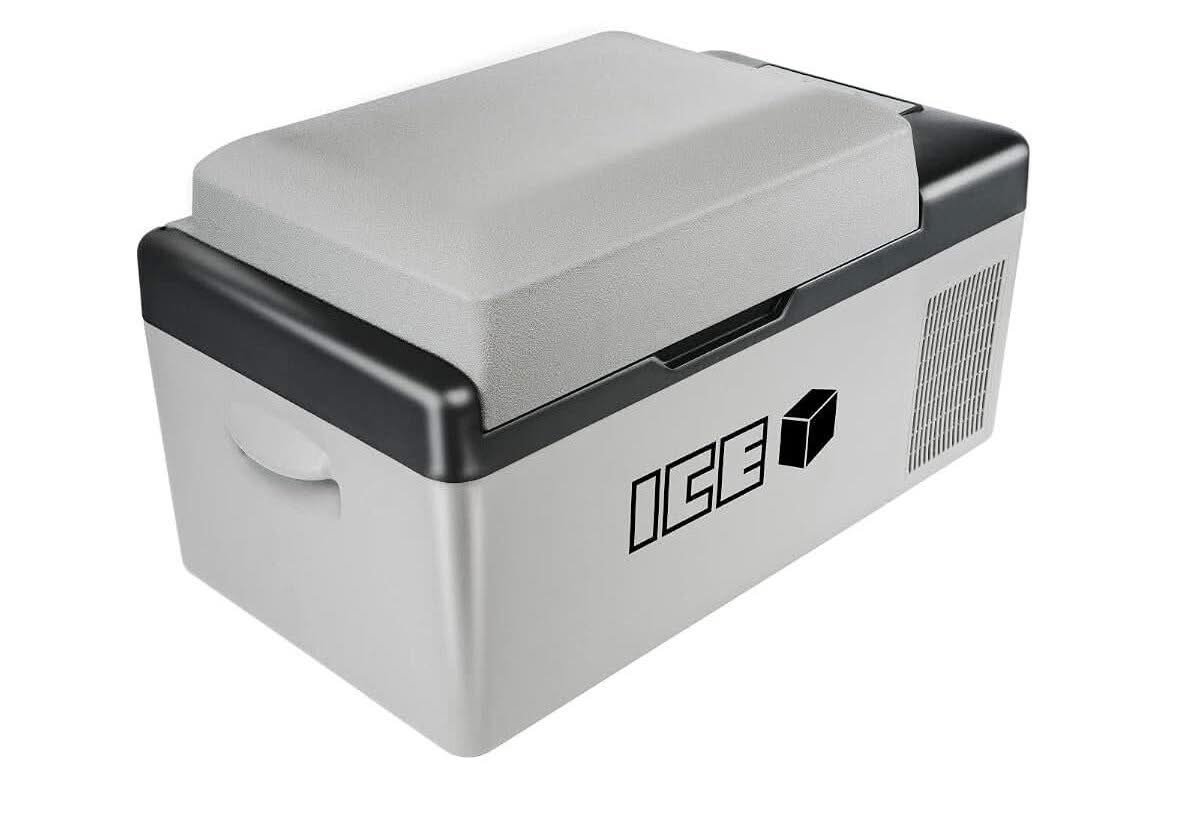
This is the entry we nearly cut on size alone, and it survived on one number: 0.2 kilowatt-hours over 24 hours. That is roughly a sixth of what the 50L at the top of this page draws, and it changes what the fridge is capable of. A 100 amp-hour deep-cycle battery will run this one for the better part of a week without a charge, which nothing else here can claim.
Twenty litres is properly small: 15 water bottles or nine wine bottles, in a case 57cm long but only 32 wide and 32 tall. It goes down to minus 20 with a maximum drop of 52 degrees below ambient, which leaves headroom for a hot Queensland afternoon. There is a USB charging port on the panel, an optional lithium battery pack sold separately that makes it fully self-contained, and it is built to run off a solar panel or a generator with no mains connection at all.
It also has the deepest review base here by a distance: 35 verified ratings averaging 4.7 out of 5. On a page where most listings have fewer than ten, that is the closest thing to a real buyer consensus available. The limits are honest ones. Twenty litres is a drinks-and-lunch fridge, not a food-for-four fridge, and the deep narrow shape that fits upright bottles wastes space if you pack flat containers. For a solo tradie’s ute or a second fridge that only ever holds drinks, it is the most sensible thing on this page.
Pros
- 0.2kWh over 24 hours, the lowest published draw here by a wide margin
- 35 ratings averaging 4.7 out of 5, the deepest review base on this page
- Deep enough inside for upright 750ml bottles
- USB charging port, and solar and generator compatible
- Optional lithium battery pack makes it self-contained
Cons
- Twenty litres covers drinks and lunch, not meals for a family
- The tall narrow shape wastes space if you pack flat containers
- The lithium battery pack that makes it truly portable costs extra
- Only a 40W compressor, so pulling down from warm takes longer than the bigger units
Key specs: 20L, 40W, 0.2kWh per 24 hours, down to minus 20C, 52C maximum drop below ambient, 12V/24V DC and 240V AC, 57 x 32 x 32cm, 9.5kg
CHECK ON AMAZON10. Igloo 18L Compact Fridge Freezer – Best for Solo Trips
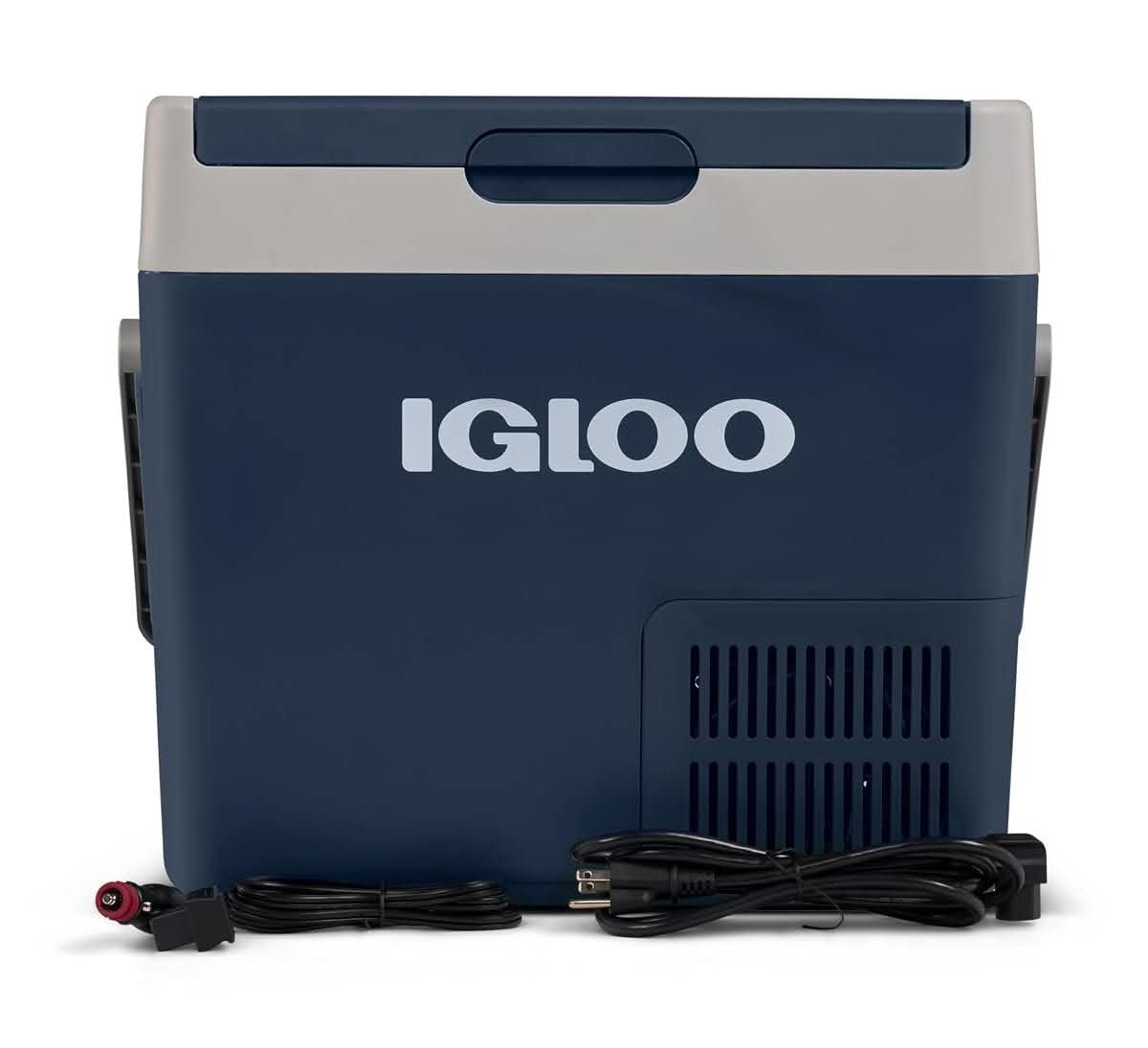
Igloo was making cool boxes decades before 12V fridges existed, and this is its smallest powered one: 18 litres, 29 cans, in a case 46.5cm by 42.2 by 30. It is the smallest fridge here and the only one you could carry any real distance with one hand.
The range runs from minus 18 to 20 degrees, both the 12V/24V DC and the 100-240V AC cables come in the box, and there is three-stage battery protection. The nice touch is a dimmable display, which reads as a gimmick until the fridge is in a footwell glowing at you all night. Igloo quotes the temperature range in Fahrenheit on its Australian listing, which is a small sign this is a US product sold here instead of one built for the market.
There is no published power figure, no ratings on the listing, and 18 litres is a hard ceiling. Against the 20L unit above it gives up two litres, a published consumption number and 35 reviews, and the two sit close on price. That comparison is not flattering. Buy this one for the brand’s long history with cool boxes and for the dimmable display; buy the 20L if you want the numbers.
Pros
- The smallest and easiest to carry here
- Dimmable digital display for overnight use
- Both DC and AC cables included in the box
- Three-stage battery protection
Cons
- No published daily power consumption
- No customer ratings on the listing
- Temperature range quoted in Fahrenheit on the Australian listing
- Two litres smaller than the 20L unit above for a similar outlay
Key specs: 18L, minus 18C to 20C, 12V/24V DC and 100-240V AC, 29 cans, three-stage battery protection, dimmable display, 46.5 x 42.2 x 30cm
CHECK ON AMAZONHow to Choose a Portable Fridge in Australia
Start with litres, not features. Choice’s sizing guidance is the shortest path through this: 25 litres or less for one person or a lunch run, 35 for a weekend for two or a week travelling solo, 40 for two or three people over a long weekend, 50 for a week for two or a family long weekend, and 60 to 65 litres before a family of five is properly fed. Buy a size up from what you actually need and you will carry weight and burn battery you never use.
Then check the daily power draw, and be suspicious when it is missing. Choice frames current draw simply: five amps is high, one amp is low. Translated into the figures manufacturers publish, the fridges here run from 0.2 to 1.32 kilowatt-hours a day, and six of the ten publish nothing at all. A fridge with no stated consumption is a fridge you cannot plan a trip around.
Battery protection is not optional. Planning to leave it running overnight with the engine off? Choice’s advice is to pick a model that cuts out at a fairly high voltage, and its warning is blunter still: deep-cycling an ordinary car battery to run a fridge takes years off the battery. Every fridge here has a multi-level cut-off. What none of them have is a battery of their own, so budget for a deep-cycle battery or a portable power station at the same time as the fridge.
Dual zone costs capacity, not just money. A dual-zone box splits its litres in two, so a 28-litre dual zone hands you two compartments of about 14 litres. Fine for a couple carrying some frozen meat and some fresh food. Not fine as a family’s only fridge. A single-zone box of the same capacity will always hold more of one thing.
Read the review count, not just the star rating. This is where the category gets genuinely risky. Adventure Kings, one of Australia’s best-known 12V fridge brands, has marketplace listings rated above four stars while its ProductReview page sits at 2.5 out of 5 across 196 reviews, 59 per cent of them negative, with recurring reports of error codes and units failing inside three years. Neither number is fake. One is a handful of buyers who just unboxed a fridge; the other is 196 people who have owned one for a while. Weight them accordingly, and treat any listing with fewer than ten ratings as untested.
Match the shape to where it will live. A chest holds cold better and tolerates being tilted; an upright is easier to reach into but sheds cold on every door opening and has to stay level. Ambient temperature matters more than most buyers expect, too, since a fridge running in an uninsulated shed or a fibro sleepout works considerably harder than the same unit inside the house. Measure the space before you buy: the gap between 53cm and 90cm decides whether the fridge goes behind the seats, in the boot, or nowhere at all.
You’ll Also Want
A fridge that runs overnight needs a battery that can take a charge the next morning, and a 12V 20A battery charger with an automatic float mode keeps a deep-cycle battery topped up between trips without cooking it.
A universal fridge slide rated to 200kg turns a fridge buried at the bottom of a boot into one you can actually open, and it is the accessory most owners of a 50L chest end up buying second.
The cigarette-lighter socket in most vehicles was never meant to carry a fridge all day, so an Anderson plug adapter cable in heavy-gauge wire is worth having before the first long drive.
A wireless fridge thermometer sits inside the box and reads out on a handset in the cab, which is how you learn the lid was not shut properly before the food tells you.
And if the fridge is going in the back of a wagon you also sleep in, a camping mattress that packs down small matters about as much as the fridge does.
Frequently Asked Questions
How much power does a portable fridge use in a day?
Published figures for compressor portable fridges sold in Australia run from about 0.2 kilowatt-hours per 24 hours for a 20-litre unit up to 1.32 kilowatt-hours for a 50-litre one in economy mode. On a 100 amp-hour deep-cycle battery that works out to roughly a week for the small unit and a little over two days for the larger one. Treat any fridge with no published daily figure as an unknown, because draw rises with ambient temperature and with every lid opening.
Can a portable fridge run off a car battery overnight?
It can, but running one off a vehicle’s starter battery overnight risks not being able to start the car in the morning, and repeatedly deep-cycling a standard car battery shortens its life considerably. Every compressor fridge sold here includes a low-voltage cut-off with two or three settings that shuts the fridge down before the battery is flat. For regular overnight use, run the fridge from a separate deep-cycle battery or a portable power station instead.
What is the difference between a two-way and a three-way portable fridge?
A two-way fridge runs on 12 or 24 volt DC and on 240 volt mains power, using a compressor much like a household fridge. A three-way model adds LPG as a third power source and runs almost silently, which suits a stationary caravan. Three-way units have to sit level to operate and are less effective in temperature extremes, so compressor two-way fridges are the standard choice for vehicle-based travel in Australia.
Are thermoelectric cool boxes the same as portable fridges?
No. A thermoelectric cool box uses a solid-state plate to cool relative to the surrounding air, usually 15 to 22 degrees below ambient, so on a 38-degree day the contents sit close to 18 degrees. Choice testing found no thermoelectric unit could hold safe food temperatures in anything but the mildest conditions. They are fine for drinks on a short trip, but meat and dairy need a compressor fridge that can hold five degrees or lower.
What size portable fridge do I need?
Twenty-five litres or less suits one person or a lunch run. Thirty-five litres covers a weekend for two, or a week travelling alone. Fifty litres handles a week for two or a long weekend for a family, and 60 to 65 litres is the point where a family of five is properly catered for. Dual-zone models divide their capacity in two, so a 28-litre dual zone gives two compartments of roughly 14 litres each.
Do portable fridges need to be level to work?
Compressor portable fridges tolerate tilting far better than three-way absorption models, which have to sit level to operate at all. Most compressor chests handle moderate slopes, and some 50-litre models are specified to keep cooling on an incline of up to 30 degrees. Upright fridges are the exception and should stand level and secured, since the door seal and the compressor both depend on it. Check the incline rating before mounting one on a steep drawer slide.
Three fridges do most of the work on this page. The Glacio 50L is the least expensive way into the size that covers a family long weekend, and it arrives with wheels and a pull rod so nobody has to lift it. The ICE 20L is the one to buy when power is the constraint instead of space, at 0.2 kilowatt-hours a day against the 50L’s 1.32 and with 35 ratings behind it rather than a handful. And if the trip runs to a fortnight instead of a weekend, the San Hima 75L is the only pick here with a five-year compressor warranty and two zones you can run independently, which is what a long trip actually asks of a fridge.