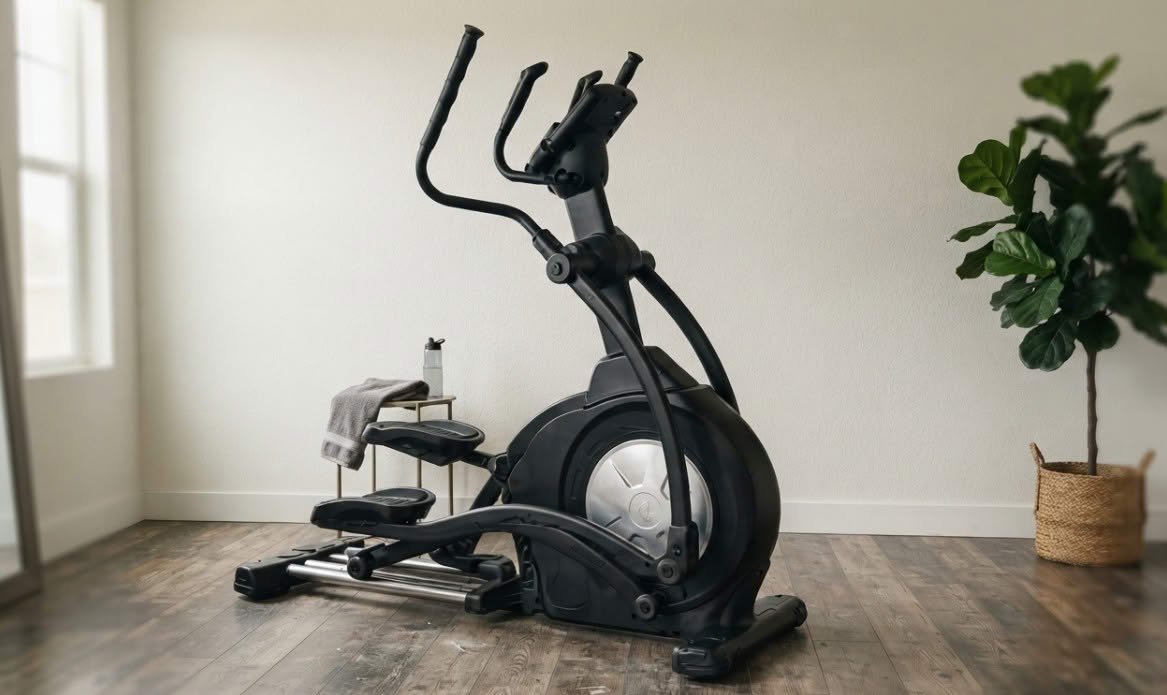
A cross trainer is a low-impact cardio machine that lets you push and pull through a walking or running-style stride without either foot leaving the pedals, so there is no jolt through the knees or hips the way there is on a treadmill. Moving handlebars bring the arms into the same motion, which is why a session works the shoulders and back as well as the legs. Most of the best cross trainers australia gyms and lounge rooms use fall into two drivetrain layouts: front-drive, where the flywheel sits ahead of the pedals for a longer, more natural stride, and rear-drive, where it sits behind for a smaller footprint and usually a lower cost.
Beyond drivetrain position, the category splits by resistance type and format. Magnetic resistance models use a flywheel with adjustable magnets and are the standard above entry level, since they run near silent and do not wear out the way a friction pad does. Air walkers drop the flywheel altogether, relying on air resistance and a lighter, more portable frame, at the cost of that smooth, weighted glide. Folding cross trainers hinge the frame to stand upright for storage, and incline cross trainers add a manual or motorised ramp that steepens the stride to work the glutes and hamstrings harder, closer to a stair climber.
Stride length is the spec that actually separates a good cross trainer from a cramped one: it runs from 32 to 50 centimetres across the machines compared here, and anyone over about 180cm will feel a sub-40cm stride as a shortened, choppy step. Flywheel weight is the number most listings bury, spanning a basic magnetic disc up to 8 kilograms on the sturdier units, and it is the difference between a machine that rocks on floorboards and one that does not.
This guide compares seven cross trainers available to Australian buyers this week, from a 27.5kg unit built for a small apartment to an 86kg incline machine meant for daily training, plus one air walker for anyone who wants the motion without the bulk. Anyone weighing up a flat, no-impact walk instead should have a look at the best treadmills australia guide before deciding between the two.
Quick Picks
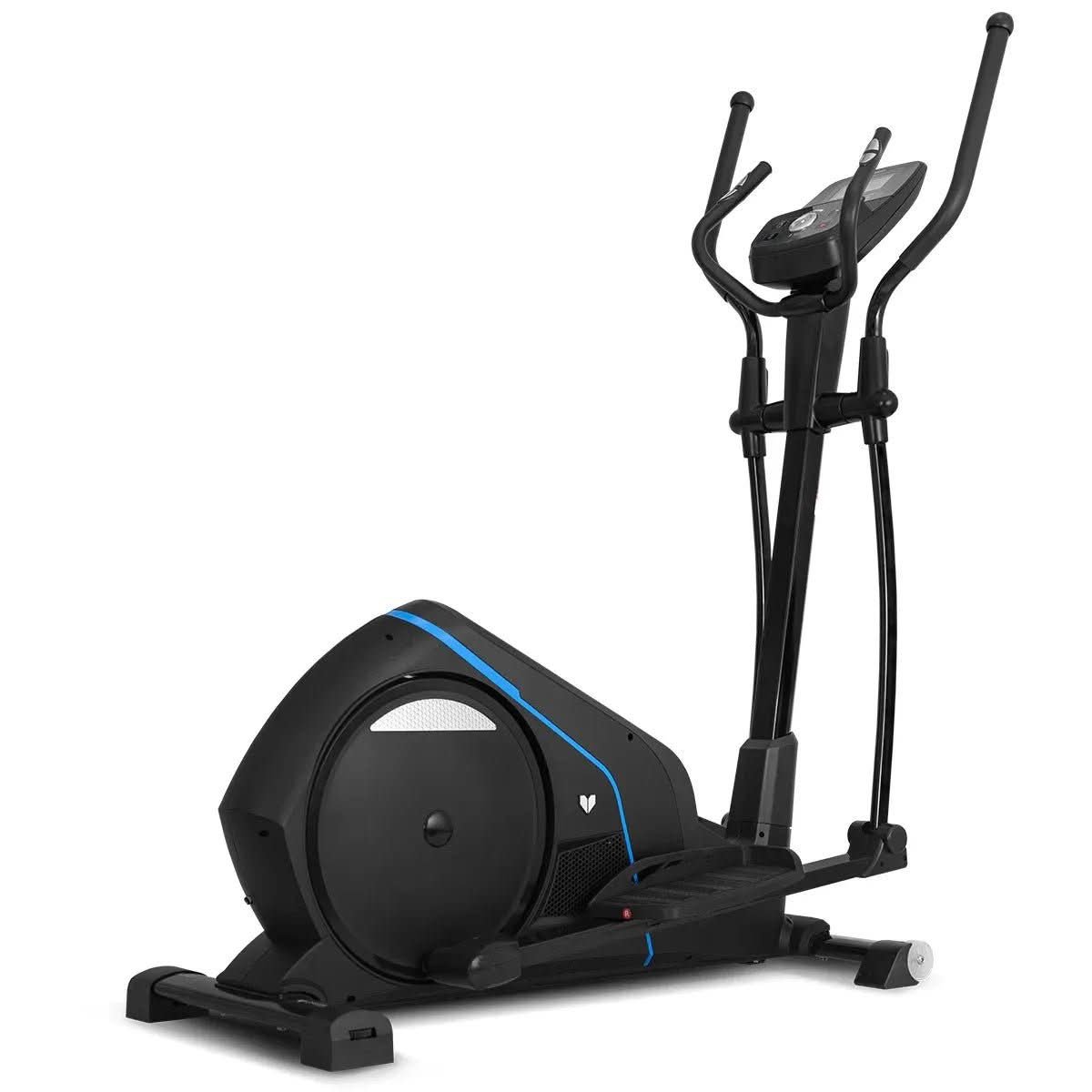
Lifespan Fitness X-41 Cross Trainer
16 computer-controlled resistance levels and an 8kg flywheel for a smooth, near-silent stride.
CHECK CURRENT PRICE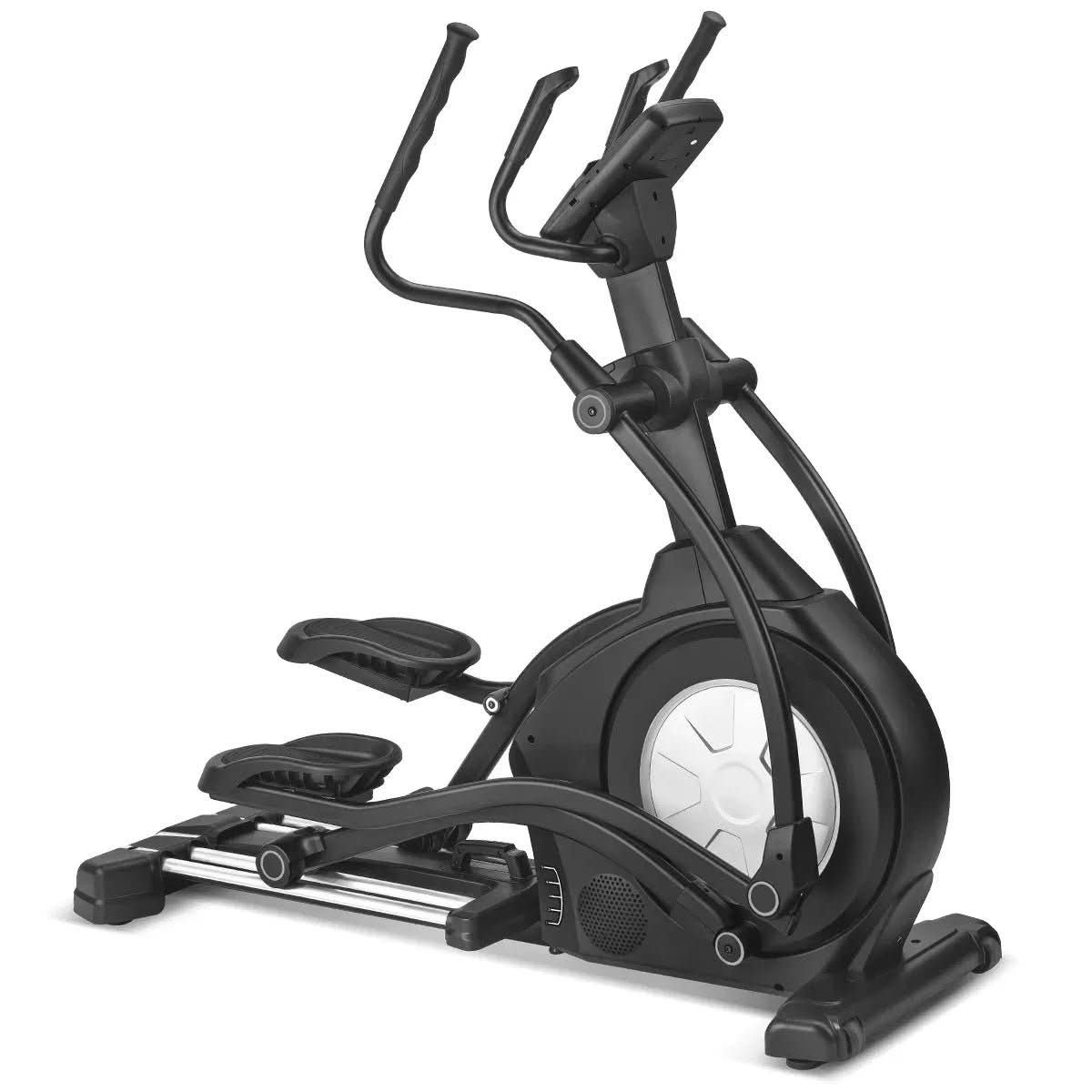
Lifespan Fitness XT-40 Ascender Incline Cross Trainer
Five manual incline levels turn a flat glide into genuine hill work.
CHECK CURRENT PRICE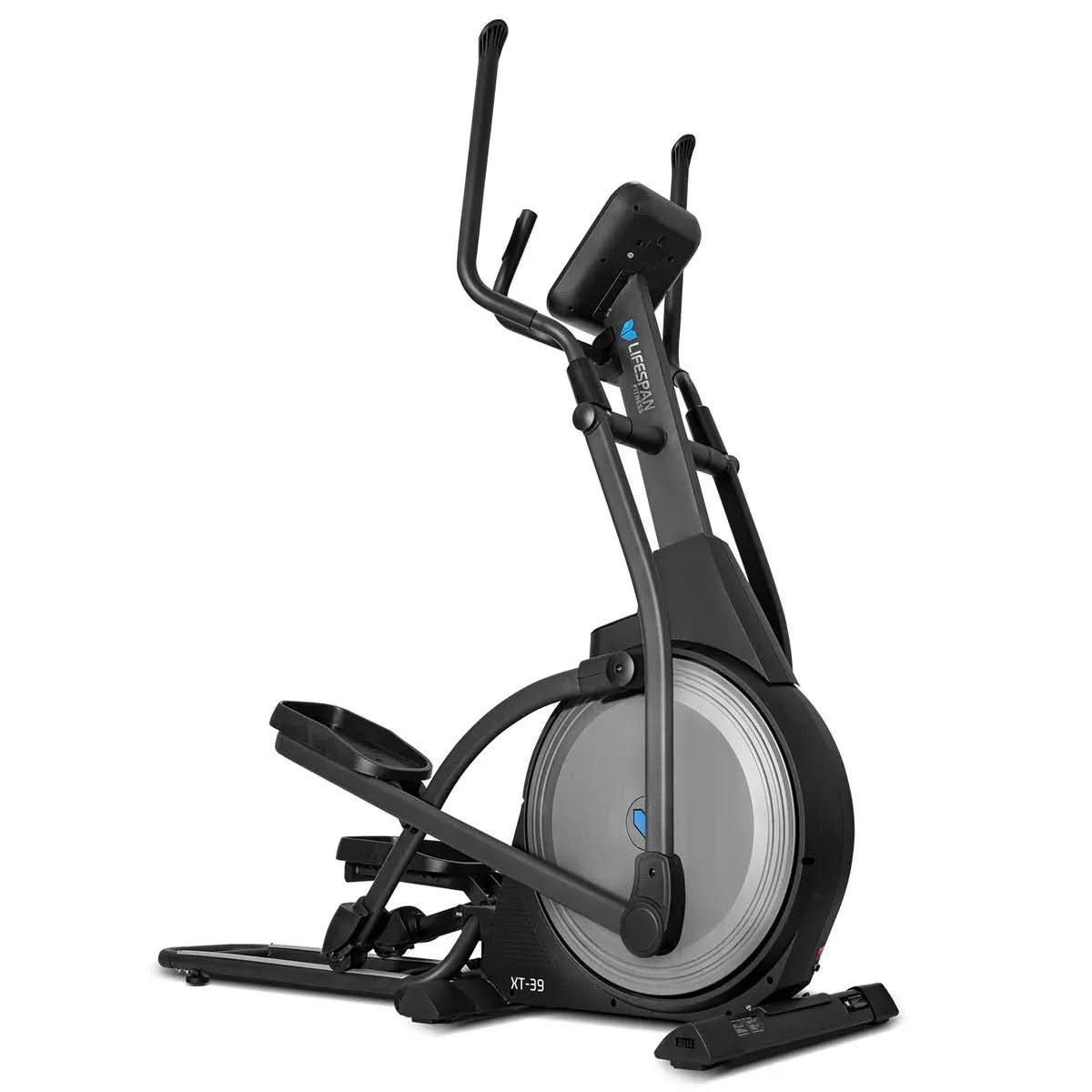
Lifespan Fitness XT-39 Folding Cross Trainer
Folds onto its own transport wheels so it does not have to live in the garage.
CHECK CURRENT PRICEBest Cross Trainers Australia Compared
| Product | Link | Type | Best For | Key Spec |
|---|---|---|---|---|
| Lifespan Fitness X-41 Cross Trainer | Check price | Front-drive magnetic | Serious daily training | 8kg flywheel, 16 levels |
| Lifespan Fitness XT-40 Ascender Incline Cross Trainer | Check price | Front-drive magnetic | Incline and hill training | 5 incline levels, 21 programs |
| Lifespan Fitness XT-39 Folding Cross Trainer | Check price | Front-drive magnetic, folding | Small spaces | Folds to 125cm, transport wheels |
| Everfit 6 in 1 Elliptical Cross Trainer | Check price | Rear-drive mechanical | Budget multi-function | 6 functions, bonus dumbbells and bands |
| LSG CTG-300 Cross Trainer | Check price | Rear-drive magnetic | Compact, lighter users | 27.5kg net weight, 100kg max user |
| Foldable Air Walker Exercise Machine | Check price | Air resistance | Low-impact, portable | 13kg unit, folds to 25cm deep |
| PowerTrain Home Gym Elliptical Cross Trainer | Check price | Magnetic, rear-drive | Garage and shed home gyms | Compact elliptical frame |
How We Picked
We started by working through the cardio equipment ranges of the retailers and marketplaces that regularly stock cross trainers for the Australian market, checking listed specs such as flywheel weight, stride length and resistance type against the maker’s own published figures where one existed. Anything out of stock, still on pre-order, or sold under two different storefronts as the same unit was cut, since a duplicate listing padding out a list helps nobody.
From there we weighed how each model holds up in real use: recurring feedback on assembly difficulty, drivetrain noise, and whether the flywheel weight quoted online plays out the way the listing promises, cross-referenced against verified-purchaser review patterns on Amazon AU and against ProductReview’s elliptical trainers category, where assembly time and drivetrain noise are the two complaints that turn up most often regardless of brand or price. Where the sweep turned up a duplicate SKU sold through more than one storefront, only one entry made the final list.
1. Lifespan Fitness X-41 Cross Trainer – Best for Serious Home Training
Lifespan Fitness builds most of its range around an 8-kilogram magnetic flywheel, and the X-41 is the version built for someone training five or six days a week, not doing a Sunday potter. Sixteen resistance levels are computer-controlled rather than a dial you crank by hand, and the 46-centimetre stride sits in the middle of the pack here, long enough for most adults without feeling like a shuffle.
Eighteen built-in programs cover flat intervals, resistance ramps and four heart-rate-controlled sessions that back off automatically once the hand pulse sensors read a spike, useful in a Brisbane granny flat gym where nobody wants the aircon working overtime on a January afternoon. The belt drivetrain is noticeably quieter than the chain-driven units this replaced a few years back (no more late-night clunk through a shared wall).
At 150 kilograms the weight limit is the lowest of the three Lifespan Fitness units here, and the console runs off mains power, so it needs a wall socket nearby. Compared with the XT-40 Ascender below, it skips incline entirely, trading that feature for a smaller footprint and a notably quieter belt system. It suits someone training seriously indoors who does not need hill simulation and would pick the quieter drivetrain over an extra feature.
Pros
- Computer-controlled resistance across 16 levels, no manual dial to fiddle with
- Belt drivetrain runs quieter than older chain-driven cross trainers
- Four heart-rate programs back off automatically once effort spikes
- Compact footprint for a full-size cross trainer
Cons
- Console needs mains power, so placement is limited to a spot near an outlet
- 150kg weight limit is the lowest of the three Lifespan Fitness builds on this list
- Assembly is a two-person job by most accounts; the base frame is heavier than the manual suggests
Key specs: 8kg magnetic flywheel, 16 resistance levels, 46cm stride, 150kg max user weight, 12-month warranty
CHECK CURRENT PRICE2. Lifespan Fitness XT-40 Ascender Incline Cross Trainer – Best Incline Training
The Ascender name refers to five manual incline levels bolted onto the same magnetic flywheel platform as the rest of the range, and it is the steepest stride on this list once the incline is wound up. A backlit touchscreen-style display holds a tablet or phone at eye level, which matters more than it sounds once a 45-minute program is running.
Wind the incline to its top setting and the stride shifts from a flat glide into something closer to a stair climber, recruiting the glutes and hamstrings harder than any flat cross trainer here manages. Twenty-one programs include a recovery mode that most competitors skip, dropping resistance automatically instead of just holding a flat number.
At 86 kilograms net and 165cm long, this is the heaviest, largest unit in the guide, roughly the footprint of a small dining table, so it wants a dedicated corner rather than a fold-away spot in a Melbourne terrace with narrow hallways. Getting it up a second-floor stairwell is a job for two people and a trolley, not a weekend solo carry.
It is the priciest pick here by a clear margin, a real step up in price from the X-41 above, and that premium buys incline over a heavier flywheel or a longer stride (the XT-40’s is actually 4cm longer, so it is not nothing). Anyone who has plateaued on a flat cross trainer and wants a harder session without adding a stair climber to the shopping list is the target buyer. Anyone tight on floor space should look at the folding XT-39 instead.
Pros
- Five incline levels most competitors at this price skip entirely
- 21 programs including an automatic recovery mode
- Tablet or phone holder built into the console
- Heaviest frame here means less wobble at higher resistance
Cons
- Heaviest and largest unit in the guide, needs a dedicated floor spot
- Getting it upstairs is a two-person job, not a solo carry
- The premium over the flat-stride X-41 is significant for the incline feature alone
Key specs: Magnetic flywheel, 1-16 resistance levels, 5 incline levels, 50cm stride, 160kg max user weight, 21 programs, 12-month warranty
CHECK CURRENT PRICE3. Lifespan Fitness XT-39 Folding Cross Trainer – Best Space-Saving Design
A share house or a one-bedroom unit is exactly the problem the XT-39 solves: fold the frame up onto its own transport wheels and it drops from 172cm down to a footprint that slides behind a couch instead of colonising the living room permanently. The same 8kg magnetic flywheel and 1-16 resistance range as the X-41 above carries over, just wrapped in a hinge.
Reversible pedal motion lets you switch direction mid-session to work the opposite muscle groups, and the 10 preset programs are fewer than the Ascender’s 21 but cover what most people actually use: intervals, a flat endurance mode and a hill simulation of sorts through resistance ramps, not a physical incline change.
The fold-down design is the cheapest of the three Lifespan Fitness units here, roughly two-thirds the price of the Ascender, and the budget tier for a folding cross trainer in AU really starts around this spec level. The 50cm stride is generous for a folding machine, though the folded unit still weighs 63.5 kilograms, so wheeling it into a cupboard is manageable but shifting it up steps in a Queenslander with a raised floor takes some doing.
Pros
- Folds down small enough to store behind a couch or in a cupboard
- Same 8kg flywheel and resistance range as the pricier X-41
- Reversible pedal motion works muscles from both directions
- Cheapest way into the Lifespan Fitness range on this list
Cons
- Folded weight is still 63.5kg, awkward to move up or down stairs alone
- Only 10 programs against 21 on the Ascender
- No incline option if you want to progress past a flat stride later
Key specs: 8kg flywheel, 1-16 resistance levels, 50cm stride, 150kg max user weight, folds to 125cm, 12-month warranty
CHECK CURRENT PRICE4. Everfit 6 in 1 Elliptical Cross Trainer – Best Budget Multi-Function
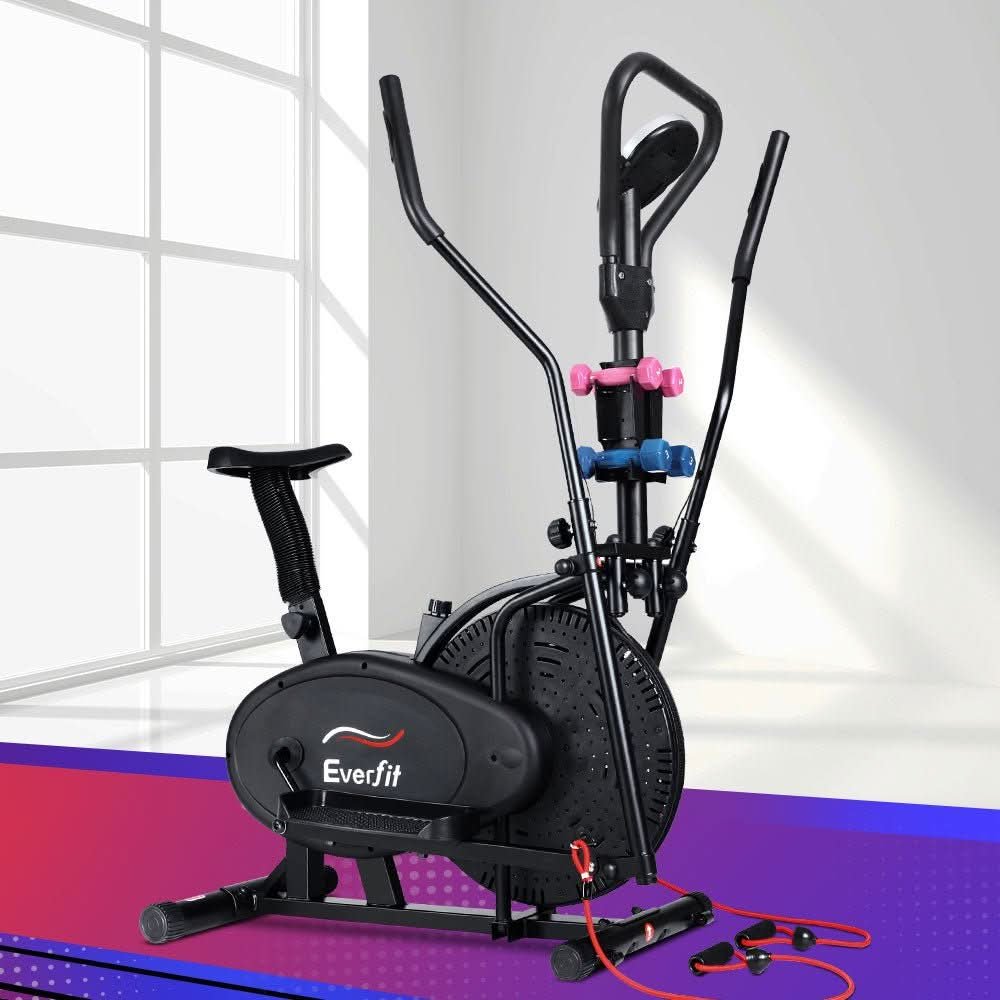
Everfit’s entry here swaps the magnetic flywheel for straightforward mechanical resistance and a twist dial instead of a computerised setting, which keeps the price down and the moving parts simple. Six functions is doing some marketing lifting since two of them are really the bundled resistance bands and dumbbells, but the core elliptical and reversible-motion modes are the real thing.
A 120kg user limit and a 280mm stride mark this out as the compact end of the category, more suited to a share house spare room or a granny flat than a dedicated home gym. Amazon AU reviewers on similar Everfit budget units consistently flag the resistance dial as stiff for the first few weeks before it loosens up, which tracks with how mechanical friction pads generally behave.
This is the most affordable pick in the whole lineup, closer to Kmart exercise-bike pricing territory than a dedicated gym machine, and it shows most in the pulse sensors, which read reliably at rest but lag once effort ramps up. Anyone wanting a first cross trainer to try the format before committing to a Lifespan Fitness unit will get their money’s worth. Anyone already sold on the category should start higher up this list.
Pros
- Cheapest entry point into the category on this list
- Bundled resistance bands and dumbbells add some strength-training variety
- Reversible motion works muscles in both directions
- Simple mechanical dial has nothing electronic to fail
Cons
- Resistance dial reads stiff out of the box, based on recurring buyer feedback on similar Everfit units
- Pulse sensors lag once effort increases, so treat the heart rate reading as a rough guide only
- 120kg user limit is the lowest of the magnetic and mechanical units on this list
Key specs: Mechanical resistance, 280mm stride, 120kg max user weight, LCD display, 12-month warranty
CHECK CURRENT PRICE5. LSG CTG-300 Cross Trainer – Best for Compact Apartments
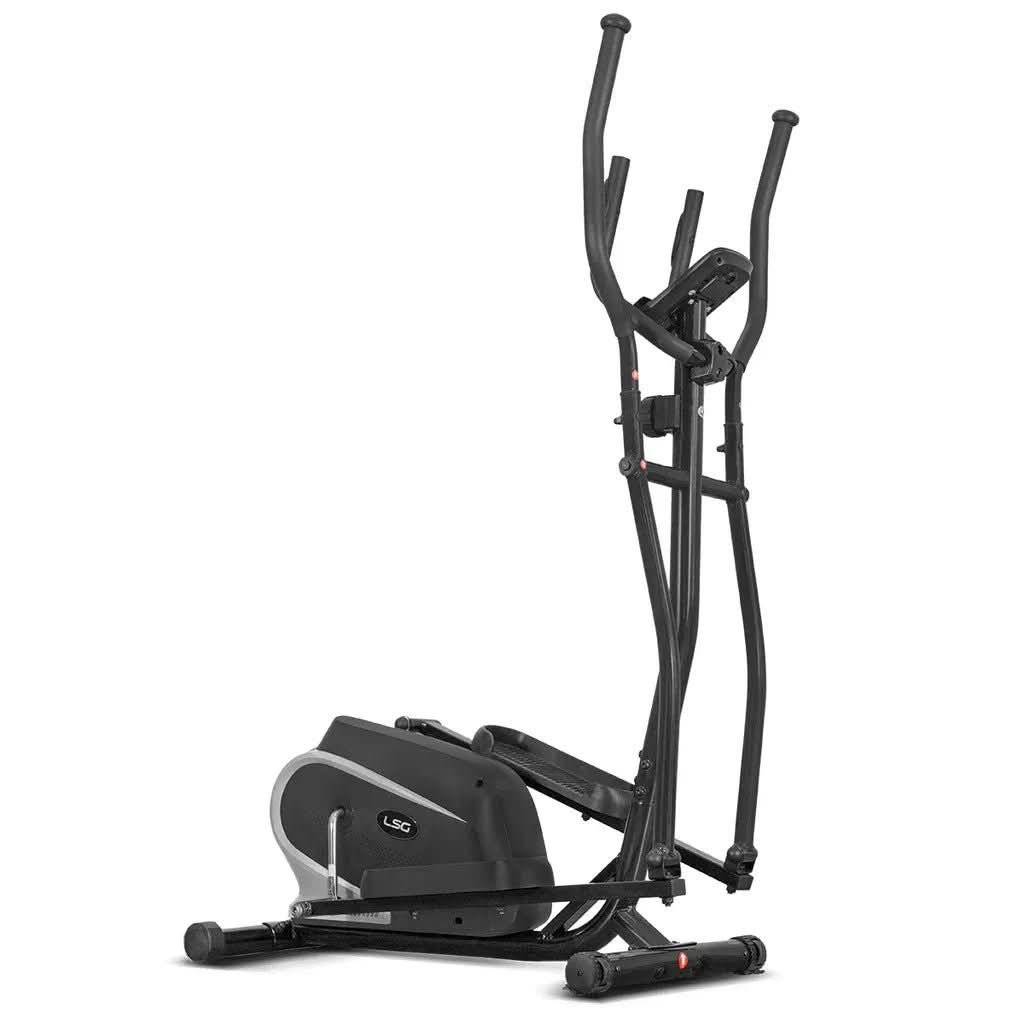
LSG is a smaller name on this list, and the CTG-300 leans into that with a notably light 27.5-kilogram net weight, about a third the mass of the Ascender above. Eight manual resistance levels replace the computerised control of the Lifespan Fitness units, adjusted with a twist dial, not a button.
The console covers the basics: speed, time, distance, heart rate and an age field for a rough calorie estimate, without pretending to be more sophisticated than it is. A 32cm stride is the shortest on this list, which suits a shorter user better than someone over about 175cm, who will feel the stride cut off early.
At a 100kg user weight limit, this is built for a single lighter user, not a household sharing one machine, and the trade-off for that light frame is less stability at the top resistance levels than the heavier Lifespan Fitness builds provide. It is the pick for a Sydney apartment where every kilogram carried up in the lift matters and the machine needs to disappear into a corner instead of dominating a room.
Pros
- Lightest cross trainer on this list at 27.5kg net
- Simple twist-dial resistance needs no learning curve
- Console covers the basics without extra clutter
- Compact footplate suits a smaller room
Cons
- 32cm stride is the shortest here, cramped for anyone over about 175cm
- 100kg user weight limit rules out heavier households sharing the machine
- Feels less planted at the top resistance levels than the heavier units above
Key specs: Magnetic resistance, 8 manual levels, 32cm stride, 100kg max user weight, 27.5kg net weight, 12-month warranty
CHECK CURRENT PRICE6. Foldable Air Walker Exercise Machine – Best Low-Impact Option
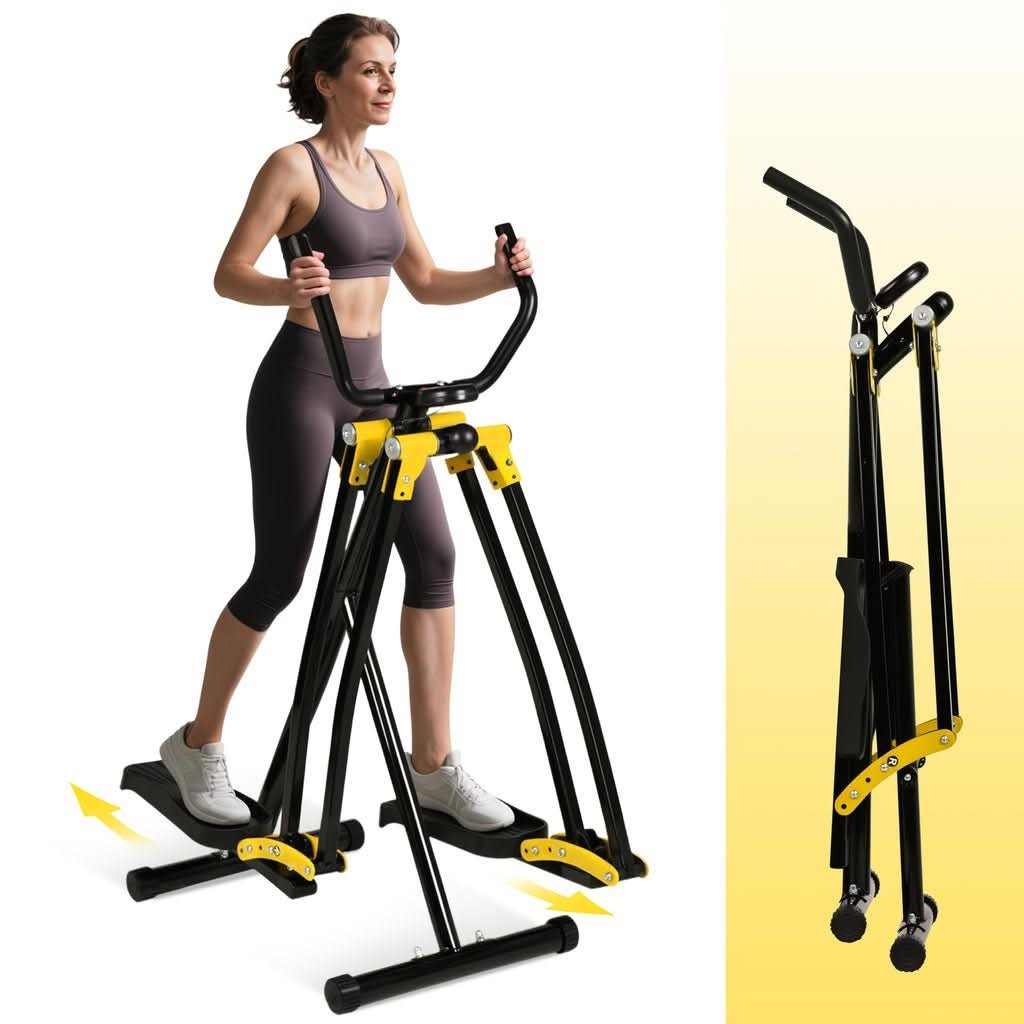
Every other pick on this list runs on a flywheel. This one does not. An air walker swaps the flywheel for a sealed air-resistance cylinder, so resistance builds the harder you push instead of sitting at a fixed level dialled in ahead of time.
At 13 kilograms it is the lightest thing here by a wide margin and the only one a single person can fold and carry, down to a 25cm-deep slab that slides under a bed or behind a door. The forward-back and side-to-side motion is gentler on the knees than any of the flywheel units above, which matters for anyone easing back into exercise after an injury or a long break.
The trade-off for that portability is a 120kg weight limit and a glide that feels noticeably lighter than the magnetic units, especially once you are used to the Lifespan Fitness builds. This is the cheapest way into the category on this list after the Everfit, and it does the job for gentle daily movement in a rental where drilling anything into the wall is not an option. Not a serious cardio machine. Just steady, low-impact movement for easing back in.
Pros
- Lightest, most portable unit on this list at 13kg
- Folds to a slim 25cm depth for under-bed or behind-door storage
- Gentler glide than any flywheel-based cross trainer here
- No installation or wall mounting needed
Cons
- Resistance tops out well below what the magnetic units offer
- 120kg weight limit is on the low side for the category
- Plastic pedals feel less secure underfoot than the metal footplates on the pricier units
Key specs: Air resistance, 120kg max user weight, folds to 25cm deep, 13kg unit weight, 12-month warranty
CHECK CURRENT PRICE7. PowerTrain Home Gym Elliptical Cross Trainer – Best for a Garage Gym Corner
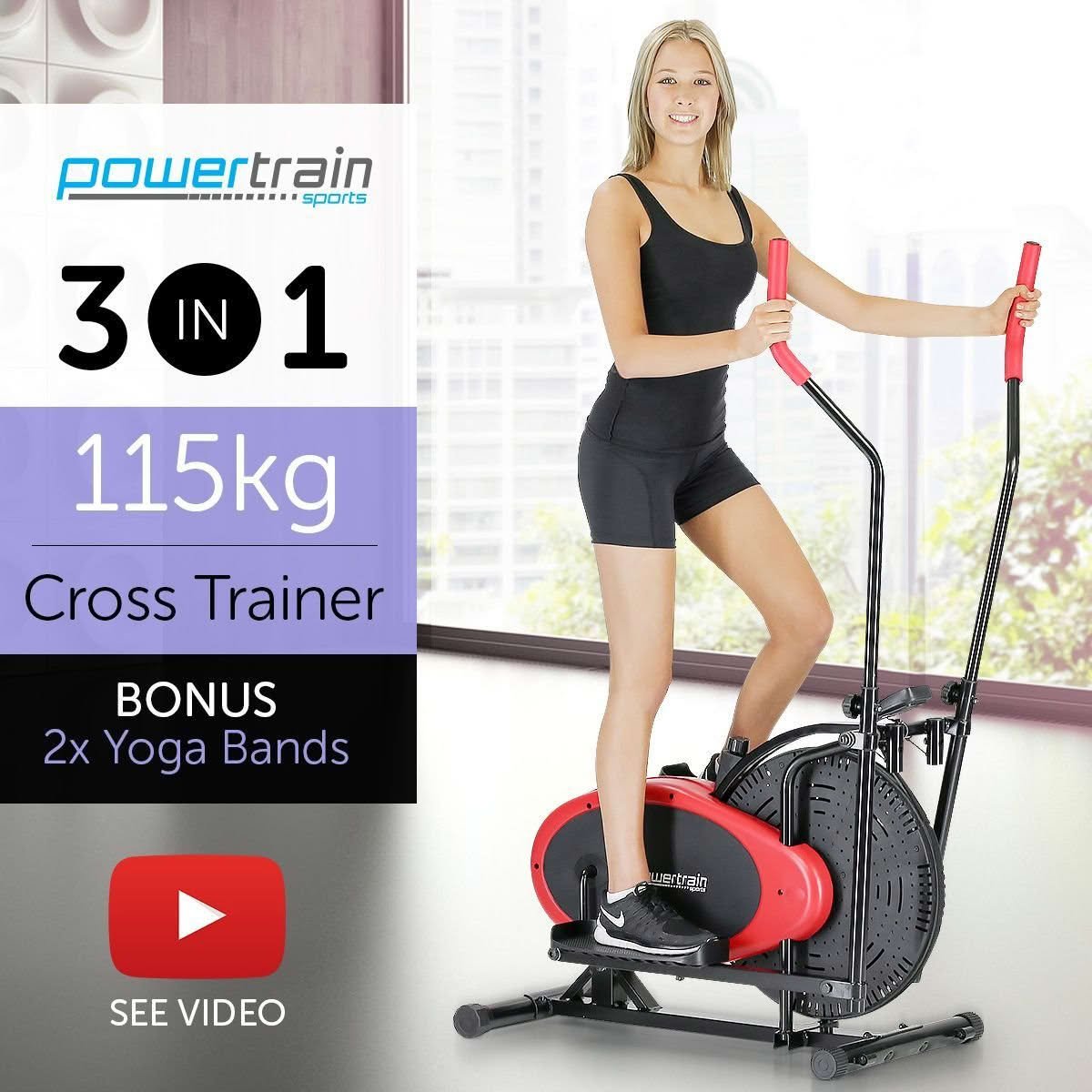
PowerTrain rounds out this list with a straightforward elliptical-style cross trainer built for a home gym setup, not a lounge room feature piece. The frame follows the same rear-drive layout as the LSG and Everfit picks above, keeping the profile low and assembly manageable for one person.
It sits alongside barbells, plates and racks in PowerTrain’s usual catalogue, which tracks with a buyer who already has a shed or garage gym in Perth or regional Victoria and wants a cardio option that does not need its own dedicated room. A ProductReview listing for a similar PowerTrain elliptical shows setup mentioned as taking longer than expected, closer to an hour than the quoted quarter-hour.
Specification sheets on this one are thinner than the Lifespan Fitness or LSG listings, the honest trade-off for a strength-focused brand’s cardio side-line over a dedicated cardio maker. It suits someone building out a garage gym who wants one more piece of equipment under the same roof, not someone chasing the deepest spec sheet on this list.
Pros
- Fits naturally into an existing garage or shed gym setup
- Low profile, rear-drive frame keeps assembly manageable for one person
- Comes from a brand shoppers already know for strength equipment
- Straightforward option if you just want one cardio machine, not a research project
Cons
- Published specifications are thinner than the other entries on this list
- Setup reportedly takes closer to an hour than the box suggests
- No incline or program variety against the Lifespan Fitness units above
Key specs: Magnetic resistance, elliptical stride, home gym frame, 12-month warranty
CHECK CURRENT PRICEHow to Choose a Cross Trainer
Match the drivetrain to your ceiling height, not just your budget. Front-drive machines like the three Lifespan Fitness units here put the flywheel out in front, which gives a longer, more natural stride but tilts the pedals more steeply, worth checking if you have a low sloped ceiling in a converted garage or an old Queenslander with a pitched roofline downstairs.
Decide whether incline actually earns its keep for you. A steeper incline like the Ascender’s turns a flat glide into real hill work, but if you already train legs elsewhere, a flat magnetic machine like the X-41 gets the cardio job done without the extra bulk and cost. Still deciding between a cross trainer and something with pedals you sit down for? The best exercise bikes australia guide is worth a look before you commit floor space to either.
Check the weight limit against everyone who will actually use it. A 100kg limit like the LSG’s rules out plenty of households outright, while the 160kg ceiling on the Ascender covers most adults with room to spare. Get this wrong and the machine either creaks under a heavier user or, worse, the warranty gets voided the day something bends.
Read the fine print on any satisfaction guarantee, not just the warranty. Choice’s review of infomercial exercise gear found that even a 30-day or six-week money-back guarantee usually leaves the buyer covering return postage, so a generous-sounding trial period is worth less than it first appears. None of the machines here carry a TV-infomercial price tag, but the same rule applies: read what you get back, not just what you are promised.
Think about where the noise actually goes. A belt-driven magnetic unit like the X-41 is noticeably quieter than an older chain-driven design, which matters more in a townhouse with a shared wall than a standalone home with a dedicated garage. Quiet enough to run before the neighbours wake up? That is the real test, not the decibel number on a spec sheet.
Settle on stride length before anything else on the spec sheet. A 32cm stride like the LSG’s suits a shorter user; anyone over 180cm should look at the 46 to 50cm strides on the Lifespan Fitness range instead. Short. Simple. The single spec most buyers skip past on their way to checking the resistance levels, and the one that decides whether the machine actually gets used after week one.
You’ll Also Want
A cushioned equipment floor mat protects floorboards from a cross trainer’s transport wheels and stops the frame creeping across a tiled or timber floor during a hard session.
A chest-strap heart rate monitor reads more accurately than any built-in hand pulse sensor, worth adding if the programs on your chosen machine lean on heart-rate zones.
Pairing a cross trainer with a set of adjustable dumbbells covers the upper-body strength work a cardio machine cannot, and the best adjustable dumbbells australia guide runs through the sets worth buying.
On a day you want a flat, no-impact walk instead, a compact walking pad tucks under a desk, and the best walking pad australia guide compares the options in more depth.
Frequently Asked Questions
What is the difference between a cross trainer and an elliptical machine?
In Australia the two names describe the same machine: a low-impact cardio device where the feet stay on the pedals through a walking or running-style stride while the handlebars move the arms. Marketing sometimes uses elliptical for the flat-drive design and cross trainer for the same layout with added incline or program features, but there is no strict technical split between the two terms.
Is a cross trainer or a treadmill better for joint pain?
A cross trainer is generally gentler on the knees and hips because the feet never leave the pedals, removing the foot-strike impact a treadmill produces with every step. A treadmill still suits someone training for running specifically, since it is the only one of the two that replicates an actual running gait. Anyone with existing joint pain should check with a physio before starting either.
What flywheel weight should I look for in a cross trainer?
Look for at least 6 to 8 kilograms if you plan to use the machine most days, since a heavier flywheel keeps the stride smooth rather than jerky at higher resistance. Lighter frames under 15 kilograms overall, like an air walker, use a different resistance method entirely and are built for portability over a heavy-duty daily stride.
Do cross trainers need much floor space in a typical Australian home?
A full-size front-drive cross trainer needs roughly 1.5 to 1.8 metres of length once the pedals are moving, plus clearance on both sides for the handlebars. A folding model can shrink that footprint by around a third when not in use, and a portable air walker needs barely more than a doorway’s width of storage space.
How long do home cross trainers usually last?
A well-maintained magnetic cross trainer with a metal flywheel typically lasts 5 to 10 years of regular home use, with the drive belt as the part most likely to need replacing first. Budget mechanical-resistance models tend to show wear earlier, particularly in the resistance dial, so checking the warranty term against how often you plan to use it is worth doing before buying.
Can two people share one cross trainer at different weights?
Yes, as long as both users fall under the machine’s stated maximum weight, which ranges from 100kg on a lighter compact unit to 160kg on a heavier incline model in this guide. Check the lower of the two figures if household members vary a lot in weight, since exceeding the limit regularly can void the warranty and strain the flywheel bearings early.
Verdict
For most Australian households training regularly, the Lifespan Fitness X-41 is the strongest all-round pick here: an 8kg flywheel, computer-controlled resistance and a quiet belt drivetrain without the bulk of the Ascender. Anyone chasing harder sessions once a flat stride stops being a challenge should look at the XT-40 Ascender for its incline levels, while a share house or apartment with no room to spare is better served by the folding XT-39 or the ultra-light LSG CTG-300.