A cubby house is a freestanding, child-scaled playhouse built for the backyard rather than the bedroom, usually timber-framed with its own door, windows and roof so a child can shut themselves inside a space that is entirely theirs. Unlike a trampoline or a swing set, it stays put once assembled, which is why most of the best cubby houses australia families buy fall into a handful of distinct styles, not one generic shape.
Ground-level cubbies sit flat on the lawn and suit younger children who cannot yet manage a ladder safely. Raised play centres lift the cubby onto a platform, usually with a climbing element or slide built into the access, adding a real adventure-play layer for children old enough to climb with confidence. Themed cubbies, like a shop-front cafe design, swap generic play for a specific pretend-play scenario, and combination units bolt a cubby onto a wider structure that includes monkey bars, a sandpit or a full play centre.
Platform height and the per-child weight rating are the two specs that actually separate a safe backyard fixture from a hazard: platform heights range from ground level up to roughly one metre across the models compared here, and rated capacity runs from a single child up to three using the structure at once. Assembly time is the number most listings understate, spanning 3 to 6 hours for two adults on the units in this guide, and it is worth blocking out a full weekend day, not just a Saturday afternoon.
This guide compares six cubby houses available to Australian buyers this week, from a compact picket-fence design for a small yard to a 4.6-metre play centre with a slide and monkey bars for a family with the space to fill. Anyone weighing up a trampoline as well should have a look at the best trampolines guide before committing the whole backyard budget to one structure.
Quick Picks

Camira Extra Large Wooden Cubby House
A covered veranda, chalkboard and included flooring in one do-everything design.
CHECK CURRENT PRICE
Kingston Raised Cubby and Play Center
Monkey bars, a 2.2m slide, a climbing wall and a sandpit share one frame.
CHECK CURRENT PRICE
Teddy Wooden Cubby House with Picket Fence
The smallest footprint and lowest cost way into a cubby house on this list.
CHECK CURRENT PRICEBest Cubby Houses Australia Compared
| Product | Link | Type | Best For | Key Spec |
|---|---|---|---|---|
| Camira Extra Large Wooden Cubby House | Check price | Ground-level | Most backyards | 1.8m tall, veranda, flooring included |
| Silverton Raised Wooden Cubby House with Rock Climbing Wall | Check price | Raised play centre | Active kids | Sandpit, kitchen, max 3 children |
| The Archie Wooden Cubby with 1.8m Green Slide | Check price | Raised with slide | A slide included | Repositionable 1.8m slide, ages 3-7 |
| Kingston Raised Cubby and Play Center | Check price | Combination play centre | Multiple kids | Monkey bars, 2.2m slide, sandpit |
| Aberdeen Wooden Cubby Cafe | Check price | Themed cubby | Pretend-play theme | Shop-front design, 3 chalkboards |
| Teddy Wooden Cubby House with Picket Fence | Check price | Ground-level | Budget pick | Picket fence, flowerbeds, compact |
How We Picked
We worked through the dedicated outdoor play and cubby house ranges carried by Australian retailers and marketplaces, checking listed dimensions, platform height and per-child weight ratings against the maker’s own specification sheet over the marketing copy alone. Anything without a clear Australian Consumer Law warranty statement, or an obvious repaint of another listing on this list, was cut before the shortlist was finalised.
From there we weighed real assembly and ownership feedback: how long the flat-pack build actually takes for two adults, whether the timber holds paint and shape through a first summer outdoors, and the kind of complaint that turns up once a cubby has spent a year exposed to weather, cross-referenced against verified-buyer patterns on Amazon AU and ProductReview’s outdoor play equipment category, where assembly time and hardware quality are the two recurring themes across brands.
1. Camira Extra Large Wooden Cubby House – Best for Most Backyards
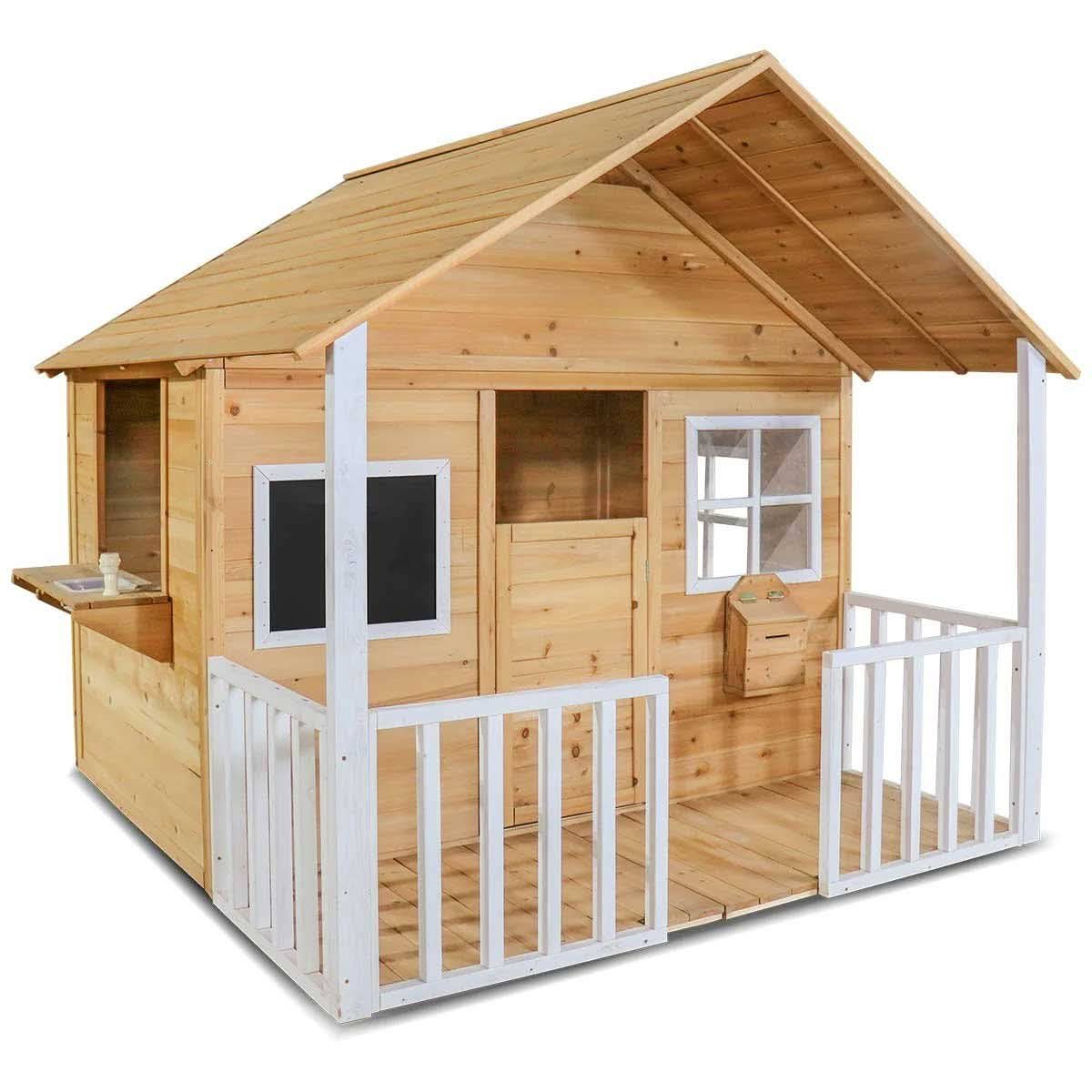
The Camira is the size most Australian backyards can actually accommodate without swallowing the whole lawn: 206cm by 190cm at the base and 1.8 metres tall, with a covered front veranda that doubles as extra play space once the novelty of the inside wears off. A serving window at the front turns it into a shopfront on demand, and an in-built window flowerbed gives it a lived-in look from day one.
Flooring is included, which several cheaper cubbies on this list treat as an optional extra, and it makes a real difference once a Melbourne winter turns bare dirt into mud that tracks straight through the door. A chalkboard and letterbox round out the pretend-play features without tipping into the themed-cafe territory of the Aberdeen below.
At 176cm by 106cm inside, there is properly enough room for two children to play without elbows constantly in the way, though the matte-stained timber finish will need a re-coat every couple of years if it sits in full WA sun instead of a shaded Adelaide courtyard. It suits a family wanting one do-everything cubby instead of a specialised climbing or cafe-themed structure.
Pros
- Covered veranda adds real extra play space beyond the interior
- Flooring included, unlike several cheaper cubbies on this list
- Serving window and flowerbed add pretend-play variety without a full theme
- Interior fits two children without constant bumping
Cons
- No climbing wall or slide if kids want more physical play than a walk-in cubby offers
- Timber needs re-staining every couple of years in full sun
- No handles cut into the panels for repositioning, so any layout change after setup means unscrewing panels again
Key specs: 206cm x 190cm x 172cm, veranda, chalkboard, flooring included, 12-month warranty
CHECK CURRENT PRICE2. Silverton Raised Wooden Cubby House with Rock Climbing Wall – Best for Active Kids
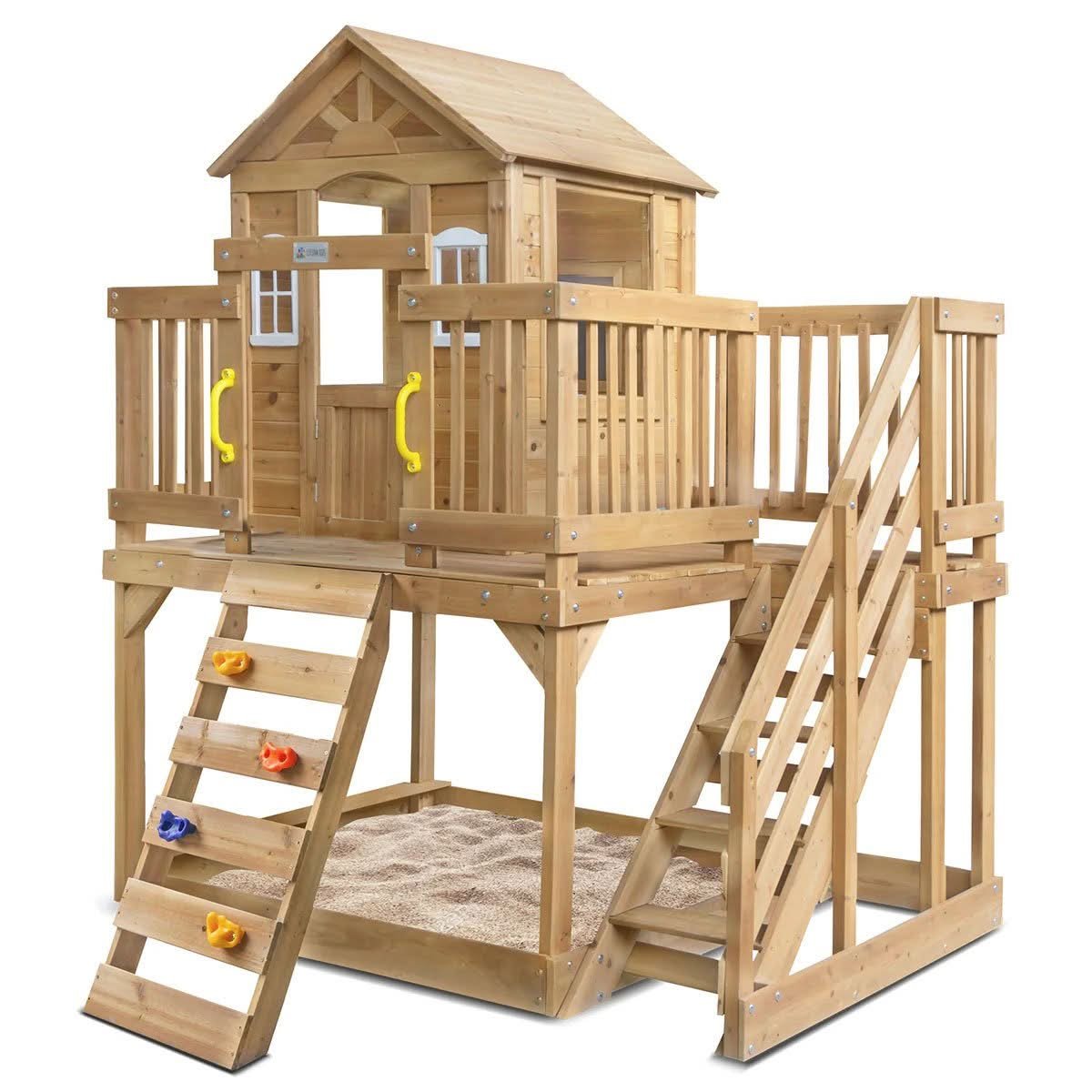
A child who has outgrown a ground-level cubby in about a season is exactly who the Silverton is built for. The raised platform sits 98.5cm up, reached by a rock climbing wall on one side and a proper wooden staircase with handrails on the other, so climbing is a built-in feature rather than an accident waiting to happen.
Underneath the platform, a 1.4-metre-square sandpit or ball pit uses the space a ground-level cubby wastes, and a mounted play sink and chalkboard sit inside the upper cubby itself. The maker rates it for a maximum of three children at once, each under 50kg, which matters more here than on a single-child ground cubby given how much of the structure invites shared play.
This is the second-priciest pick on this list, a step up in price from the Camira above, and the trade-off is a properly large assembled footprint at 191cm by 194cm, plus specialised freight since it ships direct from the supplier instead of a standard courier run. A Brisbane backyard with room to spare gets real use from the climbing wall and sandpit combination. A smaller Sydney courtyard would suit a ground-level design instead.
Pros
- Rock climbing wall and staircase both built into the access, not an afterthought
- Sandpit uses space underneath the platform that a ground cubby wastes
- Rated for three children at once, not just one
- Mounted play sink and chalkboard add function beyond a plain interior
Cons
- Specialised freight needed since it ships direct from the supplier
- Assembled footprint of 191cm by 194cm needs a properly clear, flat site
- 50kg per-child weight rating rules out an older, heavier sibling joining in
Key specs: 191cm x 194cm x 238cm assembled, sandpit 140x140cm, max 3 children at 50kg each, 12-month warranty
CHECK CURRENT PRICE3. The Archie Wooden Cubby with 1.8m Green Slide – Best with a Slide
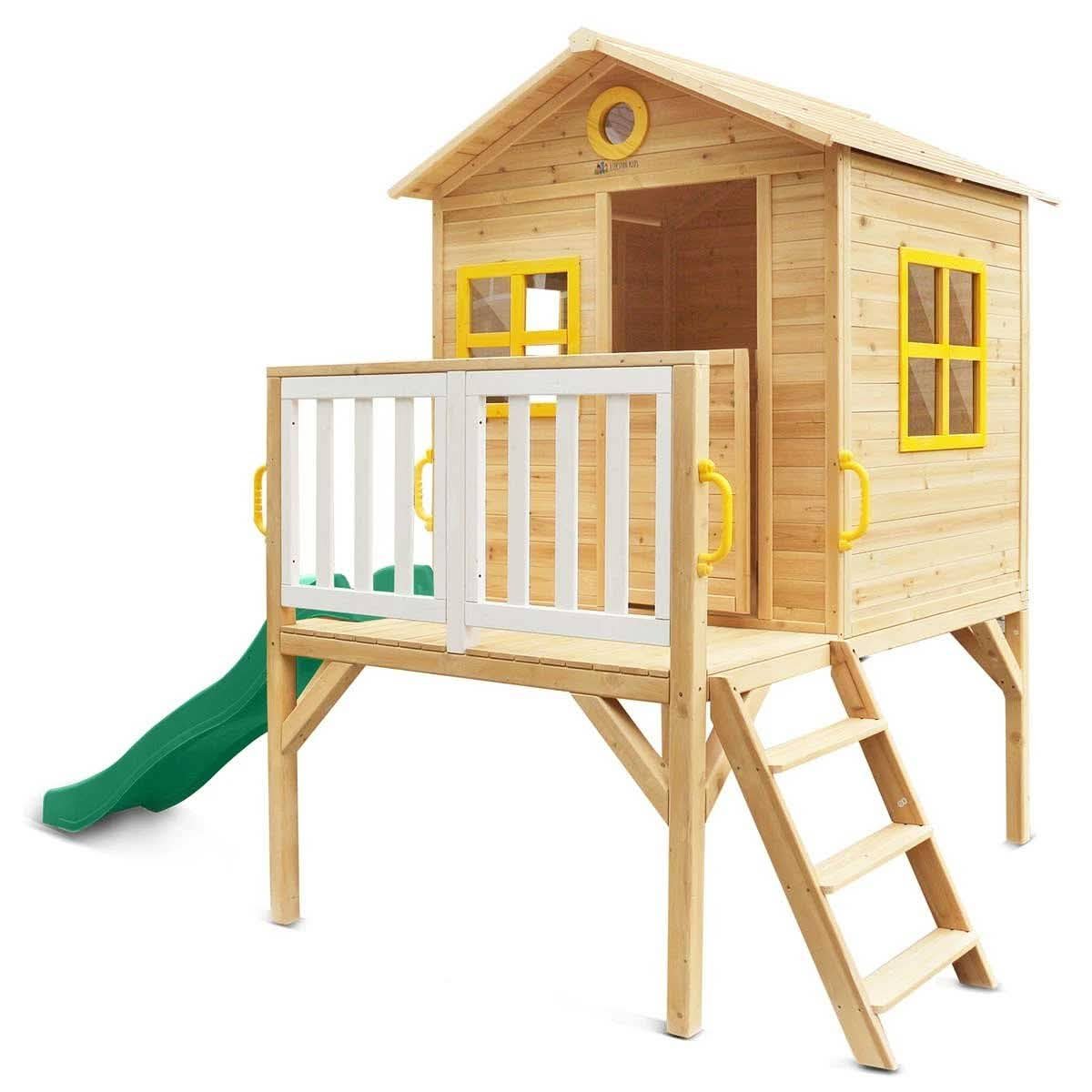
The Archie earns its spot on this list for one feature the others lack outright: a proper 1.8-metre wavy slide, and one that can be repositioned to whichever side of the yard actually has clearance instead of locking a family into one fixed layout. FSC-certified timber with rounded corners is a small detail that matters more once kids are climbing and sliding, not just standing inside a box.
A window seat catches the sun through perspex windows, and the white picket-fence trim dresses up what is otherwise a straightforward budget-conscious build. At 236cm high including the slide and 312cm deep, it needs a proper run-out zone at the bottom of the slide, not just clearance for the cubby itself.
Recommended for ages 3 to 7, narrower than the open-ended age range on the ground-level Teddy below, and assembly runs close to three hours for two adults. It is the mid-price pick here, cheaper than the Silverton or Kingston but pricier than a plain ground cubby, and it suits a family who wants one slide without paying for the full monkey-bars-and-climbing-wall combination the Kingston bundles in.
Pros
- Slide position can be moved to suit where the yard actually has clearance
- FSC-certified timber with rounded corners
- Window seat and picket-fence trim add character beyond a plain box
- Assembly is quicker than the raised platform units above at around three hours
Cons
- Age range is narrower than a plain ground-level cubby, tapering out around age 7
- Needs a proper run-out zone at the bottom of the slide, not just space for the cubby
- No sandpit or climbing wall bundled in, unlike the Silverton or Kingston
Key specs: 236cm x 198cm x 312cm assembled, 1.8m slide, ages 3-7, 12-month warranty
CHECK CURRENT PRICE4. Kingston Raised Cubby and Play Center – Best for Multiple Kids
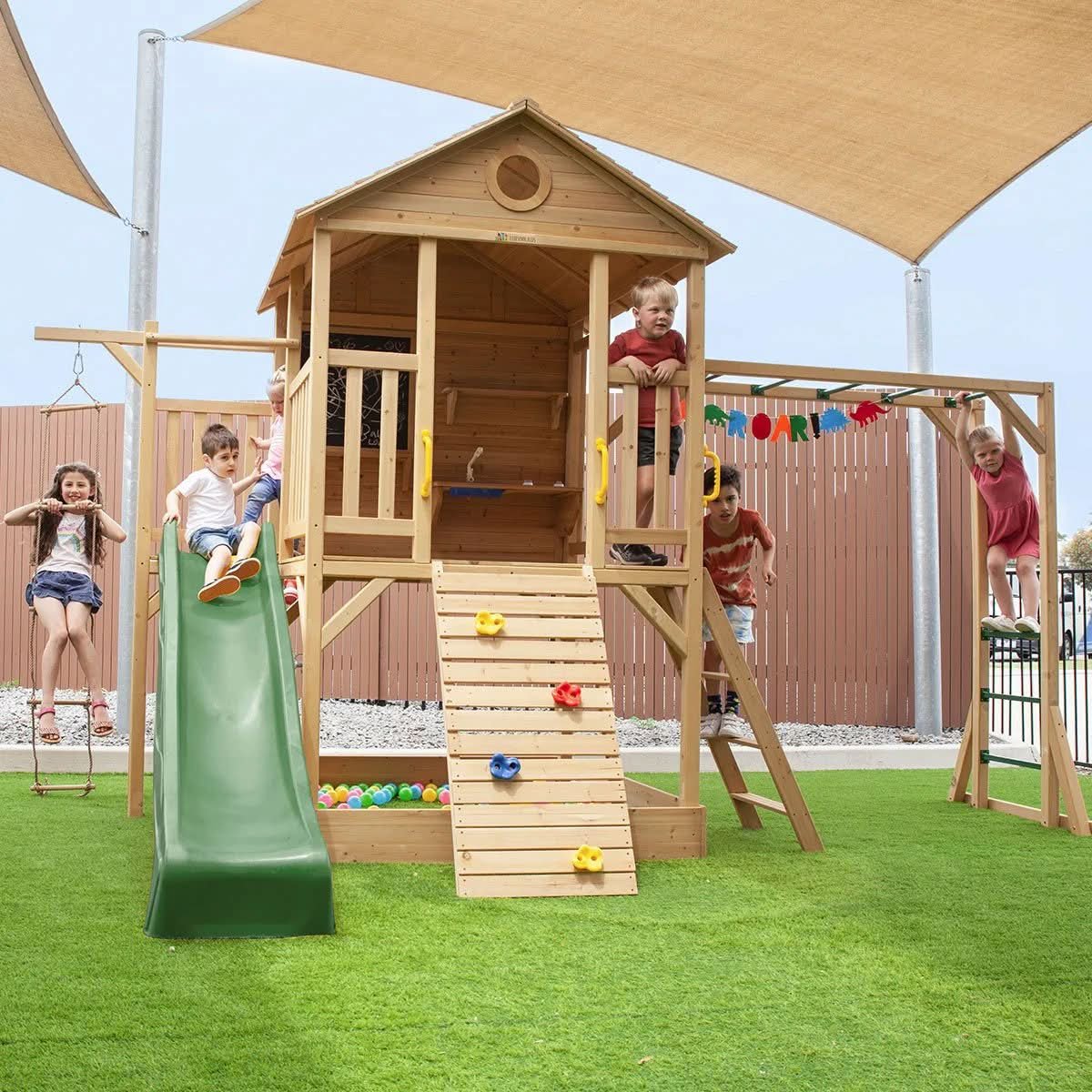
The Kingston is less a cubby house than a full play centre with a cubby bolted on, and at 4.6 metres long it is easily the biggest structure in this guide. Monkey bars, a 2.2-metre wavy slide, a rock climbing wall with a side ladder and a square sandpit all share the one frame, alongside an open fort-style cubby with an observation window and saloon doors up top.
Rated for a maximum of 65kg per child, slightly higher than the Silverton’s 50kg limit, it is built to host a small group of neighbourhood kids, not just one or two siblings taking turns. The monkey bars in particular add a strength and coordination element none of the other five picks here attempt.
The supplier notes plainly that the natural timber will develop cracks and splits over time, an honest admission most listings bury in fine print instead of stating upfront. That is normal for an outdoor timber structure this size in the Australian climate, whether it is baking through a Perth summer or getting properly rained on through a Melbourne one, but it is worth knowing before assembly day rather than after.
At 2.8 metres tall and requiring roughly six hours of assembly for two adults, this is the most expensive and most involved build on this list by a clear margin. Not a weekend project squeezed in before a birthday party. Anyone without a properly large, flat backyard footprint should look at the Silverton for a smaller dose of the same climbing-and-sandpit combination instead.
Pros
- Monkey bars add a feature none of the other picks here include
- 65kg per-child rating, the highest of any raised unit in this guide
- Combines slide, climbing wall and sandpit on one frame
- Honest supplier note about natural timber checking over time, instead of hiding it
Cons
- Biggest footprint and longest assembly time on this list, around six hours for two adults
- Priciest pick here by a clear margin
- Natural timber will develop visible cracks and splits as it weathers, per the maker’s own notes
Key specs: 4.6m x 2.4m x 2.8m assembled, 2.2m slide, monkey bars, sandpit 150x150cm, max 65kg per child, 12-month warranty
CHECK CURRENT PRICE5. Aberdeen Wooden Cubby Cafe – Best Pretend-Play Theme
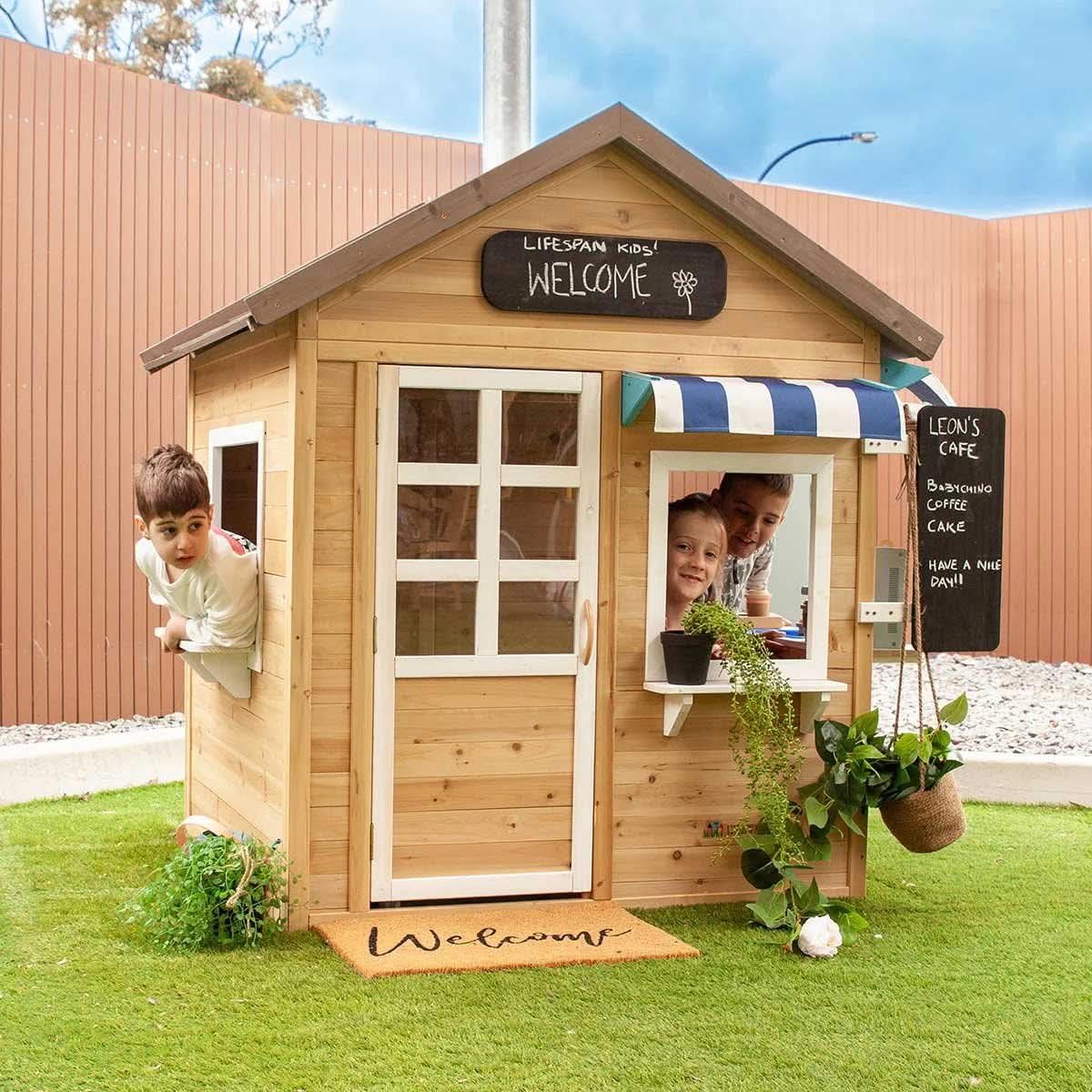
Every other pick on this list is a generic cubby with add-ons; the Aberdeen is a shopfront from the start. Serving windows on multiple sides and three chalkboard signs turn it into a proper play cafe or shop, not a house with a sign taped to the door.
At 1.55 metres tall and a compact 133cm by 122cm footprint, it is one of the smaller structures here, closer in scale to the Teddy below than the Camira or Silverton. Premium timber window frames come without glazing, which keeps the weight and price down but means no perspex to fog up or crack in a hot Cairns wet season.
There is no sandpit, slide or climbing element bundled in, since the whole design is built around pretend-play instead of physical play. A family who already has a trampoline or climbing frame elsewhere in the yard and wants a dedicated pretend-shop space gets more from this than from a second generic cubby. Anyone chasing physical activity should look at the Silverton or Kingston instead.
Pros
- Multiple serving windows and three chalkboards properly commit to the shop theme
- Compact footprint suits a smaller yard
- Open window frames without glazing mean nothing to fog up or crack
- Lighter and simpler to assemble than the raised play-centre units above
Cons
- No sandpit, slide or climbing feature at all
- Open window frames offer less weather protection than glazed designs
- Smallest interior of the non-budget picks here, better for one child than three
Key specs: 133cm x 122cm x 155cm, 3 chalkboards, open window frames, 12-month warranty
CHECK CURRENT PRICE6. Teddy Wooden Cubby House with Picket Fence – Best Budget Pick
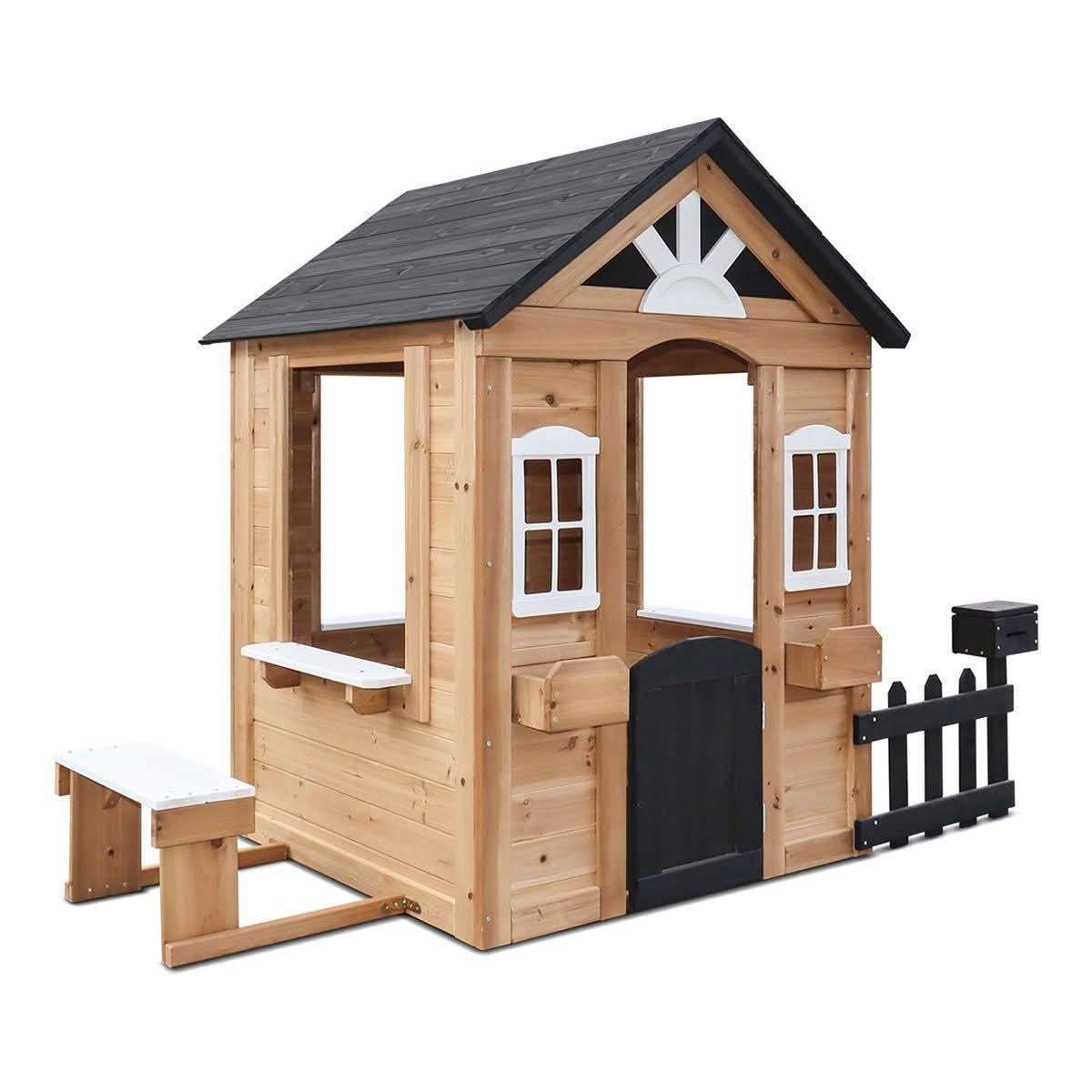
The Teddy is the smallest and cheapest cubby on this list, and it does not pretend otherwise: a 1.4-metre-tall box with a picket fence, a letterbox and window flowerbeds, pre-painted straight out of the flat pack. Simple, and it knows it. Arch window frames let in plenty of light without needing the perspex glazing some pricier units carry.
At 95cm by 106cm, the footprint (191cm including the fence) is the smallest here, which suits a townhouse courtyard or a Hobart backyard too small for the Camira or Silverton instead of a sprawling quarter-acre block. This is the most affordable pick in the whole lineup by a wide margin, and assembly reflects that too, at roughly three hours for two adults, the same as the shopfront-themed Aberdeen.
There is no sandpit, slide or raised platform, and stock has run tight on this particular model at times, so a buyer keen on this exact look should not leave the decision for months. It suits a family with a younger child not yet ready for a raised or climbing structure, or anyone short on both budget and backyard space.
Pros
- Cheapest way into a cubby house on this list by a wide margin
- Picket fence, letterbox and flowerbeds add character despite the small footprint
- Pre-painted finish saves a weekend of staining before kids can use it
- Smallest footprint here, fits a townhouse courtyard
Cons
- No sandpit, slide or raised platform of any kind
- Smallest interior on this list, one child at a time realistically
- Stock has run tight on this specific model at times, so availability can be hit and miss
Key specs: 95cm x 106cm x 140.5cm (191cm incl. fence), picket fence, flowerbeds, 12-month warranty
CHECK CURRENT PRICEHow to Choose a Cubby House
Measure the actual footprint before falling for a photo. A raised play centre like the Kingston needs 4.6 metres of clear, flat yard, not just the floor space of the cubby itself once slides and monkey bars are factored in, while a ground-level design like the Teddy or Aberdeen fits a courtyard a fraction of that size.
Match the platform style to your child’s age and confidence, not just what looks impressive. A raised cubby with a climbing wall suits a child already comfortable climbing playground equipment unsupervised; a toddler or a nervous five-year-old gets more real use from a ground-level design like the Camira or Teddy for the first couple of years. Got a child still working up the confidence to use a ladder alone? Start at ground level and upgrade later.
Check what ships direct from the supplier versus standard courier, since the larger raised units on this list arrive on specialised freight that can add days to the delivery estimate compared with a smaller cubby sent through a standard courier network. Worth asking before you commit to a birthday-week delivery date.
Read the warranty as an Australian Consumer Law entitlement, not just a manufacturer promise. Every pick here carries a 12-month manufacturer warranty on top of the guarantees that Australian Consumer Law provides automatically, covering a major failure regardless of what the fine print says. Keep photos of any timber defect from day one, since a warranty claim on a cubby usually needs image evidence instead of a phone call alone.
Budget for a coat of exterior timber oil or paint within the first year or two, even on a pre-painted model, since Australian sun bleaches raw and painted timber faster than a lot of buyers expect, especially on a north-facing Queenslander verandah with no built-in shade. A cubby left bare through a second Adelaide or Perth summer will show it faster than one that gets an annual once-over.
Block out a full day for assembly, not an afternoon. The bigger raised units run 5 to 6 hours for two adults, and rushing the last quarter of a flat-pack build is exactly when a panel goes in backwards. Slow and steady. Read the instructions twice before touching a screwdriver.
You’ll Also Want
A set of interlocking wood deck tiles gives a raised or ground-level cubby a proper level base instead of bare dirt or patchy lawn, and the best decking tiles australia guide runs through the options in more depth.
A lockable outdoor toy storage box keeps loose toys, chalk and cushions dry between play sessions, worth adding to any of the ground-level picks here that skip built-in storage.
For any pick without a bundled sandpit, like the Camira, Archie or Aberdeen, a standalone wooden sandpit adds the digging and building play the cubby itself does not cover.
When the weather keeps everyone inside, a few family card games pack away small and need no screen or batteries.
Frequently Asked Questions
What age is a cubby house suitable for?
Most ground-level cubby houses suit children from about 2 years old through primary school age, since there is no climbing or platform height involved. Raised play centres with a climbing wall or ladder access generally suit children from around 4 to 5 upwards, once they can manage stairs or a climbing wall unsupervised. Check the maker’s stated age range for the specific model instead of assuming a generic figure applies.
Do cubby houses need council approval in Australia?
Most states exempt small, low, non-habitable backyard structures like a standard cubby house from needing a building permit, though the exact height, floor area and boundary-setback thresholds vary by state and by local council. A raised play centre over roughly 2.4 metres, or one built close to a boundary fence, is more likely to trigger a requirement, so check with the local council before assembly on anything larger than a small ground-level unit.
How much space does a cubby house need?
A ground-level cubby like the Teddy or Aberdeen needs roughly 2 to 2.5 metres of clear width including a small buffer for the door swing. A raised play centre with a slide and monkey bars, like the Kingston, needs closer to 5 metres of length once the full structure and slide run-out are accounted for. Measure the actual assembled footprint from the listing, not just the cubby box dimensions.
How long do timber cubby houses last outdoors in Australia?
A well-maintained timber cubby house typically lasts 8 to 15 years outdoors in Australia, with an annual check of the roof seals, hardware and any exposed timber extending that considerably. Direct, unshaded sun exposure and coastal salt air both shorten that lifespan faster than a shaded, inland backyard, so a re-coat of exterior timber oil or paint every couple of years is worth the time.
Can a cubby house be moved once assembled?
A small ground-level cubby house can usually be shifted by two adults without full disassembly, especially lighter picket-fence style designs. A raised play centre with a sandpit, climbing wall or slide bolted into the frame is much harder to relocate once built, so it is worth finalising the exact spot in the yard before assembly starts, not after.
What is the difference between a raised and ground-level cubby house?
A ground-level cubby sits flat on the lawn with no climbing involved, suiting younger children and smaller yards. A raised cubby lifts the play area onto a platform, typically 70cm to 1 metre up, reached by a ladder, staircase or climbing wall, and often adds a sandpit or ball pit in the space underneath. Raised designs need a larger footprint and a longer assembly time in return for the extra play value.
Verdict
The Camira is the strongest all-round pick for a typical Australian backyard, big enough for real, active play without demanding the footprint or assembly time of a full play centre. Families with the space and a couple of active kids should look at the Kingston for its monkey bars and slide combination, while a smaller yard or a younger child is better matched to the compact, budget-friendly Teddy.