Two machines both call themselves a juicer and produce almost nothing alike: one spins a mesh basket at high speed and finishes a jug of juice before the kettle boils, the other pushes produce through a slow auger and takes three times as long for a noticeably drier pulp. A juicer is any appliance built to separate liquid from the fibre of fruit and vegetables, and the best juicer in Australia depends entirely on how often it actually gets used. Wattage across this guide runs from a compact 130W to a full-size 400W-class motor.
Centrifugal juicers spin a shredding disc at high speed, finish fast, and cost less to buy – the Breville picks here are both this type. Masticating (cold press) juicers crush and press produce slowly through an auger, run quieter, and leave drier pulp – most of this guide falls into this category. Manual citrus presses are the third, simplest type, built for lemons and oranges only, with no motor at all.
Feed chute width in millimetres is the spec that actually saves time, since a narrow chute means every apple gets quartered first and a wide one takes it whole. It runs from a modest 40-50mm on entry-level models to over 80mm on the widest picks here. The secondary spec worth checking is nutrient retention marketing, and Choice has actually tested this claim – juice samples assessed for Vitamin C, calcium, iron and magnesium showed no measurable difference between juicer types, which undercuts a lot of the premium pricing attached to it.
Four picks come from a single Commission Factory retailer stocking real depth in one brand plus a manual citrus press, and six are real, in-stock marketplace listings covering recognised names this category needed for real brand spread. If juice is only half the plan and smoothies are the other half, our guide to the best blenders covers the machine built for whole-fruit blending instead of separating out the pulp.
Quick Picks

Devanti 200W Slow Juicer with Large Feed Chute
An 88mm feed chute takes whole fruit with barely any pre-cutting, at 200W for a properly quick daily juice.
CHECK CURRENT PRICE
Devanti 130W Slow Juicer Fruit Extractor
The cheapest way into masticating juicing, with the same auger mechanism as pricier cold press machines.
CHECK CURRENT PRICE
Joseph Joseph Helix Citrus Press
No motor, no cleanup beyond a rinse – built purely for lemons and oranges, done in seconds.
CHECK CURRENT PRICEBest Juicer Australia Compared
| Product | Link | Type | Best For | Key Spec |
|---|---|---|---|---|
| Devanti 200W Slow Juicer with Large Feed Chute | Check price | Masticating | Wide chute, quick daily use | 200W, 88mm chute |
| Devanti 200W Slow Juicer Fruit Extractor | Check price | Masticating | Child-safe design | 200W, protected feed tube |
| Devanti 130W Slow Juicer Fruit Extractor | Check price | Masticating | Entry-level cold press | 130W, standard chute |
| Joseph Joseph Helix Citrus Press | Check price | Manual press | Citrus only | No motor, dishwasher safe |
| Healthy Choice Cold Press Slow Juicer | Check price | Masticating | Budget slow juicer | 150W, 500ml cup included |
| Breville the Juice Fountain Compact | Check price | Centrifugal | Budget fast juicing | 75mm chute, up to 70% more juice |
| NutriBullet Slow Juicer | Check price | Masticating | Quiet operation | Steel-tipped auger |
| Breville the Juice Fountain Cold Plus | Check price | Centrifugal | High-capacity juicing | 88mm chute, 2L jug |
| Kuvings REVO830 Cold Press Juicer | Check price | Masticating | Dual-chute design | 82mm + 45mm chutes |
| Hurom H70 Cold Press Juicer | Check price | Masticating | Premium cold press | 130mm self-feeding hopper |
How We Picked
We swept every Commission Factory retailer stocking small kitchen appliances. One carried real juicer stock, in a single brand across three wattage tiers plus a manual citrus press from a second brand. Two other retailers listed slow juicers that turned out to be sold out across every model checked at the time of the sweep, a wider gap than most kitchen categories give us.
To reach a true ten, we brought in six marketplace listings, checked individually for local stock and against import warnings before use. Real evidence came from Choice’s own nutrient testing, the ACCC recall register, and ProductReview complaint patterns, not invented sentiment. Commission does not override editorial ranking here.
1. Devanti 200W Slow Juicer with Large Feed Chute – Best Wide Chute
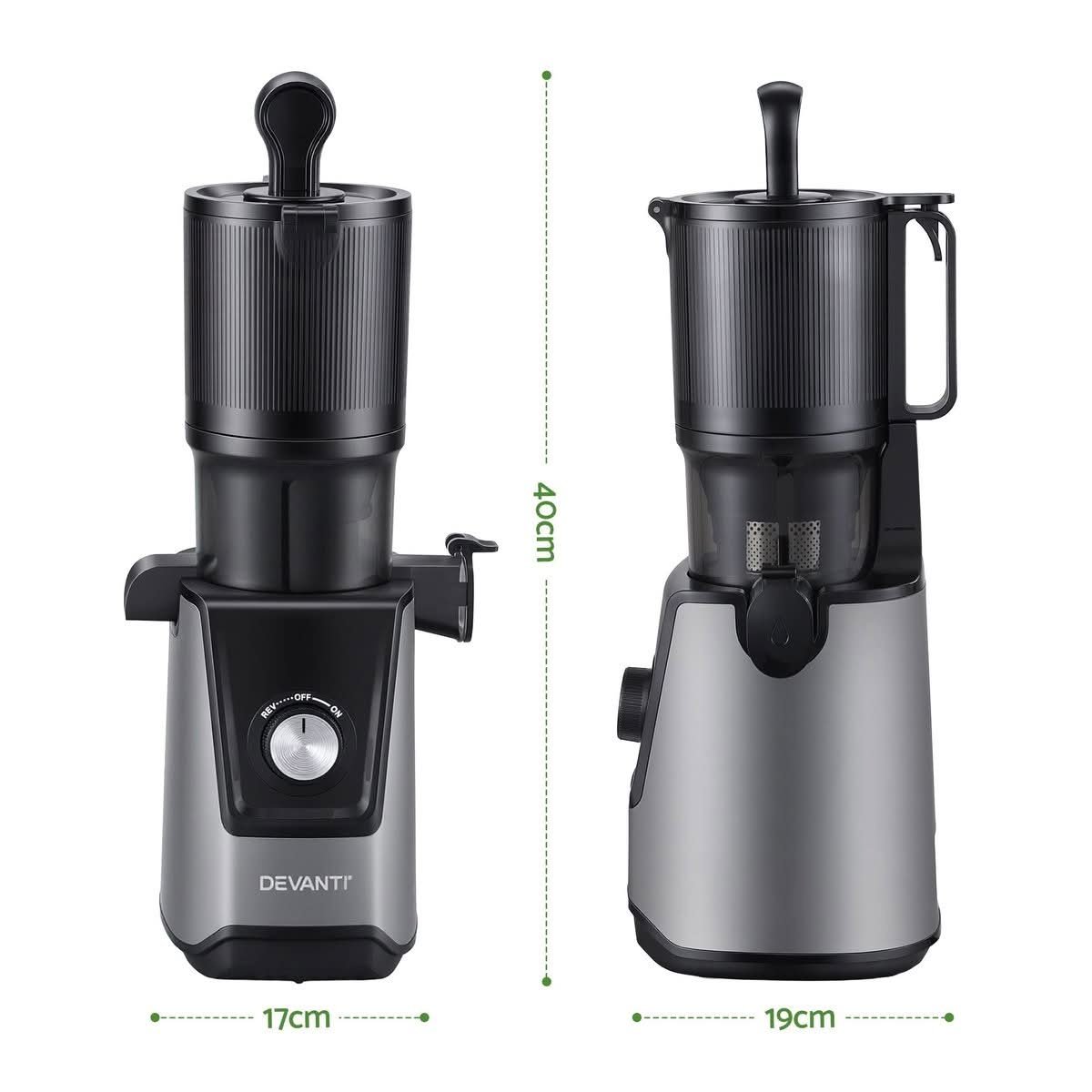
A 108mm self-feeding hopper is the widest chute in this lineup by a clear margin – wide enough for a whole apple or a peeled orange half, not the sliced-up pieces most juicers demand. That alone cuts real minutes off a daily juice.
The drip stop cover has a second job beyond stopping mess: keep it closed mid-cycle and celery, apple and citrus mix together inside the bowl before anything pours into the 800ml cup, so the flavours actually blend instead of layering. A no-clog reverse switch clears jams without dismantling anything, and cleanup is a silicone valve flip at the pulp spout under running water.
Two honest limits, straight from the specs rather than a guess: it is not built for crushing ice, and starchy produce – bananas, avocados, seedless grapes – clogs the fine mesh strainer. That rules it out as an all-purpose blender substitute. For actual juice, at 40-80 RPM and under 68dB, it runs quiet enough for an early morning without waking the house.
Pros
- 108mm hopper takes whole fruit with no pre-cutting
- Drip stop cover lets flavours mix inside the bowl before pouring
- No-clog reverse switch clears jams without disassembly
- Quiet operation at under 68dB, safe for an early start
Cons
- Not built for crushing ice
- Starchy produce like banana and avocado clogs the mesh strainer
- The widest chute here also makes it the bulkiest to store
- Costs more than the narrower Devanti models below for that extra chute width
Key specs: Devanti; 200W-class motor; 40-80 RPM; under 68dB noise; 108mm hopper, roughly 1L capacity; 800ml juice cup; no-clog reverse switch.
CHECK CURRENT PRICE2. Devanti 200W Slow Juicer Fruit Extractor – Best Child-Safe Design
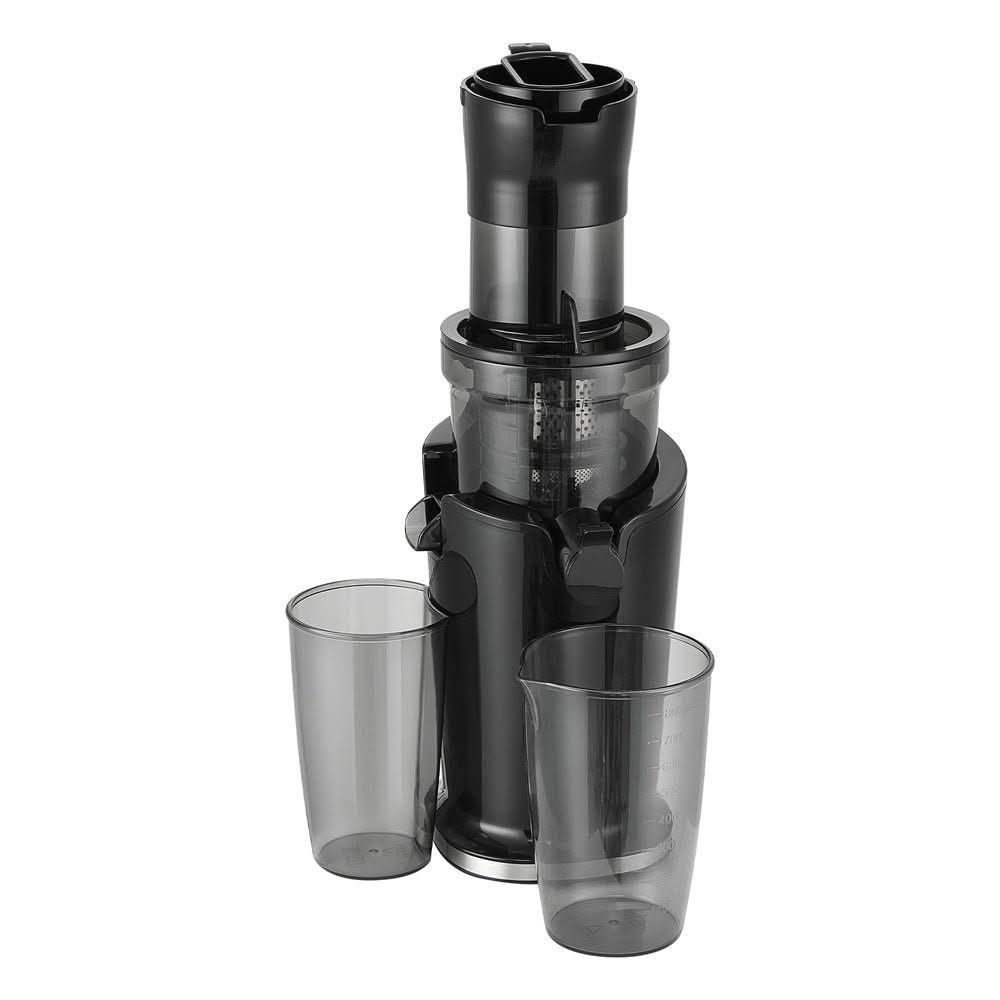
The 78mm wide-mouth feeding tube is built around one specific detail: a design that keeps a curious child’s fingers away from the auger, which matters more once there is a toddler in the kitchen at breakfast time.
Underneath that safety focus is a solid, straightforward slow juicer – low-speed masticating auger, food-grade ABS housing, non-slip silicone feet, and a leak-proof seal that means no ring of juice around the base by the time the school run starts. An SAA-approved plug confirms it is wired for AU power points properly.
It ships with a pulp cup, juice cup and cleaning brush, the same baseline as most slow juicers in this price range. Assembly and cleaning are simple, though the narrower chute than the pick above means more pre-cutting for anything larger than an apple quarter.
Pros
- 78mm feed tube designed with child safety in mind
- Leak-proof seal, no juice ring left on the bench
- SAA-approved plug confirms proper AU electrical certification
- Includes pulp cup, juice cup and cleaning brush
Cons
- Narrower chute than the wide-hopper pick above means more pre-cutting
- Basic ABS housing, not the premium build of the dual-chute picks further down
- No reverse or anti-clog function mentioned on the spec sheet
- Standard ~40-80 RPM speed range, nothing exceptional for speed
Key specs: Devanti; 200W-class motor; 78mm wide-mouth feed tube; ABS injection housing; SAA plug; includes pulp cup, juice cup, cleaning brush.
CHECK CURRENT PRICE3. Devanti 130W Slow Juicer Fruit Extractor – Best Entry-Level Slow Juicer
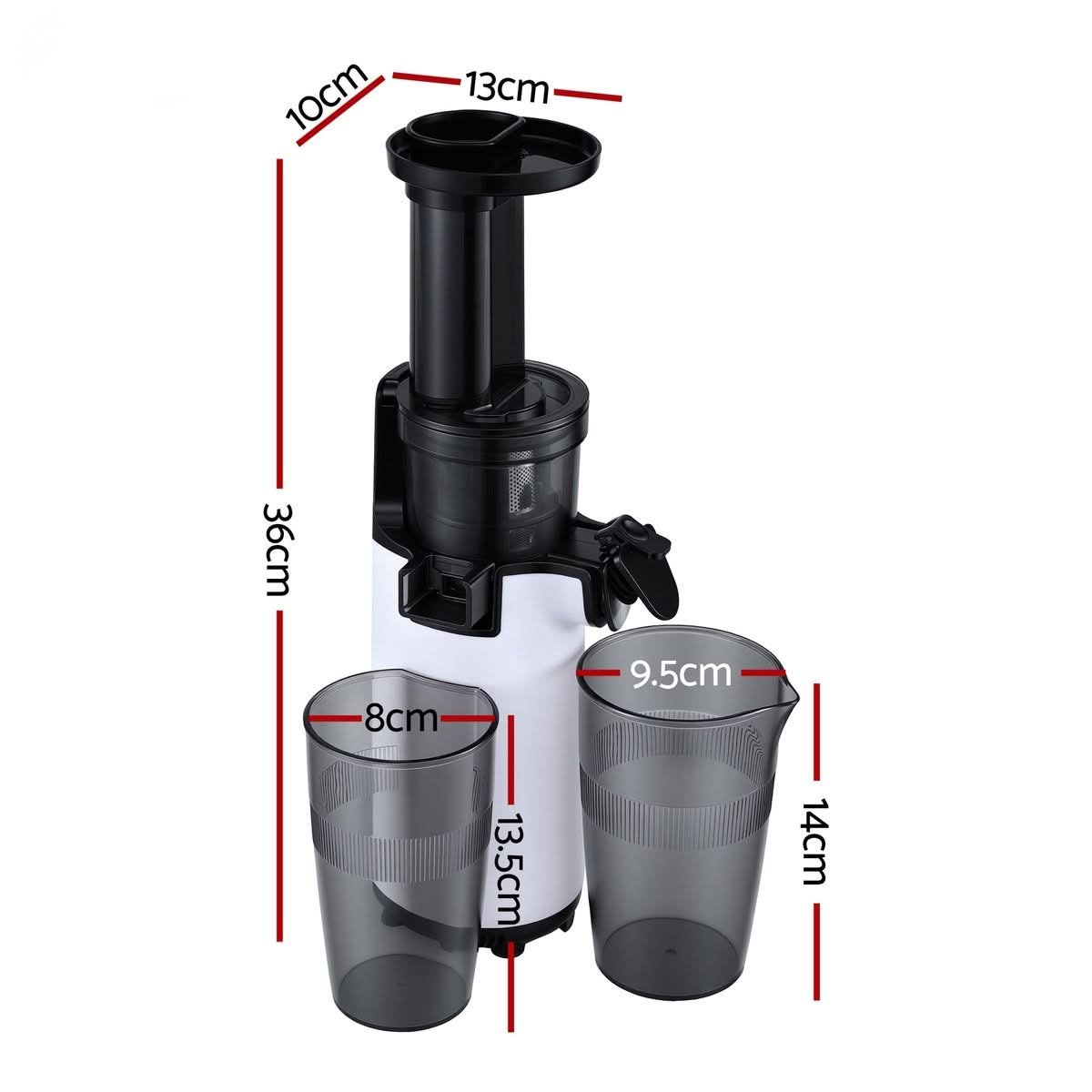
The cheapest way into a real slow juicer here. 130W is modest next to the two models above it, and the trade-off shows up as a standard-width chute, not a wide one – most fruit still needs quartering first.
What does not get cut is the mechanism itself: the same low-speed masticating auger, the same juice-and-pulp separation, the same 40-80 RPM range and under-68dB noise rating as its pricier siblings. A 90cm cable and a compact 10cm x 13cm x 36cm footprint suit a smaller kitchen bench better than the wide-hopper model above – the kind of tight bench space a share-house kitchen or a one-bedroom apartment actually has.
Buy this one specifically to find out whether slow juicing is worth the daily habit before spending more. If the answer is yes after a few months, the wider chute on the 200W model saves real prep time on every use.
Pros
- Cheapest entry into Devanti’s slow juicer range
- Same masticating auger mechanism as the pricier 200W models
- Compact footprint suits a smaller kitchen bench
- Includes juicer cup, pulp cup and cleaning brush
Cons
- Standard-width chute means pre-cutting most fruit and vegetables
- 130W is the lowest-powered motor in this guide
- No reverse or anti-clog function
- Upgrading later to a wider chute means buying a second machine
Key specs: Devanti; 130W motor; 40-80 RPM; under 68dB noise; 90cm cable; 10cm x 13cm x 36cm; includes juicer cup, pulp cup, cleaning brush.
CHECK CURRENT PRICE4. Joseph Joseph Helix Citrus Press – Best Manual Citrus Press
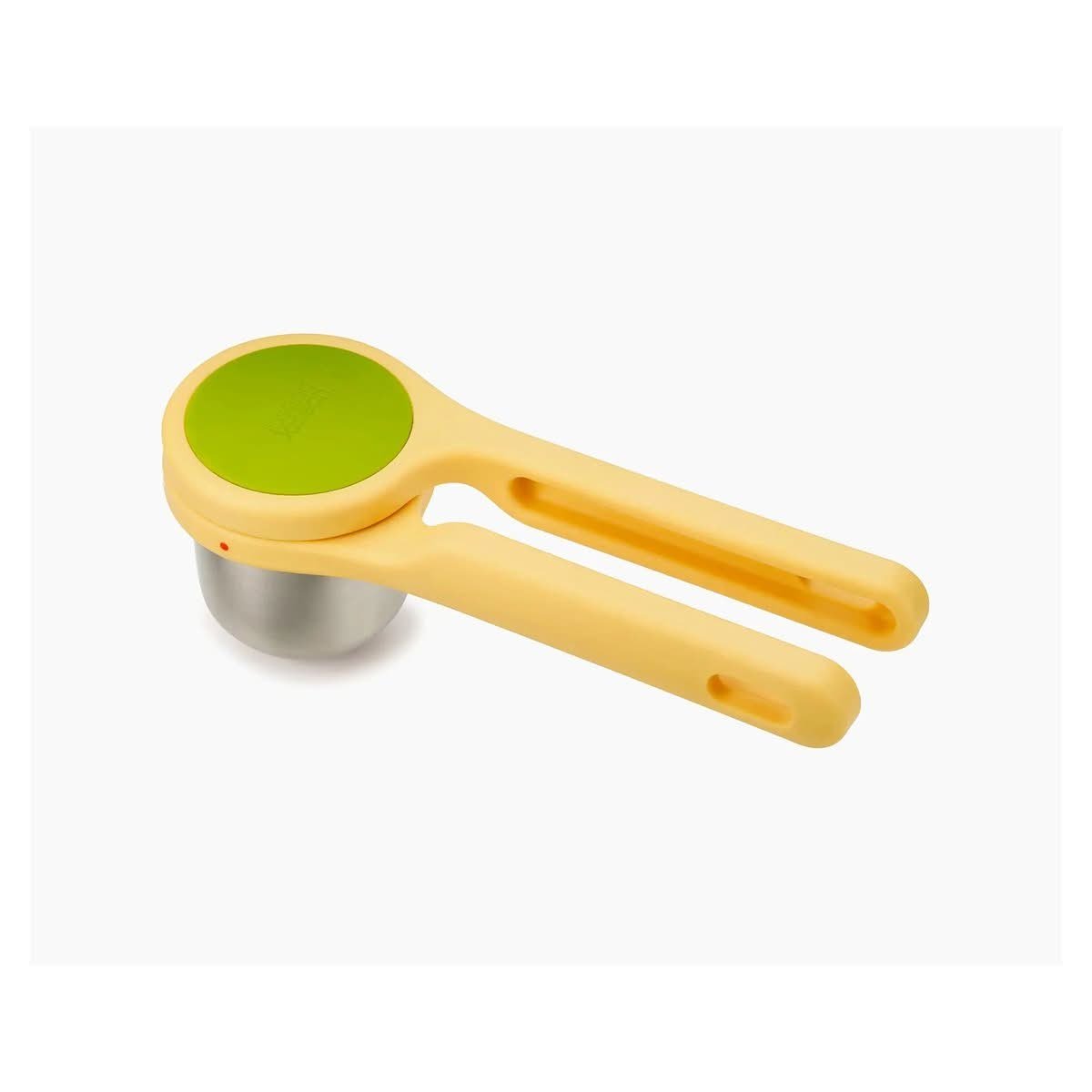
No motor, no auger, no cleanup beyond a rinse under the tap – a twisting mechanism about the size of a coffee mug does the squeezing, and it gets more juice out of a lemon or lime for less arm effort than a plain hand-press ever does.
This is the pick for anyone who only ever needs juice for a marinade, a dressing or a single gin and tonic, and has no interest in a benchtop appliance for that. Stainless steel and nylon construction, a two-piece design that pulls apart for cleaning, and dishwasher safe when hand-washing feels like too much effort for something this small.
Pros
- Twisting mechanism needs less arm effort than a plain hand-press
- Two-piece design pulls apart for easy cleaning, dishwasher safe
- No motor, no power point, no benchtop space taken up
- Cheapest product here by a wide margin
Cons
- Citrus only – oranges and lemons, not a general-purpose juicer
- No pulp separation or storage cup, just juice straight from the fruit
- Manual effort still required, just less than a plain squeezer
- Small enough to lose at the back of a kitchen drawer
Key specs: Joseph Joseph Helix Citrus Press; stainless steel and nylon; two-piece design; dishwasher safe; H24.5 x W8.5 x D9.8cm.
CHECK CURRENT PRICE5. Healthy Choice Cold Press Slow Juicer – Best Budget Slow Juicer
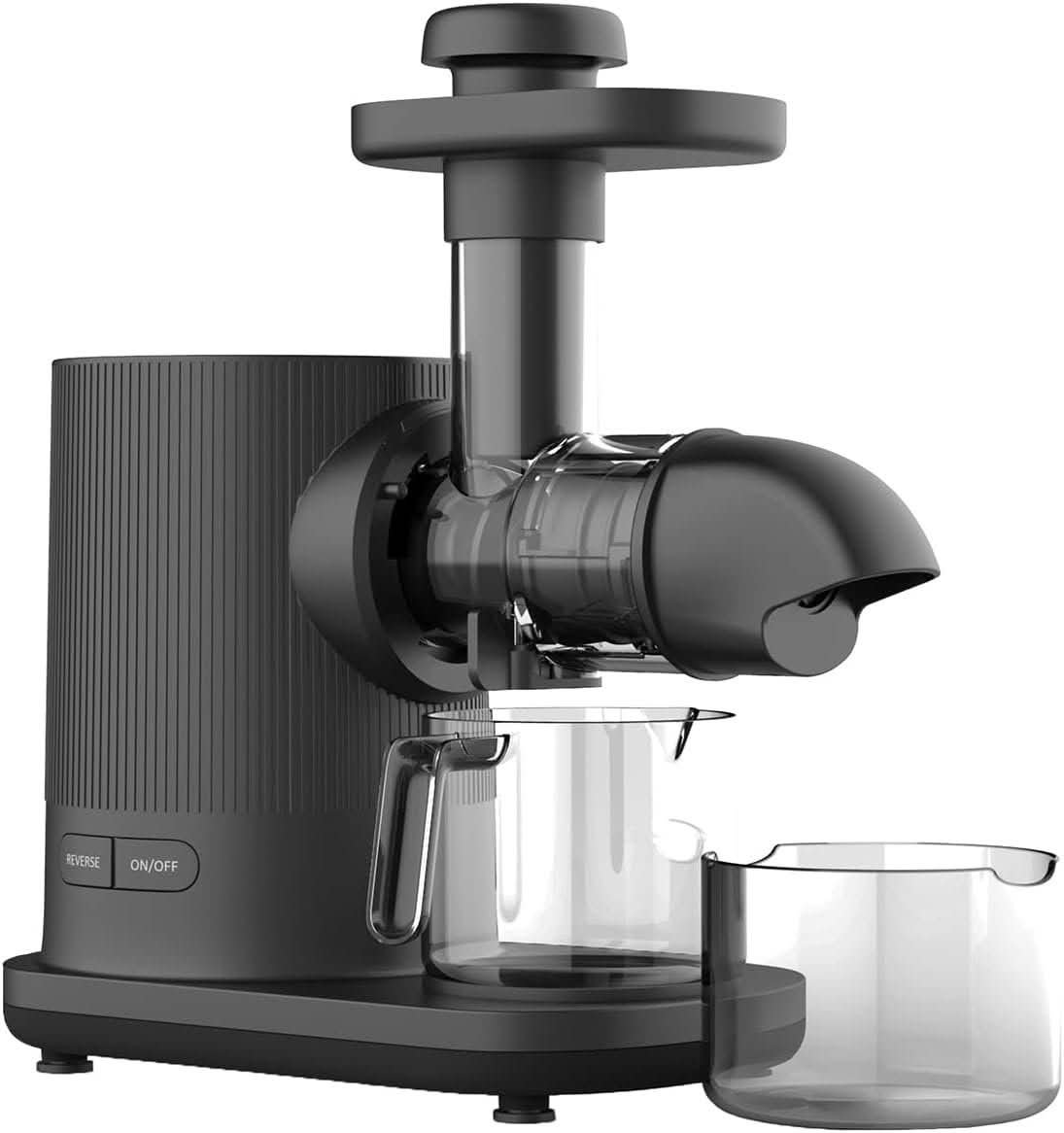
The cheapest full slow juicer here once the manual press above is set aside, and a 150W motor with a 20-minute continuous run time covers a properly large batch (enough for a full jug, not just one glass) without needing a break to cool down.
A reverse mode clears blockages without needing to fully disassemble the machine mid-juice, and a fine strainer keeps the finished drink smooth instead of gritty. A 500ml juice cup and matching pulp container are both included, along with a cleaning brush for the mesh.
It sits at the value end of this category, not the performance end, and the trade-offs show up exactly where you would expect on an entry-priced machine: a smaller chute than the premium picks, and a plainer plastic build than the dual-chute machines further down this list.
Pros
- 20-minute continuous run time suits a properly large batch
- Reverse mode clears blockages without full disassembly
- Includes a 500ml juice cup and matching pulp container
- The most affordable full slow juicer here after the manual press
Cons
- Smaller feed chute than the premium masticating picks further down
- Plainer plastic build than the dual-chute machines here
- User reviews sit lower on average than the pricier alternatives
- 150W is on the lighter end for a full-size slow juicer
Key specs: Healthy Choice; 150W motor; 20-minute continuous use; reverse mode; fine strainer; includes 500ml juice cup, pulp container, cleaning brush.
CHECK ON AMAZON6. Breville the Juice Fountain Compact – Best Budget Centrifugal
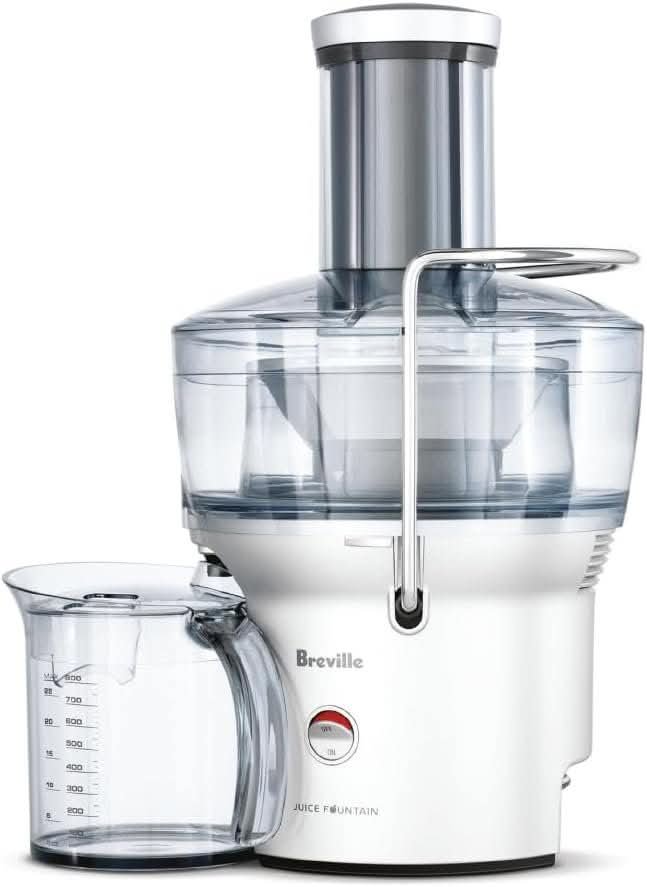
Breville is the name most Australian kitchens already know for juicers, the brand sitting on the shelf at every Harvey Norman appliance aisle from Perth to Cairns, and this compact model is the entry point into that lineup – a patented juicing system that Breville rates at up to 70% more juice straight into the glass compared with its own older design.
A 75mm feed chute takes most fruit whole or in large halves, and the Nutri Disc spins fast enough to finish a glass in well under a minute, transferring less than 1.5 degrees of heat in the process – fast, not gentle. An easy-clean stainless steel filter basket is the one part that actually needs attention after each use.
Centrifugal juicing means more foam and a slightly shorter shelf life for the finished juice than the masticating picks on this list, and that trade-off is the whole reason it costs less and finishes faster. Buy this one for speed on a weekday morning, not for a batch to store in the fridge for three days.
Pros
- Recognised Breville build quality at the most affordable price point in the range
- 75mm feed chute handles whole fruit with minimal cutting
- Finishes a glass of juice in well under a minute
- Easy-clean stainless steel filter basket
Cons
- Centrifugal spinning produces more foam than the masticating picks here
- Finished juice separates and turns faster than cold-pressed juice
- Louder in operation than any masticating model in this guide
- Smaller pulp bin than Breville’s own higher-capacity model below
Key specs: Breville the Juice Fountain Compact BJE200SIL; 75mm feed chute; Nutri Disc extraction system; stainless steel filter basket.
CHECK ON AMAZON7. NutriBullet Slow Juicer – Best Quiet Masticating Juicer
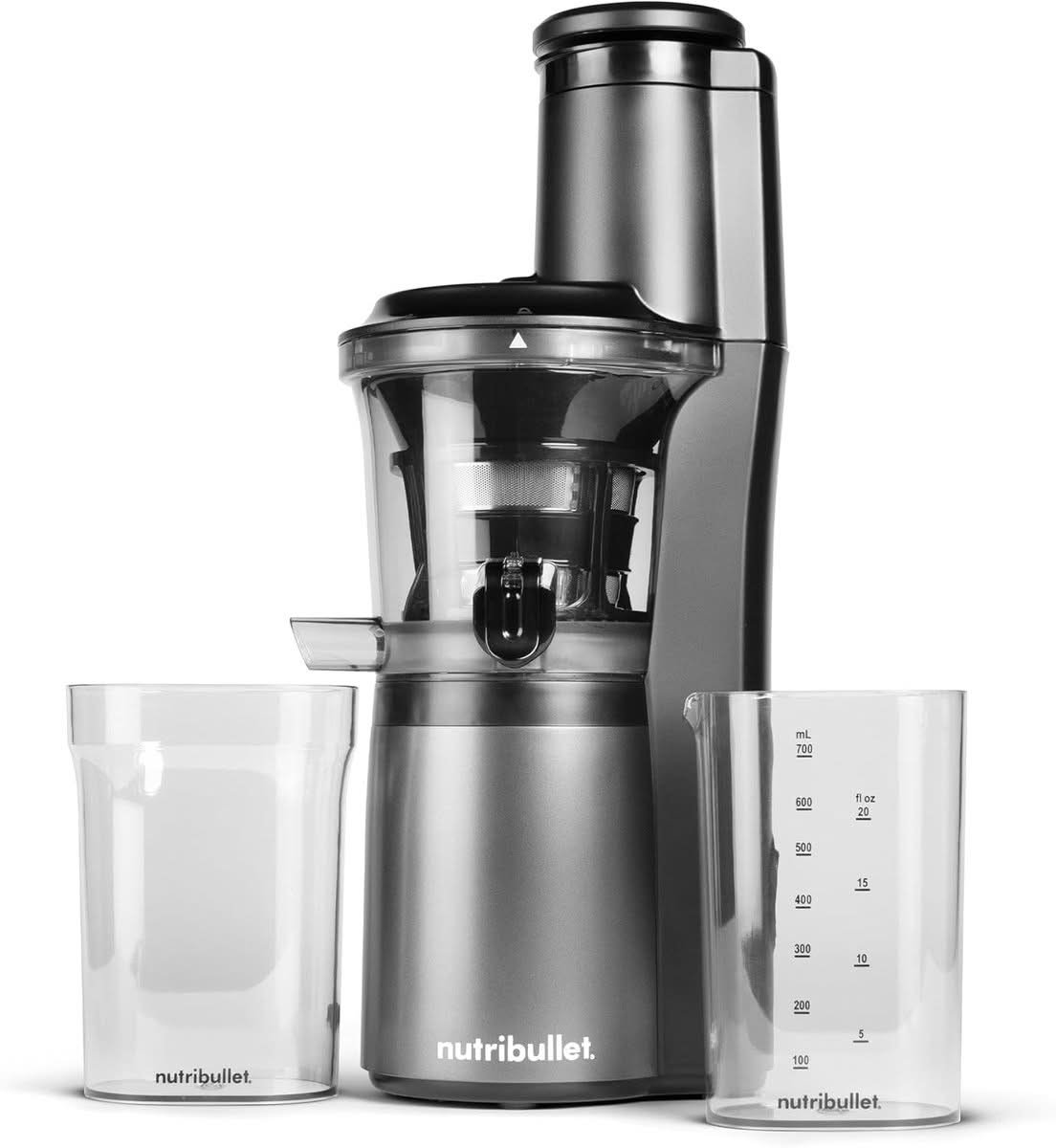
A steel-tipped auger is the detail worth knowing here – it squeezes juice out of properly tough produce, ginger and hard root vegetables included, where a plastic auger on a cheaper machine would slow down or stall.
The slower speed than a centrifugal juicer makes for a quieter, gentler extraction, and the wide-mouthed feed chute cuts down on the amount of chopping needed beforehand. It ships with only a recipe book and a user guide in the box, a leaner accessory set than most of the other slow juicers on this list.
Pros
- Steel-tipped auger handles ginger and tough root vegetables well
- Quieter operation than any centrifugal model here
- Wide-mouthed feed chute reduces pre-cutting
- Recognised NutriBullet brand backing
Cons
- Leaner accessory set than the other masticating picks – no extra cups or containers
- Slower than every centrifugal model here by design
- Mid-range price without the dual-chute features of the premium picks below
- Assembly has more parts to clean than the simpler entry-level Devanti models
Key specs: NutriBullet Slow Juicer NBJ07300; masticating, high-torque low-speed motor; steel-tipped auger; includes recipe book and user guide.
CHECK ON AMAZON8. Breville the Juice Fountain Cold Plus – Best High-Capacity Centrifugal
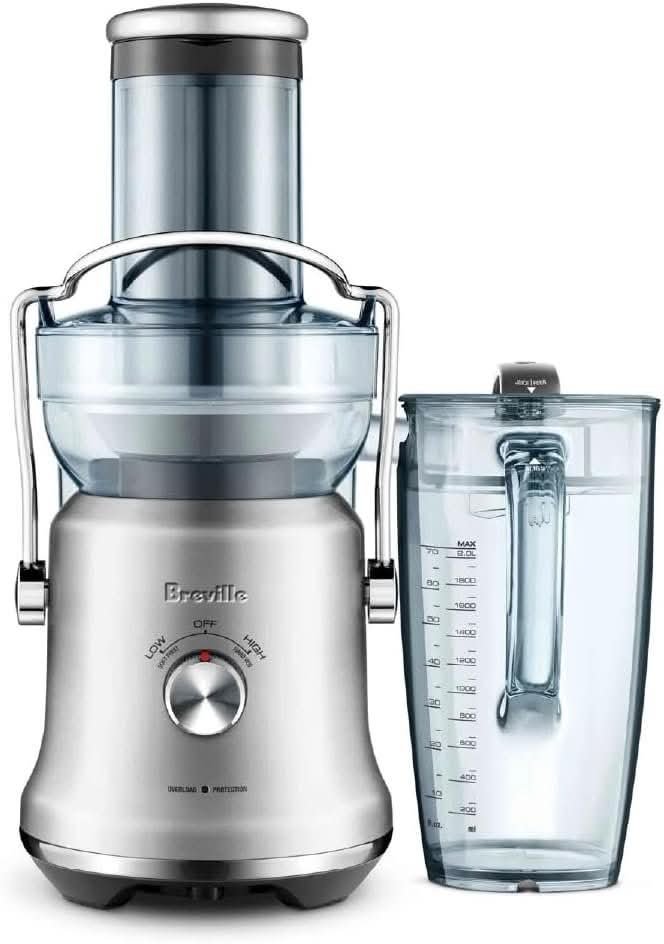
Breville’s bigger centrifugal model exists for one reason: batch size. A 2L seal-and-store jug plus a 3L pulp container mean a full family’s worth of juice in one run, sealed and kept in the fridge for up to three days without decanting into a second container.
The same 88mm-class extra-wide chute and cold-spin extraction as the compact model carry over, with an Italian-made precision mesh filter and a space-saving design that tucks the pulp bin behind the base instead of beside it. A juice nozzle pours mess-free straight into a glass, and inverts to stop drips once the run is done.
It is roughly double the price of Breville’s compact model above for properly double the capacity, not just a bigger badge on the same machine. Buy this one for a household of four or more; the compact model does a single glass just as well for less money.
Pros
- 2L seal-and-store jug plus 3L pulp container for real batch juicing
- Extra-wide chute needs minimal pre-cutting
- Space-saving design tucks the pulp bin behind the base
- Juice keeps up to three days sealed straight in the included jug
Cons
- Roughly double the price of Breville’s compact model for the extra capacity
- Large footprint needs real bench space to store
- Still centrifugal, so more foam than any masticating pick here
- Overkill for a single person juicing one glass at a time
Key specs: Breville the Juice Fountain Cold Plus BJE530BSS; 88mm-class extra-wide chute; 2L seal-and-store jug; 3L pulp container; dual speed.
CHECK ON AMAZON9. Kuvings REVO830 Cold Press Juicer – Best Dual-Chute Design
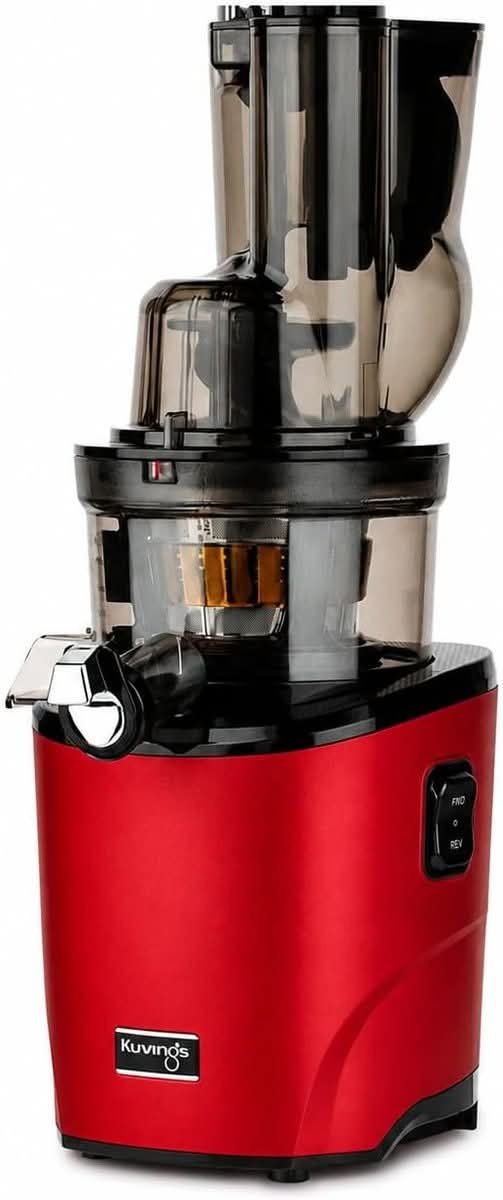
Two feed chutes solve two different jobs: an 82mm self-feeding wide mouth for whole apples and pears, and a separate 45mm straight chute built specifically for carrots, celery and cucumber, so a long vegetable does not need to be chopped down just to fit.
A bladeless auto-cutting auger chops ingredients as they enter instead of crushing them whole, which Kuvings claims produces its driest pulp yet and the highest yield across its own range. An upgraded motor handles high-volume runs without labouring, and a smart cap design speeds up opening, closing and the pre-rinse step.
Square, stackable juice and pulp jugs nest inside each other for storage, a small detail that matters once a kitchen cupboard is already full of appliances. ProductReview users covering the wider Kuvings range have flagged one recurring complaint worth knowing before buying: the lid on this brand’s machines can be properly stiff to open, especially straight after a run.
This sits at the premium end of this guide, and the dual-chute system is the reason – it is solving a real prep problem the single-chute picks above do not, not just charging more for the same mechanism.
Pros
- Dual chutes handle whole fruit and long vegetables without extra chopping
- Bladeless auto-cutting auger produces drier pulp for higher yield
- Stackable jugs nest together for compact storage
- Upgraded motor handles high-volume runs without labouring
Cons
- Lid can be stiff to open, a complaint that recurs across the wider Kuvings range
- Premium price reflects the dual-chute system, not a universal upgrade over single-chute juicers
- Larger footprint than any single-chute model here
- More parts across two chutes means more to clean after each use
Key specs: Kuvings REVO830; dual chutes, 82mm self-feed plus 45mm straight; bladeless auto-cutting auger; stackable juice and pulp jugs.
CHECK ON AMAZON10. Hurom H70 Cold Press Juicer – Best Premium Masticating Juicer
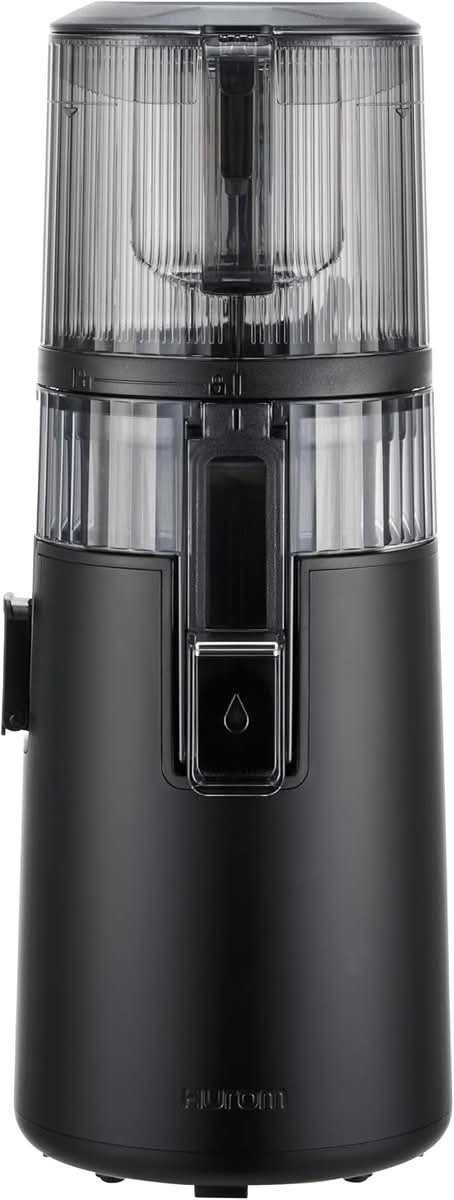
A Kitchen Innovation Award in 2024 went to this exact machine, and the mega hopper is why – at 130mm across, it beats every other chute in this lineup and swallows produce whole with essentially zero prep (a whole apple drops straight in, core and all).
Auto-sensing technology adjusts to what is actually going through the auger instead of running one fixed speed regardless of load, and the chamber is built for easy disassembly instead of the multi-step teardown some premium juicers demand. Well, “easy” is relative – it is still more parts than the manual press at the top of this list, just fewer than most machines at this price. At this price, cleaning speed matters as much as juice yield.
Priciest pick here, and the Hurom name is what buyers are paying for as much as the mega hopper – a specialist masticating brand with a reputation built over the model lines before this one. Already juicing daily? Buy this one. Still deciding if the habit sticks? Do not start here.
Pros
- 130mm hopper, the widest feed chute in this entire guide
- Auto-sensing technology adjusts speed to the load
- Designed for properly easy assembly and disassembly
- Kitchen Innovation Award winner, 2024
Cons
- The steepest price of any juicer in this lineup
- Overkill for anyone not already juicing daily
- Large hopper means a larger footprint on the bench
- Premium pricing reflects the brand as much as the mechanism
Key specs: Hurom H70; masticating, self-feeding 130mm hopper; auto-sensing technology; easy-clean chamber; 2024 Kitchen Innovation Award winner.
CHECK ON AMAZONHow to Choose the Best Juicer in Australia
Centrifugal or masticating comes down to how often the machine actually gets used. A centrifugal juicer finishes in under a minute and cleans up fast, which suits a rushed weekday morning. A masticating juicer takes three times as long but drier pulp means a higher yield from the same produce, and quieter operation matters if juicing happens before anyone else in the house is awake.
Feed chute width is the spec worth paying for, not the marketing claims around nutrients. Choice tested juice for Vitamin C, calcium, iron and magnesium across juicer types and found no measurable difference – the premium price on cold press machines buys drier pulp and quieter operation, not a health advantage the testing could actually confirm. A wider chute buys real time back on every single use.
Check the mesh filter and housing for cracks before every use, not just when it is new. The ACCC recalled a self-cleaning juicer model in 2023 after the housing could fracture and send plastic shavings into the finished juice. That is a rare failure, but a quick visual check of the mesh basket costs nothing and catches wear long before it becomes a genuine hazard.
Read the actual complaint pattern for a brand, not just the star rating. ProductReview’s juicer category shows pulp clogging at the outlet as the single most common complaint across brands and price points, alongside the occasional stiff lid on premium models. Neither is disqualifying on its own, but a pattern repeated across dozens of reviews for one specific model is worth weighing against the star rating alone.
Match capacity to the household, not to the biggest jug on the shelf. A single-person kitchen gets no benefit from a 2L seal-and-store jug sitting mostly empty, and a family of four will refill a small juice cup constantly. Buy the size that matches how many glasses actually get poured each morning.
Starchy produce is the one thing every juicer here struggles with. Bananas, avocados and seedless grapes clog a fine mesh strainer regardless of brand or price. If a smoothie with whole banana in it is the actual goal, a blender does that job properly – our guide to the best food processors in Australia covers the appliance built for that instead.
You’ll Also Want
Leftover pulp from a masticating juicer is mostly fibre, and a stainless steel food dehydrator turns it into fruit leather or stock base instead of the compost bin, which is worth it once the pulp bin starts filling up daily.
A garlic press with a built-in cleaner shares the same twisting-mechanism logic as the citrus press above, and covers the one job neither a juicer nor a citrus press ever will.
For the same benchtop that now hosts a juicer, a 3-in-1 sandwich and waffle press covers breakfast on the days juice alone is not enough.
A pull-cord compact food processor handles the chopping and dicing prep work a juicer does not, without taking up the bench space a full-size processor needs.
Frequently Asked Questions
What is the difference between a centrifugal and a masticating juicer?
A centrifugal juicer spins a shredding disc at high speed to separate juice from pulp in under a minute, producing frothier juice with a shorter shelf life. A masticating juicer crushes and presses produce slowly through an auger, taking longer but yielding drier pulp, quieter operation and juice that keeps a little longer in the fridge. Choose based on how much time is available each morning instead of assumed health differences between the two.
Does cold press juicing actually preserve more nutrients?
Choice tested juice samples from different juicer types for Vitamin C, calcium, iron and magnesium content and found no measurable difference between centrifugal and masticating machines. The genuine benefits of masticating juicers are drier pulp, higher yield from the same produce and quieter operation, not a proven nutritional advantage. Marketing claims around nutrient preservation are largely unsupported by independent testing.
Can you put banana or avocado through a juicer?
No, starchy and low-water produce like banana, avocado and seedless grapes will clog the fine mesh strainer in almost any juicer, regardless of brand or price point. These ingredients belong in a blender or food processor instead, where the whole fruit gets blended rather than separated. Running starchy produce through a juicer risks jamming the auger and can void the warranty on some models.
How wide does a juicer feed chute need to be?
Feed chutes in Australia typically range from around 40mm on entry-level models up to 130mm on premium wide mouth designs. A chute under 60mm generally requires most fruit to be quartered first, while anything above 80mm accepts whole apples and pears with minimal cutting. A wider chute costs more but saves real preparation time on every single use, which adds up over months of daily juicing.
Is it safe to keep using a juicer with a cracked housing or mesh filter?
No, a cracked housing or damaged mesh filter should be treated as a safety issue, not a cosmetic one. The ACCC recalled a self-cleaning juicer model in 2023 specifically because a fractured housing could release plastic shavings into the finished juice, and a broken mesh filter carries the same risk. Stop using any juicer showing visible cracks and contact the manufacturer rather than continuing to use it.
How often should a juicer’s mesh filter be cleaned?
The mesh filter should be rinsed immediately after every use, since dried pulp is significantly harder to remove than fresh residue and can clog the fine mesh permanently over time. Most manufacturers recommend a deeper clean with a dedicated cleaning brush weekly, and a thorough check for cracks or wear at the same time. A neglected filter is the single biggest cause of reduced juice yield over a machine’s lifespan.
For a daily juice with minimal fuss, the wide-hopper Devanti at the top of this list earns its price with the least prep of any budget masticating machine here. Families juicing in volume should look at Breville’s bigger Cold Plus model, and anyone who already knows juicing is a permanent habit gets real value from the Kuvings dual-chute system or the Hurom mega hopper. For citrus only, skip the motor entirely and buy the Joseph Joseph press instead – it does that one job better than any full-size juicer on this list.