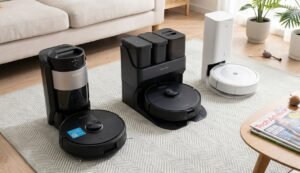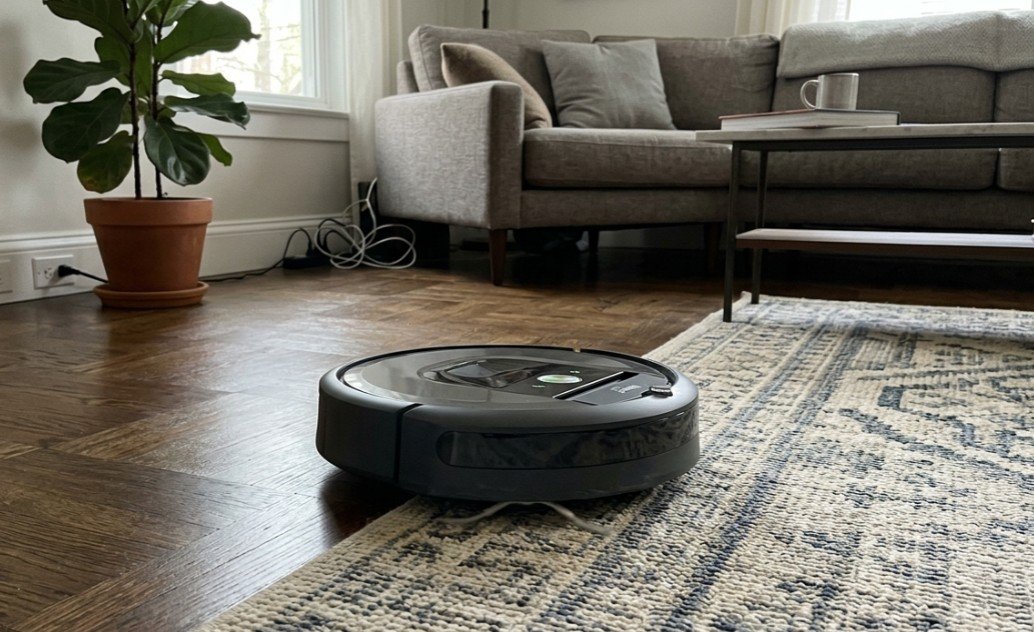
The best robot vacuum in Australia is a self-navigating disc that maps a floor, cleans it unattended and returns to a dock to recharge, with most current models also mopping hard floors in the same run. Navigation matters more than suction, because a robot that maps properly cleans a room once in efficient rows, while one that bumps and turns randomly covers some areas three times and misses others entirely.
How a robot finds its way around is the first thing to settle. LDS and LiDAR laser models spin a rangefinder to build a live map, enabling no-go zones and multi-level floor plans. Gyroscopic models track their own movement to follow orderly paths without a laser, at lower cost. Self-emptying models add a dock that pulls the onboard bin into a larger bag, changing maintenance from weekly to monthly.
Suction across this guide runs from 2,500 to 11,000 pascals and runtime from 90 minutes to over 4 hours. The figures worth comparing alongside those are the navigation type, dock capacity where fitted, robot height for furniture clearance, water tank size on mopping models, and whether the brush design resists hair tangling.
Twelve robots held in Australian stock appear below, running from four laser-navigating models with docks through five mid-range mopping machines and a low-profile unit, to two premium anti-tangle designs.
Quick Picks
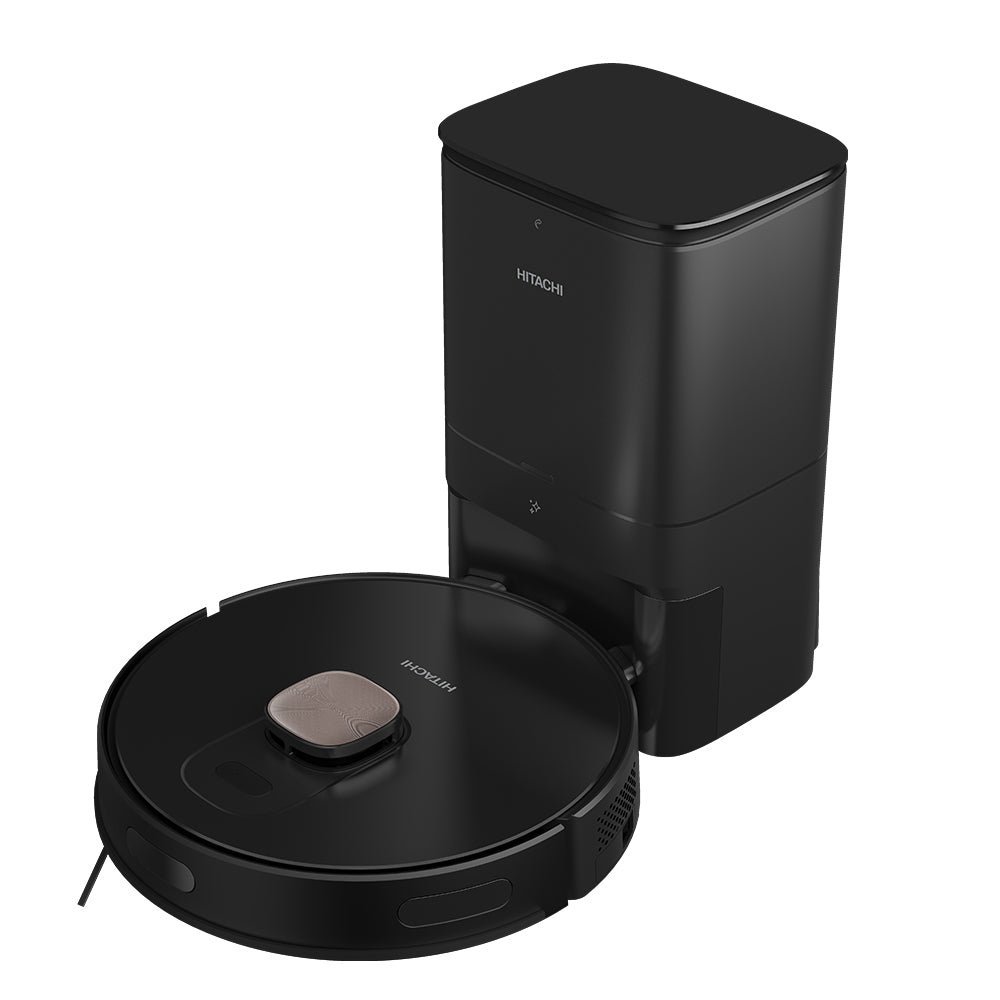
Hitachi LDS with Auto Dust Station
Over four hours of runtime and a 4 litre dock that empties the robot for weeks at a time.
CHECK CURRENT PRICE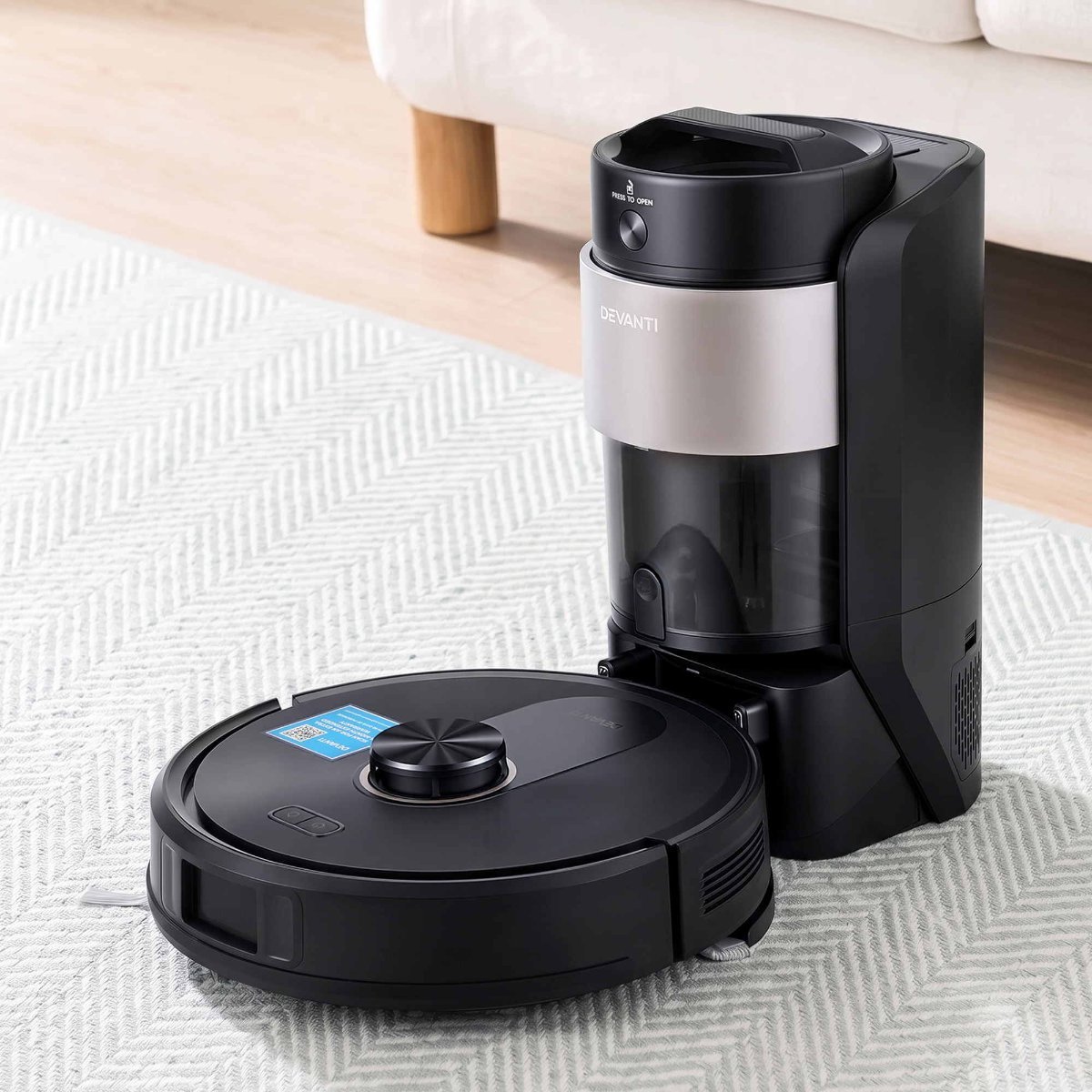
Devanti Self-Empty 6000Pa
6000Pa with laser mapping, a mopping pass and a 1.5 litre self-emptying station.
CHECK CURRENT PRICE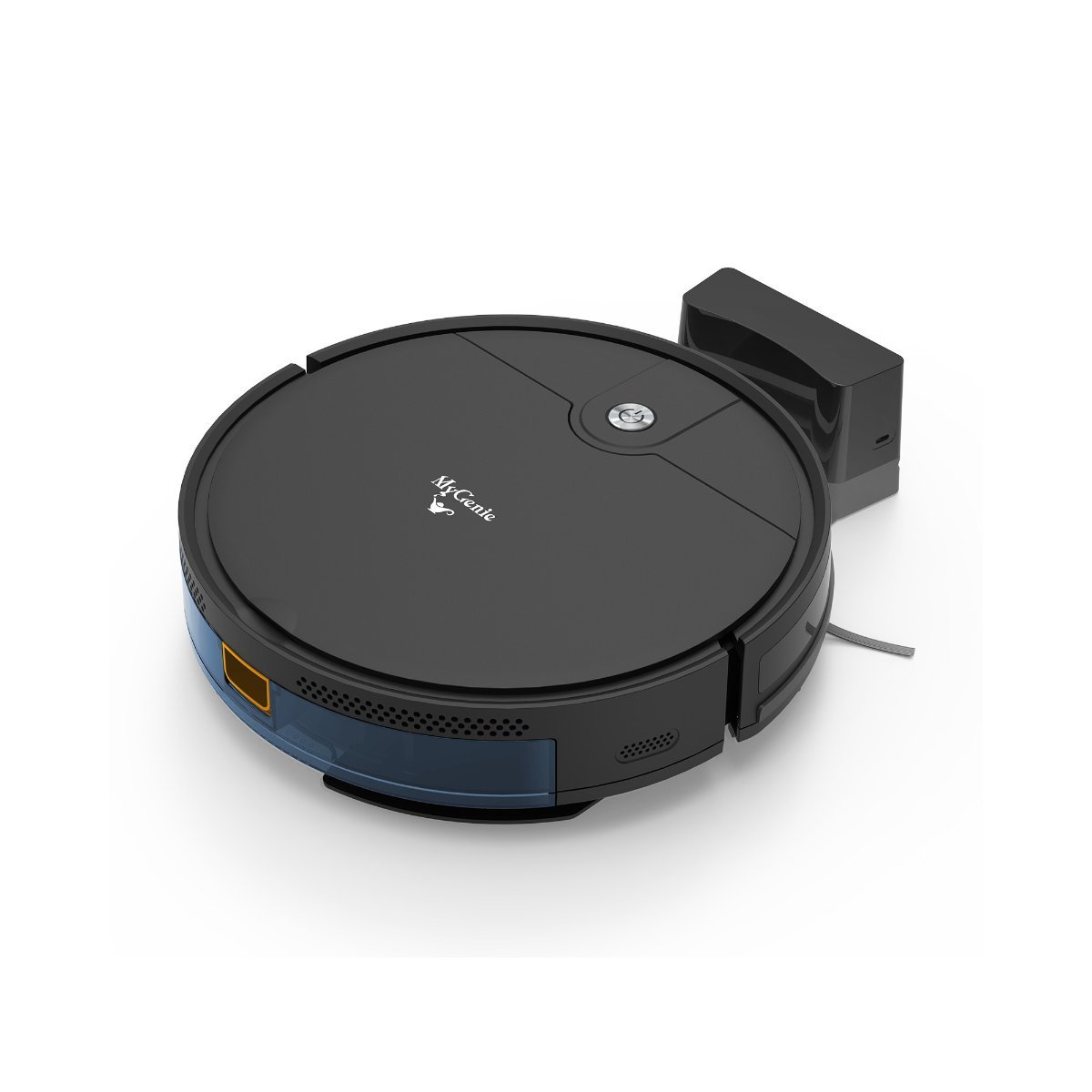
MyGenie ZX3000
3000Pa with a 450ml bin, three mop water levels and HEPA filtration at the lowest outlay here.
CHECK CURRENT PRICEThe Best Robot Vacuum in Australia: All 12 Compared
| Product | Link | Type | Best For | Key Spec |
|---|---|---|---|---|
| Hitachi LDS with Dust Station | Check price | Laser with dock | Hands-off cleaning | 5000Pa, 4 hr, 4L auto dock, 5 maps |
| Hitachi LDS RV-X20PWHSI | Check price | Laser | Multi-level homes | 5000Pa, 4 hr, 5 multi-level maps |
| Devanti Self-Empty 6000Pa | Check price | Laser with dock | Vacuum and mop in one | 6000Pa, 155 min, 1.5L dock |
| Devanti App Control 6000Pa | Check price | Laser | Suction for the money | 6000Pa, 155 min, 300ml bin |
| MyGenie Raptor Laser | Check price | Laser | Value laser mapping | 5000Pa, 90 min, no-go zones |
| MyGenie Laser Sonic AI | Check price | Laser | AI wet and dry | 4000Pa, LiDAR, 3200mAh, HEPA |
| MyGenie HydraClean | Check price | Gyroscopic | Mopping capacity | 3200Pa, 2 hr, 450ml bin, 250ml tank |
| MyGenie ZX3000 | Check price | Gyroscopic | Lowest outlay | 3000Pa, 450ml bin, 3 water levels |
| MyGenie X Sonic Pro | Check price | Gyroscopic | Quiet running | Under 55dB, 90-120 min, 600ml bin |
| MyGenie Vortex | Check price | Gyroscopic | Low furniture | 2500Pa, 80mm high, 2 hr, HEPA |
| Roborock Q7T+ | Check price | Laser with dock | Pet hair and tangles | 10,000Pa, DuoRoller, 7 weeks hands-free |
| ECOVACS DEEBOT T30S Pro | Check price | Laser with dock | Edge cleaning | 11,000Pa, TruEdge mop, 180 min |
1. Hitachi LDS with Auto Dust Station – Best Self-Emptying Robot
Over four hours of continuous cleaning is the longest runtime in this guide by a wide margin, roughly two and a half times the nearest laser competitor. Integrated laser sensors store five floor maps across multiple levels, so carrying the robot upstairs does not mean remapping.
The 4 litre dock empties the robot automatically, and dock capacity is what actually sets the maintenance interval. A 300ml onboard bin in a shedding household needs attention every second run, while a 4 litre bag absorbs weeks of the same debris and asks only that the bag be lifted out when full. Suction reaches 5000Pa across four modes.
Long runtime only pays off when mapping is accurate, since a robot that wanders re-covers floor it has already done and flattens the battery advantage. This is the highest outlay here and the dock claims permanent floor space against a wall. Large or multi-level homes justify both; a one-bedroom flat will not.
Pros
- Over 4 hours runtime, the longest here
- LDS laser navigation storing 5 multi-level maps
- 4 litre auto dust disposal dock
- 5000Pa across four suction modes
- Bag-only disposal keeps hands out of the dust
Cons
- Highest outlay in this guide
- Dock needs permanent floor space
- No mopping function, unlike most models here
Key specs: LDS laser navigation with 5 multi-level floor maps, auto dust disposal, 4 litre dock, up to 5000Pa, four suction modes, over 4 hours runtime. Model RV-X20DPBKCG.
CHECK CURRENT PRICE2. Hitachi LDS RV-X20PWHSI – Best for Multi-Level Homes
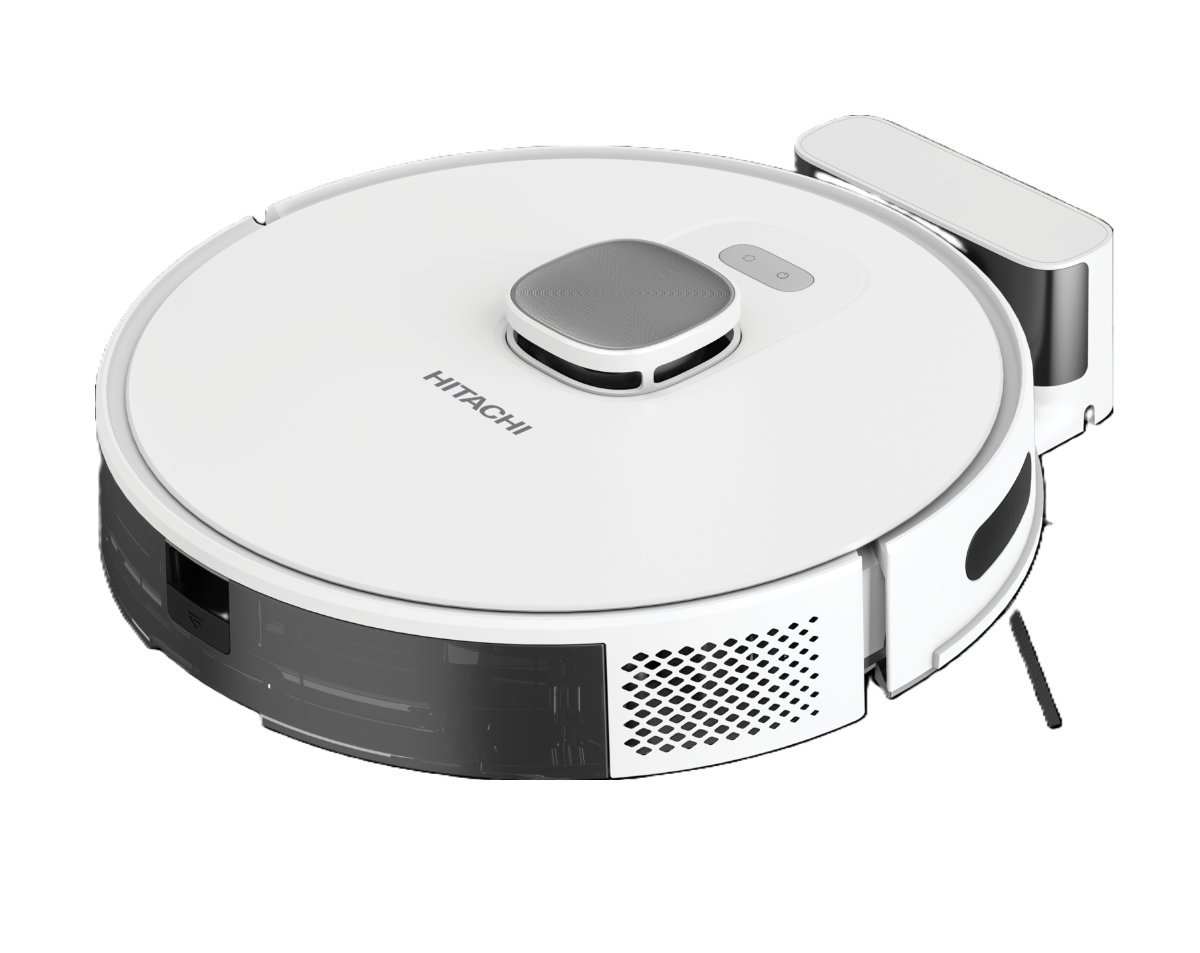
Same laser navigation, same five stored multi-level maps and the same 5000Pa across four modes as the model above, without the auto-emptying dock. That single omission is the entire difference, and it removes a substantial slice of the outlay.
Five maps is the specification that matters in a two or three storey house. Most robots hold one, which means a machine carried upstairs either remaps from scratch each time or navigates blind. Storing each level separately turns one robot into a whole-house cleaner rather than a ground-floor one.
Suction modes run Quiet, Standard, Powerful and Maximum, and the four-hour battery is unchanged. The trade against the dock model is emptying the onboard bin by hand every few runs. For a household happy to do that, this delivers the same navigation and endurance for meaningfully less.
Pros
- LDS laser navigation with 5 multi-level maps
- Over 4 hours runtime
- 5000Pa with Quiet, Standard, Powerful and Maximum modes
- Substantially cheaper than the dock version above
- Handles fine dust and pet hair on floors and carpet
Cons
- No self-emptying dock, bin emptied by hand
- No mopping function
- Still a premium outlay without the dock
Key specs: LDS navigation, 5 unique multi-level floor maps, up to 5000Pa, four suction modes covering Quiet Standard Powerful and Maximum, over 4 hours runtime, white and silver. Model RV-X20P WHSI.
CHECK CURRENT PRICE3. Devanti Self-Empty 6000Pa – Best Self-Empty Mop Combo
Six thousand pascals with both a mopping pass and a self-emptying dock is a combination neither Hitachi above offers, and it arrives at roughly half their outlay. LDS laser navigation with SLAM mapping plans the route.
Tank sizes describe the intended use honestly. A 300ml dustbox and 200ml water tank cover one floor of mopping rather than a whole house in a single run, so the mop pass suits a kitchen and bathroom better than an open-plan ground floor end to end. The station holds 1.5 litres, smaller than the Hitachi dock but enough for several weeks.
Runtime is up to 155 minutes with auto-recharge, and control works through either a mobile app or the supplied remote, which keeps it usable when the home network is down. Two side brushes, two mopping cloths, a HEPA filter and a cleaning brush are included, and at 9.8cm tall it clears most sofa bases.
Pros
- 6000Pa with mopping and a self-emptying dock
- LDS laser navigation with SLAM mapping
- 1.5 litre self-emptying station
- 155 minutes runtime with auto-recharge
- App and physical remote both included
- 9.8cm height clears most furniture
Cons
- 200ml water tank limits mopping to one area per run
- Dock is smaller than the Hitachi at 1.5L versus 4L
- Assembly required
Key specs: 6000Pa suction, 3-in-1 sweep vacuum and mop, 1.5L self-emptying dock, 300ml dustbox, 200ml water tank, LDS laser navigation with SLAM, up to 155 minutes, app and remote control, 30.6 x 30.6 x 9.8 cm, 1 year warranty.
CHECK CURRENT PRICE4. Devanti App Control 6000Pa – Best Suction for the Money
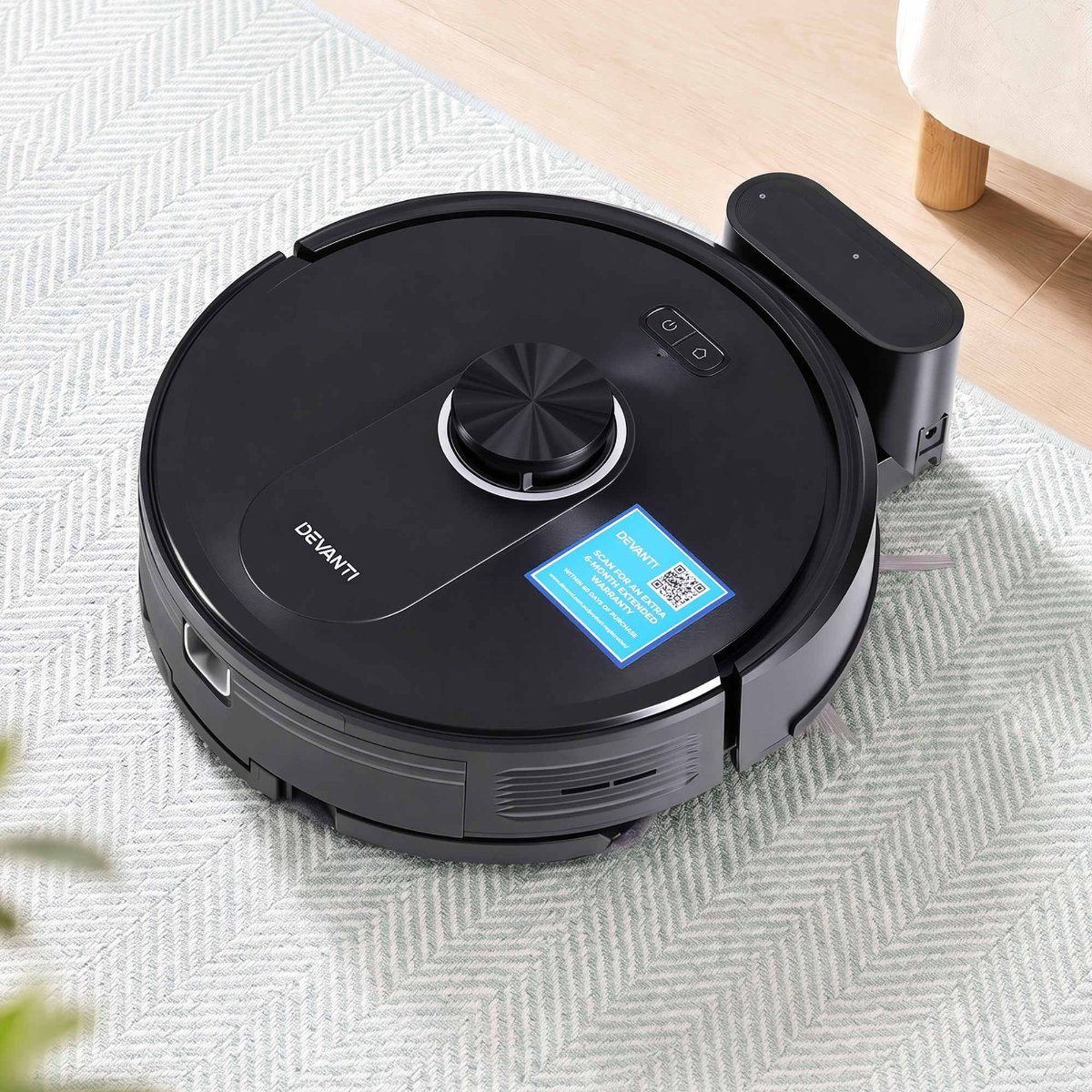
The same 6000Pa and the same 155 minute runtime as the entry above, minus the dock, which lands this among the strongest suction figures here at a mid-range outlay. LDS laser navigation and the SLAM algorithm are retained in full.
A 9.8cm profile lets it pass under low furniture, and that clearance is where pet hair and dust accumulate untouched because no upright vacuum reaches there. Combined with 6000Pa, this is aimed at hard floors and pet households, and the listing is explicit that very deep shag rugs are outside its range.
Dual control through app or remote is retained, along with the 300ml dustbox and 200ml water tank. Set against the self-emptying version at position three, the question is simply whether emptying a 300ml bin every few runs is worth the saving, and for a smaller home without pets it usually is.
Pros
- 6000Pa, matching the dock model above
- LDS laser navigation plus SLAM algorithm
- 155 minute runtime with auto-recharge
- 9.8cm height reaches under low furniture
- App and remote control both supported
- Notably cheaper than the self-emptying version
Cons
- No self-emptying dock
- 300ml dustbox fills quickly in pet households
- Not suited to deep shag rugs
Key specs: 6000Pa suction, LDS laser navigation with SLAM, sweep vacuum and mop 3-in-1, up to 155 minutes with auto-recharge, 300ml dustbox, 200ml water tank, app and remote control, robot 30.6cm diameter and 9.8cm high, base 14.5 x 13.2 x 7.7 cm.
CHECK CURRENT PRICE5. MyGenie Raptor Laser – Best Value Laser Navigation
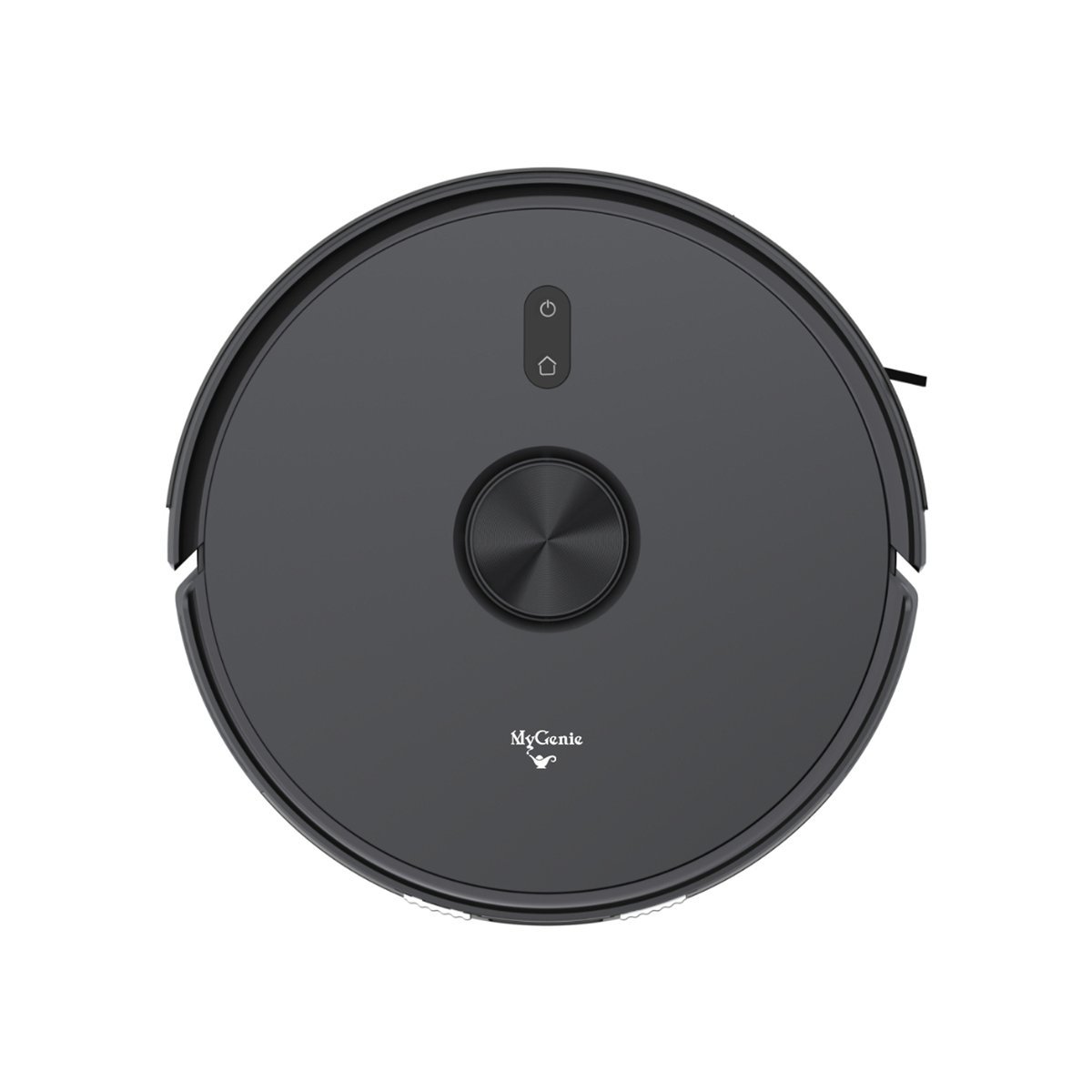
LIGHTSTREAM LiDAR mapping at this outlay is what makes the Raptor interesting, because it puts real-time floor plans and route planning into a bracket usually served by bump-and-turn navigation. Suction is 5000Pa on a three-in-one sweep, vacuum and mop system.
No-go zones are the practical payoff of a laser map. They fence off a pet bowl, a cable nest or a rug fringe in the app rather than with physical barriers, and that is not possible on a gyroscopic robot because it has no map to draw on. Scheduling, suction adjustment and return-to-dock all run from the same WiFi app.
Runtime is 90 minutes with auto-recharge, the shortest of the laser models here, and there is no self-emptying dock. For an apartment or a single floor, 90 minutes completes a full clean, and the mapping quality rather than the endurance is what the money buys.
Pros
- LIGHTSTREAM LiDAR with real-time floor plan
- 5000Pa, matching the Hitachi models above
- 3-in-1 sweep, vacuum and mop
- WiFi app with scheduling and no-go zones
- Auto-recharge and resume
- Lowest outlay of the laser-navigating models
Cons
- 90 minute runtime is the shortest laser model here
- No self-emptying dock
- Mopping is a trailing pad rather than a pressurised system
Key specs: LIGHTSTREAM LiDAR laser mapping, 5000Pa suction, 3-in-1 sweep vacuum and mop, WiFi app with scheduling, no-go zones and suction control, 90 minute runtime with auto-recharge.
CHECK CURRENT PRICE6. MyGenie Laser Sonic AI – Best AI Wet and Dry
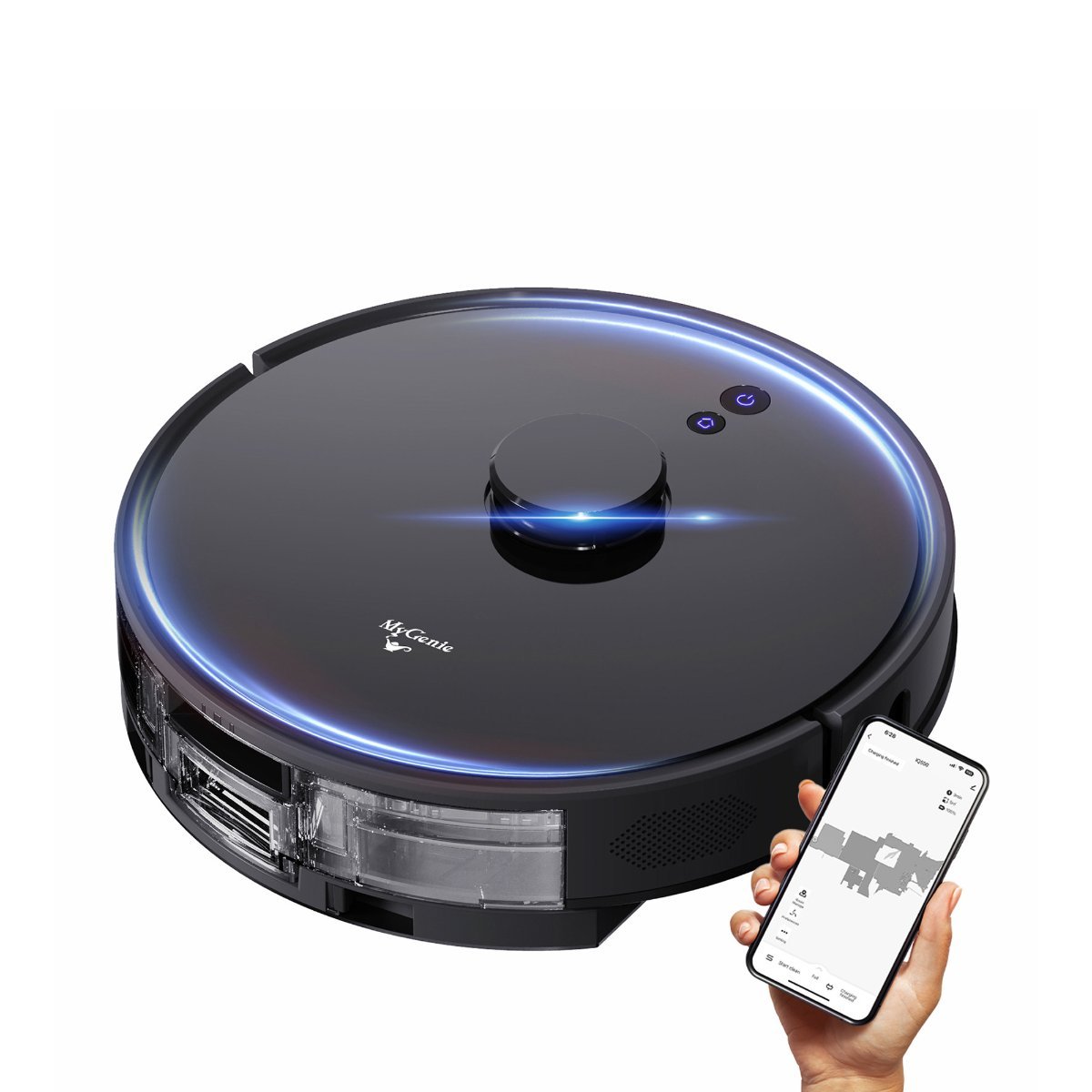
Two navigation systems work together here: LiDAR laser mapping paired with the LIGHTSTREAM Navigation System, which is a heavier navigation stack than anything else at this price. Suction is 4000Pa on a three-in-one sweep, vacuum and mop pass.
Wet and dry capability is genuine rather than a trailing cloth, and the listing is specific about where it belongs: hard surfaces, tiles, laminate and vinyl. That honesty is useful, because mopping robots marketed as universal tend to disappoint on carpet, and knowing the intended surface prevents the most common complaint.
A 3200mAh battery handles extended runs with automatic docking to recharge between cycles, HEPA filtration catches fine particles, and the bagless bin empties directly. Control runs through the app or the included remote. Sitting below the 5000Pa and 6000Pa machines above, it competes on navigation quality rather than raw pull.
Pros
- LiDAR plus LIGHTSTREAM navigation
- 4000Pa with 3-in-1 sweep, vacuum and mop
- Genuine wet and dry cleaning capability
- 3200mAh battery with automatic docking
- HEPA filtration and bagless emptying
- App and included remote control
Cons
- 4000Pa trails the 5000 and 6000Pa models above
- Suited to hard floors rather than carpet
- No self-emptying dock
Key specs: 4000Pa suction, 3-in-1 sweep vacuum and mop, LiDAR laser with LIGHTSTREAM Navigation System, 3200mAh battery, automatic docking and recharge, HEPA filtration, bagless, app and remote control, suited to hard surfaces, tiles, laminate and vinyl.
CHECK CURRENT PRICE7. MyGenie HydraClean – Best Mopping Capacity
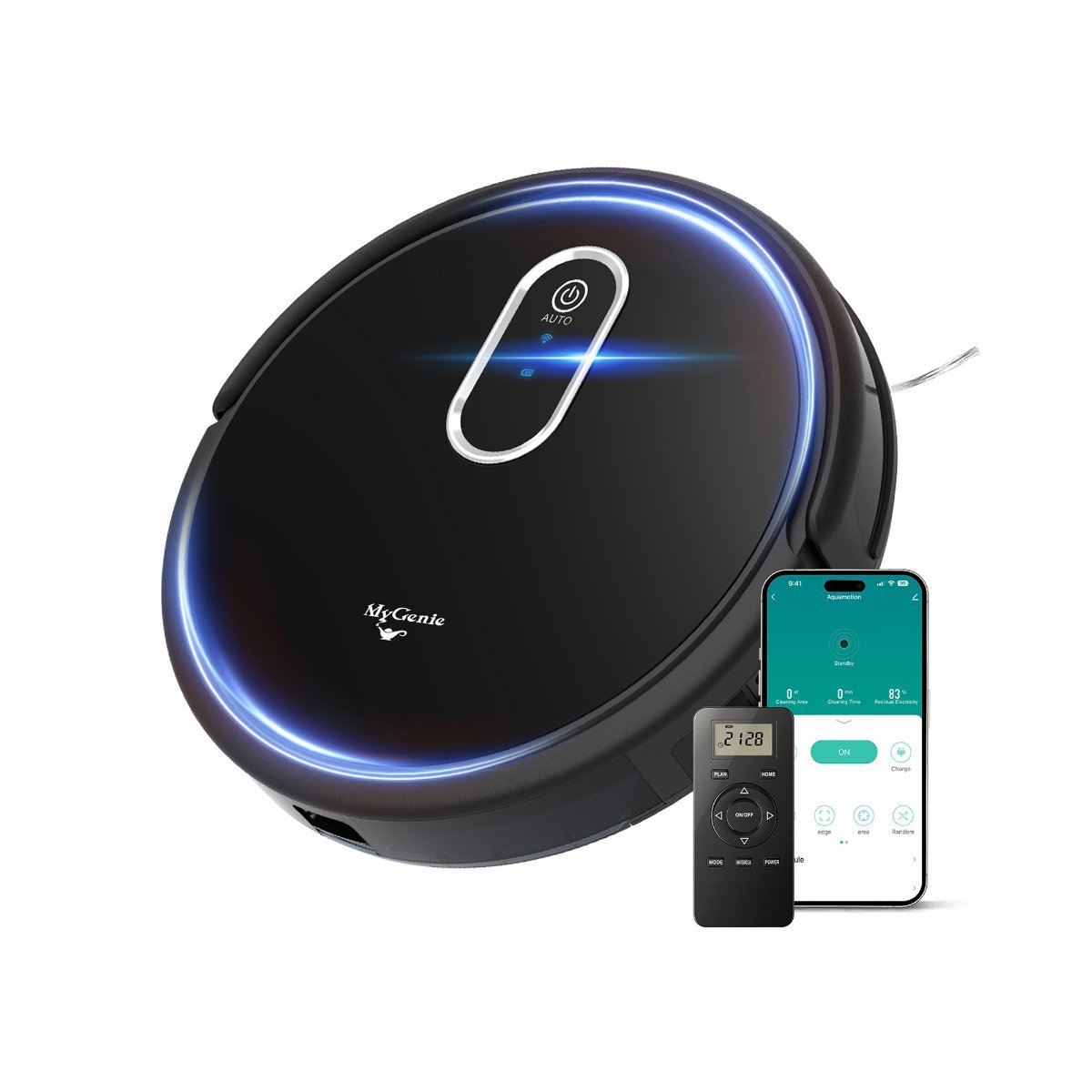
A 450ml dust bin paired with a 250ml water tank is the most generous capacity combination among the gyroscopic models here, and capacity is what determines how far a mopping robot gets before it needs a human. A brushless motor produces 3200Pa.
Dual side brushes work with a central roller to pull dirt in from the edges rather than pushing it along, and the whole run stays under 65 decibels. That noise figure matters on a robot more than on an upright, because the entire point is running it while people are home and doing something else.
Gyroscopic navigation tracks the robot movement to follow orderly paths without a laser, which costs less and works well on open floor while lacking the no-go zones a mapped robot offers. A 3200mAh battery gives up to two hours before it returns to dock, and basic app control is supported.
Pros
- 450ml dust bin and 250ml water tank, the largest gyroscopic pairing here
- Brushless motor delivering 3200Pa
- Dual side brushes plus central roller brush
- Under 65dB running noise
- 3200mAh battery giving up to 2 hours
- Automatic return to dock and app control
Cons
- Gyroscopic navigation, so no no-go zones
- 3200Pa trails the laser models above
- App control is basic rather than full-featured
Key specs: 3200Pa from a brushless motor, 3-in-1 sweep vacuum and mop, 450ml dust bin, 250ml water tank, dual side brushes with central roller, under 65dB, gyroscopic navigation, 3200mAh battery with up to 2 hours runtime, automatic docking, basic app control.
CHECK CURRENT PRICE8. MyGenie ZX3000 – Best Budget Pick
Three thousand pascals, a 450ml bin and a 250ml tank at the lowest outlay in this guide is a stronger specification than the price suggests, and the bin is the same size as the model above it. Sweeping, vacuuming and mopping all happen in one pass.
Active mop control with three water levels is the feature that separates this from cheaper mopping robots, which typically drip at one rate and soak timber. Being able to dial the flow down for floorboards and up for tile is the difference between a mop function that gets used and one that gets switched off.
A HEPA filter captures allergens rather than redistributing them, gyroscopic navigation keeps the coverage orderly, and the robot returns to dock on its own with a 4 to 6 hour recharge. Dual side brushes feed debris into the intake. As a first robot vacuum, this covers the fundamentals without asking for a premium.
Pros
- Lowest outlay in this guide
- 3000Pa with a 450ml dust bin
- Active mop control with three water levels
- HEPA filtration that does not redistribute allergens
- Gyroscopic navigation for orderly coverage
- Automatic docking and dual side brushes
Cons
- No laser mapping, so no no-go zones
- 4 to 6 hour recharge
- 3000Pa is mid-pack for suction
Key specs: 3000Pa suction, sweep vacuum and mop in one pass, 450ml dust bin, 250ml integrated water tank, active mop control with three water levels, HEPA filtration, gyroscopic navigation, automatic charging base, 4-6 hour charge, dual side brushes, remote control included.
CHECK CURRENT PRICE9. MyGenie X Sonic Pro – Best Quiet Operation
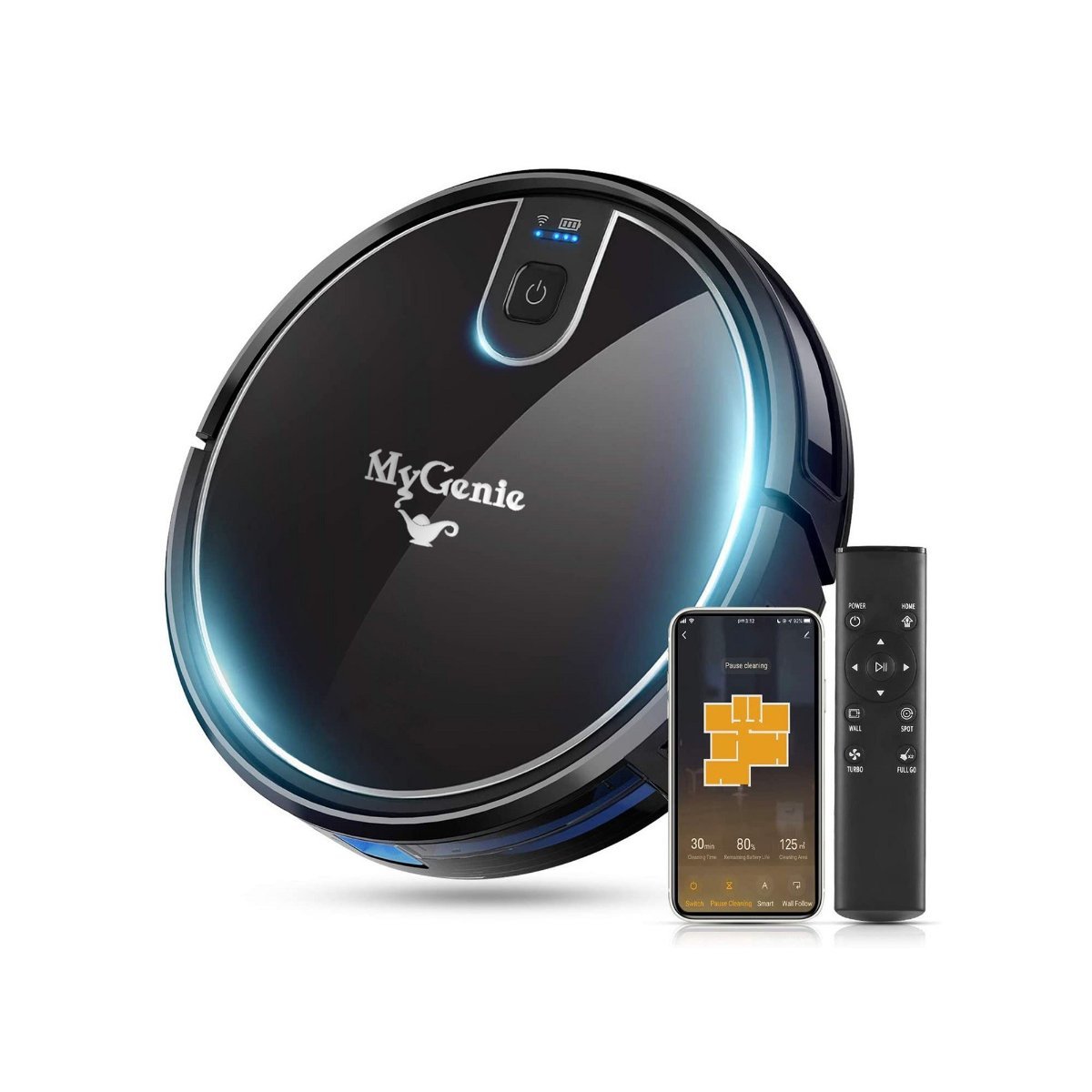
Under 55 decibels is the quietest figure in this guide by a clear ten decibels, which on a logarithmic scale is a substantial difference rather than a marginal one. A brushless motor drives it, and the robot connects over WiFi through the Smart Life app.
Bin capacity is 600ml, the largest here, paired with a 350ml water tank, so it runs longer between interventions than anything else in the gyroscopic group. Runtime is 90 to 120 minutes from a 2600mAh battery, with back-to-base and anti-collision handling the navigation.
Scheduling from anywhere is the practical benefit of the app connection, so a clean can start after everyone leaves. Charging takes 4 to 5 hours. The box includes four side brushes, two HEPA filters with one spare, two mop cloths and a water tank, which covers the first round of consumables. Households running a robot during naps or work calls will value the noise figure above any suction number.
Pros
- Under 55dB, the quietest here by a clear margin
- 600ml dust capacity, the largest in this guide
- Brushless motor with WiFi via the Smart Life app
- 90 to 120 minutes from a 2600mAh battery
- Back-to-base and anti-collision navigation
- Spare HEPA filter, four side brushes and two mop cloths included
Cons
- Suction figure not published for this listing
- Anti-collision rather than mapped navigation
- Suited to hard surfaces rather than deep carpet
Key specs: brushless motor, WiFi with Smart Life app scheduling, 2600mAh Li-ion battery giving 90-120 minutes, 600ml dust capacity, 350ml water tank, under 55dB, back-to-base and anti-collision, 4-5 hour charge, bagless with HEPA filters, four side brushes and two mop cloths included. Suction not published.
CHECK CURRENT PRICE10. MyGenie Vortex – Best for Low Furniture
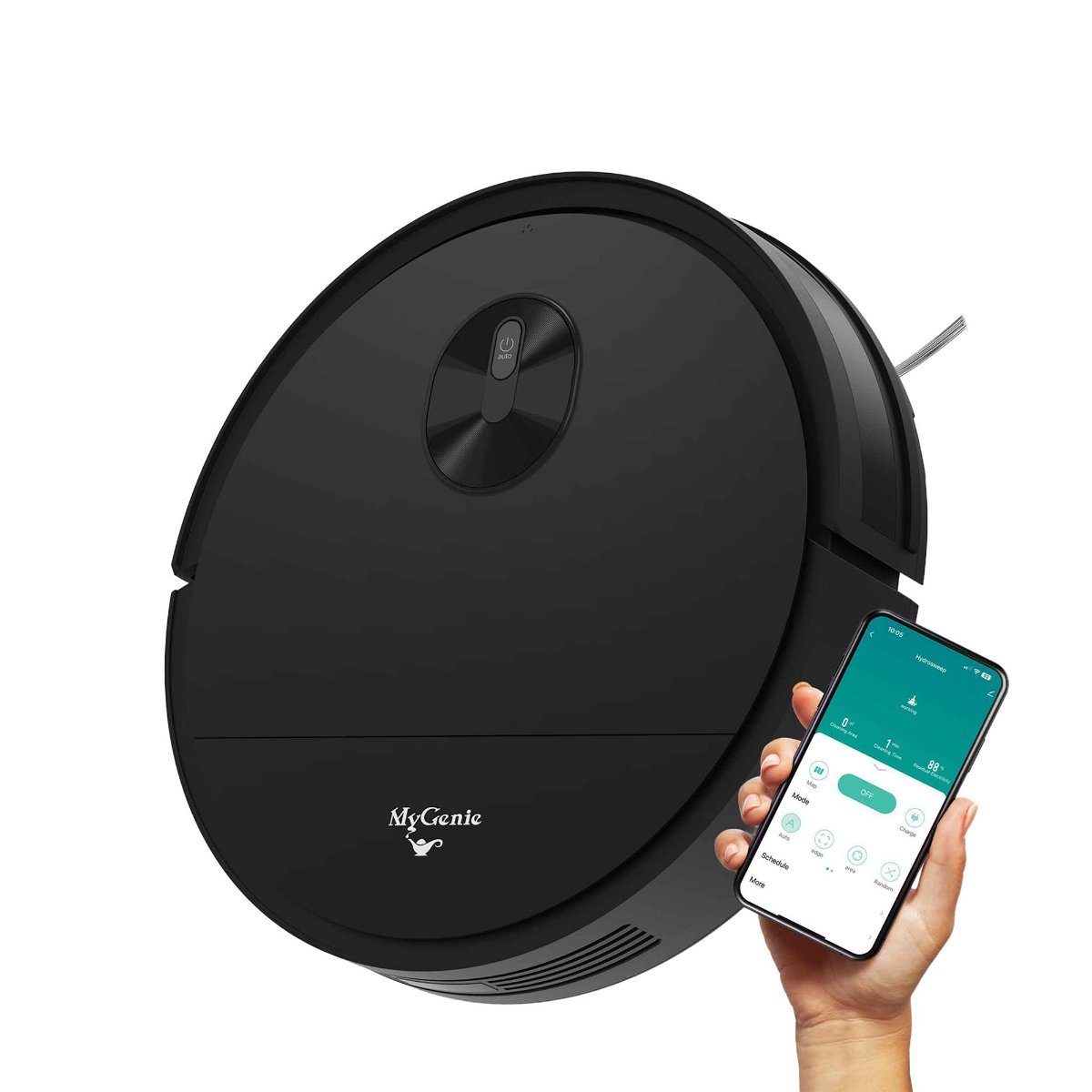
Eighty millimetres tall is the lowest profile in this guide, roughly two centimetres under the Devanti models, and that gap decides whether a robot slides beneath a bed frame and lounge base or stops against it. Those are the spaces that go uncleaned for months in most homes.
Suction is 2500Pa, the lowest here, on a three-in-one sweep, vacuum and mop system with dual side brushes and a central roller. The listing places it on hard floors and low-pile carpets, which is the honest limit of that figure and worth respecting rather than testing.
HEPA filtration and ultra-quiet running make it suitable for pet owners and allergy-sensitive homes, and it runs up to two hours before auto-recharging. App and remote control are both supported. Where a robot exists to keep under-furniture dust down between proper cleans, height beats suction, and nothing else here goes lower.
Pros
- 80mm high, the lowest profile in this guide
- 3-in-1 sweep, vacuum and mop
- Dual side brushes with central roller
- HEPA filtration and ultra-quiet operation
- Up to 2 hours runtime with auto-recharge
- App and remote control
Cons
- 2500Pa is the lowest suction here
- Hard floors and low-pile carpet only
- No mapping or no-go zones
Key specs: 2500Pa suction, 3-in-1 sweep vacuum and mop, dual side brushes with central roller brush, 80mm height, up to 2 hours runtime, auto-recharge, HEPA filtration, ultra-quiet operation, app and remote control, suited to hard floors and low-pile carpet.
CHECK CURRENT PRICE11. Roborock Q7T+ – Best for Pet Hair and Tangles
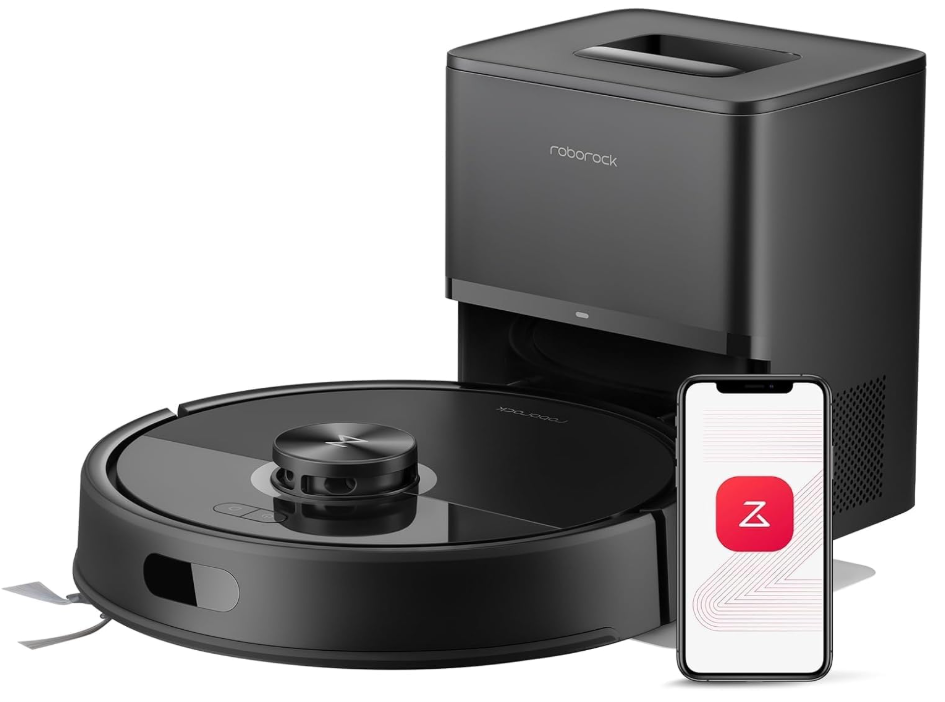
Ten thousand pascals is nearly double the strongest Commission Factory model in this guide, and the anti-tangle hardware is what makes that suction usable in a pet household. A JawScrapers comb main brush pairs with a tangle-free side brush so hair is cut and drawn in rather than wrapped around the roller.
Hair wrap is the failure mode that quietly ends most robot vacuums in homes with a long-haired dog or cat. Suction pulls the hair in, the roller spins it into a solid collar, and cleaning performance drops until someone takes scissors to it. Designing the brush to resist that is worth more day to day than the pascal figure alone.
Precise LiDAR builds 3D maps in seconds and the app allows furniture, pet supplies and flooring materials to be added to the plan. A 400ml dustbin and 270ml tank support up to 150 minutes of mopping, three water flow levels adjust for timber, tile or stubborn kitchen stains, and the dock runs about seven weeks hands-free. This sits at the premium end here and is the natural pick where pets shed heavily.
Pros
- 10,000Pa, nearly double the strongest CF model here
- JawScrapers comb brush and tangle-free side brush
- About seven weeks of hands-free operation
- LiDAR building 3D maps in seconds
- Three app-controlled water flow levels
- Vacuums and mops simultaneously, 400ml bin and 270ml tank
Cons
- Premium end of this guide
- Dock adds a substantial footprint
- 150 minute figure is mop-only running
Key specs: 10,000Pa HyperForce suction, DuoRoller JawScrapers comb main brush, tangle-free side brush, precise LiDAR with 3D mapping, app-controlled water tank with three flow levels, simultaneous vacuum and mop, 400ml dustbin, 270ml water tank, up to 150 minutes mopping, about 7 weeks hands-free.
CHECK ON AMAZON12. ECOVACS DEEBOT T30S Pro – Best Edge Cleaning
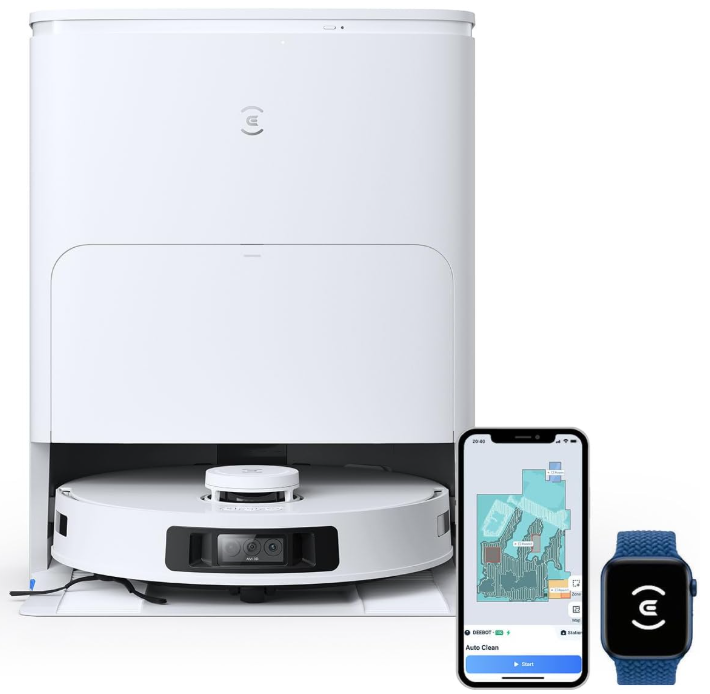
Eleven thousand pascals is the highest suction figure in this guide, and TruEdge is the feature that distinguishes it: a mop plate that extends and retracts continuously to reach within a millimetre of walls and obstacles rather than tracing a circle a few centimetres out from them.
Edges are where robot vacuums traditionally fail, because a round body cannot physically reach into a square corner and a fixed mop plate always leaves a border. An extending plate under variable control, guided by 3D omni-directional perception sensors, is a mechanical answer to a geometric problem rather than a software workaround.
ZeroTangle handles hair the way the Roborock above does, AIVI 3D 2.0 recognises objects for obstacle avoidance and TrueMapping 2.0 handles the floor plan. Battery life is 180 minutes, longer than any other mopping model here, and the OMNI station covers auto-emptying with an AI re-mop that returns to stains it identifies. It is the most capable and the most expensive machine in this guide.
Pros
- 11,000Pa, the highest suction in this guide
- TruEdge extending mop plate reaching within 1mm of walls
- ZeroTangle technology for hair
- AIVI 3D 2.0 object recognition and TrueMapping 2.0
- 180 minute battery, the longest of the mopping models
- OMNI station with auto-empty and AI instant re-mop
Cons
- Most expensive machine in this guide
- OMNI station is large and needs permanent space
- More capability than a small apartment requires
Key specs: 11,000Pa suction, TruEdge adaptive edge mopping with continuous mop extension, ZeroTangle technology, AIVI 3D 2.0 object recognition, TrueMapping 2.0, OZMO TURBO 2.0 with auto small tank refill, AI instant re-mop, OMNI auto-empty station, 180 minute battery, YIKO AI voice assistant.
CHECK ON AMAZONHow to Choose a Robot Vacuum
Navigation matters more than suction. A laser-mapping robot drives in efficient rows and knows where it has been, while a gyroscopic or bump-and-turn model covers some floor repeatedly and misses other areas. Six models here use LDS or LiDAR mapping, and only mapped robots support no-go zones and multi-level floor plans.
Measure your lowest furniture before choosing. Robot heights here run from 80 to 98 millimetres, and that difference decides whether the machine slides under a bed frame or stops against it. Under-furniture floor is exactly the area no upright vacuum reaches, so a robot that cannot get there gives up much of its value.
A self-emptying dock changes maintenance, not cleaning. Onboard bins here range from 300 to 600 millilitres, which in a shedding household is a job every few runs. Docks of 1.5 to 4 litres turn that into a monthly task. The cleaning result is identical; what you are buying is not thinking about it. Robots are one format among several, and the best vacuum cleaner in Australia sets them against barrels and cordless machines.
Check the brush design if you have pets. Suction pulls hair in, then a conventional roller winds it into a collar that has to be cut off by hand. Two models here use anti-tangle brush designs specifically to prevent that, and in a home with a long-haired animal it matters more than the difference between 5,000 and 6,000 pascals.
Mopping is a wipe, not a scrub. Water tanks here hold 200 to 350 millilitres, enough for a kitchen and bathroom rather than a whole floor, and a trailing pad maintains hard floors between proper mops rather than replacing them. Models with adjustable water levels are worth seeking out, because a single flow rate that suits tile will over-wet timber. Where mopping is the main reason for buying, the best robot vacuum and mop in Australia ranks on water capacity and self-washing docks rather than suction.
A robot supplements, it does not replace. No machine here does stairs, skirting boards, upholstery or deep carpet properly, so most households run one alongside something handheld. Where the daily grab-and-go job matters more than scheduled cleaning, a stick model does it better, and for whole-house deep cleaning nothing here matches a mains-powered barrel. While the robot runs unattended, home security cameras let you check on it and on pets from work. Every robot sold here carries consumer guarantees under Australian Consumer Law.
Frequently Asked Questions
How much suction does a robot vacuum need?
For hard floors and daily maintenance, 2,500 to 4,000Pa is adequate. For low-pile carpet and pet hair, 5,000Pa and above works noticeably better, and the premium models here reach 10,000 and 11,000Pa. Brush design matters alongside the figure, because suction alone will not lift hair that wraps around a roller.
What is the difference between LDS, LiDAR and gyroscopic navigation?
LDS and LiDAR both spin a laser rangefinder to build a live map, letting the robot plan efficient rows and support no-go zones and multi-level plans. Gyroscopic navigation tracks the robot own movement to follow orderly paths without a map, which costs less and works well on open floor but cannot be fenced off in an app.
Is a self-emptying dock worth it?
It changes how often you touch the robot, not how well it cleans. Onboard bins of 300 to 600ml need emptying every few runs in a shedding household, while docks of 1.5 to 4 litres stretch that to weeks or months. In a pet home the answer is usually yes; in a small flat it is usually not.
Can a robot vacuum handle pet hair?
Yes, provided the brush is designed for it. Suction draws hair in easily enough, but a conventional roller winds it into a collar that has to be cut free. Two models in this guide use anti-tangle brush designs for exactly this reason, and they are the ones to prioritise if an animal sheds heavily.
Do robot vacuums work on carpet?
On low-pile carpet, yes, and most models here raise suction automatically when they detect it. Deep or shag pile is a different matter: several listings in this guide explicitly exclude it, and a robot that bogs down in long fibres will strand itself. For thick carpet throughout, a mains-powered upright remains the better tool.
How long do robot vacuums run before recharging?
Runtime here spans 90 minutes to over 4 hours. Most models return to the dock automatically when the battery drops and resume where they stopped, so a shorter runtime extends the total time rather than leaving the job unfinished. Larger homes still benefit from the longer-running models because fewer recharge cycles means an earlier finish.
Verdict
Four hours of runtime and a 4 litre dock put the Hitachi LDS with Auto Dust Station in a class of its own for endurance, with five stored floor maps letting it spend that battery efficiently rather than wandering. Households wanting mapping, mopping and self-emptying without that outlay are better served by the Devanti Self-Empty 6000Pa, which delivers all three at roughly half the price. Where pets shed heavily, the Roborock Q7T+ is the one to take, because 10,000Pa paired with an anti-tangle brush solves the hair-wrap problem that quietly disables cheaper robots.