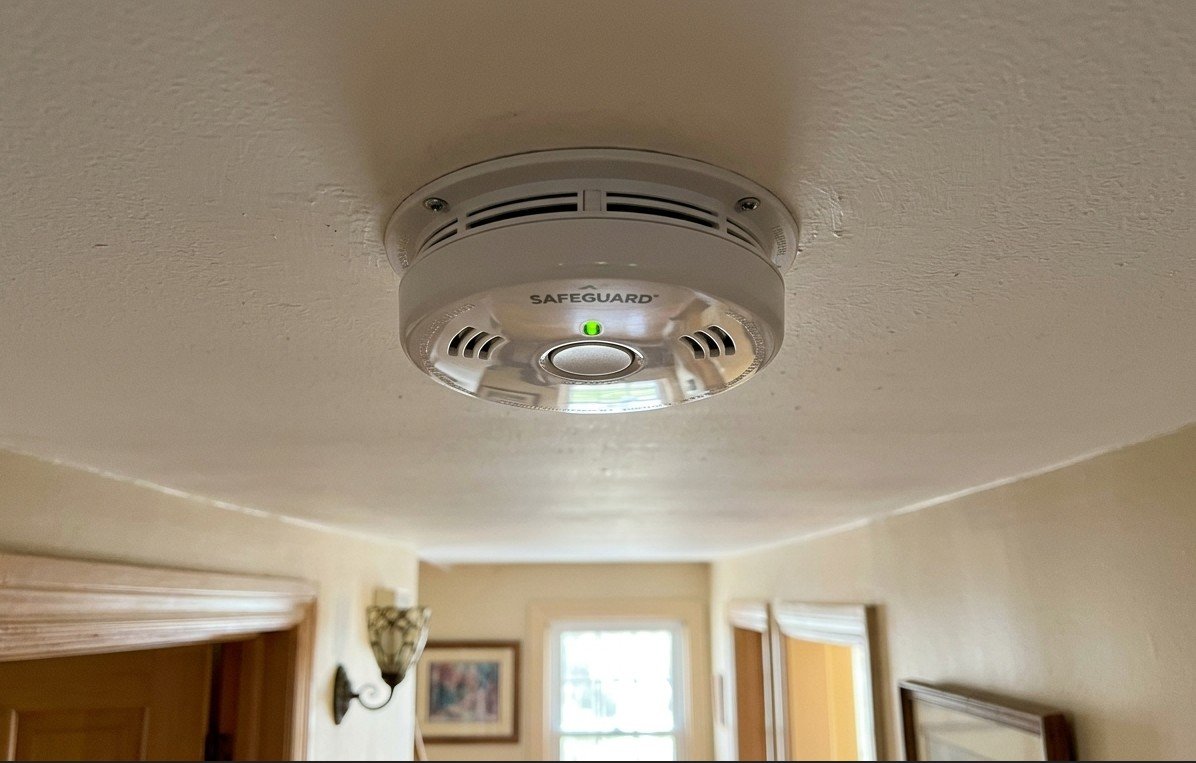
Whether a smoke alarm uses a photoelectric sensor, a replaceable battery or a sealed 10-year cell decides not just convenience but whether it actually meets what most Australian jurisdictions now require, and that detail matters more than brand for a device with one job. Smoke alarms in Australia are devices that detect the smoke particles produced by a fire and sound an audible alert, required by law in every home, with current regulations in most states now specifying a photoelectric sensor rather than the older ionisation type for any new or replacement installation.
Smoke alarms sold in Australia today fall into three broad categories. Standalone battery alarms run on a replaceable 9V battery and operate independently, the simplest and cheapest way to add coverage to a single room. Sealed 10-year battery alarms use a non-removable lithium cell rated to last the alarm’s full service life, removing the flat-battery failure that disables more standalone alarms than any other cause. Hardwired and interconnected alarms run from mains power or link wirelessly to other alarms in the home, so smoke detected in one room triggers every connected alarm to sound.
A standard replaceable 9V battery in a basic alarm typically needs changing every 1 to 2 years, or roughly 12 to 24 months, while a sealed lithium cell is rated to last the alarm’s full 10-year service life without ever being opened. Beyond battery type, the criteria that matter are sensor certification against AS 3786, whether the alarm interconnects with others in the home, and where it will be mounted.
This guide compares standalone, sealed-battery and interconnected smoke alarms available from Australian retailers and Amazon, checking AS 3786 compliance on every entry rather than picking on price or brand alone. Anyone building out a broader home safety setup at the same time may also want to check our guide to the best smart locks for securing entry points alongside fire detection.
Quick Picks
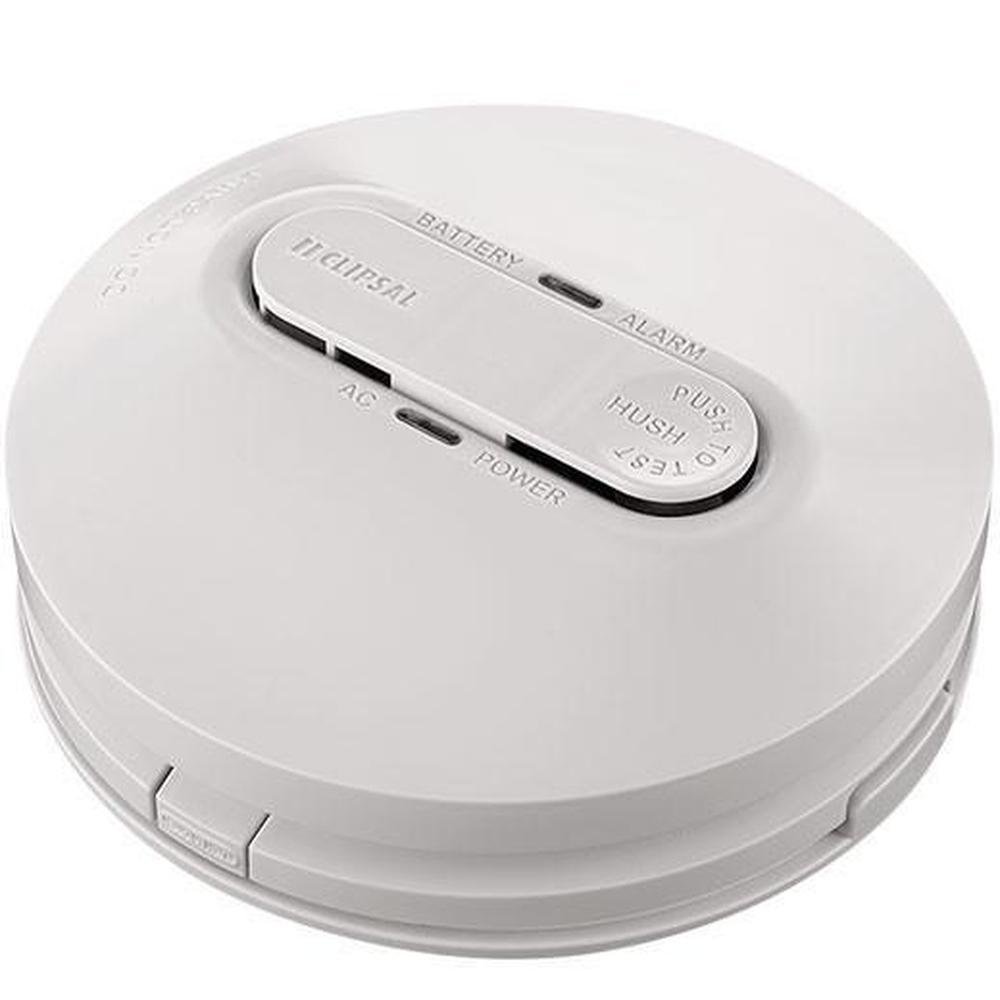
Clipsal 755PSMA4 Photoelectric Smoke Alarm
A wired-interconnect alarm built for whole-home coverage in a new build or renovation.
CHECK CURRENT PRICEBest Smoke Alarms Australia Compared
| Product | Link | Type | Best For | Key Spec |
|---|---|---|---|---|
| Clipsal 755PSMA4 Photoelectric Smoke Alarm | Check price | Wired Interconnect | New Builds and Renovations | Photoelectric, AS 3786:2014, Wired Interconnect up to 40 Units |
| Quell Q301 Photoelectric Smoke Alarm | Check price | Standalone Battery Alarm | Budget Single-Room Coverage | Photoelectric, AS3786 Compliant, 9V Battery |
| PSA HomeGuard HG140AC Photoelectric Smoke Alarm | Check price | Hardwired with Battery Backup | Replacing an Old Hardwired Alarm | 240V AC Hardwired, 140mm Base, Interconnects up to 48 Units |
| Quell Q501 Photoelectric Smoke Alarm Twin Pack | Check price | Standalone Battery Alarm, Twin Pack | Covering Two Rooms at Once | Photoelectric, Twin Pack, 9V Battery, DIY Installation |
| PSA Lifesaver LIF6800 Photoelectric Smoke Alarm | Check price | Hardwired with Advance Sensor | Humid or Dusty Rooms | Advance Sensor Chamber, ActivFire AS3786:2014 Certified |
| Quell Q10YB Photoelectric Smoke Alarm | Check price | Sealed 10-Year Battery Alarm | Bedrooms and Deep-Sleeping Households | 10-Year Sealed Lithium Battery, Talking Voice Alert |
| PSA Lifesaver LIF5800ACF Flush Mount Smoke Alarm | Check price | Slim Flush-Mount, Sealed Battery | Low-Profile Ceiling Installation | 28.5mm Slim Profile, 10-Year Sealed Lithium Battery |
| Quell Q10YK-CO Smoke and Carbon Monoxide Alarm | Check price | Combo Smoke and CO Alarm | Kitchens and Gas Appliance Rooms | Photoelectric Smoke Plus Electrochemical CO Sensor |
| LEVSUPTY 5 Pack Wireless Interconnected Smoke Alarms | Check price | Wireless Interconnected Kit | Whole-Home Coverage Without Wiring | 5-Pack, Pre-Linked Wireless, 10-Year Sealed Battery |
1. Clipsal 755PSMA4 Photoelectric Smoke Alarm – Best Wired Interconnect for New Builds
Clipsal is an established name in Australian electrical fittings, and this alarm carries that same build quality in a compact housing that mounts flush to a ceiling. The photoelectric sensor meets AS 3786:2014, the Australian Standard smoke alarms are required to comply with, and the unit ships with its 9V battery included rather than sold separately.
The real strength here is wired interconnection: up to 40 alarms can be linked over 150 metres of cabling, so when one alarm detects smoke, every connected alarm in the home sounds together. That is a genuine safety advantage over a standalone unit in a house with bedrooms far from the kitchen or living area.
Wired interconnect means running cable between alarms, which suits a new build or a renovation where an electrician is already working on the wiring, not a same-afternoon DIY swap. Anyone wanting interconnection without opening up walls should look at the wireless-linked options further down this list instead.
Pros
- Wired interconnect links up to 40 alarms across a home
- AS 3786:2014 compliant with 9V battery included
- Established Australian electrical brand
Cons
- Wired interconnect needs an electrician for new cabling runs
- Not a quick retrofit compared to standalone or wireless units
Key specs: Photoelectric sensor, AS 3786:2014 compliant, replaceable 9V battery included, wired interconnect for up to 40 alarms over 150 metres
CHECK CURRENT PRICE2. Quell Q301 Photoelectric Smoke Alarm – Best Budget Single Alarm
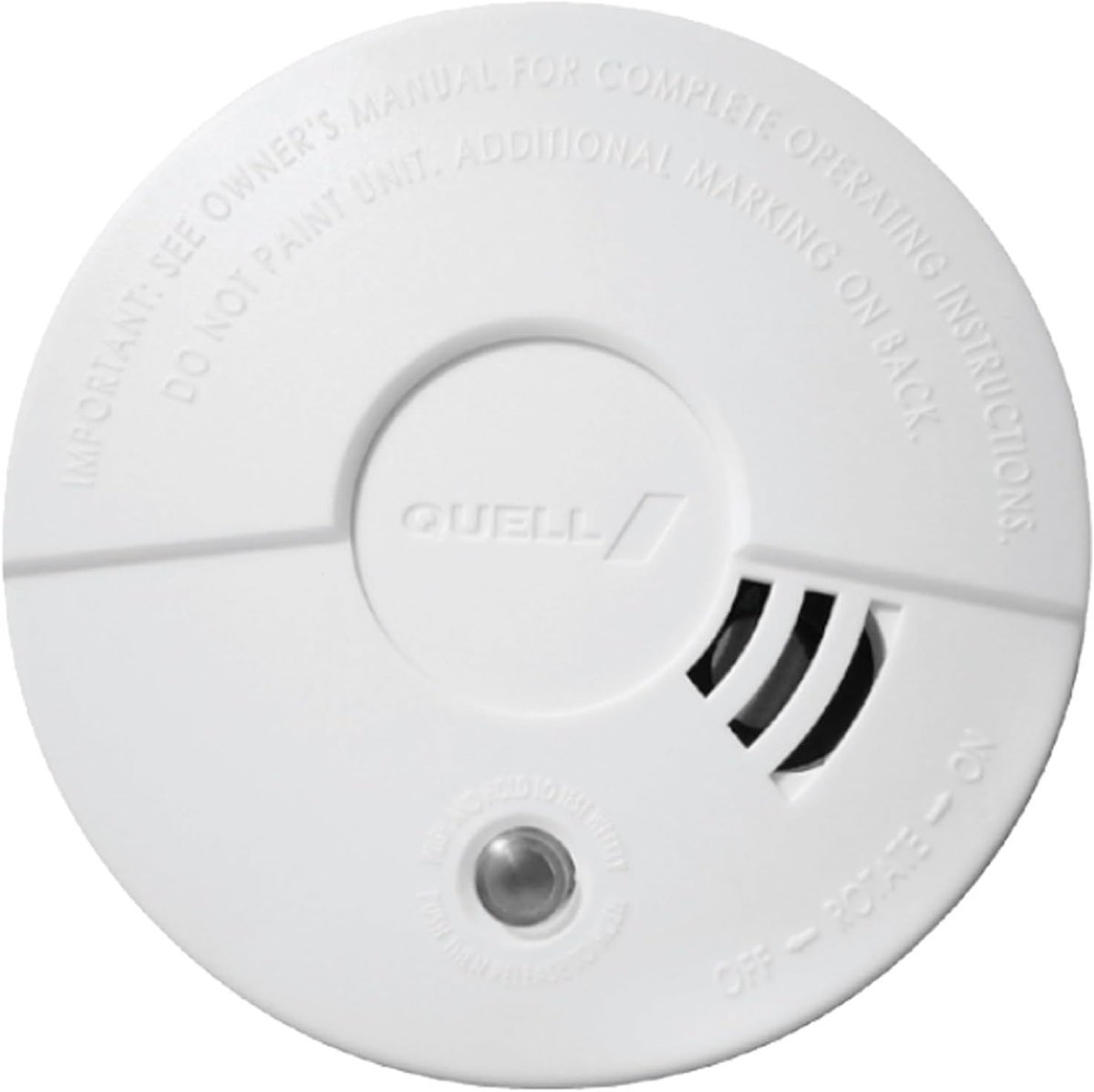
This is a straightforward single alarm at the more affordable end of this guide, without cutting the sensor type that actually matters: it is photoelectric, which responds faster to the slow, smouldering fires that are more common in a home than fast flaming ones. The trade box packaging suggests it is aimed at tradespeople fitting multiple units, which also makes it a sensible pick for a homeowner buying just one or two.
The hush button silences nuisance alarms, such as one triggered by cooking smoke, without disabling the unit entirely, and the LED indicator gives a visual read on battery and alarm status at a glance. Standby and low battery alerts mean it will chirp a warning well before the 9V battery actually dies.
It is a standalone unit with no interconnection to other alarms, so a fire detected in one room will not trigger an alarm in a bedroom down the hall. For a granny flat, a single-level unit, or filling a gap in an existing setup, that limitation matters less than the price does.
Pros
- Photoelectric sensor responds well to smouldering fires
- Hush button and LED indicator make day-to-day use easier
- Low battery and standby alerts give advance warning
Cons
- No interconnection with other alarms
- 9V battery needs manual replacement over the alarm’s life
Key specs: Photoelectric sensor, AS3786 compliant, replaceable 9V battery, hush button, LED status indicator, test button
CHECK ON AMAZON3. PSA HomeGuard HG140AC Photoelectric Smoke Alarm – Best Value Hardwired Retrofit
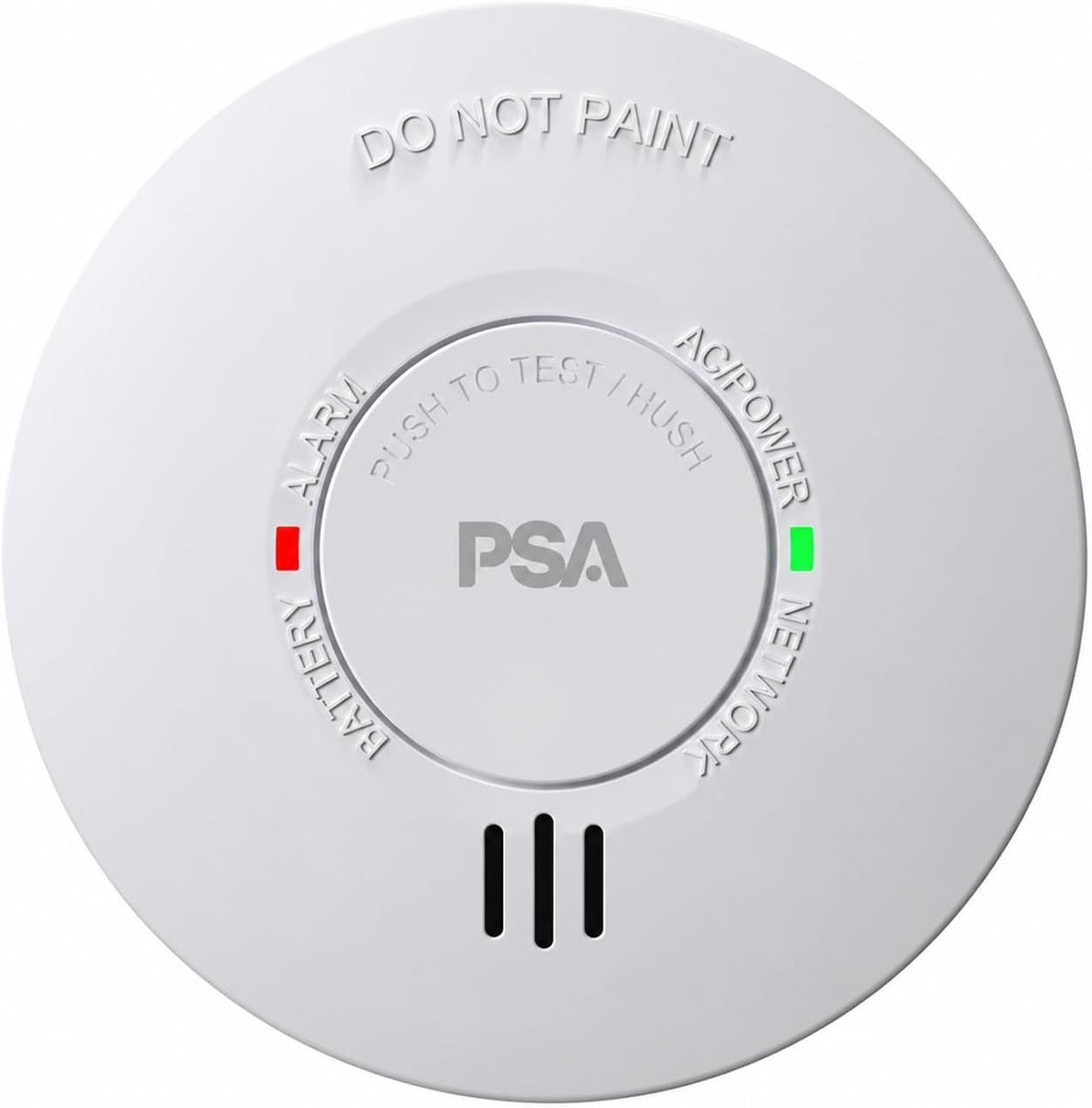
The 140 millimetre mounting base is a deliberate design choice, sized to match the base plate most older hardwired smoke alarms in Australian homes already use. That makes this one of the simplest ways to upgrade an ageing alarm to a current AS3786:2014-compliant unit without needing to run new wiring or patch a ceiling.
Running from 240V mains power with a 9V battery backup means it keeps working through a power outage, and its interconnect capacity of up to 48 units is the highest of any alarm in this guide, suiting a large home with many rooms already wired for hardwired alarms.
Mains wiring work should be left to a licensed electrician even when the physical swap looks simple, and anyone in a rental or without existing hardwired alarms will get more practical value from a battery-only unit instead. For a straightforward like-for-like replacement, this is the most budget-friendly hardwired option here.
Pros
- 140mm base matches most existing hardwired alarm mounts
- Battery backup keeps it working during a power outage
- Highest interconnect capacity in this guide at up to 48 units
Cons
- Requires licensed electrical work to install or replace
- Not suitable for a home without existing hardwired alarm points
Key specs: 240V AC hardwired power with 9V battery backup, 140mm mounting base, interconnects up to 48 units, 85dBA alarm output
CHECK ON AMAZON4. Quell Q501 Photoelectric Smoke Alarm Twin Pack – Best Twin Pack for Two Rooms
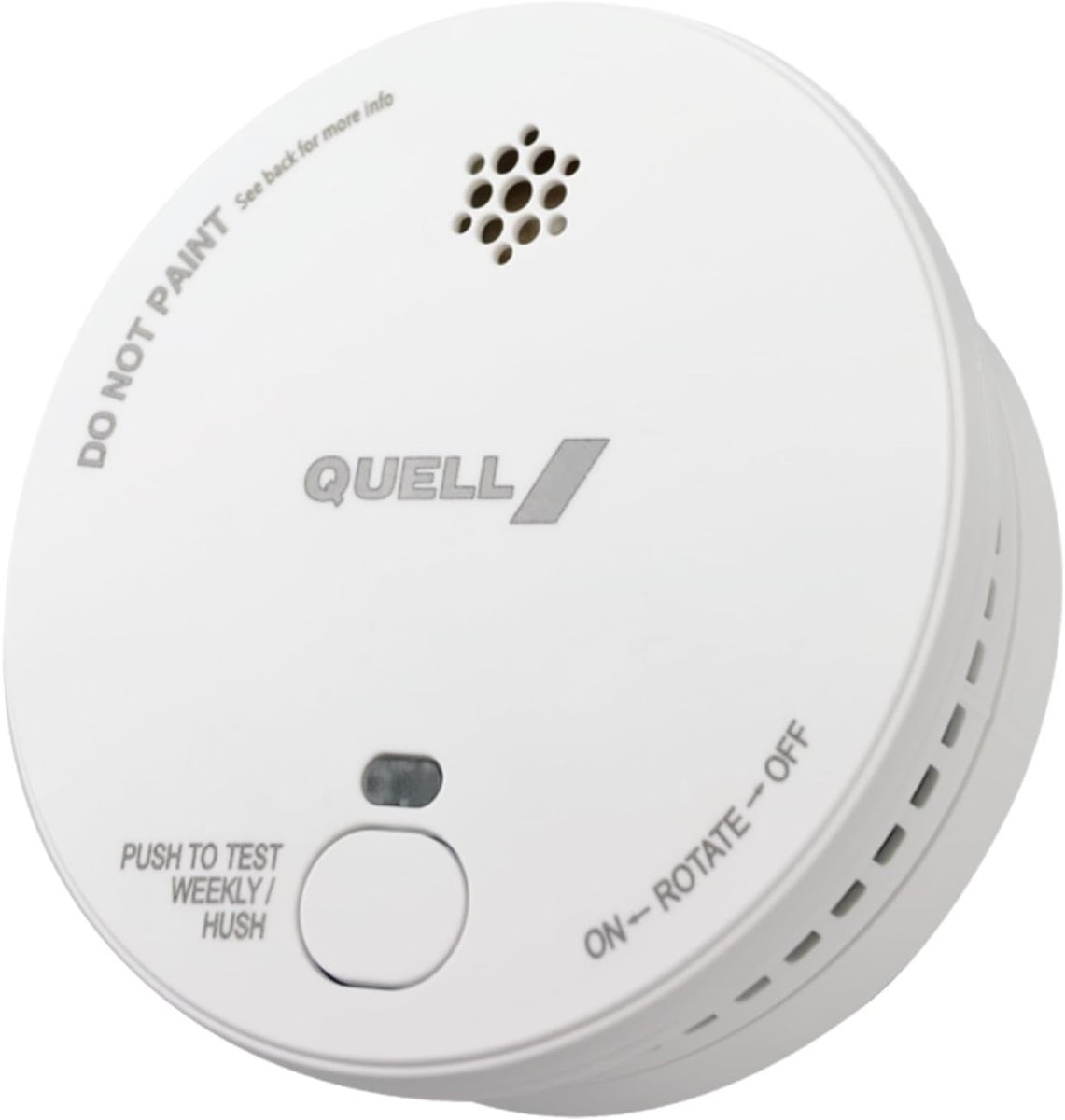
Buying two alarms at once solves the common gap where a home has an alarm in the hallway but nothing directly in a bedroom or a second living area. The twin pack format from the same brand as the single Q301 above means identical operation across both units, so there is nothing new to learn installing the second one.
The twist-and-click mounting is genuinely quick DIY work, no electrician required, and the quick response to smouldering fires carries over from the photoelectric sensor shared across the Quell range. An end-of-life notification chirps when the whole unit, not just the battery, needs replacing, which most basic alarms leave the owner to track manually.
Like the single Q301, these two units are not interconnected with each other or with any other alarm in the home, so each one only sounds for smoke it detects directly. For two rooms that genuinely need independent coverage rather than a linked system, that is a fair trade for the lower cost per unit.
Pros
- Two alarms for the price of expanding coverage in one purchase
- Simple twist-and-click DIY mounting
- End-of-life notification tracks the whole unit, not just the battery
Cons
- The two units are not interconnected with each other
- Still relies on a replaceable 9V battery rather than a sealed long-life cell
Key specs: Photoelectric sensor, twin pack with 9V batteries included, DIY twist-and-click mounting, hush feature, end-of-life notification
CHECK ON AMAZON5. PSA Lifesaver LIF6800 Photoelectric Smoke Alarm – Best False-Alarm Resistance
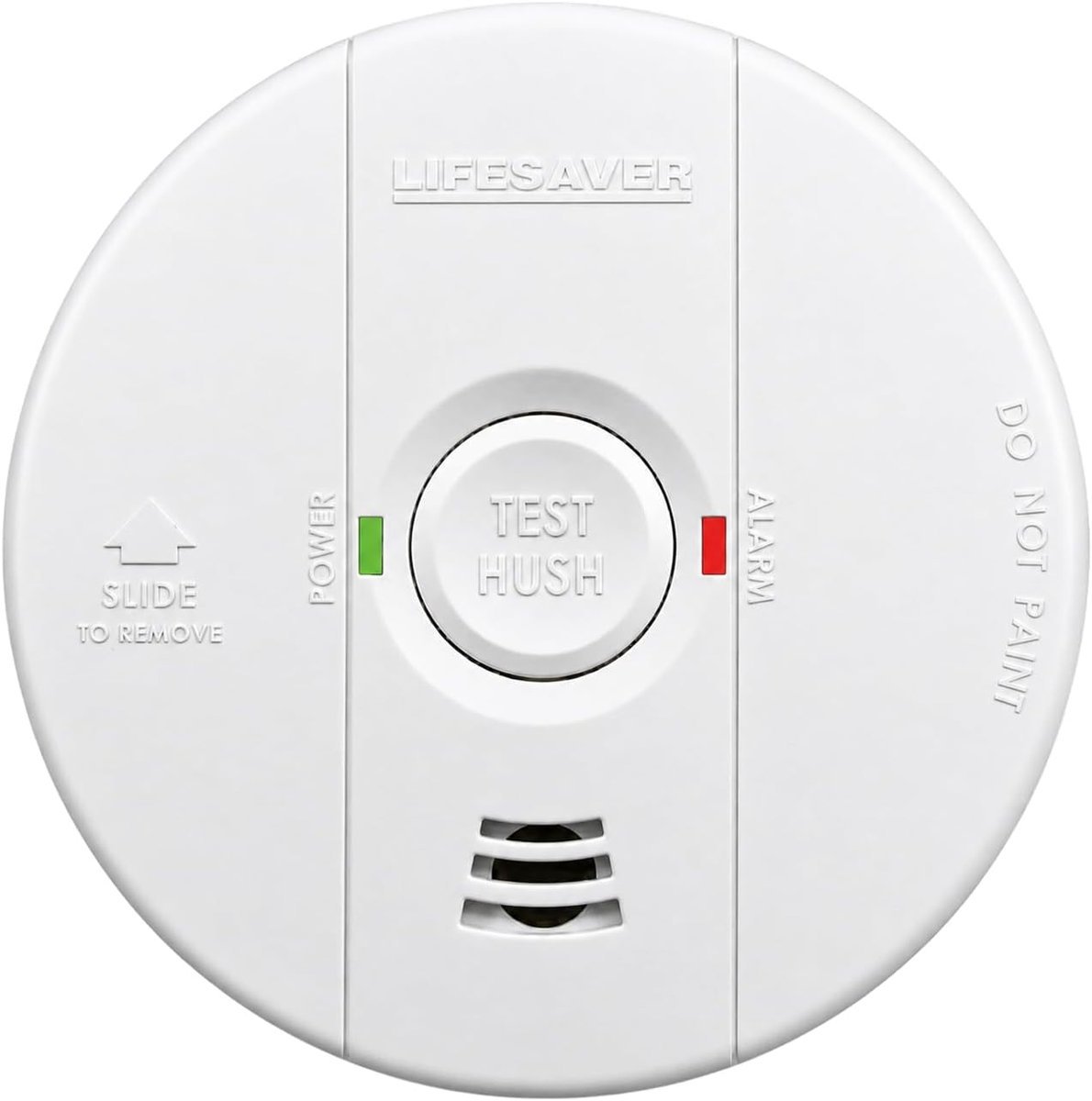
The Advance Sensor chamber is built specifically to cut down on the false alarms that steam from a bathroom or dust in a laundry can trigger in a standard photoelectric unit. An anti-static chamber design reduces how much dust settles inside the sensor over time, which is the usual cause of nuisance alarms in older units well before their actual end of life.
ActivFire certification against AS3786:2014 is a step beyond a manufacturer’s own compliance claim, since it involves independent third-party testing. Interconnection is available either wired or through an optional wireless base unit, giving more flexibility than the purely wired Clipsal alarm at the top of this list.
It runs on mains power with battery backup rather than a fully sealed long-life cell, so it still needs a 9V swap periodically despite the more advanced sensor chamber. Anyone specifically fighting recurring false alarms in a room near a bathroom or kitchen is the clearest use case for paying the premium over a basic photoelectric unit.
Pros
- Anti-static chamber reduces false alarms from steam or dust
- Independently ActivFire certified against AS3786:2014
- Wired or optional wireless interconnect flexibility
Cons
- Still needs periodic 9V battery replacement despite the advanced sensor
- Premium pricing over a basic photoelectric alarm
Key specs: 240V hardwired with 9V battery backup, Advance Sensor anti-static chamber, ActivFire AS3786:2014 certified, wired or wireless interconnect option
CHECK ON AMAZON6. Quell Q10YB Photoelectric Smoke Alarm – Best 10-Year Sealed Battery with Voice Alert
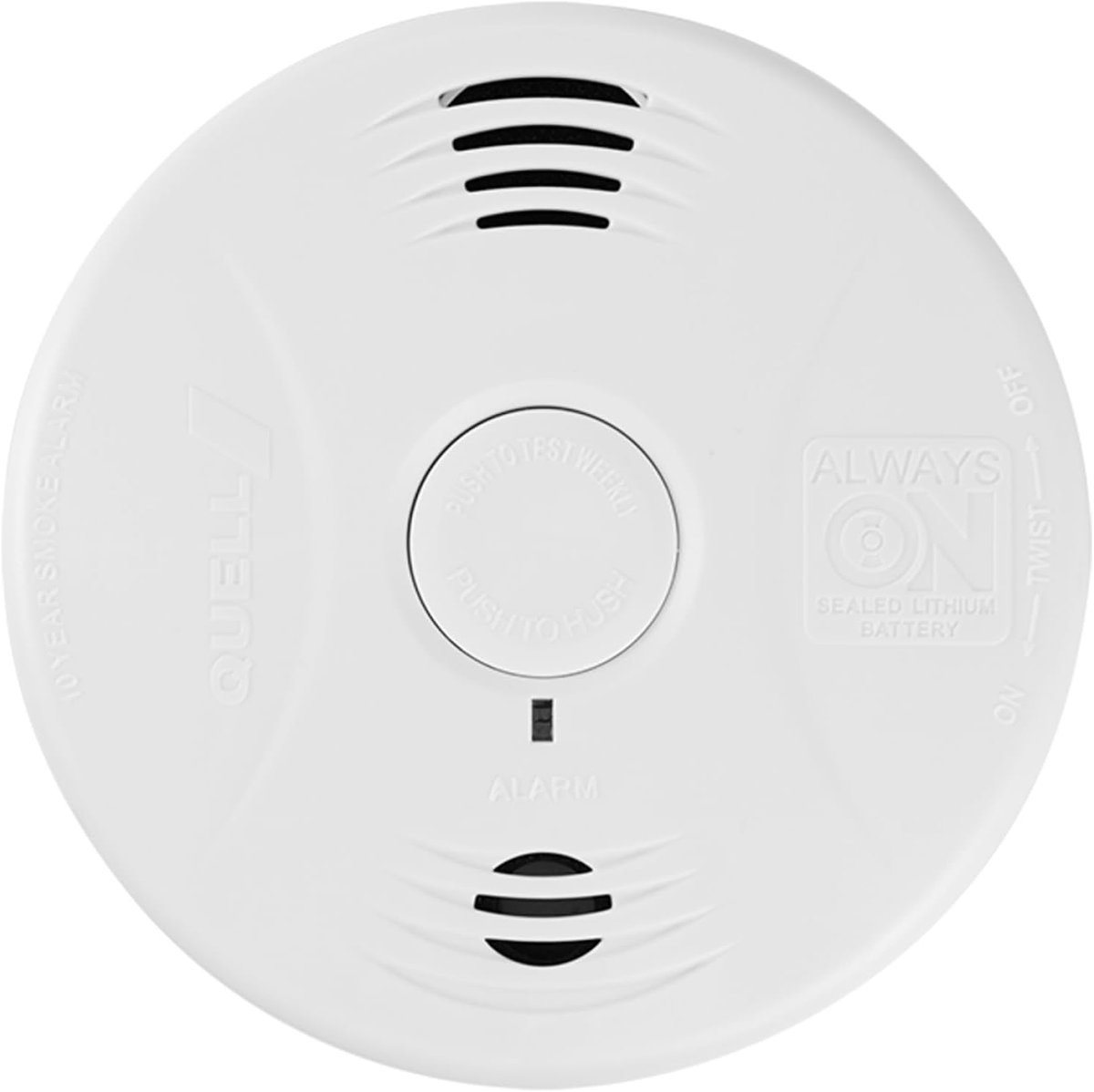
A sealed 10-year lithium battery removes the single most common reason a smoke alarm ends up disabled: a flat battery nobody got around to replacing, or worse, one that gets pulled out during a cooking mishap and never goes back in. This is the type increasingly required for bedroom installations under current Australian state regulations.
The talking voice alert is the real point of difference from every other alarm in this guide, announcing rather than just beeping when smoke is detected. Research into fire alarm effectiveness has found a voice alert wakes both children and deep sleepers more reliably than a standard tone alone, which is exactly why it is positioned for bedroom use.
The trade-off for a sealed unit is that the whole alarm gets replaced at the end of its rated life rather than just a battery, and the smart hush button is a welcome inclusion for silencing false alarms without needing to physically remove anything. For a bedroom, particularly a child’s room, this is worth the step up from a basic 9V unit.
Pros
- 10-year sealed battery removes the flat-battery failure point
- Talking voice alert is more effective at waking deep sleepers
- Smart hush button handles nuisance alarms without removing the battery
Cons
- Whole unit needs replacing at end of life, not just a battery
- Costs more upfront than a standard 9V photoelectric alarm
Key specs: Photoelectric sensor, 10-year sealed lithium battery, talking voice alert, smart hush button, end-of-life signal
CHECK ON AMAZON7. PSA Lifesaver LIF5800ACF Flush Mount Smoke Alarm – Best Slim Flush-Mount Design
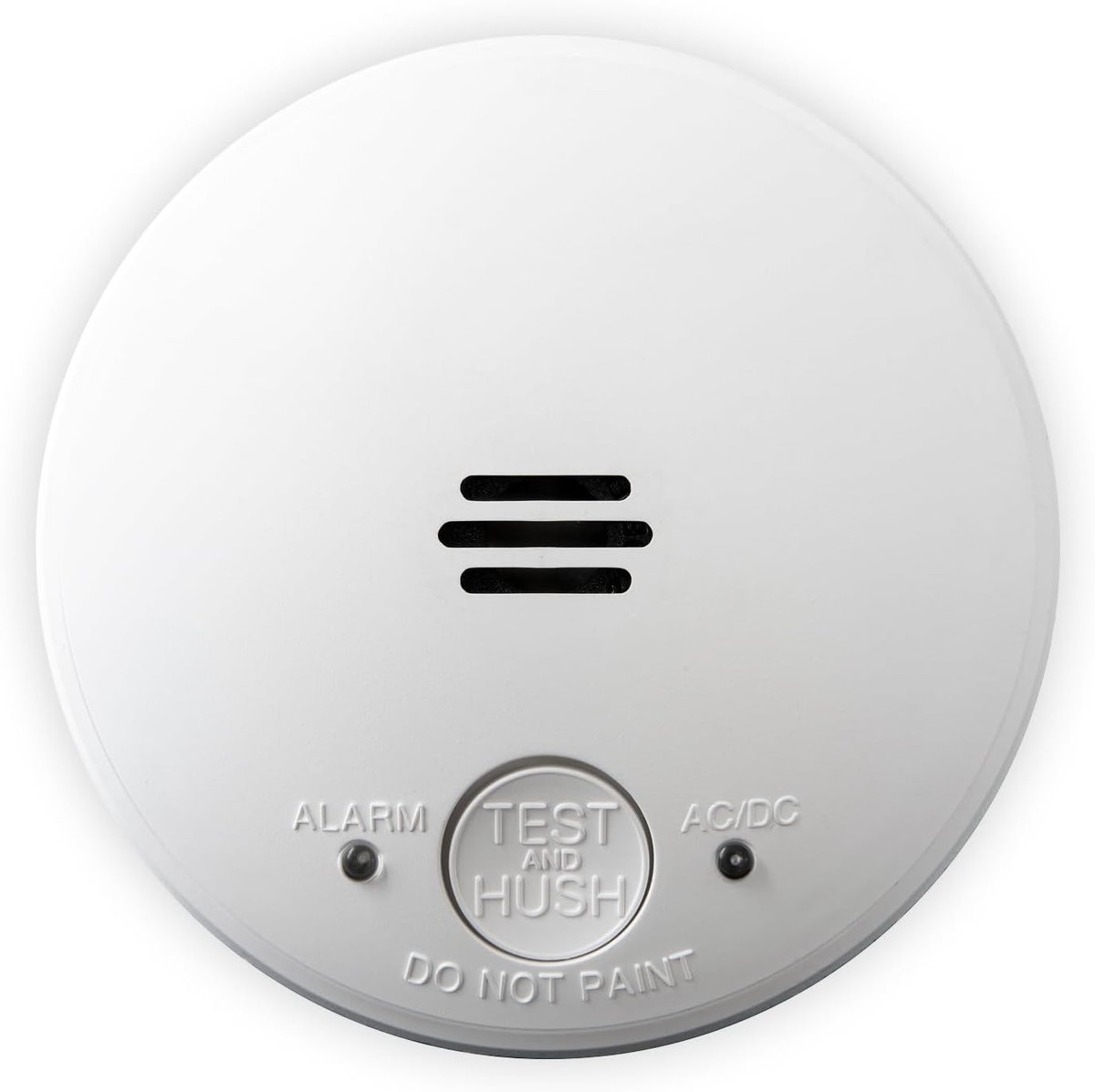
Most smoke alarms sit as a visible white disc protruding from the ceiling, and this one is built specifically to minimise that, with a silhouette profile of just 28.5 millimetres designed to sit closer to flush against a ceiling surface. For a newly renovated room where the ceiling finish matters, that low profile is a genuine aesthetic advantage over a bulkier unit.
A dual insect screen keeps small insects out of the sensor chamber, addressing a specific nuisance-alarm cause in Australian homes that the anti-static design on the LIF6800 above does not directly target. The 10-year sealed lithium battery matches the long-life standard increasingly expected in newer installations.
The slim design and sealed battery combination puts it toward the pricier end of this guide, and stock levels on this specific model have run tighter than the more common units here, so it is worth confirming availability before planning an installation around it. Anyone prioritising how the alarm looks on a finished ceiling is the target buyer.
Pros
- 28.5mm profile sits noticeably flatter against the ceiling
- Dual insect screen addresses a specific AU nuisance-alarm cause
- 10-year sealed lithium battery
Cons
- Premium pricing for the slim design and sealed battery combination
- Stock availability has run tighter than the other alarms in this guide
Key specs: Silhouette flush-mount design at 28.5mm profile, 10-year sealed lithium battery, dual insect screen, AS3786:2014 certified
CHECK ON AMAZON8. Quell Q10YK-CO Smoke and Carbon Monoxide Alarm – Best Combo Smoke and CO Alarm
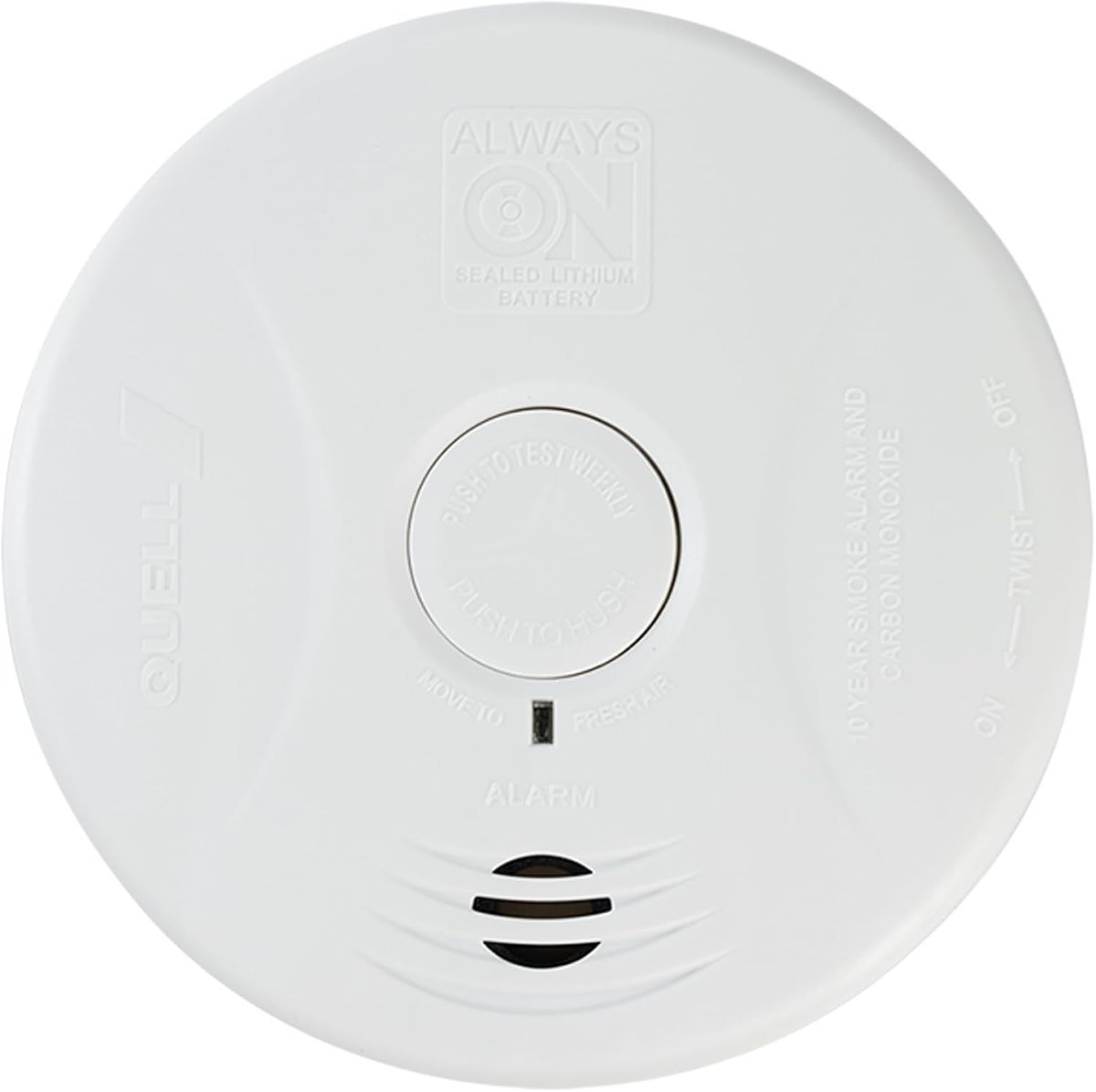
This is a genuine dual-hazard alarm rather than a carbon monoxide detector with smoke sensing bolted on as an afterthought: a proper photoelectric smoke sensor sits alongside a separate electrochemical CO sensor, each detecting its own hazard independently. That distinction matters, since a CO-only detector will not respond to a smouldering fire the way this one does.
It is specifically rated for kitchen placement, where cooking-related carbon monoxide risk from gas appliances is highest and where a standard smoke-only alarm is most prone to false alarms from cooking smoke. The multi-sensor detection and smart hush work together to cut down on those nuisance triggers without disabling either sensor.
A dedicated CO alarm elsewhere in the home, such as near a gas heater, may still be worth adding separately, since one kitchen unit cannot cover a large house on its own for carbon monoxide specifically. For anyone with gas cooking or heating who wants both hazards covered in one kitchen-rated unit, this is the practical pick.
Pros
- Genuine dual sensors for both smoke and carbon monoxide
- Kitchen-rated to handle cooking-related false alarm risk
- 10-year sealed lithium battery
Cons
- One kitchen unit does not replace a dedicated CO alarm elsewhere in the home
- Costs more than a smoke-only alarm in this guide
Key specs: Photoelectric smoke sensor plus electrochemical carbon monoxide sensor, 10-year sealed lithium battery, smart hush button, kitchen-rated
CHECK ON AMAZON9. LEVSUPTY 5 Pack Wireless Interconnected Smoke Alarms – Best Whole-Home Wireless Kit
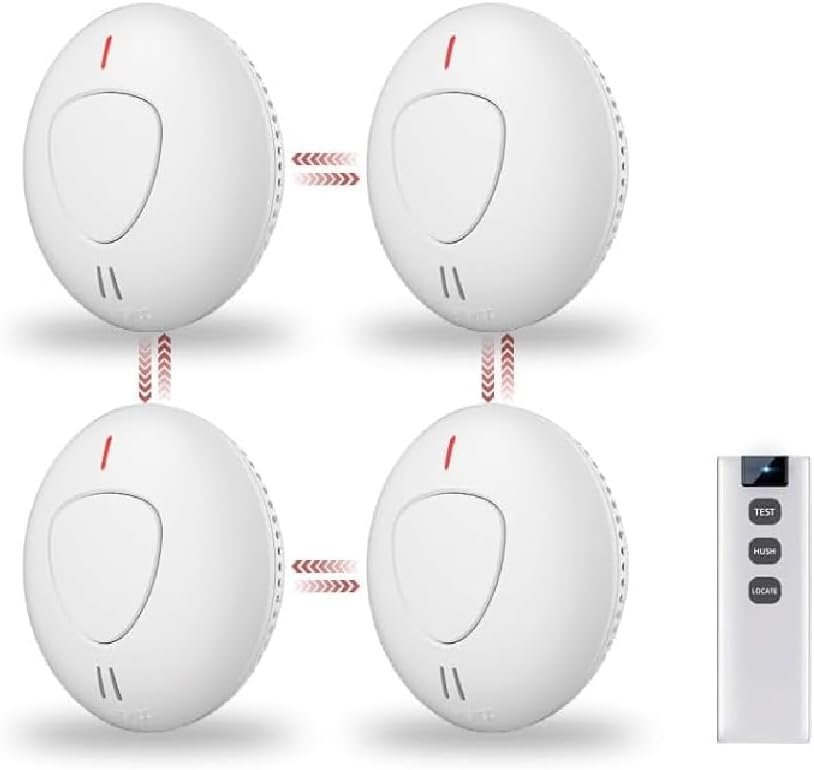
Wireless interconnection gets a household most of the way to the wired Clipsal alarm’s whole-home coverage without opening a single wall. All five units in this pack arrive pre-paired, so smoke detected in one room triggers every alarm in the house to sound, which matters most in a larger home where a kitchen fire might otherwise go unheard from a bedroom at the far end.
The included remote lets every alarm in the network be tested or silenced from one spot, rather than climbing a ladder to reach each unit individually, a genuinely practical convenience once alarms are mounted across a full home. The 10-year sealed battery in each unit matches the long-life standard of the other premium alarms in this guide.
Buying five at once is a bigger upfront outlay than any single alarm here, and it makes the most sense for someone kitting out a whole house rather than filling one or two gaps. For that whole-home job, the wireless pairing removes the biggest practical barrier that keeps interconnection out of reach for most renters and existing homes.
Pros
- Pre-linked wireless interconnect needs no wiring work
- Remote tests and silences all five alarms from one spot
- 10-year sealed battery across the full set
Cons
- Highest upfront cost in this guide for the full 5-pack
- Overkill for covering just one or two rooms
Key specs: 5 alarms pre-linked wirelessly, AS 3786:2014 certified, 10-year sealed battery, includes remote control for testing
CHECK ON AMAZONHow to Choose a Smoke Alarm
Sensor type and AS 3786 compliance is not optional in Australia the way brand or design might be. Every alarm in this guide states compliance with AS 3786, the Australian Standard smoke alarms are tested against, and a genuine listing will say so explicitly rather than only citing an overseas standard.
Battery type decides how much ongoing maintenance the alarm asks for. A replaceable 9V unit is the cheapest to buy but needs a battery swap every year or two, and forgetting that swap is one of the most common reasons a smoke alarm ends up disabled. A sealed 10-year lithium battery avoids that entirely, at a higher upfront cost.
Interconnection matters most in a home larger than a single level, or one with bedrooms far from the kitchen or living area. A wired system needs an electrician but supports the most alarms per network; a wireless kit gets most of the same benefit without opening a wall, at a smaller premium per alarm.
Mounting location and coverage follows building code requirements that apply regardless of which alarm is chosen: at least one alarm on every level of a home, and one inside or immediately outside each bedroom. A kitchen alarm needs particular care in placement, since cooking smoke is one of the most common causes of a false trigger.
False-alarm resistance is worth checking for any alarm going near a bathroom, kitchen or laundry, where steam and cooking smoke are common nuisance triggers. An anti-static or advanced sensor chamber, or a kitchen-rated combo unit, cuts down on alarms disabled out of frustration after repeated false triggers, which is a real safety risk in itself.
Who is buying and installing it should shape the final decision as much as any spec. A renter filling a gap in existing coverage is usually better served by a standalone or wireless alarm that needs no electrical work, while a homeowner renovating can justify wired interconnection run alongside other electrical work. Anyone thinking about home air quality more broadly may also want to check our guide to the best air purifiers in Australia for handling everyday dust and allergens rather than emergency smoke.
Frequently Asked Questions
Do smoke alarms need to be photoelectric in Australia?
Most Australian states and territories now require photoelectric sensors rather than the older ionisation type for new and replacement smoke alarms, since photoelectric sensors respond faster to the slow, smouldering fires most common in homes. Every alarm in this guide uses a photoelectric sensor and states compliance with AS 3786.
How many smoke alarms does a home need, and where should they go?
Building codes generally require at least one smoke alarm on every level of a home, plus one inside or immediately outside each bedroom. A larger home, or one with bedrooms far from the kitchen or living area, benefits from interconnected alarms so a fire detected in one area is heard everywhere.
How often should smoke alarm batteries be replaced?
A standard replaceable 9V battery typically needs changing every 1 to 2 years, and most alarms give a low-battery chirp well before it fails completely. A sealed 10-year lithium battery is designed to last the alarm’s full service life without ever being replaced.
Do smoke alarms need to be interconnected?
Interconnection is not universally mandatory everywhere but is increasingly required or recommended, particularly for new builds, renovations and larger homes. A wired system needs an electrician, while a wireless interconnected kit can be installed without any electrical work.
Can a smoke alarm also detect carbon monoxide?
Yes, a genuine combo alarm uses a separate photoelectric smoke sensor alongside an electrochemical carbon monoxide sensor, each detecting its own hazard independently. A standalone CO detector will not respond to smoke the way a proper combo unit does, so check that a listing states both sensor types explicitly.
How often should a smoke alarm actually be replaced?
Most smoke alarms, the whole unit and not just the battery, have a rated service life of around 10 years, after which the sensor’s sensitivity can no longer be relied on. The manufacture date is usually printed inside the unit, and a sealed 10-year battery alarm is generally designed to be replaced as a complete unit at the end of that period.
Verdict
For most Australian households, the Quell Q301 covers reliable single-room photoelectric coverage at the lowest cost in this guide. Anyone renovating or building new should look at the Clipsal 755PSMA4 for wired whole-home interconnection instead, while a household wanting the lowest-maintenance option for a bedroom should choose the Quell Q10YB for its sealed 10-year battery and talking voice alert.