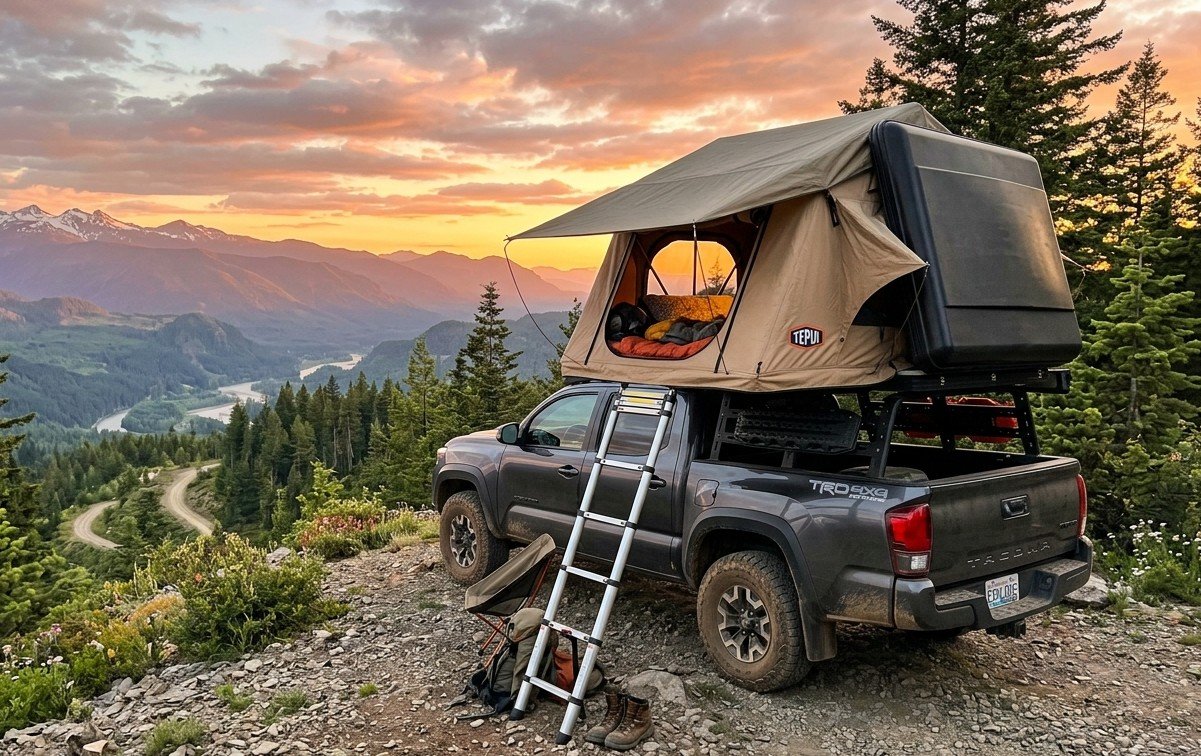
Rooftop tents are fold-out or hardshell sleeping platforms that mount to a vehicle’s roof rack, lifting a mattress and sleeping area off the ground and onto the car itself rather than pitching a separate tent on the site below.
The category splits into three genuinely different builds: hardshell rooftop tents, which fold open in under a minute from a rigid aluminium or fibreglass clamshell, soft-shell rooftop tents, which pack down into a canvas cover over a folding frame and usually cost less for the same sleeping area, and inflatable rooftop tents, which use air-filled tubes instead of poles or a rigid shell and pack down to the lowest weight of the three.
Weight is the number that decides which of these a given roof rack can actually carry: hardshell tents on this list run from 60 to just over 100 kilograms, or roughly 132 to 220 pounds, well above the dynamic roof load rating most passenger SUVs carry, while inflatable tents drop to around 30 kilograms and fit far more vehicles without a load-rating upgrade. Sleeping capacity, packed height for garage clearance, and waterproof rating in millimetres matter as much as the headline setup-speed claim.
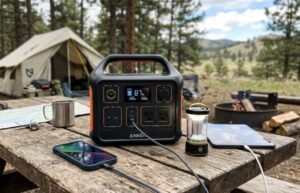
This guide compares six rooftop tents available to Australian buyers, from a lightweight aluminium hardshell through to soft-shell and inflatable designs built for 4WD touring, and pairs well with a portable power station for keeping devices charged through nights spent off-grid.
Quick Pick
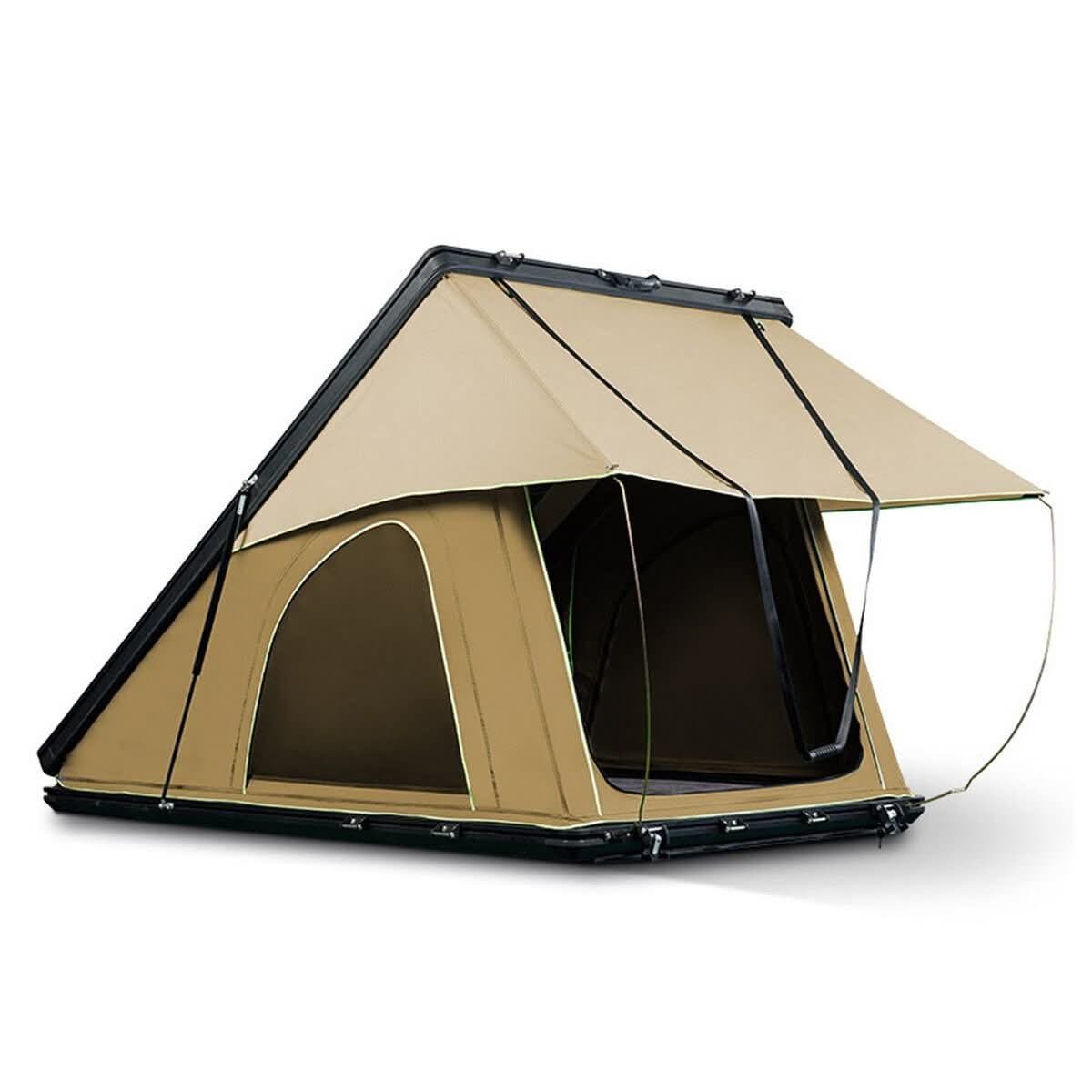
Slimline Aluminium Hardshell Rooftop Tent
A 64kg aluminium hardshell that folds down to 18.5cm, among the lightest and lowest-profile hardshells available to Australian buyers.
CHECK CURRENT PRICERooftop Tents Compared
| Product | Link | Type | Best For | Key Spec |
|---|---|---|---|---|
| Slimline Aluminium Hardshell Rooftop Tent | Check price | Hardshell | Compact SUVs | 64kg, folds to 18.5cm, 5000mm waterproof |
| SAN HIMA Kalbarri Lite Gen 2 | Check price | Hardshell | Low-profile setup | 60.5kg, 11.6cm packed, built-in power panel |
| SAN HIMA Jervis Pro | Check price | Hardshell | Families | 203x145cm bed, 101kg, stargazer skylight |
| SAN HIMA Alpine Soft Shell | Check price | Soft shell | Small cars | 36.9kg, 3000mm waterproof |
| Adventure Kings Premium + Annex | Check price | Soft shell | Extended 4WD touring | 2.5m sleeping length, annex included |
| BOOMALTU Inflatable Rooftop Tent | Check price | Inflatable | Ultra-light setups | 30kg, inflates in minutes |
1. Slimline Aluminium Hardshell Rooftop Tent – Best Lightweight Hardshell
This hardshell folds from an aluminium honeycomb clamshell that weighs 64 kilograms without the ladder, among the lightest hardshells on this list, and packs down to just 18.5cm, low enough to clear most undercover parking that a taller hardshell would catch on.
Setup uses the same lift-and-lock clamshell action as the rest of the hardshells here, with a full LED strip, dual mesh doors and a skylight window built in, and the 420D Oxford and 280GSM poly-cotton shell carries a 5,000mm waterproof rating, ahead of some of the soft-shell options later in this guide.
The compact size means a snugger fit than the family-sized hardshell further down this list, and low stock at the time of writing means availability can move quickly. Anyone with a compact SUV and tight garage clearance, rather than a full-size 4WD, gets the most out of this one.
Pros
- Among the lightest hardshells on this list at 64kg
- Packs down to just 18.5cm for tight garage clearance
- 5,000mm waterproof rating with a full LED interior
Cons
- Snugger sleeping area than the family-sized hardshell later in this guide
- Stock levels can run low
Key specs: 210x120cm sleeping area, 64kg (69kg with ladder), 5,000mm waterproof, folds to 210x130x18.5cm, 2.3m telescopic ladder
CHECK CURRENT PRICE2. SAN HIMA Kalbarri Lite Gen 2 – Best Low-Profile Hardshell
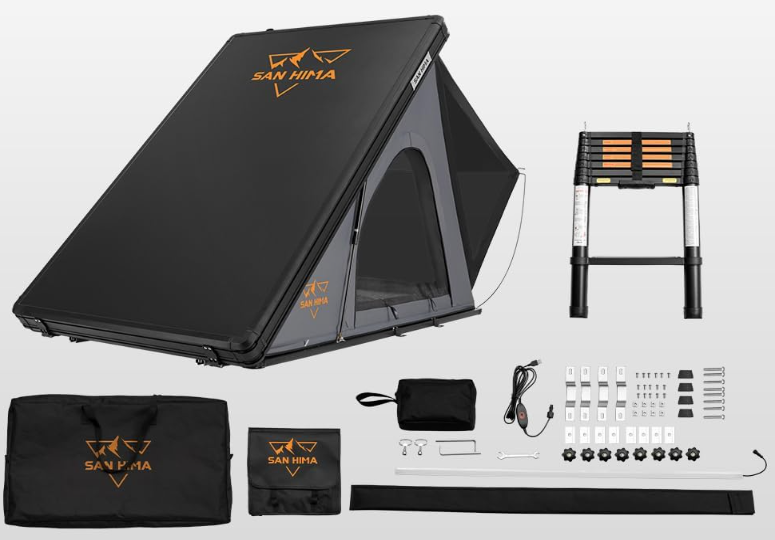
At 11.6cm packed thickness, this is the lowest-profile hardshell in this guide, built around the same aluminium honeycomb construction as the rest of the category but shaved down for a slimmer roofline. A digital power panel built into the shell adds USB-C and USB-A charging plus a 12V outlet without running a separate cable inside.
The interior measures 207 by 117 centimetres and is rated for up to three people, though that rating is tight in practice for anything more than two adults and a small child. Setup is a genuine 30-second lift-and-lock action, and the 6.5cm self-inflating mattress is thicker than most of the foam pads used elsewhere in this guide.
There is no annex included, so anyone wanting a ground-floor living space needs to add one separately or look further down this list. Buyers prioritising the lowest packed height and fastest setup over interior space get the clearest win from this model.
Pros
- Lowest packed profile of the hardshells in this guide
- Built-in USB-C/USB-A/12V power panel
- 6.5cm self-inflating mattress
Cons
- 3-person rating is tight for more than two adults
- No annex included
Key specs: Up to 3-person, 207x117cm interior, 6.5cm mattress, 60.5kg, 5,000mm waterproof, built-in power panel
CHECK ON AMAZON3. SAN HIMA Jervis Pro – Best for Families
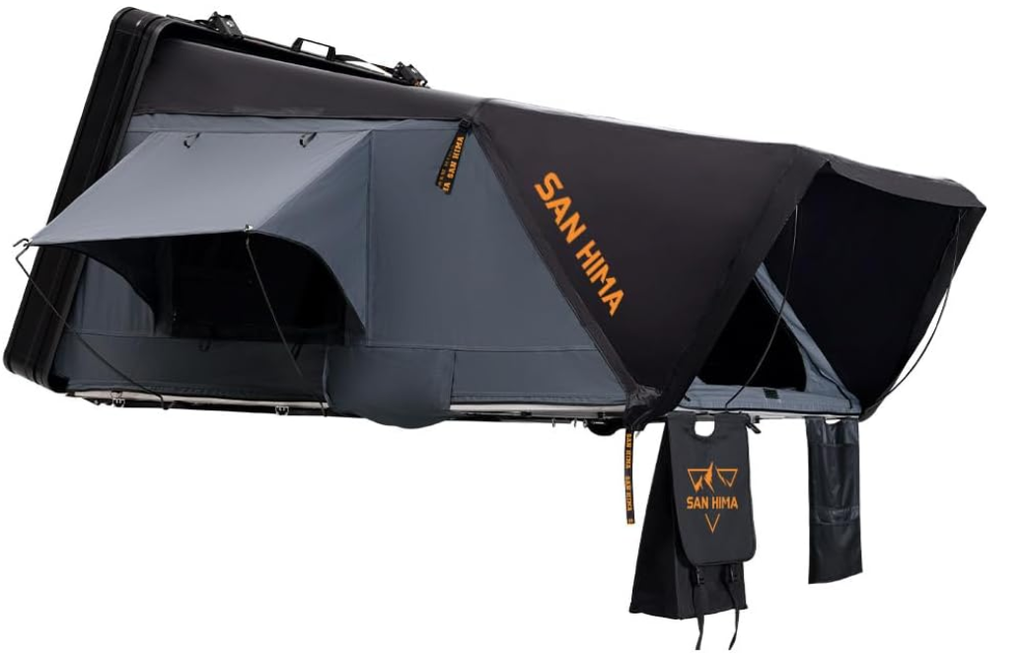
The bed measures 203 by 145 centimetres, the largest sleeping area of any hardshell in this guide, with 115cm of headroom and a stargazer skylight above the mattress rather than just a side window. A 40mm cloud foam mattress replaces the thinner pads most hardshells ship with.
Entry is through a side-opening door rather than the rear-ladder-only layout common on smaller hardshells, and a tri-colour LED strip and 5,000mm waterproof poly-cotton shell match the rating on the smaller hardshell earlier in this guide despite the larger footprint. A 2-year warranty covers the shell and hardware.
That extra space comes with extra weight: at 101 kilograms this is the heaviest tent in this guide, and it needs a roof rack with a genuinely high dynamic load rating rather than the standard factory rails on most SUVs. A family who needs the room, and has a rack rated to carry it, gets more usable sleeping space here than anywhere else on this list.
Pros
- Largest sleeping area of any hardshell here, at 203x145cm
- Stargazer skylight and side-opening entry
- 2-year warranty on shell and hardware
Cons
- Heaviest tent in this guide at 101kg
- Needs a roof rack rated for a genuinely high dynamic load
Key specs: 203x145cm bed, 115cm headroom, 40mm mattress, 101kg, stargazer skylight, 5,000mm waterproof, 2-year warranty
CHECK ON AMAZON4. SAN HIMA Alpine Soft Shell – Best Soft-Shell for Small Cars
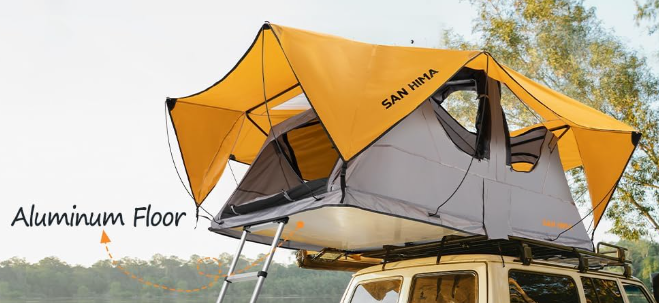
Roughly a third of the weight of the family-sized hardshell earlier in this guide, this soft-shell folds out from a 300D PU-coated canvas cover over an aluminium honeycomb floor at 36.9 kilograms, sitting well within the dynamic roof load most small SUVs and hatchbacks carry.
The interior opens out to 209 by 137 centimetres with 105cm of headroom once erected, with 360-degree skyview mesh windows on every side and a cloud foam mattress matching the one used in the heavier Jervis Pro. The waterproof rating comes in at 3,000mm, lower than the hardshells here since it relies on canvas rather than a rigid shell.
Setup takes longer than a clamshell hardshell since the canvas has to be unfolded and tensioned rather than simply lifted, and the warranty runs a shorter 1 year against the 2-year cover on the Jervis Pro. Anyone driving a smaller car who cannot carry a 60-100kg hardshell gets a genuine rooftop tent here without upgrading the roof rack first.
Pros
- Roughly a third the weight of the family-sized hardshell in this guide
- 360-degree skyview mesh windows
- Fits within the load rating of most small SUVs and hatchbacks
Cons
- 3,000mm waterproof rating, lower than the hardshells here
- Slower setup than a clamshell hardshell, and a shorter 1-year warranty
Key specs: 36.9kg, folds to 140x107x26cm, 209x137x105cm interior, 3,000mm waterproof, cloud foam mattress, 1-year warranty
CHECK ON AMAZON5. Adventure Kings Premium Rooftop Tent + Annex – Best for Extended 4WD Touring
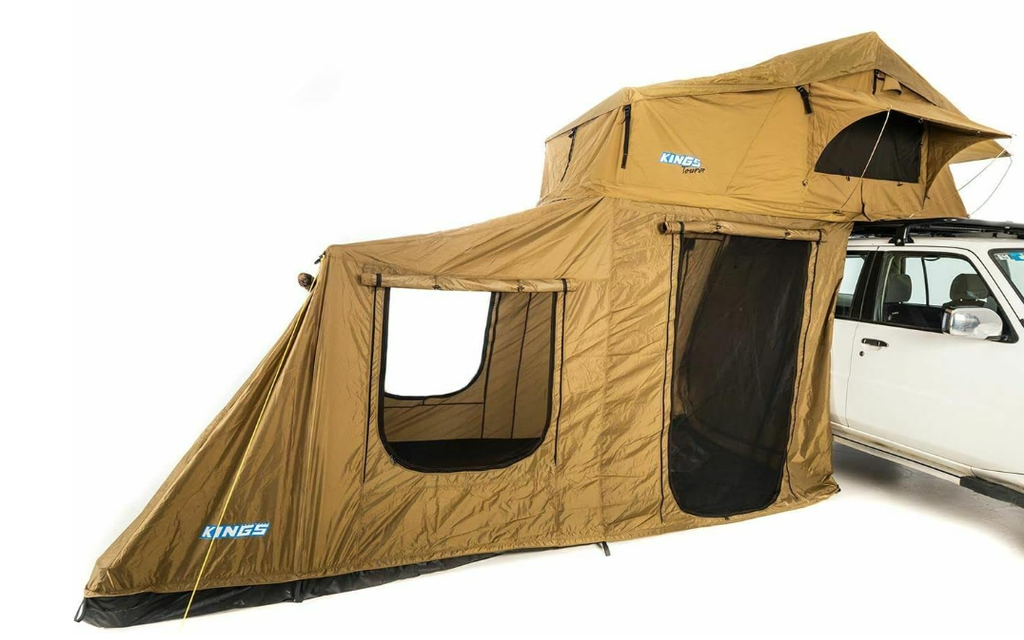
This is the only tent in this guide sold with an annex, a canvas room that hangs beneath the tent and turns the ladder area into a stand-up space for cooking, gear storage or extra sleeping capacity rather than just a climb up to bed. The tent itself is a ladder-rack soft-shell design rather than a clamshell hardshell.
Sleeping length runs to 2.5 metres with over 1.3 metres of headroom, and the midge-proof mesh plus window awnings hold up to the kind of extended, stationary camping a 4WD touring trip involves rather than a single overnight stop. At 57 kilograms for the tent alone, it sits in the middle of the weight range in this guide.
Setup takes longer than any hardshell here, closer to the several-minute range than the 30-to-60-second clamshell action earlier in this guide, which matters less on a multi-night stay and more if the plan is to pack up and drive again the same day. Families doing extended 4WD touring who want real ground-floor living space, not just a bed, get the most from this setup.
Pros
- Only tent in this guide with an annex for stand-up ground-floor space
- 2.5m sleeping length with over 1.3m of headroom
- Established Australian 4WD touring brand
Cons
- Slower setup than any of the hardshells in this guide
- Canvas soft-shell needs more maintenance than an aluminium clamshell
Key specs: 2.5m sleeping length, 1.3m+ headroom, 57kg tent-only, 2m telescopic ladder, annex included, midge-proof mesh
CHECK ON AMAZON6. BOOMALTU Inflatable Rooftop Tent – Best Ultra-Light Pick
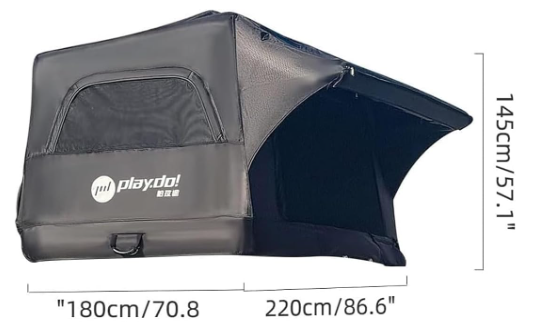
At 30 kilograms, this is the lightest tent in this guide by a wide margin, roughly half the weight of the lightest hardshell and a third of the heaviest, because air-filled tubes replace the aluminium frame or clamshell hinge every other tent here relies on. The 300D Oxford fabric cover unfolds to 220 by 180 centimetres once inflated.
Inflation takes a few minutes with a pump rather than the lift-and-lock action of a hardshell, and the design doubles as a ground or water-adjacent tent when it is not mounted on the roof, which none of the hardshells or the soft-shell options in this guide can do. A 15cm mattress and mosquito mesh cover the basics.
There is no track record of reviews on this specific listing yet, and delivery runs closer to two weeks against the roughly one week most of the hardshells in this guide ship in. For anyone on a lighter-duty vehicle, or simply wanting the lowest possible roof load, nothing else on this list comes close on weight.
Pros
- Lightest tent in this guide at 30kg
- Doubles as a ground or water-adjacent tent off the roof
- Lowest roof load of any option here, suiting lighter-duty vehicles
Cons
- No review history yet on this specific listing
- Longer delivery window than the hardshells in this guide
Key specs: 220x180x145cm unfolded, 30kg, 300D Oxford fabric, 220x145x15cm mattress, mosquito mesh
CHECK ON AMAZONHow to Choose a Rooftop Tent
Weight decides which roof rack you need before anything else. A hardshell in the 60-100kg range needs a rack with a genuinely rated dynamic load capacity, not just static roof-rail figures, while an inflatable or lightweight soft-shell under 40kg fits within what most factory racks already carry. Checking the vehicle’s dynamic roof load rating against the tent’s actual weight, including the ladder, is the first filter that should rule anything out.
Packed height matters if the car goes into a garage. A hardshell that folds down to 18-19cm clears most undercover parking, while a soft-shell folded onto a roof rack can add considerably more height depending on how it is mounted. Anyone parking undercover regularly should measure the clearance before assuming any rooftop tent will fit.
Setup speed trades off against sleeping space and features. A clamshell hardshell opens in 30 to 60 seconds because the shell itself does the work, while a soft-shell or annex-equipped tent takes several minutes to unfold and tension by hand in exchange for more usable space once it is up. A single-night stop favours the fastest setup; an extended stay favours the extra room.
Waterproof rating is not just a marketing number. A 5,000mm rating handles sustained heavy rain, while a 3,000mm rating, common on lighter canvas soft-shells, is adequate for showers but will be tested in a genuine downpour. Anyone camping through a wet season, rather than mostly dry conditions, should weigh this rating alongside the weight and setup-speed trade-offs above.
Ladder rating and mattress thickness affect comfort more than the spec sheet suggests. A ladder rated to 150kg comfortably carries most adults, but a family climbing up and down repeatedly benefits from checking the actual step spacing, not just the weight rating, while mattress thickness ranges from 4cm foam pads to 6.5cm self-inflating pads across this guide, a noticeable difference for anyone sleeping on it for more than one night.
Tyre pressure matters before the tent does. A loaded roof, tent included, changes a vehicle’s handling and recommended tyre pressure more than most drivers expect, and airing down before heading off-road, then back up before returning to bitumen, is standard practice for anyone touring with this kind of roof load. A portable air compressor kept in the vehicle makes that a two-minute job rather than a servo detour.
Frequently Asked Questions
How much weight can a roof rack carry for a rooftop tent?
It depends on the vehicle’s dynamic roof load rating, which is usually well below the static rating printed on the rack itself and is the figure that actually matters while driving. Most passenger SUVs sit in the 75 to 100kg dynamic range, which rules out the heaviest hardshells in this guide unless the vehicle’s rating is checked and confirmed first.
Are hardshell or soft-shell rooftop tents better?
Hardshells open faster, in around 30 to 60 seconds, and generally handle rain better, while soft-shells weigh less and usually cost less for a comparable sleeping area. Frequent movers who set up and pack down often tend to prefer a hardshell, while extended-stay campers who value space and weight over setup speed often prefer a soft-shell.
Do rooftop tents need a special roof rack?
Yes. A rooftop tent needs load bars or a platform rated for the tent’s full weight including the ladder and any occupants, not the lighter-duty racks sold for bikes or a roof box. Checking both the rack’s rating and the vehicle’s dynamic roof load, since the lower of the two is the real limit, is worth doing before buying.
How long do rooftop tents take to set up?
A clamshell hardshell typically opens in 30 seconds to a minute with a lift-and-lock mechanism, while a soft-shell or an annex-equipped tent takes several minutes to unfold, peg out and tension by hand. The gap matters most on a trip involving multiple overnight stops rather than one extended stay.
Can a rooftop tent be used without four-wheel drive?
Yes, as long as the vehicle’s roof rack and dynamic load rating support the tent’s weight, which rules out some hardshells on regular passenger SUVs but not the lighter soft-shell and inflatable options in this guide. The tent itself does not require four-wheel drive to use, only a rack rated to carry it.
What waterproof rating should a rooftop tent have?
A rating of 5,000mm or higher handles sustained heavy rain, while 3,000mm, common on lighter canvas soft-shells, is adequate for showers but will be tested in a genuine downpour. Anyone camping through a wet season regularly should prioritise the higher rating over a small weight saving.
Verdict
For most buyers with a roof rack rated to carry it, the Slimline Aluminium Hardshell is the easiest recommendation in this guide: genuinely light for a hardshell, fast to set up, and low enough to clear most undercover parking. Families needing real interior space should look to the SAN HIMA Jervis Pro instead, provided the roof rack can handle its weight, and anyone on a smaller car or wanting the lowest possible roof load is better served by the BOOMALTU inflatable or the SAN HIMA Alpine soft-shell.