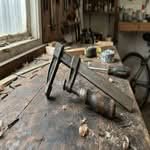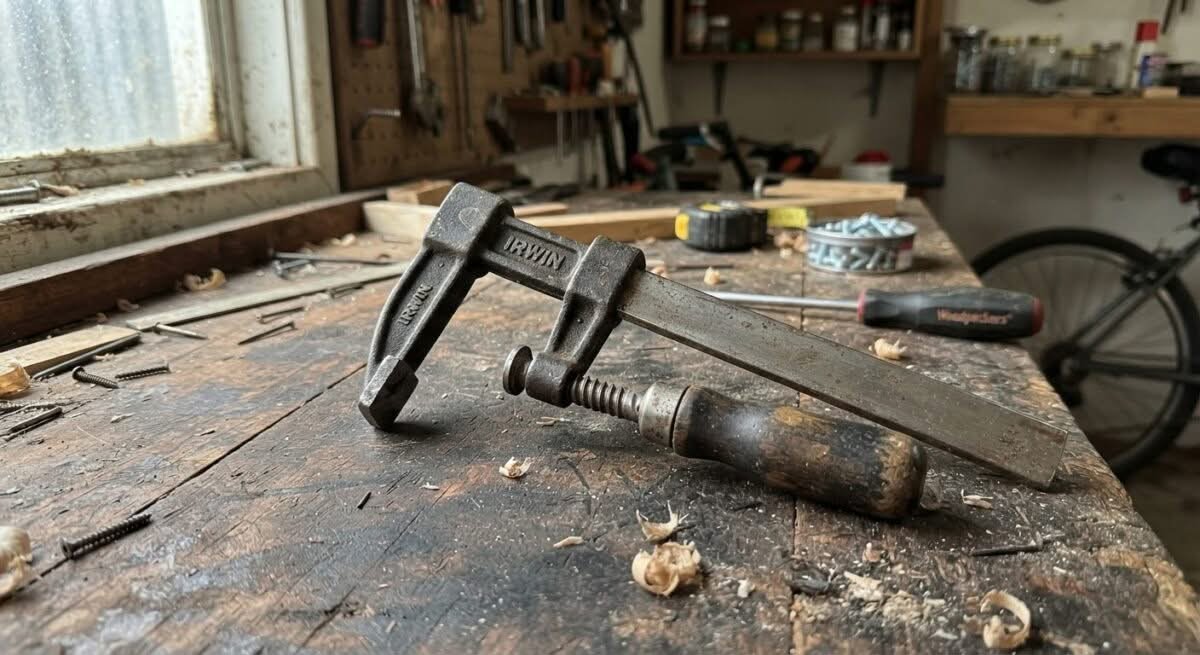
A clamp is a hand tool that holds two or more workpieces together under adjustable pressure while glue cures, a fastener goes in, or a cut is made. What nobody warns you about before a first glue-up is that the clock is the real constraint. Standard PVA wood glue gives you somewhere around five to ten minutes of open time in a warm shed before it starts to skin over, and every clamp you have to go hunting for eats into that window. The best clamps in Australia are the ones already sitting within arm’s reach when the glue goes on.
Seven patterns cover almost everything a home workshop does. Bar clamps and F clamps take long spans and can usually be reversed into spreaders. G clamps, also sold as C clamps, are the cast-iron workhorses for short reaches and high pressure. Quick-grip trigger clamps close one-handed, which matters when the other hand is holding the workpiece. Spring clamps are for light holding only. Corner clamps hold two pieces at a fixed 90 degrees. Band clamps wrap a strap around an entire frame and pull every joint at once. And locking clamps use an over-centre cam to grip and stay gripped without you holding the handle.
The number that decides most of this is clamping force, quoted in pounds or kilograms. The picks here run from about 16kg on a micro trigger clamp to over 270kg on a forged G clamp, and that spread is not a quality ladder, it is a job ladder. Timber glue joints want moderate even pressure spread over many clamps, not one clamp cranked hard enough to starve the joint. The second figure most buyers miss is throat depth, which is how far in from the edge the clamp can reach. A 2-inch throat is fine on a picture frame and useless in the middle of a tabletop.
This guide compares ten clamps sold and dispatched from Australian warehouses, spanning the full range from a 50mm G clamp to a 36-inch steel bar clamp, plus the corner, band and rail-mounted specialists that solve jobs a general-purpose clamp cannot. One honest boundary: nothing here is a parallel cabinet clamp, because no Australian-dispatched listing we found cleared the stock and image checks. If a track saw is already part of your setup, our guide to the best circular saws in Australia pairs directly with the rail clamp further down.
Quick Picks
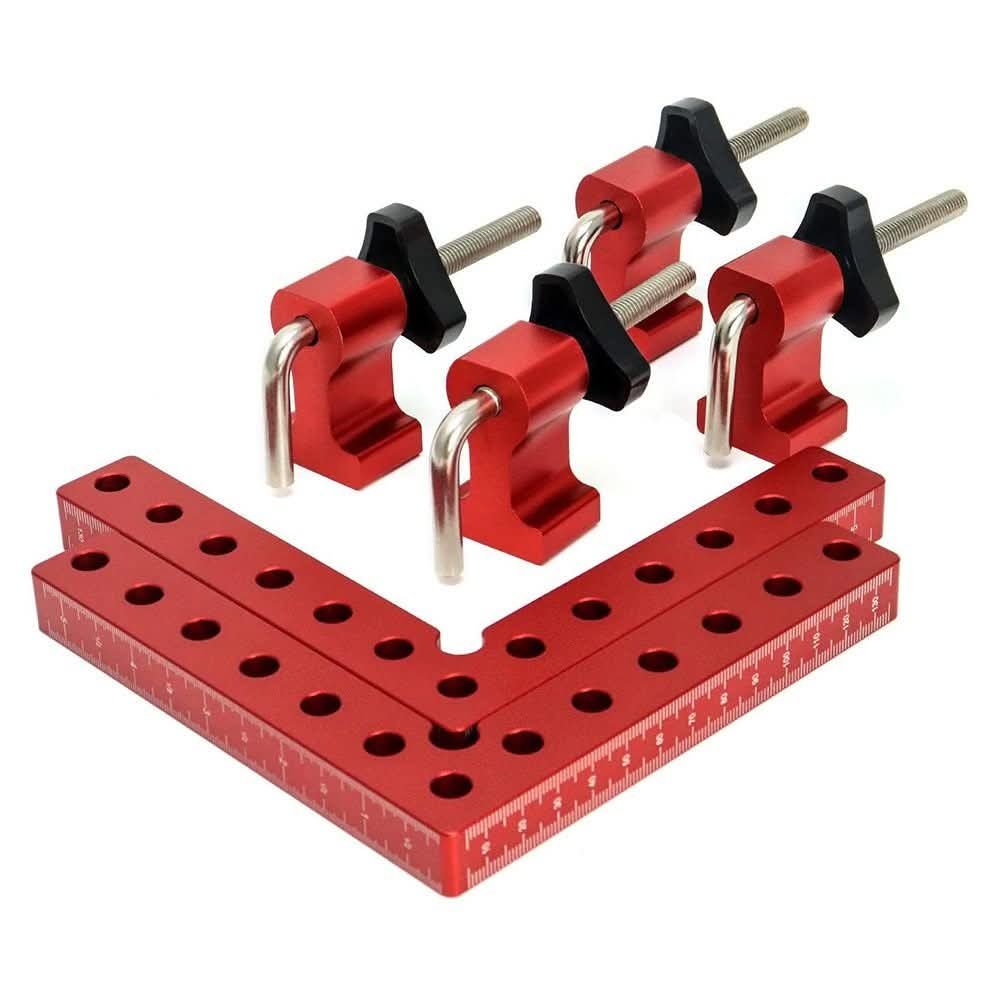
Right Angle Corner Clamp Positioning Squares, 2 Piece
Two aluminium positioning squares that hold a corner at a true 90 degrees while you drive screws, which is the one job a bar clamp physically cannot do.
CHECK CURRENT PRICE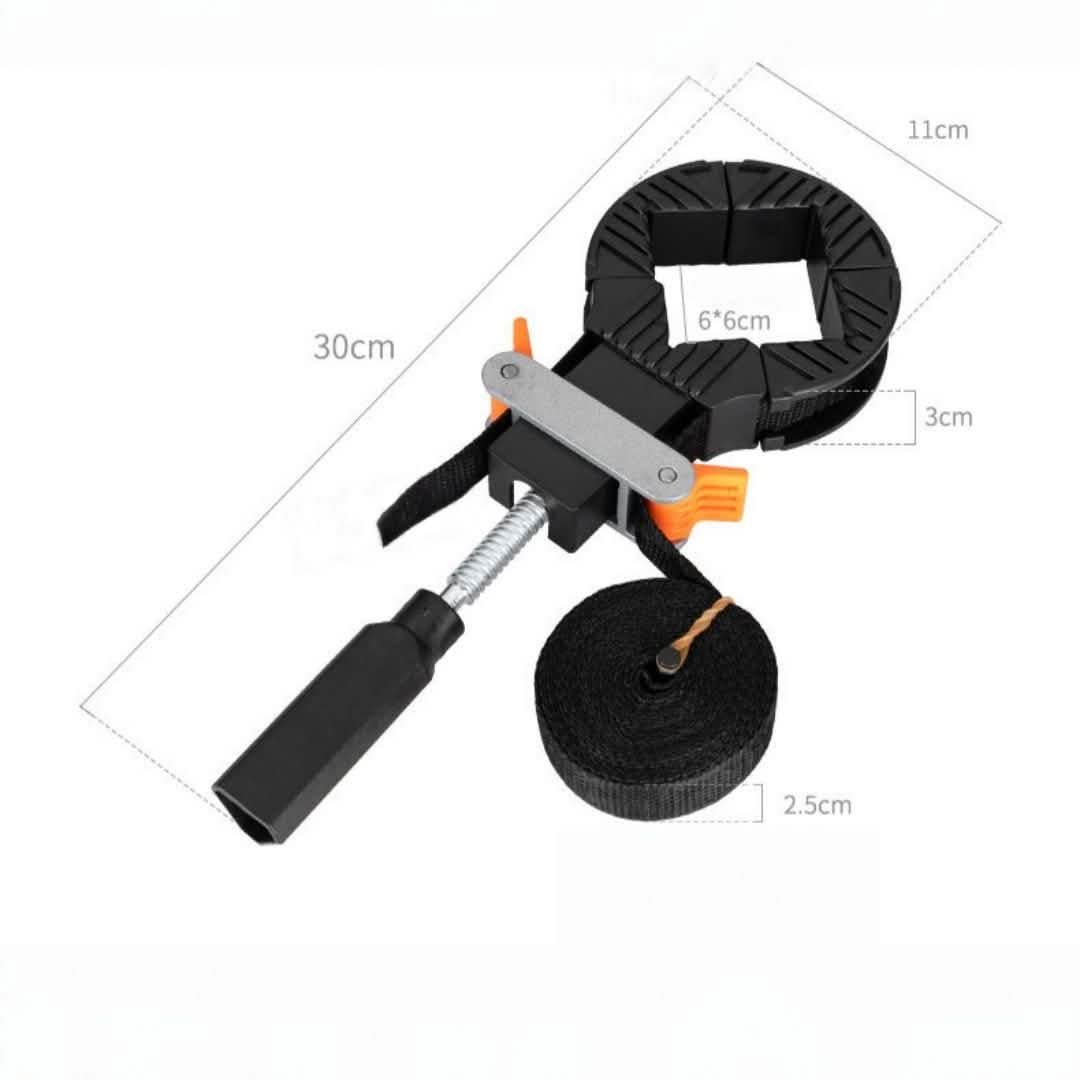
Quick-Tension Band Clamp with 4m Nylon Strap
A 4-metre nylon strap that wraps a whole frame and pulls all four mitres closed together, for a fraction of what four corner clamps cost.
CHECK CURRENT PRICE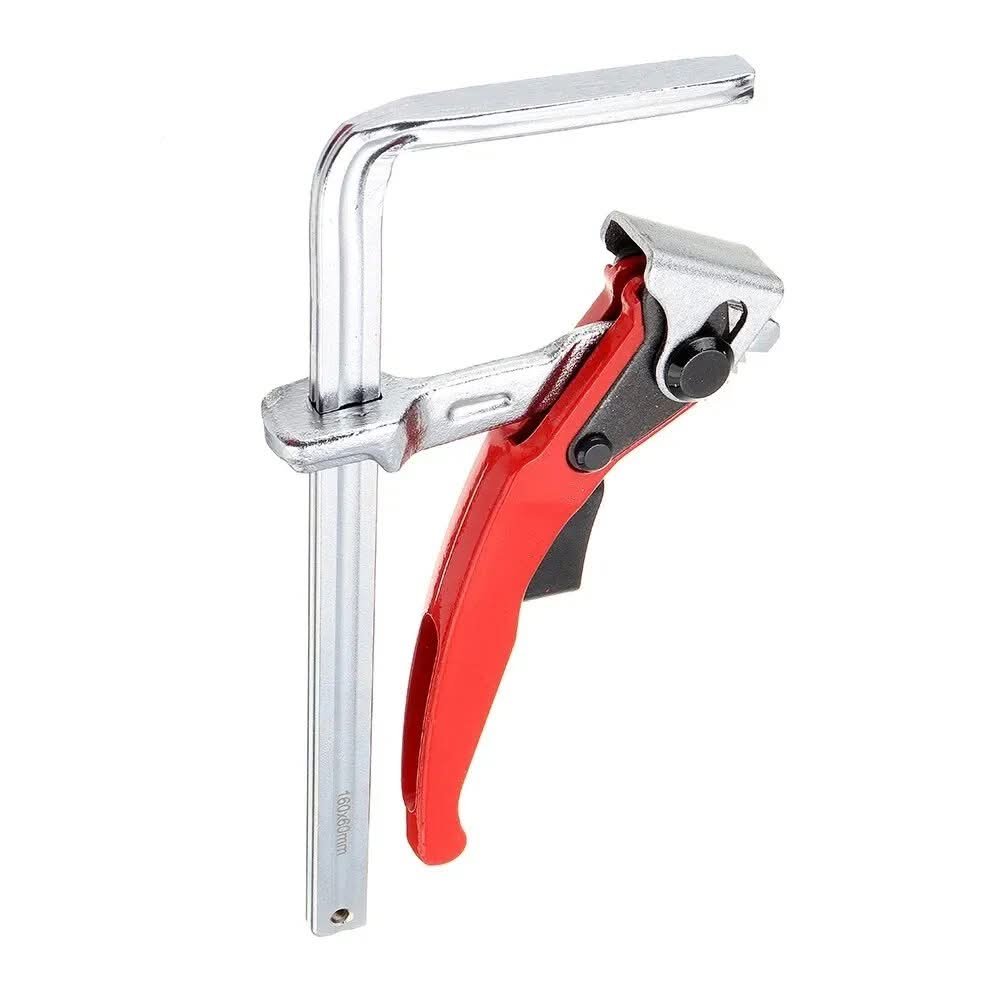
Drillpro Quick Guide Rail Clamp
A quick-action F clamp with a shoe that drops into a guide-rail or MFT slot, so the track stops creeping mid-cut.
CHECK CURRENT PRICEBest Clamps Australia Compared
| Product | Link | Type | Best For | Key Spec |
|---|---|---|---|---|
| Right Angle Corner Clamp Positioning Squares, 2 Piece | Check price | Corner clamp, 2 pack | Boxes and carcase corners | Aluminium alloy, 90 degrees fixed |
| Quick-Tension Band Clamp with 4m Nylon Strap | Check price | Band clamp, 4m strap | Mitred frames and round work | 4 metre nylon strap |
| Drillpro Quick Guide Rail Clamp | Check price | Rail clamp, F pattern | Guide rails and MFT tops | Fits MFT slots and rail channels |
| Adjustable Drawer Front Fixing Clamp, 2 Pack | Check price | Specialist clamp, 2 pack | Fitting drawer and door fronts | Stainless steel, adjustable reveal |
| 2-in-1 Self-Centring Drill Guide Positioning Clamp | Check price | Drill guide clamp | Dowel joints and edge holes | 6, 8, 10 and 12mm bushings |
| Jorgensen 3736 36-Inch Steel Bar Clamp | Check price | Steel bar clamp, 36 inch | Panel and carcase glue-ups | 36 inch (915mm) capacity |
| IRWIN VISE-GRIP 6-Inch Locking C-Clamp | Check price | Locking C-clamp, 6 inch | Welding and metal fabrication | 50mm jaw, 38mm throat |
| Eclipse Professional Heavy Duty G Clamp 250mm | Check price | G clamp, 250mm | High-pressure holding | Malleable iron, Acme thread |
| Silverline VC26 G-Clamp 150mm | Check price | G clamp, 150mm | Welding and metalwork | Copper-plated thread |
| IRWIN QUICK-GRIP One-Handed Micro Bar Clamp, 2 Pack | Check price | Trigger clamp, 4.25 inch | Confined spaces and small parts | About 16kg clamping force |
How We Picked
The sweep ran across five Australian supplier storefronts, one 85,000-line product sitemap and roughly seventy individual marketplace listings, then filtered hard. Three checks decided the shortlist: dispatched from an Australian warehouse, in stock when we looked, and photographed well enough to show what you are actually buying. That third check knocked out more products than either of the others, including a well-priced pair of 36-inch bar clamps whose entire photo set topped out at 500 pixels.
Performance came from verified-buyer rating distributions read in full, not just the headline average. A clamp sitting on 4.1 stars with nine percent of reviewers at one star is telling you something specific about its failure mode, and we have said what that is in the entry instead of hiding behind the average. Where a listing carried no ratings, the drawback is written from the design and the material spec. Safety guidance came from Australian work health and safety regulators.
1. Right Angle Corner Clamp Positioning Squares, 2 Piece – Best for Square Corners
A bar clamp pulls two things together. It has no opinion at all about whether they meet at 90 degrees. That is the gap these fill: a pair of aluminium alloy squares that sit inside a corner and hold both faces against a machined reference while you drive the screws or the glue grabs.
The aluminium build is the sensible call here over cast iron, because a positioning square only ever takes light load and a lighter tool is one you can hold in place with a spare finger. Each square is drilled for screws and slotted for a clamp, so you can either fix them semi-permanently to a jig or hold them with a G clamp for a one-off box.
Seven buyers have rated this one, which is a thin sample and worth treating that way. What it does have going for it is the price. It sits at the affordable end here and it is the single cheapest way to solve square, ahead of buying a dedicated corner clamp with its own screw mechanism. If you build drawers, boxes or small cabinets, two squares will change how those go together.
Pros
- Solves squareness, which no bar or G clamp can do on its own
- Aluminium alloy stays light enough to hold in place one-handed
- Drilled and slotted, so it works as a fixed jig or a hand-held aid
Cons
- Only seven ratings, so there is very little buyer track record to read
- Holds position but applies no clamping pressure of its own, so you still need a clamp with it
- Fixed at 90 degrees, with nothing for the 45 degree mitres a picture frame needs
Key specs: 2 pieces, aluminium alloy, fixed 90 degree reference faces, drilled and slotted for screws or clamps.
CHECK CURRENT PRICE2. Quick-Tension Band Clamp with 4m Nylon Strap – Best for Frames and Odd Shapes
Four mitres, four clamps, and every one of them fighting the other three. Anyone who has glued up a picture frame with individual corner clamps knows the problem. A band clamp goes around the outside instead, so one ratchet pulls every joint closed at the same time and the frame finds its own square.
Four metres of nylon strap is enough for a frame roughly a metre on each side, and because the strap conforms to whatever it wraps, it works on round and octagonal work where nothing with a rigid jaw fits at all. Chair repairs. Barrel-shaped planters. Anything a straight clamp slides off.
It is the cheapest item on this list by a clear margin, and that is the honest reason to own one, ahead of any performance claim: it does a job the corner squares above and every bar clamp below simply cannot, and it costs less than a single G clamp. There are no verified ratings yet, so treat the tension mechanism as unproven. Nylon webbing also stretches slightly under load, which is fine for glue-ups and no good for anything needing precise held dimensions.
Pros
- One ratchet closes all four mitres of a frame at once
- Strap conforms to round, octagonal and irregular work
- The most affordable pick here by a wide margin
Cons
- Nylon webbing stretches under load, so it holds well but not precisely
- No verified ratings, so the ratchet mechanism has no buyer track record
- Four metres caps the frame size at roughly a metre per side
Key specs: 4 metre nylon strap, quick-tension ratchet mechanism, corner blocks for mitred frames.
CHECK CURRENT PRICE3. Drillpro Quick Guide Rail Clamp – Best for Track Saw Rails

A guide rail that creeps 2mm during a cut ruins the cut, and the rubber strips on the underside of a track only hold so well on dusty melamine. This is an F clamp with a shoe shaped to drop into the T-slot underneath a guide rail or through the dog holes of an MFT-style bench top, so the track is mechanically locked instead of relying on grip.
The action is a quick-release slide with a screw for final tension, which is the right arrangement for this job: you are positioning the rail, checking the line, nudging it, and then locking. A pure screw clamp makes that dance slow. Sitting in the mid-range of this guide on price, it costs a fraction of what the branded rail clamps from track saw makers ask, and the slot profile is a common standard.
SafeWork SA spells out why this matters beyond accuracy: its circular saw guidance says the item being cut should be held in a secure and stable mounting device on a bench or sawhorse, and that both hands belong on the saw. You cannot hold the workpiece and run the saw properly at the same time. Something has to do the holding. No verified ratings on this listing yet, and the shoe profile is worth measuring against your own rail before ordering.
Pros
- Shoe locks into a rail T-slot or MFT dog hole instead of gripping a surface
- Quick-slide action with screw tension suits repeated repositioning
- Far cheaper than the branded rail clamps sold by track saw makers
Cons
- The shoe profile suits common slot standards but not every brand of rail, so measure first
- No verified ratings, so long-term wear on the slide is unknown
- Useless as a general-purpose clamp because the shoe fouls a flat surface
Key specs: F pattern quick-action clamp, shoe profiled for guide-rail T-slots and MFT dog holes, slide adjustment with screw tension.
CHECK CURRENT PRICE4. Adjustable Drawer Front Fixing Clamp, 2 Pack – Best for Cabinet Fronts
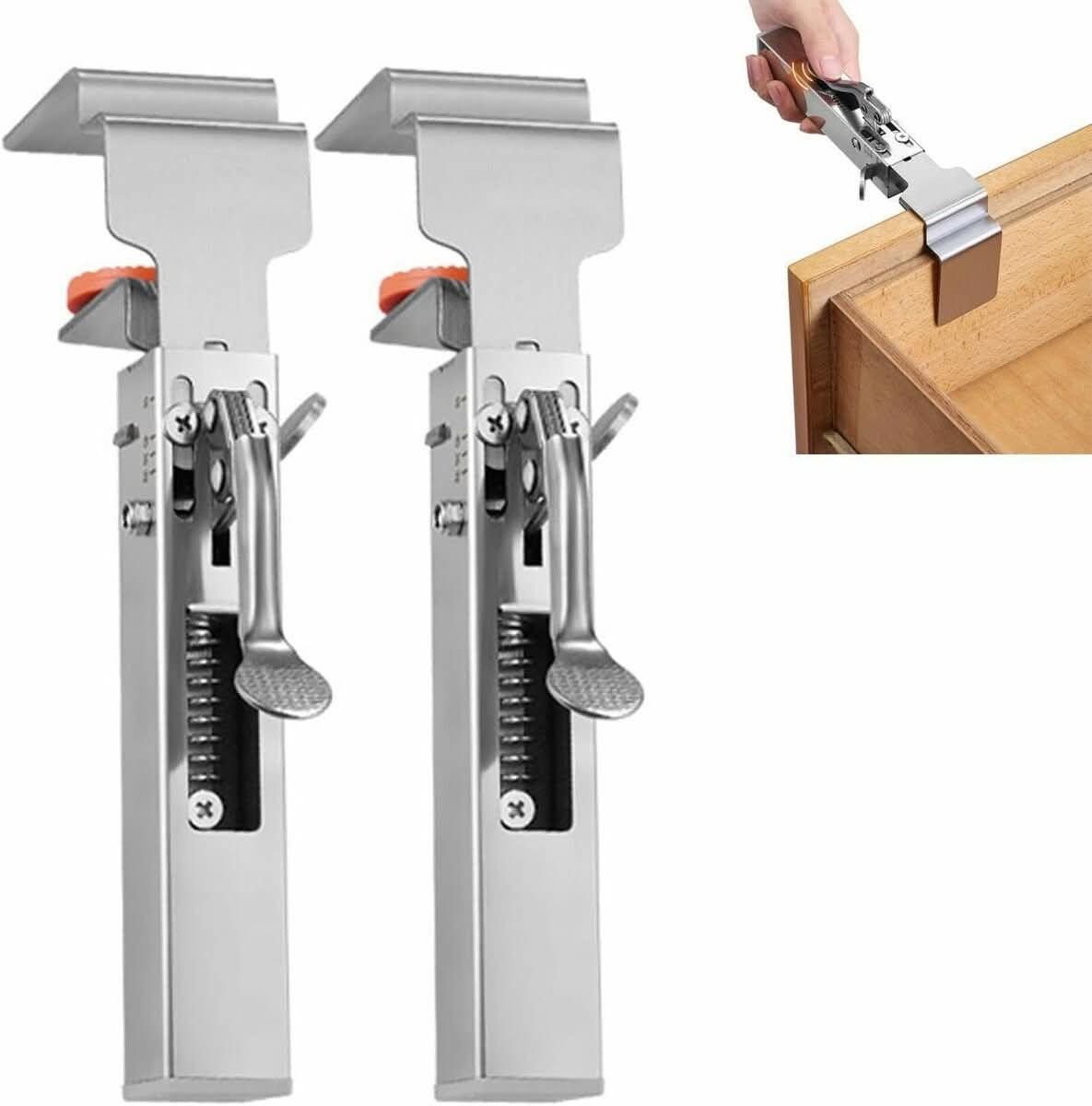
This one is unashamedly a single-job tool, and the job is a genuinely miserable one done any other way. Fitting a drawer front means holding a heavy panel dead level with an even gap on both sides while you reach inside the cabinet to drive screws you cannot see. Two hands are not enough. Most people use double-sided tape and hope.
These clamp the front to the drawer box with an adjustable screw that sets the reveal, so the gap is dialled in mechanically instead of eyeballed. Stainless steel construction is the right choice for a tool that lives near a kitchen bench. They come as a pair, which is the minimum useful count since you need one at each end.
There are no ratings yet on this listing. Against the corner squares above, the comparison is scope: those solve one geometric problem across many projects, these solve one project step exceptionally well and sit idle the rest of the year. If you are fitting a whole kitchen, they pay for themselves on the second drawer.
Pros
- Sets the reveal gap mechanically instead of by eye and tape
- Stainless steel handles a kitchen fit-out environment
- Supplied as a pair, which is the minimum count that actually works
Cons
- Single-purpose, so it sits in the drawer between kitchen jobs
- No verified ratings, so the adjustment screw has no track record
- Two clamps handle one front at a time, so a full kitchen means working sequentially
Key specs: 2 pieces, stainless steel, adjustable reveal screw, for drawer front and cabinet door installation.
CHECK CURRENT PRICE5. 2-in-1 Self-Centring Drill Guide Positioning Clamp – Best for Straight Drilling

Drilling a square hole into the edge of a board freehand is close to impossible, and it is exactly what dowel joints and knock-down fittings require. This clamps onto the workpiece, self-centres on the board thickness, and gives the bit a hardened bushing to run through. Four bushings cover 6, 8, 10 and 12mm, which is the standard dowel range.
The graduated body is the part that turns it from a guide into a jig, because you can set an offset and repeat it down a whole edge. It sits in the mid-range of this list on price. There are no verified ratings yet, and self-centring mechanisms live or die on the tolerance of their moving jaws, which is not something a listing photo can settle.
Pros
- Self-centring jaws remove the marking-out step for edge holes
- Four bushings cover the standard 6 to 12mm dowel range
- Graduated body lets an offset be set once and repeated
Cons
- No verified ratings, and self-centring jigs depend entirely on jaw tolerance
- Bushings limit it to four bit sizes, with no oversize option
- It is a drilling jig first and a clamp second, so it will not stand in for a general-purpose clamp
Key specs: Self-centring drill guide clamp, 4 hardened bushings (6, 8, 10 and 12mm), graduated metal body.
CHECK CURRENT PRICE6. Jorgensen 3736 36-Inch Steel Bar Clamp – Best Long-Reach Bar Clamp
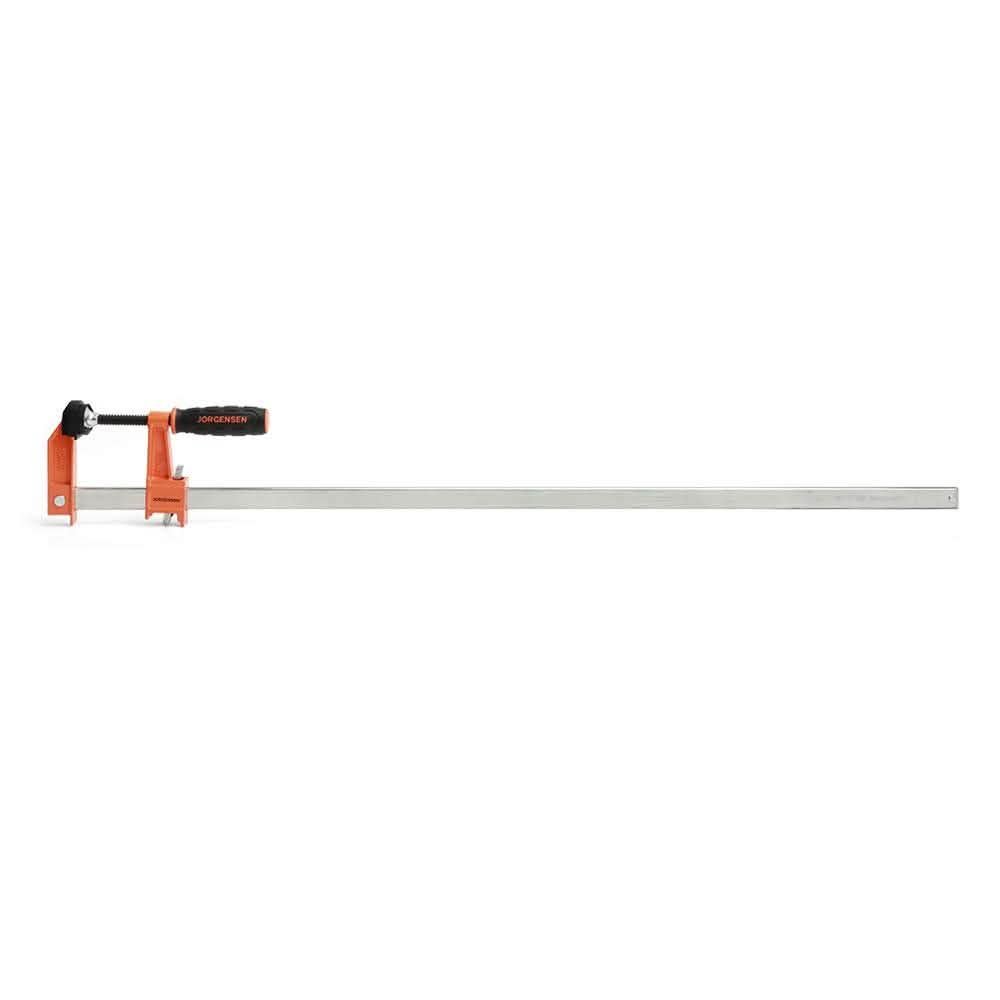
Thirty-six inches is the length that turns a workshop from one that assembles small boxes into one that can glue up a tabletop. Below about 600mm of capacity you are limited to drawers and frames, and the jump to a 915mm bar is where panel glue-ups become possible at all.
It is a plain steel bar clamp: a sliding jaw that drops onto the bar and grips under load, and a screw at the fixed end for tension. There is nothing clever about the mechanism and that is exactly why the pattern has survived unchanged for a century. The rating spread reflects it at 78 percent five star across 467 ratings, though four percent at two stars and two at one is a slightly rougher tail than the G clamps below.
The practical catch with any long bar clamp is that you need at least two, and realistically four, before a panel glue-up is possible. Buying one is buying a quarter of a solution, and that is a real cost worth planning for. Store them hanging, not flat, because a bent bar never comes back true.
Pros
- 915mm capacity opens up tabletop and carcase glue-ups
- 78 percent five-star across 467 ratings for a mechanism with nothing to go wrong
- Steel bar takes real tension without flexing the way alloy does
Cons
- You need four before a panel glue-up is genuinely workable, so the real cost is four times the sticker
- Six percent of reviewers left two stars or below, a rougher tail than the G clamps here
- Long steel bars need hanging storage, because a bent bar stays bent
Key specs: 36 inch (915mm) capacity, steel bar, sliding jaw with screw tension at the fixed end.
CHECK ON AMAZON7. IRWIN VISE-GRIP 6-Inch Locking C-Clamp – Best Locking Clamp

An over-centre cam is the whole idea. Set the screw once for the material thickness, squeeze the handle, and the clamp stays locked with no ongoing hand pressure and no screw to keep turning. For repetitive work where every piece is the same thickness, that is the difference between a clamp you use and one you leave in the drawer.
Jaw adjustment runs to about 50mm with a 38mm throat depth, and the swivel pads spread load without marking soft material too badly. It carries a lifetime guarantee, which is unusual in this category and worth something concrete under Australian Consumer Law, where a manufacturer’s stated guarantee sits on top of your statutory rights and does not replace them.
The rating spread is 75 percent five star across 1,886 ratings, with four percent at one star. The recurring theme in the low end of any locking clamp’s reviews is the same: the cam mechanism is either set correctly and grips hard, or set loosely and pops open under load, and it takes a few goes to learn the feel. Compared to the plain bar clamp above, this trades reach for grip. Six inches of capacity is nothing, and the pressure per square millimetre is enormous.
Pros
- Over-centre cam holds without ongoing hand or screw pressure
- Lifetime manufacturer guarantee, which sits on top of Australian Consumer Law rights
- 1,886 ratings is a deep track record for a single hand tool
Cons
- The cam needs setting correctly or it pops open under load, which is what most one-star reviews describe
- Six inches of capacity is short, so it is no help on a panel
- Hardened jaws mark soft timber if you clamp without a scrap pad
Key specs: 6 inch body, jaw adjustment to roughly 50mm, throat depth roughly 38mm, over-centre locking cam, lifetime manufacturer guarantee.
CHECK ON AMAZON8. Eclipse Professional Heavy Duty G Clamp 250mm – Best Heavy Duty G-Clamp
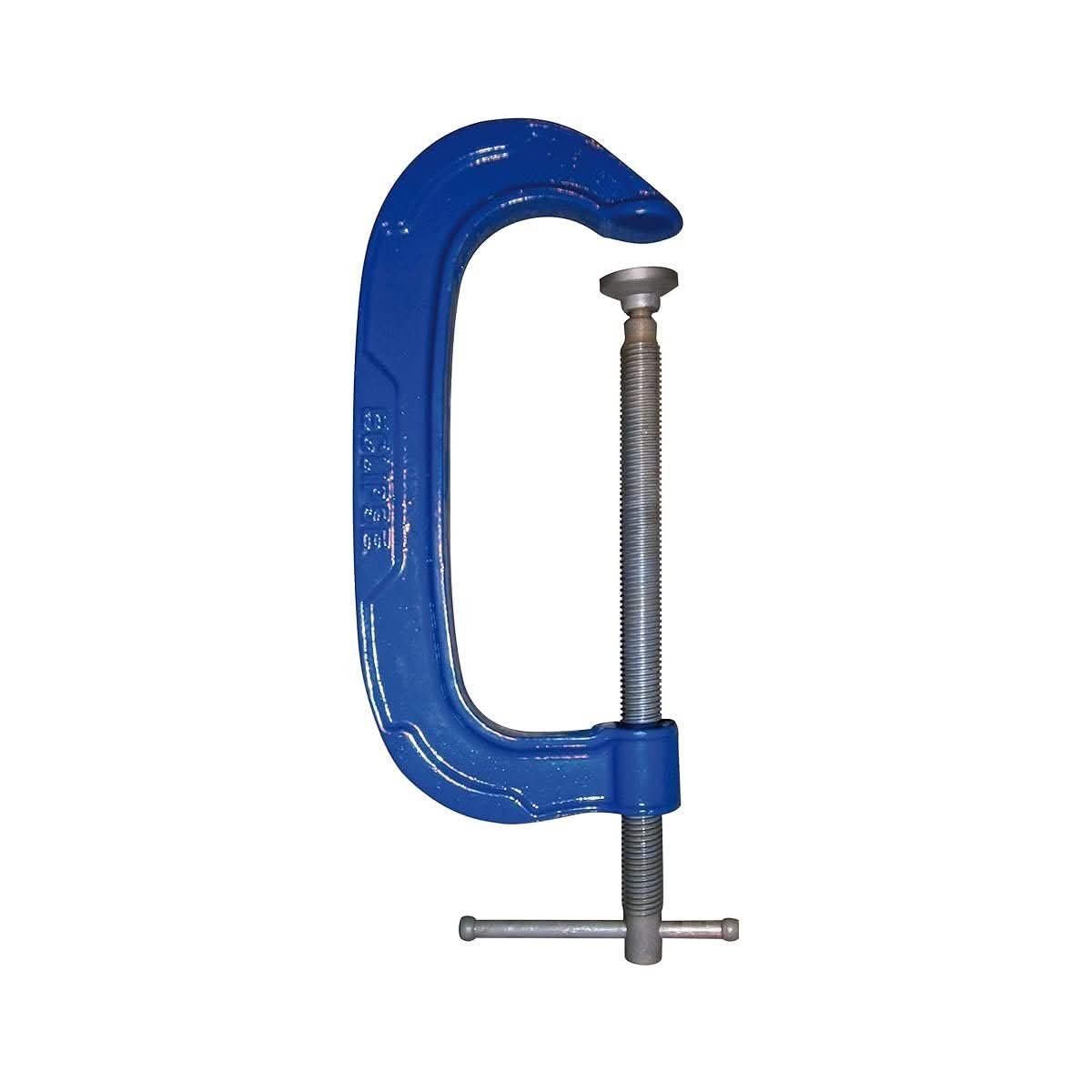
The specification line that matters on this one is unusual and worth quoting straight: the tommy bar will bend before the frame does. That is a deliberate design decision. A cast iron G clamp frame that fails does so suddenly and throws pieces, while a bending handle warns you first and costs nothing to replace.
Malleable iron rather than grey cast iron is the reason it can behave that way, because malleable iron deforms before it snaps. The thread is a twin start Acme profile, which closes the clamp in roughly half the turns of a standard vee thread and takes side load far better. At 250mm of capacity and sitting at the premium end of this guide, it is the clamp you buy for the jobs where a lighter one has already let you down.
Only 23 people have rated it, but they sit at 4.7 stars and it is the highest average here. Set against the 150mm G clamp below it, the honest difference is capacity and weight: this one is heavier than most people expect and is a two-hand tool to position.
Pros
- Malleable iron frame deforms before failing instead of shattering
- Twin start Acme thread closes in about half the turns of a standard thread
- Highest average rating here at 4.7 stars
Cons
- Only 23 ratings, so the sample is thin next to the four-figure counts here
- Heavy enough that positioning it overhead is a two-hand job
- The premium end of this guide on price for a single clamp
Key specs: 250mm capacity, malleable iron frame, twin start Acme rolled thread, tommy bar handle, swivel shoe.
CHECK ON AMAZON9. Silverline VC26 G-Clamp 150mm – Best for Welding
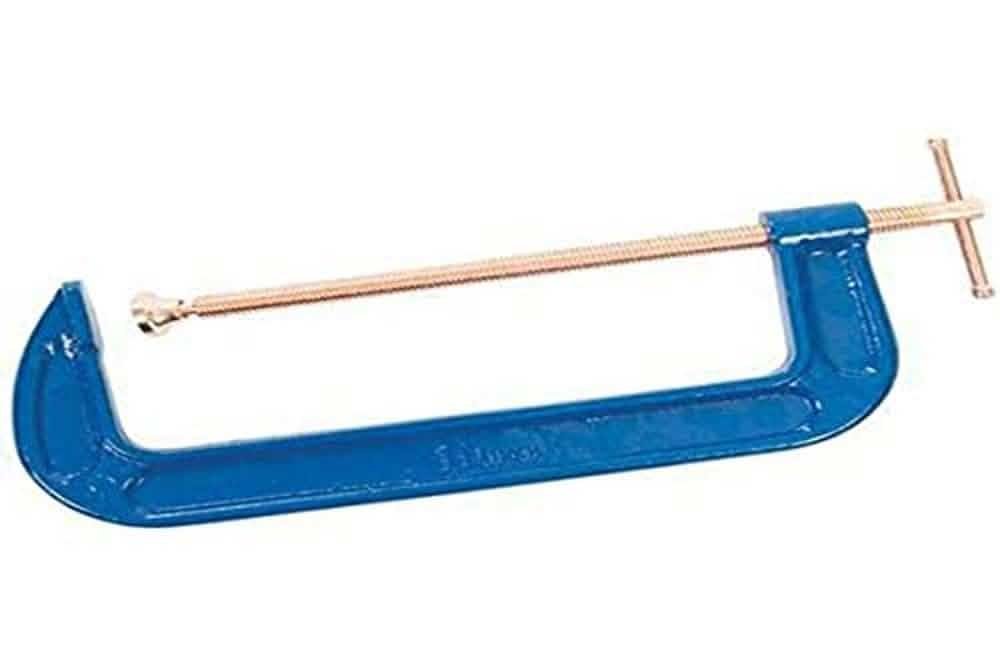
One detail separates this from every other G clamp here, and you only notice it the second time you weld: the thread is copper plated so weld spatter will not stick to it. Spatter welded onto a bare steel thread turns a smooth clamp into a seized one, and cleaning it off is a job nobody enjoys.
The rest is conventional and solid: a cast iron frame, reinforced shoulders, a tommy bar handle and a swivel shoe that lets the pad sit flat on angled work. 150mm of capacity is the size most people reach for most often, which is presumably why it has collected 1,573 ratings, the second deepest count in this comparison.
The spread is 71 percent five star with only one percent at one star, which is the cleanest low end of anything here. It sits in the lower-middle of this guide on price. Stock on the Australian listing runs down to single units regularly, so if welding is on the list, order it when you see it rather than when you need it.
Pros
- Copper-plated thread stops weld spatter seizing the screw
- Only one percent of 1,573 ratings sit at one star, the cleanest low end here
- 150mm is the most generally useful G clamp size
Cons
- Australian stock drops to single units regularly
- Cast iron frame cracks instead of bending if you overload it
- Swivel shoe is small enough to dent soft timber without a pad
Key specs: 150mm capacity, cast iron frame with reinforced shoulders, copper-plated steel thread, tommy bar handle, swivel shoe.
CHECK ON AMAZON10. IRWIN QUICK-GRIP One-Handed Micro Bar Clamp, 2 Pack – Best for Small Work
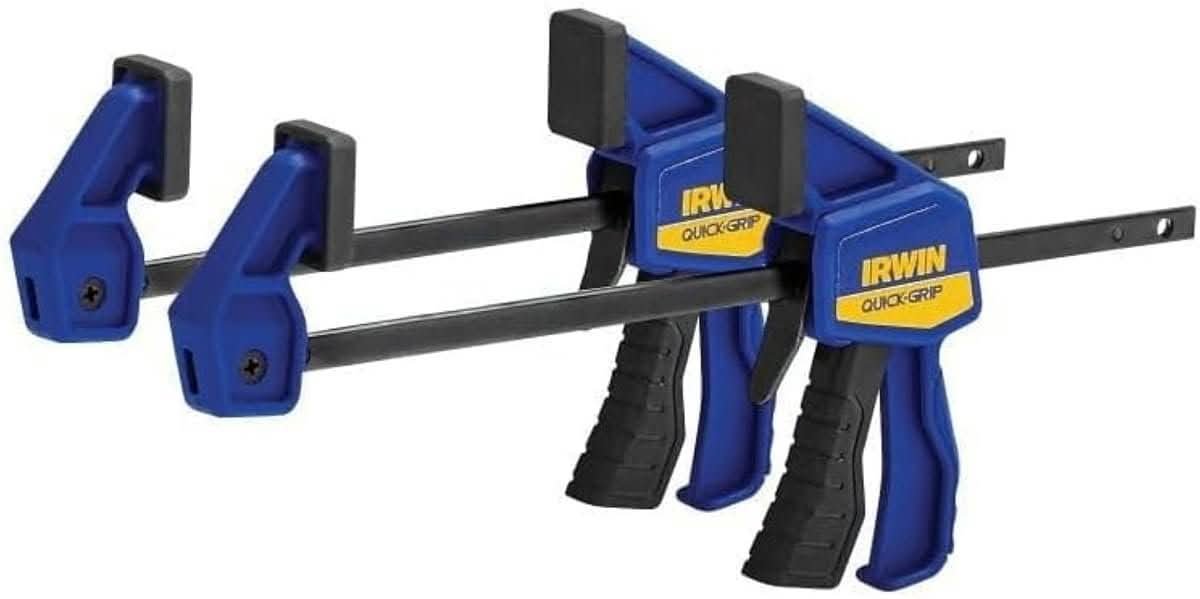
Four and a quarter inches of capacity and roughly 16kg of clamping force. Those numbers look feeble beside every other clamp here, and that is the point. This is the clamp for holding a hinge while you mark it, pinching a moulding return, or working in a corner where a G clamp handle has nowhere to turn.
One-handed trigger action is what makes it usable at all in those spots, since the other hand is holding the part. Model 1964747 comes as a pair, which is the sensible minimum. Be clear-eyed about the rating though: 4.1 stars across 1,724 ratings, with nine percent at one star, is the weakest distribution in this comparison by a distance. The pattern in the low reviews is the resin trigger mechanism wearing out and losing grip, and with 16kg of force there is very little margin before slipping starts.
Bought as a light-duty holding tool it does well. Bought expecting a real clamp it will disappoint, and that expectation gap is most of what the one-star reviews describe.
Pros
- One-handed trigger action works where two hands are not available
- Small enough to reach into corners a G clamp handle cannot turn in
- Supplied as a pair at the affordable end of this guide
Cons
- Nine percent of 1,724 ratings sit at one star, the weakest spread here
- Roughly 16kg of force means it slips under any real load
- The resin trigger mechanism is the reported wear point, not the bar
Key specs: 4-1/4 inch capacity, roughly 16kg (35lb) clamping force, one-handed trigger action, 2 pack, model 1964747.
CHECK ON AMAZONHow to Choose Clamps in Australia
Buy quantity before you buy quality. The most common clamp mistake is spending the whole budget on two excellent clamps. A panel glue-up wants a clamp roughly every 200 to 300mm along the joint, so four mid-priced bar clamps beat two premium ones every time. The cheap orange F clamps on the Bunnings end-cap are not the best clamps made, and eight of them will still glue up a tabletop that two premium ones cannot. Once you have enough, upgrade the ones that annoy you most.
Match throat depth to how far in from the edge you need to reach. Capacity gets quoted on every listing and throat depth often does not, which is backwards for anyone gluing up panels. A 38mm throat clamps an edge. Reaching the middle of a 600mm tabletop needs either a deep-throat clamp, cauls spanning the width, or a different approach entirely.
Work out whether you need pressure or position. Corner squares and drill guides hold things in the right relationship and apply almost no force. G clamps apply enormous force and have no opinion about geometry. Most jobs need both, used together, and buying only one kind is why glue-ups come out square in one dimension and racked in another.
Check what the jaw pads will do to your timber. Bare cast iron on Tasmanian oak leaves a dent that sanding will not fully remove. Jarrah and spotted gum shrug it off, and that difference is worth knowing before you crank a clamp down on a show face. On a finished surface it is worse. Swivel shoes help, plastic caps help more, and a scrap offcut used as a pad costs nothing. Any clamp without pads goes on the list of things to keep away from show faces.
Store clamps where you can reach them mid-glue-up. This sounds trivial and it decides more glue joints than any spec on this page. PVA skins over in minutes, so a rack on the wall next to the bench beats a tub under it. SafeWork SA makes the same point from the safety side: store tools safely, inspect them before use, and keep them maintained. A clamp with a seized thread is one you will not reach for.
Think about what else the clamp is holding down. Australian safety guidance on circular saws is explicit that the workpiece belongs in a secure mounting on a bench or sawhorse and both hands belong on the saw, which means a clamp is part of the cutting setup and not an optional extra. If your workshop is still coming together, our guides to the best tool boxes in Australia and the best jigsaws in Australia cover the storage and cutting sides of the same bench.
You’ll Also Want
Clamping cauls. A pair of straight timber battens laid across a panel spreads a clamp’s point pressure into an even line, which is how a glue-up comes out flat instead of bowed. Any straight offcut works, but a screw-adjustable angle clamp block handles the awkward case where two surfaces meet at anything other than square.
A second pair of hands for small parts. Nylon spring clamps hold light work while glue grabs and cost almost nothing, which makes them the right answer for the jobs where a real clamp is overkill and a rubber band is not enough.
Wood glue that suits the open time you have. Standard PVA gives roughly five to ten minutes before it skins in a warm shed. A waterproof indoor-outdoor wood glue holds up to weather as well as workshop use, which matters on anything living on a Queensland verandah.
Somewhere to keep them. Clamps are heavy, awkward and quick to rust if they sit on a damp concrete floor. Our guide to the best tool boxes in Australia covers the storage side, and a wall rack beside the bench beats any box for the clamps you reach for mid-glue-up.
Frequently Asked Questions
How many clamps do you actually need?
For a panel glue-up, plan on one clamp every 200 to 300mm along the joint, alternating above and below the panel so the pressure does not bow it. A 600mm-wide tabletop wants roughly four bar clamps. For general repairs and small assemblies, two G clamps and two trigger clamps cover most jobs. Buying enough mid-priced clamps beats buying two expensive ones every time.
What is the difference between a G clamp and an F clamp?
A G clamp has a fixed cast frame shaped like the letter G, with a single screw that closes onto a small throat. It applies very high pressure over a short reach. An F clamp has a sliding jaw running on a steel bar, so its capacity is adjustable and much longer, with lower pressure. Use G clamps for grip and F or bar clamps for reach across a panel.
How tight should you clamp a glue joint?
Firm, not maximum. A wood glue joint needs enough pressure to close the gap and squeeze out a thin even bead, which is far less than most clamps can deliver. Over-tightening starves the joint by forcing out too much glue and can bow the workpiece. If the squeeze-out has stopped and the joint line has disappeared, the clamp is tight enough. Wipe the excess before it cures.
Do clamps damage timber?
Bare metal jaws will dent softwoods and Tasmanian oak, and the mark often will not sand out of a finished surface. Swivel shoes reduce it, moulded plastic caps help more, and a scrap offcut used as a pad between jaw and workpiece removes the problem entirely at no cost. Keep unpadded cast iron clamps away from show faces and reserve them for rough work and metal.
Can woodworking clamps be used for welding?
Some can, and one detail decides it. Weld spatter sticks to bare steel threads and eventually seizes the screw solid, so a clamp intended for welding should have a copper-plated or otherwise coated thread. Plastic-jawed trigger clamps and any clamp with resin components should stay well away from hot work. Cast iron G clamps with metal pads are the standard choice.
What clamping force do you need?
Far less than most people assume for timber, and more than they assume for metal. A glue joint in softwood needs moderate even pressure across many contact points, which is why four clamps at medium tension beat one cranked hard. Metal fabrication and holding work against a saw need real grip, in the range a cast iron G clamp or a locking clamp delivers. Match the figure on the listing to the material, not to the price.
Verdict
For a workshop starting from nothing, the two aluminium corner squares and the band clamp at the top of this list are the cheapest way to fix the two problems that ruin most first projects, which are joints that are not square and frames that will not close. Add the 36-inch steel bar clamp once panels enter the picture, and buy it in multiples of four instead of one at a time. If the work is metal instead of timber, the 150mm G clamp with the copper-plated thread is the one to start with, because a seized screw is what kills every other clamp near a welder.