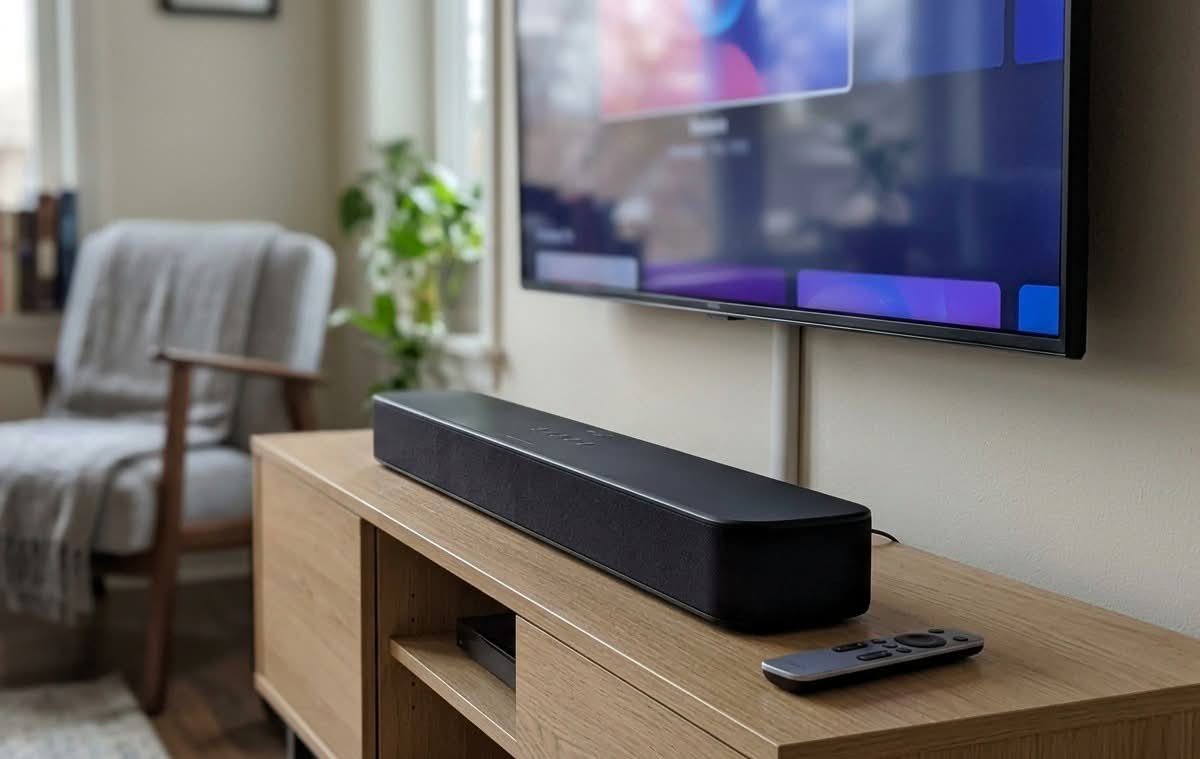
A sound bar is a single elongated speaker unit that sits in front of or below a television and replaces the thin, forward-firing drivers built into most modern TVs. It packs multiple channels into one enclosure, often paired with a separate wireless subwoofer, to widen the stereo image and add bass that a flat-panel TV cannot reproduce on its own. This guide to the best sound bars australia shoppers can buy covers everything from compact two-channel bars through to multi-channel Dolby Atmos systems with wireless rear speakers.
Sound bars split into a handful of distinct types. Two-channel (2.0) bars are the simplest, stereo-only units built mainly for voice clarity on a tight budget. 2.1 systems add a dedicated subwoofer, wired or wireless, for genuine low end that a slim bar cannot produce alone. 3.1 and higher multi-channel bars split the front stage into left, right and centre channels for clearer dialogue and a wider soundstage. Dolby Atmos and DTS:X soundbars add upward-firing or virtual height channels that bounce sound off the ceiling for a surround effect without extra speakers, and full home theatre systems bundle a bar, subwoofer and physical rear speakers into one package.
Most bars built for a 55 inch to 65 inch television run between 90cm and 100cm (35 to 39 inches) wide, matching the width of the screen sitting above them. Past size, the specs that actually decide sound quality are channel count, total wattage, whether a subwoofer is included, and the connection options on offer, since HDMI ARC or eARC carries far more audio detail than a basic optical cable.
The list below draws on a general Australian retailer plus Amazon Australia, running from an entry-level two-channel bar through to flagship Dolby Atmos systems, with a straight comparison table, full specs for every entry and buying advice further down the page.
Quick Picks

Sansai BT-199K Soundbar
A compact rechargeable 2.0 channel bar with RGB lighting and up to six hours away from the TV on battery power.
CHECK CURRENT PRICE
Bose Smart Soundbar
A single-unit Dolby Atmos bar with built-in Alexa and Wi-Fi streaming for a smart-home living room.
CHECK ON AMAZON
50W Bluetooth Sound Bar
A basic wall-mountable bar that beats a TV’s built-in speakers at the lowest outlay on this list.
CHECK ON AMAZONBest Sound Bars Australia Compared
| Product | Link | Type | Best For | Key Spec |
|---|---|---|---|---|
| Sansai BT-199K Soundbar | Check price | 2.0 Channel | Portable Use | 20W, Bluetooth 5.0, rechargeable battery |
| Bose Smart Soundbar | Check price | All-in-One Dolby Atmos | Premium Sound | Dolby Atmos, Wi-Fi, Alexa built-in |
| LG SC9S Soundbar | Check price | 3.1.3 Channel | LG OLED Pairing | 400W, Dolby Atmos, Wi-Fi |
| Sony BRAVIA Theatre System 6 | Check price | 5.1 Channel System | Full Surround | Wireless rear speakers, Dolby Atmos/DTS:X |
| JBL Cinema SB550 | Check price | 3.1 Channel | Mid-Range Home Theatre | 250W, wireless subwoofer, HDMI eARC |
| Yamaha SR-B30A | Check price | 2.1 Channel | Compact Setups | Built-in subwoofers, virtual Dolby Atmos |
| Razer Leviathan V2 | Check price | 2.1 Channel Gaming | Desktop Gaming | THX Spatial Audio, Chroma RGB |
| Soundcore Infini Mini | Check price | 2.0 Channel | Small Rooms | 21 inch compact frame, optical input |
| 50W Bluetooth Sound Bar | Check price | 2.0 Channel | Value for Money | 50W, Bluetooth, optical/AUX |
| Razer Leviathan V2 X | Check price | Compact Gaming | Desk-Friendly Setups | USB-C powered, Bluetooth 5.0 |
1. Sansai BT-199K Soundbar – Best Portable Design
The Sansai BT-199K is small enough to sit on a shelf rather than stretch the full width of a TV, and the moulded plastic body holds a strip of RGB lighting along the front edge. Build quality is what you would expect at this size, light and simple, with a single power button and a set of touch controls on top.
Bluetooth 5.0 pairs quickly and holds a connection out to around 25 metres, which is more range than most lounge rooms need. The built-in 3600mAh battery gives roughly two and a half to six hours of playback depending on volume, so it can run through a movie without sitting on charge, and the FM radio and TF card slot add options a wired bar does not have.
At 20W total output this is not a bar for a large living room or a genuinely bassy movie soundtrack, and the RGB lighting will not suit everyone’s decor. A student or renter who wants better sound than a laptop or a TV’s own speakers, without wall brackets or a permanent setup, is the obvious fit here.
Pros
- Rechargeable battery means it works away from a power point
- Bluetooth 5.0 with a long effective range
- USB, TF card and FM radio inputs beyond Bluetooth
Cons
- 20W output struggles in a larger room
- No dedicated subwoofer or HDMI input
Key specs: 2.0 channel, 20W total power, Bluetooth 5.0, 3600mAh rechargeable battery, USB/TF/AUX/FM inputs.
CHECK CURRENT PRICE2. Bose Smart Soundbar – Best Premium All-in-One
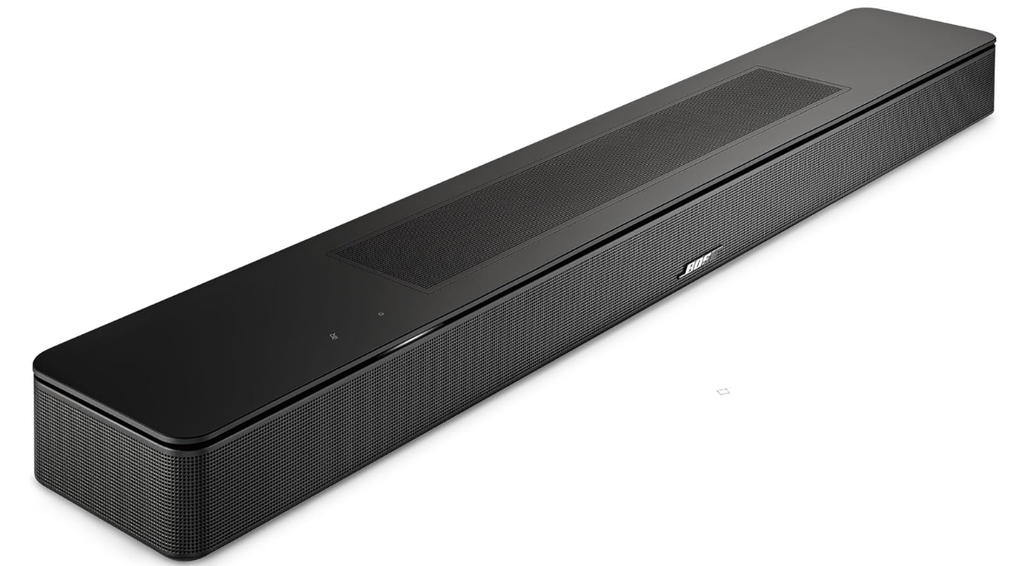
Bose packages this bar as a single self-contained unit rather than a bar-plus-subwoofer pair, which keeps the footprint tight under a TV cabinet without a separate box to place. The finish is the usual matte Bose black, with a fabric grille running the length of the front and a small top-mounted control strip.
Dolby Atmos processing and Bose’s own TrueSpace tuning do most of the work here, widening dialogue and effects without relying on physical height channels. Alexa is built in for voice control, and it connects over Wi-Fi as well as Bluetooth, so streaming a playlist does not need the TV switched on at all.
This is the most expensive entry on this list, and buyers who mainly want louder TV dialogue rather than a full listening experience are paying for features they will rarely touch. Someone building a smart-home living room around voice assistants, who wants one box rather than a subwoofer to find room for, gets the most out of it.
Pros
- Single-unit design with no separate subwoofer to place
- Built-in Alexa and Wi-Fi streaming
- Dolby Atmos processing for a wider soundstage
Cons
- The highest price on this list by a wide margin
- No physical height channels, so Atmos is virtual rather than true up-firing
Key specs: All-in-one design, Dolby Atmos with TrueSpace processing, Wi-Fi and Bluetooth, Alexa built in, HDMI eARC.
CHECK ON AMAZON3. LG SC9S Soundbar – Best for LG OLED Pairing
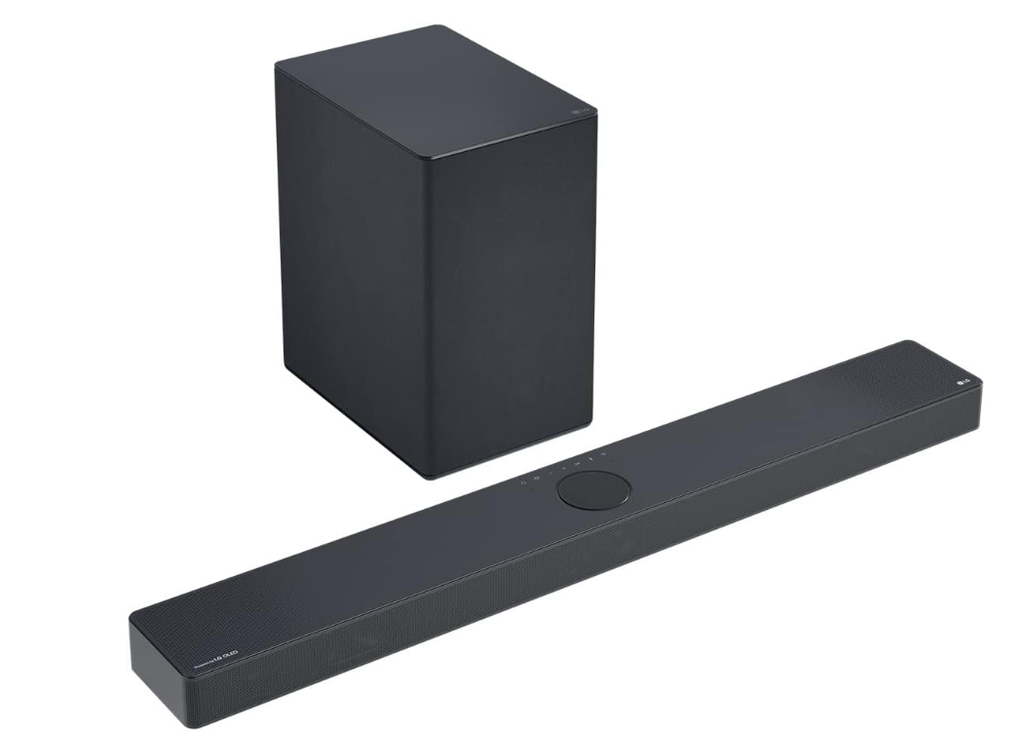
LG built the SC9S to sit flush against the stand of its C-series OLED televisions, and the low, flat profile reflects that brief. A brushed metal top panel and a fabric-wrapped front give it a finish that reads as part of the TV setup rather than an add-on speaker.
Nine drivers spread across a 3.1.3 layout, backed by 400W of power, so height and surround cues are handled by physical up-firing speakers rather than software tricks. LG’s WOWCAST connection pairs wirelessly with a compatible OLED TV, and Wow Orchestra blends the bar’s output with the TV’s own speakers to widen the stage further.
Most of the party-piece features are locked to LG’s own OLED range, so pairing this with a TV from another brand still works but loses the wireless handshake and orchestra mode. It makes the most sense for someone who already owns or is buying an LG OLED and wants the bar built specifically around it.
Pros
- True 3.1.3 layout with physical up-firing speakers
- 400W of power across nine drivers
- Wireless WOWCAST pairing with compatible LG OLED TVs
Cons
- Best features are tied to LG’s own OLED range
- Premium pricing to match the flagship spec sheet
Key specs: 3.1.3 channel, 400W, nine drivers, Dolby Atmos and DTS:X, Wi-Fi and WOWCAST wireless connection.
CHECK ON AMAZON4. Sony BRAVIA Theatre System 6 – Best Full Surround System
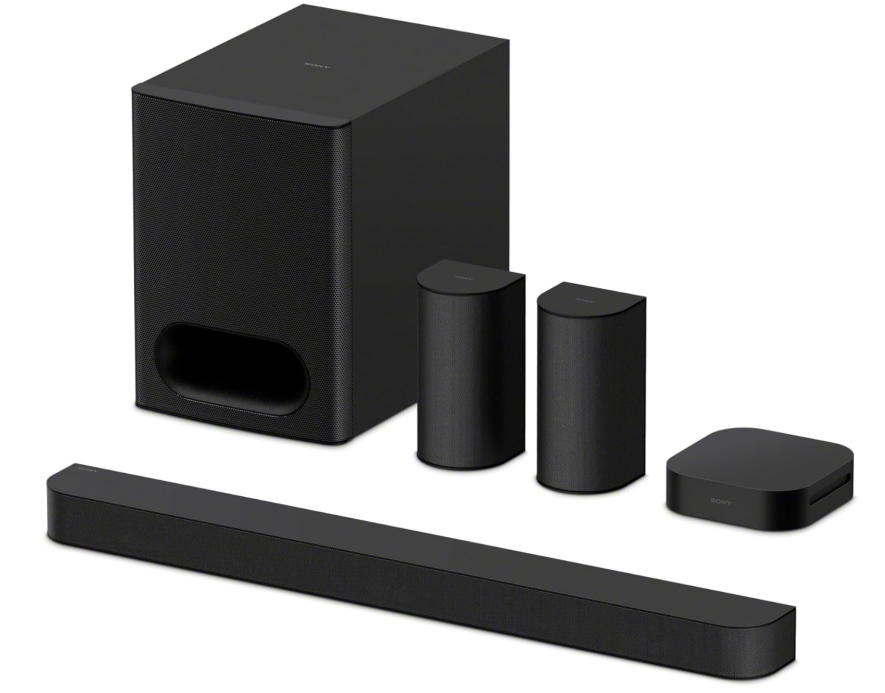
Unlike every other entry on this list, the Theatre System 6 ships as a full three-piece kit rather than a bar you buy alone. The main bar carries three front-firing speakers including a dedicated centre channel, while a wireless subwoofer and two small rear speakers handle bass and surround duties.
Setup is colour-coded cabling for the main bar plus a wireless link to the rear pair, so there is more to place around the room than a single bar but no running speaker wire behind the couch. Dolby Atmos and DTS:X are both supported, and the centre channel keeps dialogue distinct even with the surround channels active.
Two rear speakers and their power leads are extra clutter next to a plain bar-and-subwoofer setup, and this is not a fit for a rental where wall space or extra power points are limited. A dedicated home cinema corner, where the rear speakers can sit on stands or a shelf behind the seating, is where this system earns its size.
Pros
- Genuine 5.1 layout with physical rear speakers, not virtual surround
- Dedicated centre channel for dialogue clarity
- Dolby Atmos and DTS:X support
Cons
- More boxes and cables to place than a single bar
- Rear speakers need their own power point
Key specs: 5.1 channel system, wireless subwoofer and rear speakers, Dolby Atmos and DTS:X, Bluetooth.
CHECK ON AMAZON5. JBL Cinema SB550 – Best Mid-Range All-Rounder
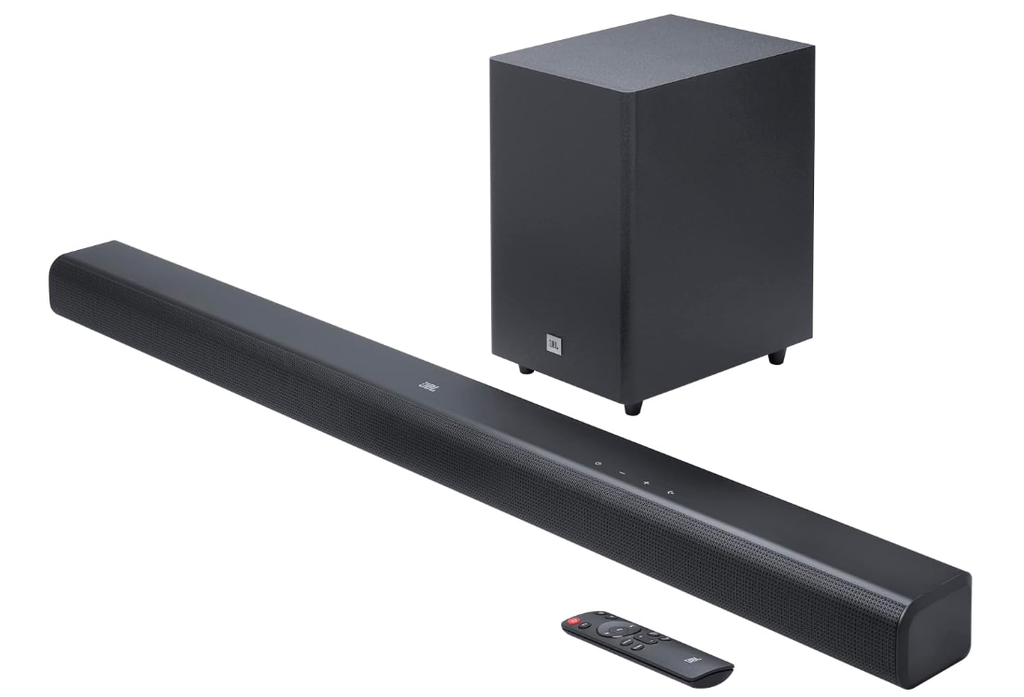
The SB550 keeps the bar itself slim and low, so it rarely blocks the bottom of a screen even sitting flat on a cabinet, and it pairs with a separate wireless subwoofer that needs its own patch of floor. Build is mostly plastic with a mesh grille, in line with JBL’s mid-range home audio line.
250W is split 3.1 across the bar and subwoofer, with a dedicated centre channel driver aimed squarely at dialogue rather than raw volume. A single HDMI eARC cable handles both audio and TV remote control together, and Bluetooth 5.3 is there for music without touching the TV at all.
It sits well above the Sansai and budget picks on this list for output and bass, without reaching the price or the physical height channels of the LG or Bose entries above it. Anyone upgrading straight from a TV’s built-in speakers, who wants a noticeable jump for a mid-range outlay, lands well here.
Pros
- Dedicated centre channel driver for clear dialogue
- Wireless subwoofer included for genuine bass
- Single HDMI eARC cable for audio and remote control
Cons
- No physical height channels for true Atmos
- Subwoofer needs its own floor space
Key specs: 3.1 channel, 250W, wireless subwoofer, HDMI eARC, Bluetooth 5.3, Dolby Audio.
CHECK ON AMAZON6. Yamaha SR-B30A – Best Compact Built-In Subwoofer
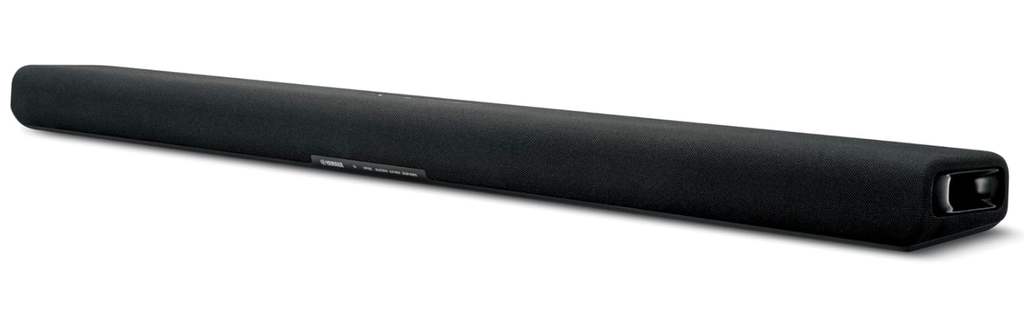
Yamaha fits two dedicated subwoofer drivers inside the bar itself rather than shipping a separate box, so the SR-B30A stays a single piece of furniture from the day it arrives. The cabinet is narrower than most of the flagship bars on this list, suiting smaller TVs and tighter cabinets.
Virtual Dolby Atmos processing widens the sound field without physical height speakers, and Yamaha’s Clear Voice mode lifts dialogue when a soundtrack gets busy. Setup is a single HDMI or optical cable, and Yamaha’s companion app carries tone controls that a lot of bars at this size skip entirely.
Bass has an obvious ceiling next to a bar running a full external subwoofer, since two small internal drivers cannot move as much air. Bedrooms, studies and second living areas, where a full external subwoofer would be overkill for the room size, are the natural home for this bar.
Pros
- Built-in subwoofers mean no second box to place
- Compact width suits smaller TVs and cabinets
- App-based tone controls and Clear Voice dialogue mode
Cons
- Bass is noticeably lighter than bars with a separate subwoofer
- Dolby Atmos here is virtual, not physical up-firing
Key specs: 2.1 channel, built-in dual subwoofers, virtual Dolby Atmos, HDMI ARC, Bluetooth, companion app.
CHECK ON AMAZON7. Razer Leviathan V2 – Best for Desktop Gaming
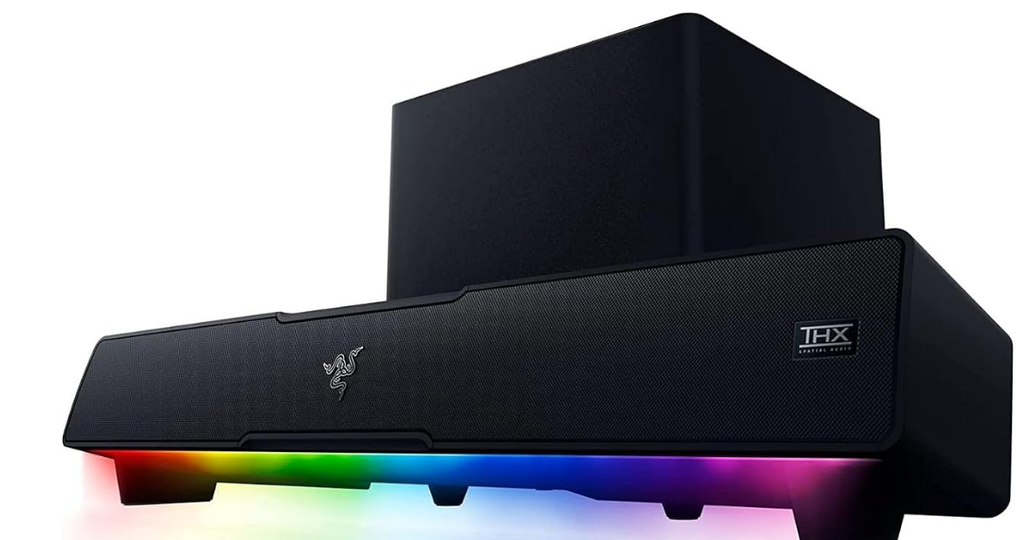
This one is built for a desk rather than a lounge room, short enough to sit under an ultrawide monitor with a matching compact subwoofer tucked underneath. Chroma RGB lighting runs along eighteen zones on the bar, syncing with other Razer peripherals for anyone already in that ecosystem.
THX Spatial Audio drives the positional side of things, aimed at picking out footsteps and directional cues in games rather than movie dialogue, and Bluetooth 5.2 keeps latency low enough for gaming rather than just music. A 3.5mm input and USB-C round out the connections for a PC or console setup.
It is a poor match for a large TV or a proper home cinema, since the drivers and subwoofer are sized for near-field desk listening rather than filling a room. A gaming setup running one or two monitors, where a full-size TV bar would be comically oversized, is exactly what this was built for.
Pros
- Compact size built for desk and monitor setups
- THX Spatial Audio for positional gaming sound
- Chroma RGB lighting syncs with other Razer gear
Cons
- Too small to properly fill a lounge room
- Tuned for games and music over movie dialogue
Key specs: 2.1 channel, THX Spatial Audio, compact subwoofer, Bluetooth 5.2, Chroma RGB, 3.5mm and USB-C.
CHECK ON AMAZON8. Soundcore Infini Mini – Best for Small Rooms
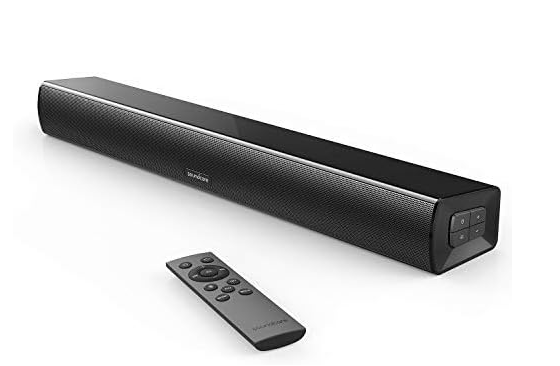
At 21 inches end to end, the Infini Mini from Anker’s Soundcore line is one of the shortest bars on this list, built to sit under a small TV or monitor without hanging off either edge. The plastic housing is plain and low profile, with physical buttons on top rather than a touch panel.
A 2.0 channel layout keeps things simple, with Bluetooth for wireless streaming and an optical input for a more stable TV connection. Included remote and on-unit controls cover volume and sound modes without needing a phone app for basic adjustments.
There is no subwoofer here, so bass stays modest regardless of how the sound modes are set, and this is not the pick for anyone chasing home cinema impact. A bedroom, dorm room or small apartment TV, where a full-width bar would look oversized, is where this compact size actually works in its favour.
Pros
- Short 21 inch frame suits small TVs and desks
- Bluetooth and optical inputs both included
- Simple physical controls plus a remote
Cons
- No subwoofer, so bass is limited
- Not built for a large room or a full home cinema setup
Key specs: 2.0 channel, 21 inch compact frame, Bluetooth audio, optical input, remote control included.
CHECK ON AMAZON9. 50W Bluetooth Sound Bar – Best Value for Money

This is the cheapest entry on the list, a straightforward 15.8 inch bar with no separate subwoofer and no smart features to speak of. The housing is basic moulded plastic, and the whole thing is light enough to mount on a wall with the supplied bracket.
50W across two full-range drivers is enough to noticeably beat a TV’s own speakers, especially for dialogue, and a basic 3D surround processing mode adds a bit of width to the sound. Optical, AUX and Bluetooth cover the ways most people will actually connect it.
Bass and overall detail are both modest, and this will not satisfy anyone coming from a bar with a real subwoofer. For a first sound bar, a spare-room TV, or simply testing whether a bar is worth the upgrade before spending more, it does the basic job without the outlay of the rest of this list.
Pros
- The lowest price on this list
- Wall-mountable with an included bracket
- Optical, AUX and Bluetooth connections covered
Cons
- No subwoofer and limited bass
- No HDMI input or app control
Key specs: 2.0 channel, 50W, 15.8 inch width, Bluetooth, optical and AUX inputs, wall-mount bracket included.
CHECK ON AMAZON10. Razer Leviathan V2 X – Best Desk-Friendly Design

The V2 X strips the standard Leviathan V2 down to a single bar with no separate subwoofer box, trading some low end for a footprint that fits under almost any monitor stand. Full-range drivers run the width of the unit, finished in the same understated black as the rest of the range.
A single USB-C cable handles both power and audio from a laptop or PC, which keeps cable clutter on a desk to a minimum compared with a mains-powered bar. Bluetooth 5.0 is on board too for a phone or console, and fourteen Chroma RGB zones carry over from the larger model.
Dropping the subwoofer means less bass than its own sibling above it on this list, let alone a proper TV bar, so this stays a desk speaker rather than a lounge-room upgrade. Anyone short on desk space who still wants Chroma lighting and USB-C simplicity should look here before the full-size V2.
Pros
- Single USB-C cable for power and audio
- Smaller footprint than the standard Leviathan V2
- Chroma RGB lighting across fourteen zones
Cons
- No dedicated subwoofer, so bass is lighter than the standard V2
- Strictly a desk speaker, not a TV replacement
Key specs: Compact single-bar design, USB-C powered, Bluetooth 5.0, Chroma RGB, full-range drivers.
CHECK ON AMAZONHow to Choose a Sound Bar
Match the bar to your room, not the biggest spec sheet. A 400W flagship is wasted in a small bedroom, and a compact 20W bar will disappoint in an open-plan living area. Measure the space in front of the TV and think about how loud the room needs to get before picking a wattage tier.
Decide early whether you need a separate subwoofer. Bars with built-in subwoofers stay tidy and easy to place, while a separate wireless subwoofer adds genuine low end at the cost of another box to find room for. Anyone mainly watching dialogue-heavy shows can usually skip the extra unit; action movies and games generally reward it.
Check the connection options before paying for extras. HDMI ARC or eARC carries the most detail and lets one remote control both the TV and the bar, where optical is a reliable fallback on older televisions. If you are also shopping for a new screen, it is worth reading a guide to the best smart TVs in Australia alongside this one, since HDMI eARC support varies a lot between models.
Weigh up channel count against dialogue clarity. A basic 2.0 bar handles music and casual viewing fine, but a dedicated centre channel on a 3.1 or higher bar makes a noticeable difference once the TV volume creeps up during a busy scene. This matters more than headline wattage for most Australian lounge rooms.
Think about mounting before buying, not after. Some bars ship with a wall bracket included, others need one bought separately, and a wireless subwoofer still needs a nearby power point wherever it lands. A quick look at our guide to TV units in Australia before deciding on a bracket can save a second order once the bar has already arrived.
Set a budget around the features you will actually use. Dolby Atmos, app-based tone controls and voice assistants all add cost, and none of them matter if the room is small and the TV is mostly used for free-to-air news and sport. Matching the spec sheet to real viewing habits, rather than the longest feature list, is the fastest way to avoid overspending.
Frequently Asked Questions
What is a good sound bar for a small apartment in Australia?
A compact 2.0 or 2.1 channel bar under about 60cm wide is usually the better fit for a small apartment, since a full-width flagship bar with a separate subwoofer can overwhelm a small living area and leaves little floor space for the extra unit.
Do I need a subwoofer with a sound bar?
Not always. A subwoofer adds genuine low end for action movies, games and music with heavy bass, but dialogue-focused viewing such as news and drama comes through clearly on a bar with built-in drivers and no separate subwoofer at all.
What is the difference between 2.1 and 3.1 channel sound bars?
A 2.1 system is stereo left and right plus a subwoofer for bass, while a 3.1 system adds a dedicated centre channel aimed specifically at dialogue, which is why 3.1 and higher bars tend to sound clearer during busy scenes with music, effects and speech overlapping.
Can a sound bar work with any TV?
Most modern TVs support at least one of HDMI ARC, HDMI eARC or optical audio out, and any current sound bar will use one of these, so compatibility is rarely an issue. It is worth checking which of these your TV has, since eARC carries more audio detail than a basic optical connection.
Is Dolby Atmos worth it on a sound bar?
Dolby Atmos adds a sense of height to movies and some TV shows, either through physical up-firing speakers or virtual processing, and it is most noticeable on Atmos-mastered content played through a bar with true up-firing drivers rather than software-only processing.
How much should I spend on a sound bar?
A basic 2.0 or 2.1 bar covers most everyday TV viewing, a mid-range 3.1 bar with a wireless subwoofer suits a typical Australian living room, and a full Dolby Atmos or multi-speaker system is worth the extra spend mainly for a dedicated home cinema setup.
Verdict
For most Australian lounge rooms, the JBL Cinema SB550 lands closest to the sweet spot, pairing a wireless subwoofer and a dedicated centre channel with a price well short of the flagship end of this list. Buyers who want a single tidy unit with voice assistant support should look to the Bose Smart Soundbar instead, and anyone furnishing a first apartment or a spare room on a tight budget will get more than expected from the Sansai BT-199K, the one pick here backed by a 30-day return window through its retailer rather than Amazon’s 24-hour one.